The Arctic sea-ice story is about more than disappearance
Published in Earth & Environment

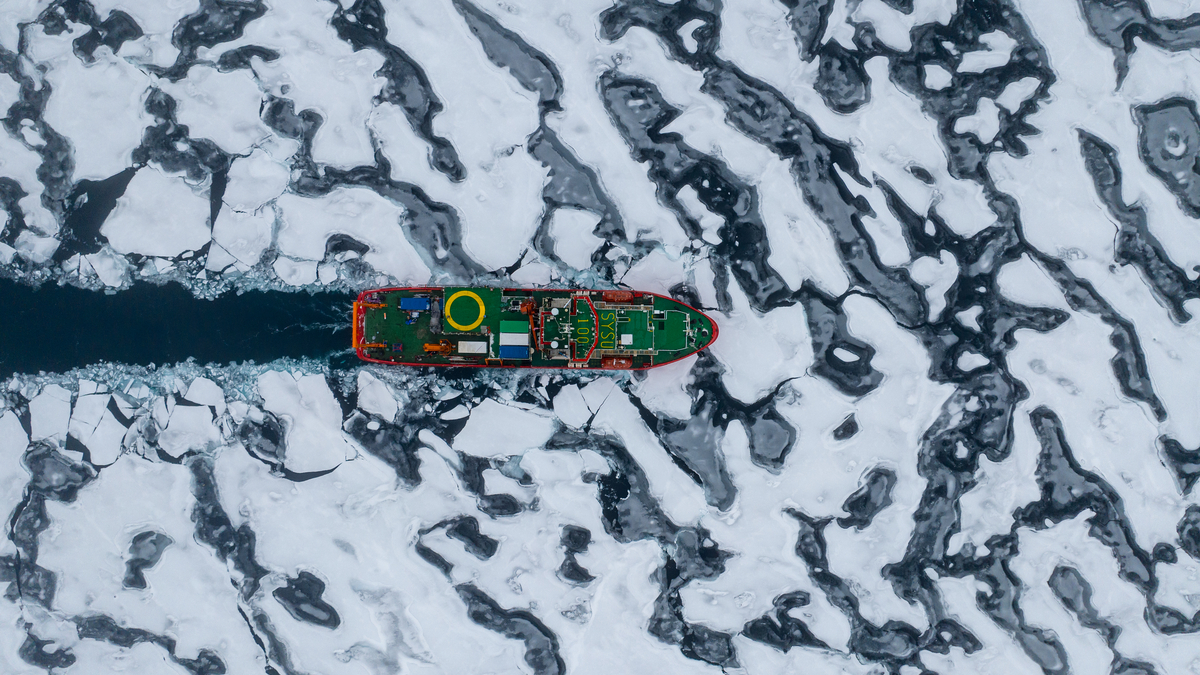


The Arctic sea-ice story is often told as one of persistent loss. The Chukchi Sea has been no exception, experiencing some of the most pronounced summer sea-ice decline in recent decades. So when we looked at the Chukchi Sea in summer 2024, we did not expect to find so much ice still there.
By September 2024, a large area of sea ice had persisted in the southern Chukchi Sea—the first such event since 2001—and the ice became extensive enough to temporarily obstruct the Northeast Passage. Research vessels operating in the region experienced it firsthand. On its return journey, the icebreaker Zhong Shan Da Xue Ji Di spent around three hours navigating continuously through sea ice. The research vessel Norseman II, which was not equipped to break through heavy ice, became trapped in the southern Chukchi Sea for 14 days and eventually had to suspend its operations and seek nearby repairs.
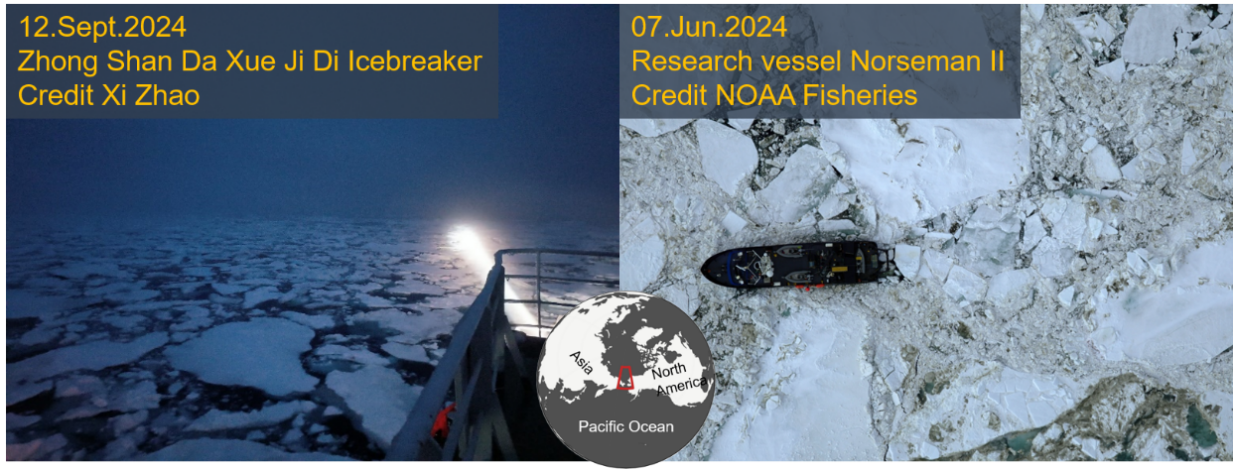
For us, this raised a simple but intriguing question: was the remarkable ice persistence in 2024 simply an unusual weather event, or had something been changing in the region for several years?
An unusual pattern that had been building since 2020
Previous studies had already shown that persistent northerly winds in summer 2024 promoted sea-ice accumulation along the Siberian coast and contributed to regional cooling. Our analysis, however, revealed that this was not an isolated event. Since 2020, the southern Chukchi Sea had repeatedly experienced anomalous northerly winds, accompanied by a gradual recovery of both summer sea-ice concentration and thickness.
This made the 2024 event particularly intriguing. Rather than viewing it as an isolated extreme, we began to ask whether the exceptional ice conditions might have been the result of several consecutive summers with unusually favorable conditions for sea-ice retention.
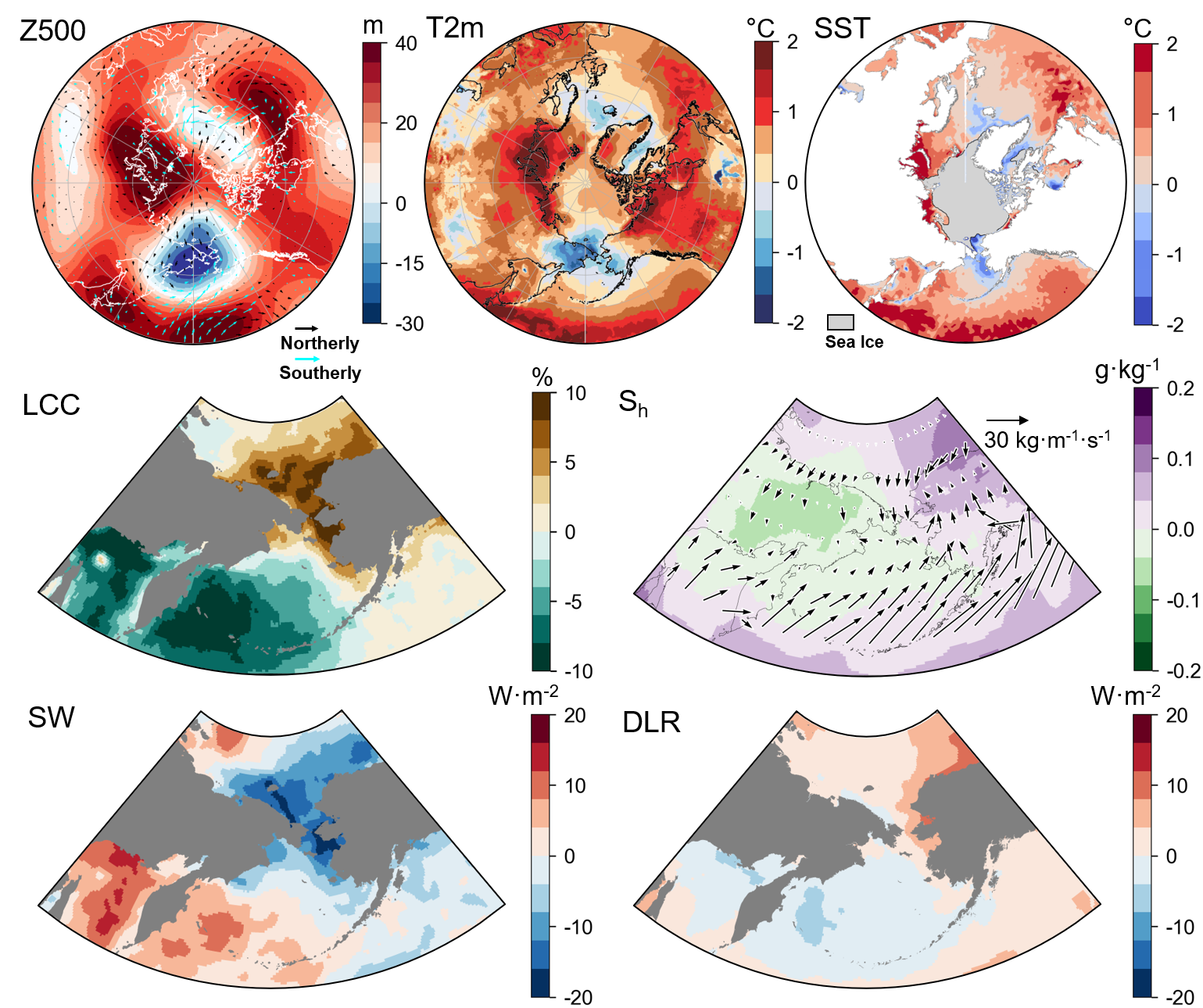
The atmospheric circulation provided an important clue. Between 2020 and 2024, the centre of the summer cyclonic anomaly over the North Pacific shifted markedly northward from its climatological position, approaching the Bering Strait. This poleward displacement was associated with persistent northerly winds over the Chukchi Sea.
What interested us was that the atmospheric anomaly did more than simply push the ice toward the coast.
The rising motion around the cyclonic anomaly centre favored low-cloud formation, reducing the amount of shortwave radiation reaching the ocean surface. On its western side, cold-air advection transported cold and dry air into the Chukchi Sea and weakened the poleward transport of warm, moist air from the North Pacific. At the same time, the anomalous northerly winds promoted the transport and accumulation of sea ice along the Siberian coast.
Together, these processes acted almost like a regional “umbrella”, shielding the Chukchi Sea from summer heating and maintaining a relatively cold surface environment.
When several summers begin to matter
The most interesting part of the story was that the cooling did not simply disappear at the end of each summer.
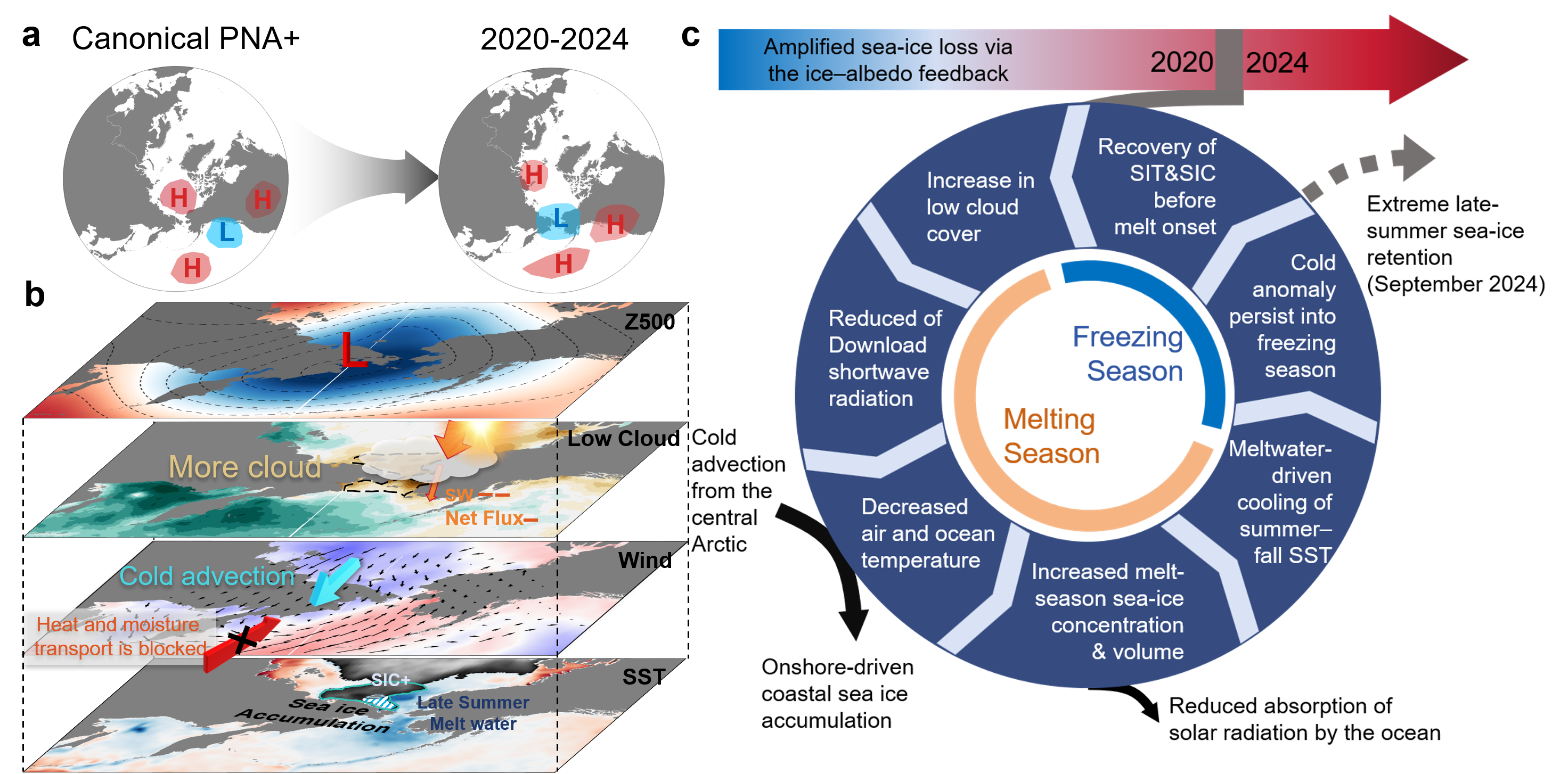
The persistent atmospheric conditions during 2020–2024 repeatedly reduced summer heat input to the region. Each summer therefore left behind a colder ocean–ice background that favored sea-ice recovery during the subsequent freezing season. Over several consecutive years, these effects accumulated.
One of the clearest signatures appeared in sea-ice thickness. Under normal conditions, sea-ice thickness in the Chukchi Sea begins to decline in May. During 2020–2024, however, the onset of seasonal thinning was delayed until early June. In 2024, sea ice continued to thicken into mid-June.
This provided an important piece of the puzzle. The unusual ice conditions observed at the end of summer 2024 did not emerge from nowhere. The region entered the 2024 melt season with an unusually favorable ice–ocean state that had developed over several preceding years.
As sea-ice coverage increased, more incoming solar radiation was reflected by the ice rather than absorbed by the ocean. Summer meltwater further helped maintain cooling in the upper ocean. By summer 2024, sea-surface temperatures in the Chukchi Sea had reached some of their lowest levels in the observational record. The combination of relatively thick ice at the beginning of the melt season and persistently cold atmospheric and oceanic conditions then suppressed summer ice loss, ultimately allowing a large area of sea ice to survive into late summer.
Looking beyond the “usual” Arctic sea-ice story
The circulation pattern behind this recovery occurred during a positive phase of the summer Pacific–North American (PNA) pattern, which is generally associated with enhanced poleward transport of warm and moist air into the Pacific Arctic and sea-ice loss.
Yet our results showed that the PNA phase alone does not tell the whole story. Between 2000 and 2024, the summer PNA index was significantly correlated with both Chukchi Sea ice conditions and the latitude of the associated North Pacific low-pressure anomaly. Because the Chukchi Sea lies close to this anomaly, its sea ice is particularly sensitive to where the circulation centre is located.
A more southerly centre can favor warm-air advection and surface heating, whereas a poleward-shifted centre promotes northerly winds, cloud-induced cooling and ice retention. This helps explain why regional sea-ice conditions can sometimes depart so strongly from the broader Arctic trend
A different side of the “New Arctic”
The unusual persistence of sea ice in the Chukchi Sea in 2024 offers a glimpse of the complexity of an Arctic that is continuing to warm. Even as Arctic sea ice declines over the long term, regional conditions can still depart sharply from this trajectory, allowing ice to persist in unexpected places and for unexpectedly long periods.
This may be an important feature of the emerging “New Arctic”. As sea ice becomes thinner and younger, its evolution may be increasingly shaped by the interplay between long-term warming and short-term climate variability. The Arctic of the future may therefore not simply be an Arctic with less sea ice, but one in which when and where ice persists becomes increasingly variable.
Follow the Topic
-
Communications Earth & Environment
An open access journal from Nature Portfolio that publishes high-quality research, reviews and commentary in the Earth, environmental and planetary sciences.

Related Collections
With Collections, you can get published faster and increase your visibility.
Ecological resistance and resilience under global change
Publishing Model: Open Access
Deadline: Apr 07, 2027
Hazards in Mountain Regions
Publishing Model: Open Access
Deadline: Nov 02, 2026