The first years after protection: what changes beneath the Mediterranean seafloor?
Published in Ecology & Evolution and Zoology & Veterinary Science
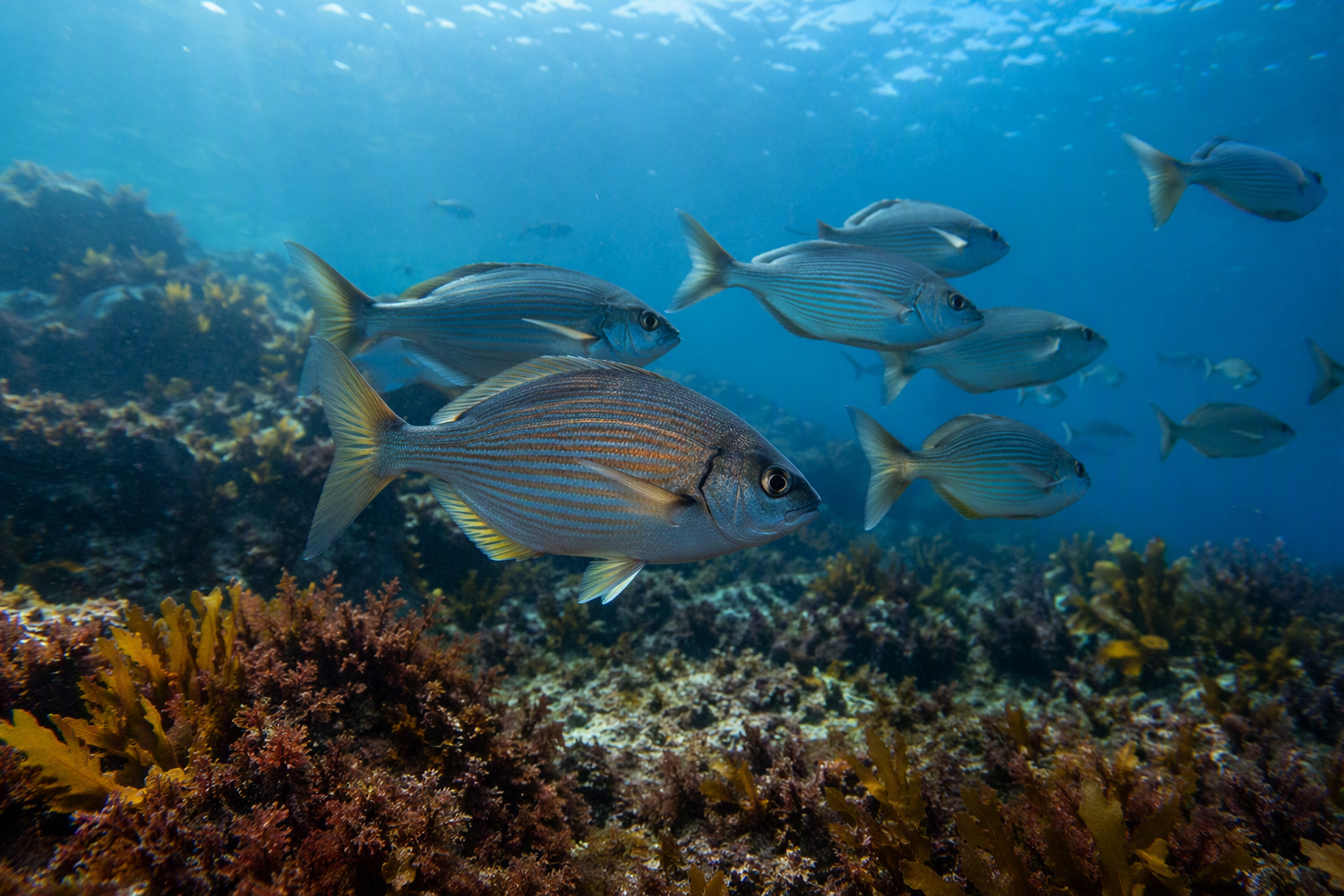

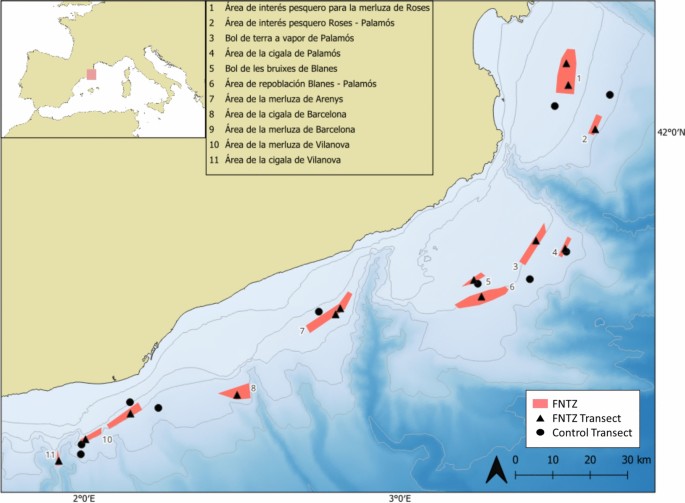

Fishery No-Take Zones (FNTZs) are increasingly being introduced as a management tool to reduce pressure on marine ecosystems and support the sustainable use of fisheries resources. Yet assessing whether these measures are delivering ecological benefits can be challenging, particularly in deep soft-sediment habitats where changes may unfold over long timescales. A new article published in Reviews in Fish Biology and Fisheries examines the early ecological responses observed in eleven recently established FNTZs along the Catalan margin in the northwestern Mediterranean.
The research team surveyed bentho-demersal communities between 2023 and 2024 using remotely operated vehicle (ROV) video transects. Protected areas were compared with adjacent sites that remained open to fishing across two depth ranges: 100–300 m and deeper than 300 m. The study focused separately on sessile fauna, such as habitat-forming organisms attached to the seabed, and motile fauna, whose greater mobility may influence how quickly they respond to protection.
The results suggest that protection is already associated with ecological differences in some locations. Several no-take zones, particularly on the shelf edge, supported higher densities, richness and diversity of sessile organisms than nearby control areas. Community composition also differed, with protected zones tending to host a greater representation of habitat-forming species. These organisms can play an important role in increasing habitat complexity and supporting biodiversity.
Responses among motile fauna were less consistent. While some differences between protected and non-protected areas were observed, patterns varied among locations and depths. This contrast highlights an important point for marine managers and researchers: the effects of protection may depend not only on the duration of protection but also on the life histories of the organisms being studied and the environmental characteristics of the habitat.
The study also provides a reminder that recovery in deep-sea soft-sediment environments is unlikely to be rapid. The authors suggest that decades of bottom trawling have left a legacy of physical habitat degradation that may constrain ecological restoration, even after fishing pressure is removed. As a result, signs of recovery are currently uneven across the region and should be interpreted as the beginning of a longer process rather than evidence of full ecosystem restoration.
Beyond its ecological findings, the work establishes an important baseline for future monitoring of Mediterranean FNTZs. By providing a regional-scale assessment shortly after protection was implemented, it offers a reference point against which future changes can be measured. Long-term monitoring will be essential for understanding whether the patterns observed today develop into broader and more persistent ecosystem recovery in the years ahead.
Image and text were created with the assistance of AI.

Follow the Topic
-
Reviews in Fish Biology and Fisheries
Reviews in Fish Biology and Fisheries is an international journal that publishes original and review articles on various aspects of fish biology, fisheries, and aquaculture.

Related Collections
With Collections, you can get published faster and increase your visibility.
Sustaining Life Below Water: Conserving, managing, and protecting our marine and freshwater resources
In support of the UN Sustainable Development Goal SDG14 we are calling for submissions for this new collection on Sustaining Life Below WaterPlastic waste, overfishing, ocean acidification, increasing eutrophication are some of the major threats endangering our oceans, rivers and lakes. With this collection we aim to create a cross-disciplinary home for research articles, perspectives, and emerging topics addressing the conservation and sustainability of the use of our marine and freshwater resources. By putting scholarship supporting this UN Goal in the spotlight we hope to increase the scientific knowledge and awareness of the targets and indicators set by the UN Goal such as reducing marine pollution, strengthening resilience, restoring coastal ecosystems, minimizing the impacts of ocean acidification, reducing destructive fishing practices, providing access for small-scale fishers to marine resources and markets and more.
We call for submissions on (but not limited to) the following topics:
•Biotelemetry and bio-logging
•Dam removal policy and development
•Economic benefits to Small Island developing States and least developed countries through sustainable management of fisheries, aquaculture and tourism
•Effects of reef degradation on ecosystem goods and services
•Environmental DNA and RNA
•Environmental flows
•Fish migration and passage
•Fisheries-induced evolution
•Floodplain management
•Hydropower mitigation
•Links between reef health and human health
•Methods and case studies and their scientific assessment, to manage, protect, and restore wetlands, to prevent and significantly reduce wetland pollution, in particular from land-based activities, including sedimentation from poor land-use, plastic and nutrient pollution
•Physiology and health of wild fish
•Preventing and reducing (plastic) pollution/waste in particular from land-based activities, including marine debris and nutrient pollution
•Policy development in river and lake management
•Reducing/minimizing ocean acidification
•Regulating harvesting, ending of overfishing and destructive fishing practices, and science-based management plans to restore fish stocks
•Restoration goals in lake management River and lake restoration
•Strengthening resilience and restoration of coastal ecosystem Understanding and improving sustainable use of coral reef resources.
How to submit? Please use the Submit to this journal link from the participating journals. These journals can be viewed in the right menu. During submission you will be asked if you would like your article to be included in a Topical Collection. Select ‘Yes’ and select the name of this collection from the drop down menu: TC: Sustaining Life Below WaterSubmissions to the collection may be original research articles, perspectives or review articles. Please read the submission guidelines for each journal before submitting. Each submission will undergo thorough and rigorous peer review according to each journal’s peer review editorial policy. Accepted articles will be published in their respective journal and will benefit from being cross-linked as well on the collection page.
The following journals are participating in this collection:
•Aquatic Ecology
•Aquaculture International
•Aquatic Sciences
•Coral Reefs
•Environmental Biology of Fishes
•Estuaries and Coasts
•Fish Physiology and Biochemistry
•Fisheries Science
•Hydrobiologia
•Journal of Applied Phycology
•Journal of Coastal Conservation
•Journal of Ocean University China
•Limnology
•Marine Biology
•Marine Biotechnology
•Maritime Studies
•Ocean Science Journal
•Reviews in Fish Biology and Fisheries
•Thalassas: An International Journal of Marine Sciences
•Wetlands Ecology and Management
Publishing Model: Hybrid
Deadline: Ongoing