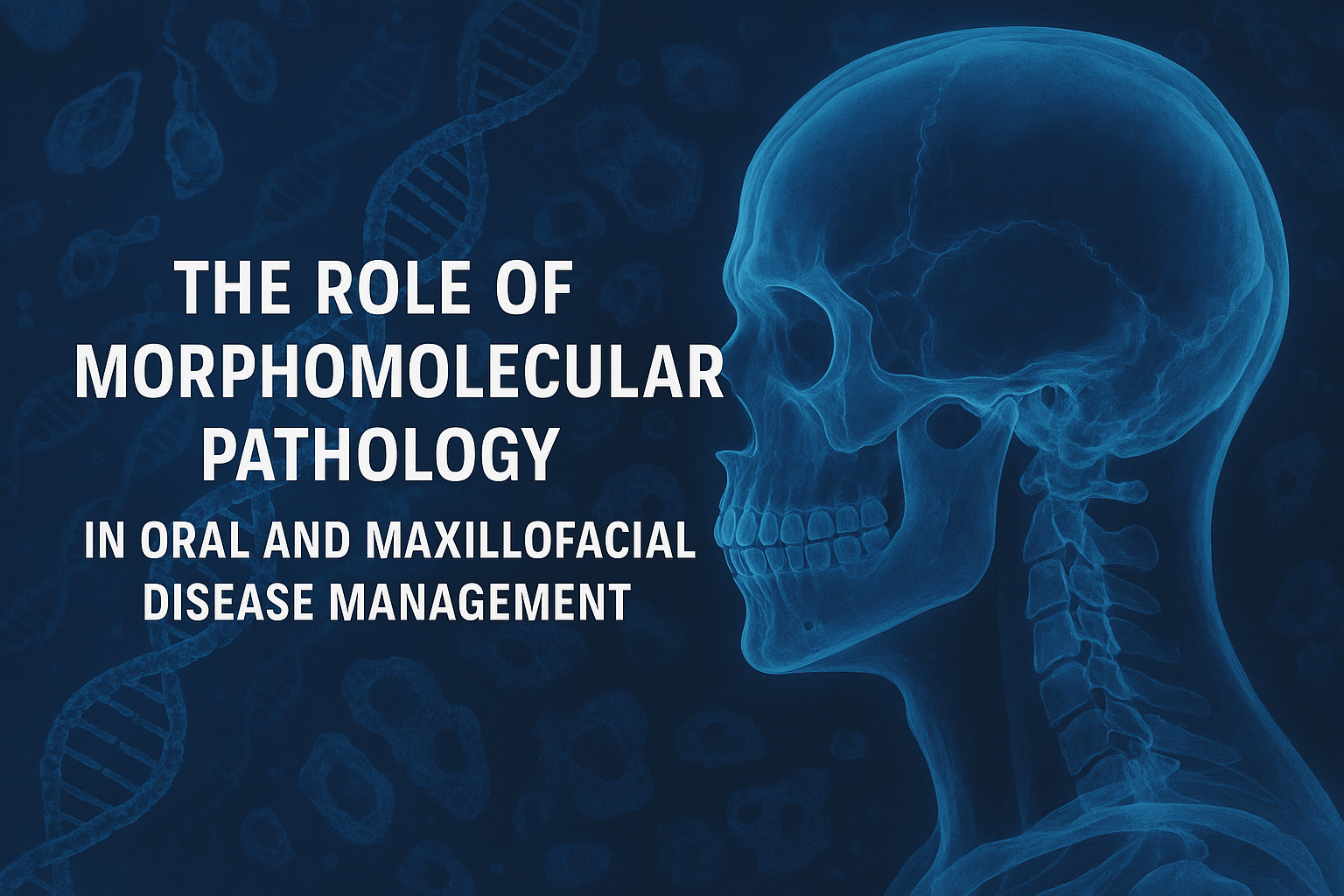
The Role of Morphomolecular Pathology in Oral and Maxillofacial Disease Management
Published in General & Internal Medicine
The integration of morphomolecular pathology into oral and maxillofacial pathology represents a transformative shift in diagnostic accuracy, prognostic precision, and therapeutic guidance. Traditionally reliant on histopathological evaluation alone, oral pathology has advanced significantly through the incorporation of molecular diagnostics, enabling us to move beyond morphology to unravel the underlying genetic and epigenetic alterations driving disease processes.
This integrative approach enables the comprehensive classification of head and neck lesions, particularly oral squamous cell carcinoma, odontogenic tumours, salivary gland neoplasms, and orofacial developmental anomalies, by identifying actionable mutations, gene fusions (e.g., EWSR1, MAML2), copy number variations, and microRNA signatures. The morphomolecular model supports more refined subclassification of tumours, distinguishes reactive from neoplastic lesions with overlapping histology, and facilitates early detection of potentially malignant disorders (OPMDs) through molecular markers such as TP53, NOTCH1, and CDKN2A.
Incorporating molecular data enhances diagnostic objectivity, especially in borderline or ambiguous cases. It further allows for risk stratification, prediction of treatment response (e.g., EGFR, PD-L1 expression), and monitoring of minimal residual disease using liquid biopsy approaches. For pathologists, this integration promotes interdisciplinary collaboration with oncologists, surgeons, and genetic counsellors, bridging the gap between histopathology and precision oncology.
Ultimately, the convergence of morphology with molecular insights equips oral and maxillofacial pathology with a powerful toolkit for personalised patient care, research innovation, and alignment with the future of genomic-driven medicine.