The Untold Story of Kewda: What the Literature Reveals and What It Ignores
Published in Sustainability, Agricultural & Food Science, and Economics
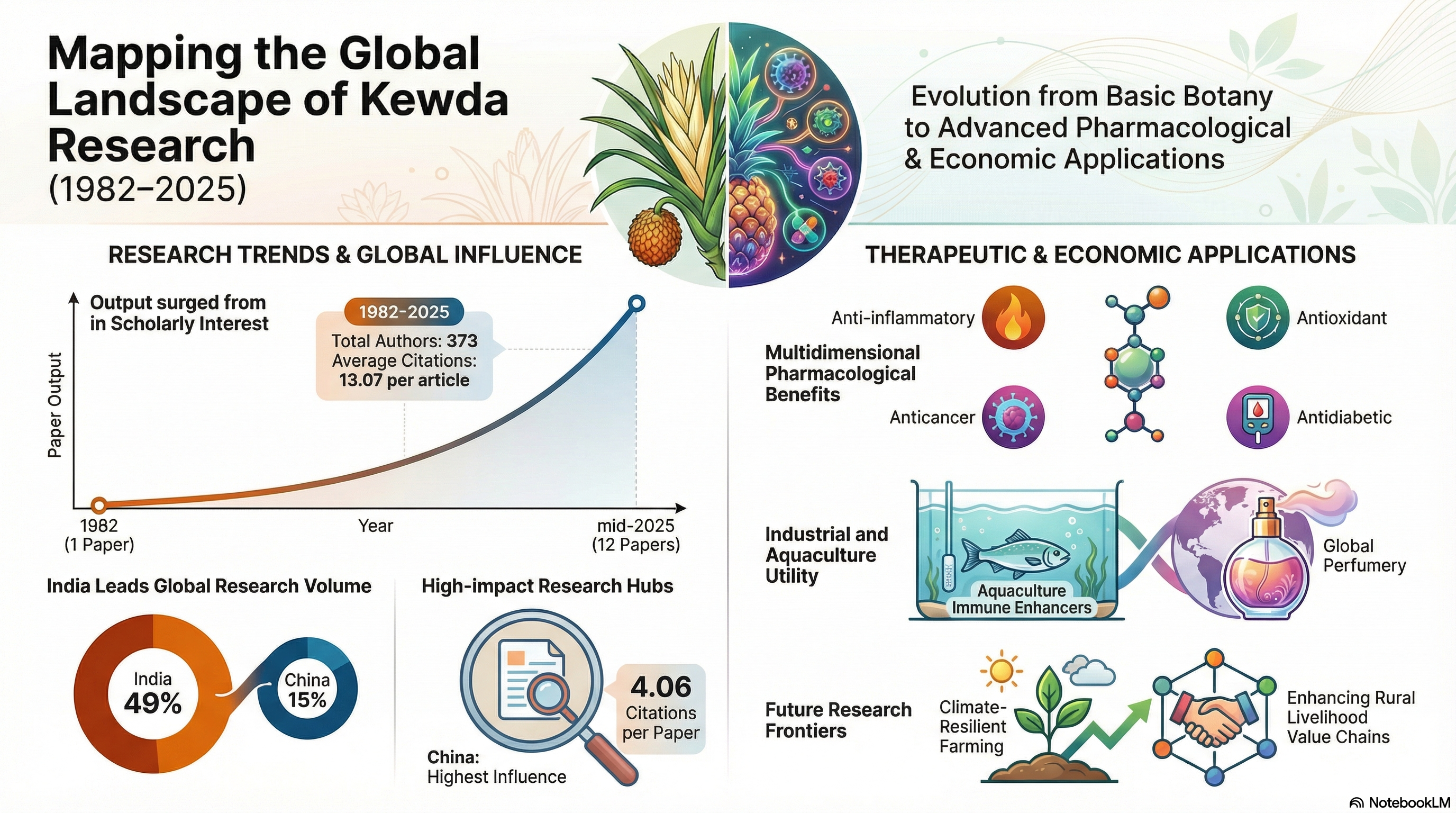




Kewda (Pandanus fascicularis), though deeply embedded in India’s cultural, medicinal, and aromatic traditions, has remained largely underexplored in mainstream sustainability and development research. Our paper, “Mapping the Landscape of Kewda Studies: A Bibliometric Review and Content Analysis,” emerged from a simple yet compelling observation: despite the enormous economic and livelihood significance of Kewda cultivation, particularly in Odisha, scholarly attention to this crop has been fragmented, scattered, and often disconnected from ground realities.
The inspiration for this study came from the Ganjam district of Odisha, which accounts for nearly 90% of India’s total Kewda production. In four blocks, namely Chatrapur, Chikiti, Ganjam, and Rangeilunda, Kewda cultivation spreads over more than 37,000 hectares, sustaining the livelihoods of over 40,000 families and nearly 200,000 people. The crop generates high-value products such as Kewda oil, attar, and floral water, contributing approximately ₹120 crore annually to the regional economy. Yet, when we began exploring academic databases, we found that the scale of research attention was disproportionately small compared to its socio-economic importance.
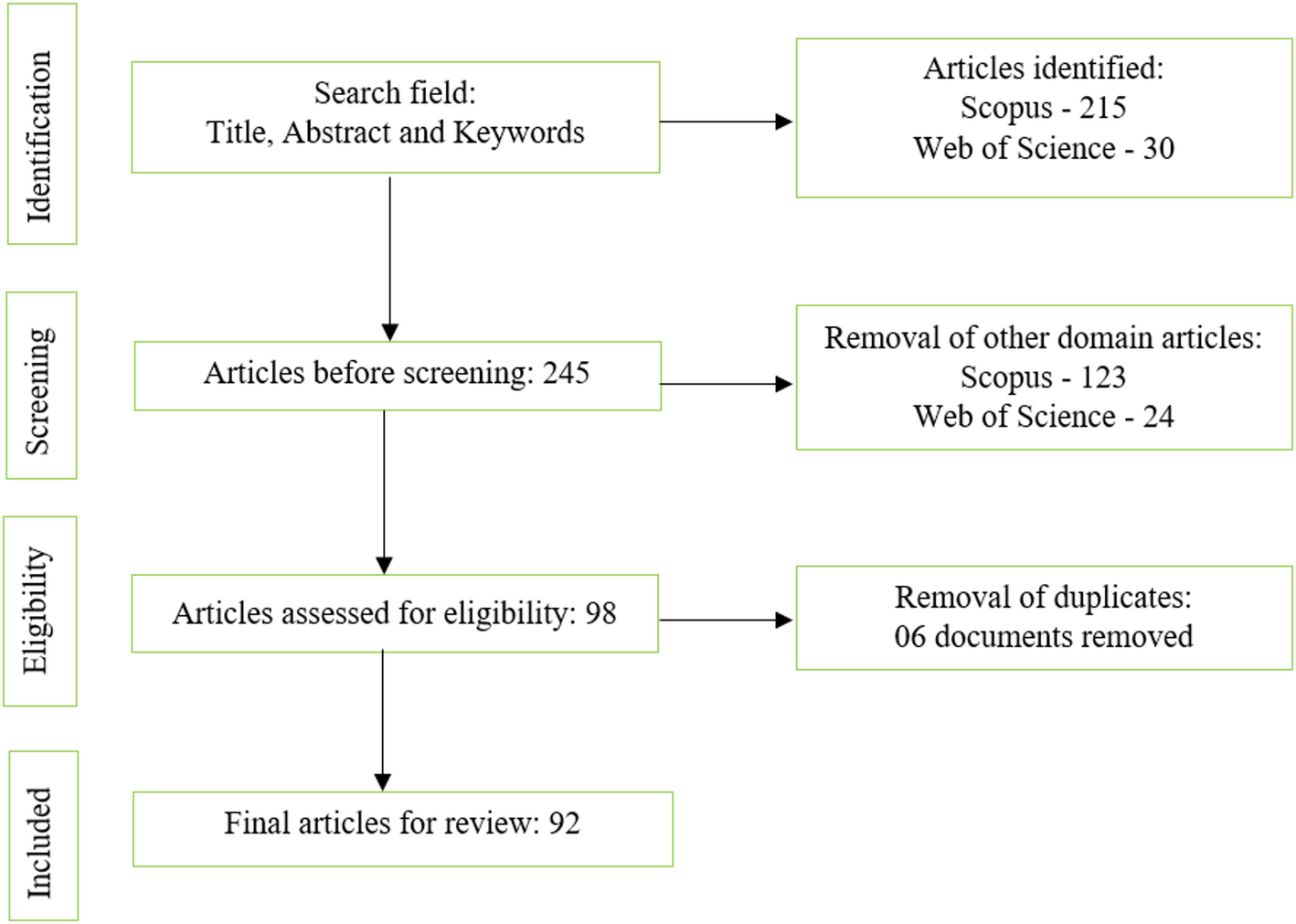
This gap motivated us to map the intellectual landscape of Kewda studies systematically. Rather than conducting yet another isolated field study, we adopted a bibliometric and content analysis approach to understand how Kewda has been studied over time, which disciplines have engaged with it, what themes dominate the literature, and, perhaps most importantly, what remains unexplored. This methodological choice enabled us to move beyond anecdotal evidence and to provide a structured, replicable overview of existing knowledge.
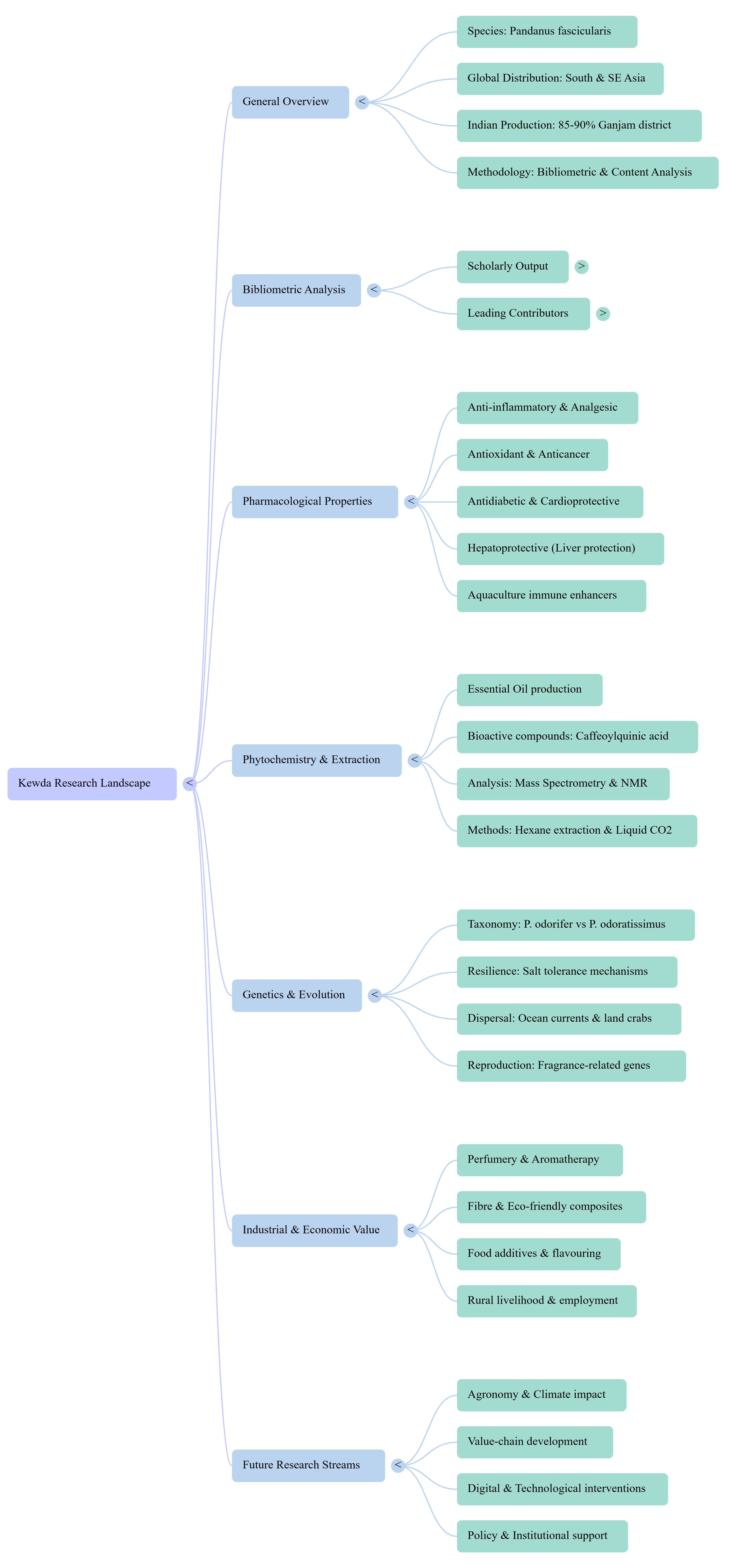
One of the most striking findings from our analysis was the thematic concentration of existing studies. Most published research on Kewda focuses on botanical classification, chemical composition, fragrance extraction, and pharmacological properties. While these studies are scientifically valuable, they largely overlook socio-economic dimensions such as farmer livelihoods, value-chain asymmetries, sustainability of cultivation practices, and vulnerability of smallholders. The voices of Kewda farmers, who form the backbone of this industry, are almost absent from the academic discourse.
This disconnect between economic reality and research focus became even more evident during our field interactions. Many small and marginal farmers cultivate Kewda along the boundaries of their land, making it a low-input but high-return crop. Despite its commercial value, farmers often remain price-takers, dependent on intermediaries and MSME processing units that dominate the value chain. These insights reinforced our belief that sustainability research must integrate economic, social, and institutional perspectives, rather than merely focus on technical efficiency.
Another important insight from our bibliometric mapping was the geographical and disciplinary fragmentation of research outputs. Although Kewda cultivation is region-specific, the limited studies available are scattered across unrelated journals and domains, resulting in weak knowledge accumulation and limited policy relevance. There is little evidence of interdisciplinary collaboration or development-oriented research, which restricts the translation of academic findings into actionable strategies for farmer welfare and regional development.
Conducting this review also came with methodological challenges. The limited availability of indexed literature on Kewda required extensive screening across multiple databases and grey literature sources. Variations in terminology, including local names and alternative botanical classifications, further complicated data retrieval. Addressing these issues demanded iterative refinement of search strategies and careful contextual validation.
Beyond technical challenges, this work carries a deeply personal dimension. Many of us involved in this research have long-standing academic and social engagement with rural Odisha. Interactions with farmers revealed a paradox: while Kewda cultivation generates substantial aggregate revenue, individual farmers continue to face income instability, limited institutional support, and constrained access to technology and markets. These lived realities underscored the urgency of aligning sustainability research with grassroots experiences.
This work is an outcome of the research project funded by the Odisha State Higher Education Council (OSHEC), Government of Odisha, under the Mukhyamantri Research and Innovation Program (MRIP-2024). This support enabled systematic literature mapping, field engagement, and analytical rigour. The MRIP initiative reflects the Government of Odisha’s commitment to promoting region-specific, policy-relevant research with direct societal impact, and it has significantly strengthened our capacity to connect scholarly analysis with local development concerns.
Our paper seeks to provide a foundation for future research that bridges disciplinary silos. By identifying dominant themes, research gaps, and emerging directions, we encourage scholars to move beyond laboratory-centric studies and engage with livelihood outcomes, gender roles, climate resilience, and policy frameworks. Kewda cultivation offers a compelling case to examine sustainable rural development at the intersection of traditional knowledge, natural resources, and markets.
Ultimately, this study is not just about mapping publications; it is about amplifying an overlooked narrative. Kewda farmers in Ganjam have sustained a globally valued aromatic industry for generations, yet their stories remain largely untold in academic literature. By bringing these gaps to light, we hope our work will inspire interdisciplinary, inclusive, and impact-oriented research that places farmers and communities at the centre of sustainability discourse and contributes to the long-term resilience of Kewda-growing regions.

Follow the Topic
-
Discover Sustainability
A multi-disciplinary, open access, community-focussed journal publishing results from across all fields relevant to sustainability research whilst supporting policy developments that address all 17 of the United Nations Sustainable Development Goals (SDGs).

What are SDG Topics?
An introduction to Sustainable Development Goals (SDGs) Topics and their role in highlighting sustainable development research.
Continue reading announcementRelated Collections
With Collections, you can get published faster and increase your visibility.
Food, Societies and Sustainability: Contemporary Concerns around Local Food Production and Consumption
Food goes far beyond nutrition. It reflects sociocultural identities and territorial heritage, consumption dynamics, economic development, public policies, sustainability concerns, food production, distribution and consumption. Understanding food production and food products, practices and strategies offers key insights into both historical traditions and contemporary lifestyles. Around the world, food and drink serve as powerful symbols of identity and attract interest through diverse value chains, economic interests and cultural expressions. On the other hand, traditional and local food systems contribute to cultural heritage, biodiversity conservation and sustainability matters from environmental, sociocultural and economic concerns.
The Collection "Food, societies and sustainability: Contemporary concerns around local food production and consumption" explores how food is locally produced, promoted and protected through public and private initiatives, food-based experiences, media platforms, and sustainable dietary and productive practices. It encourages contributions that examine how food concerns are shaped in contemporary societies, how globalization is affecting local food cultures, emphasizing the role of food as both tangible and intangible cultural heritage. Food preferences, food stereotypes, and attitudes towards food sustainability, analysed through the lenses of generational gaps and gender differences are also welcomed. This Collection seeks original research and case studies using both qualitative and quantitative methods.
Keywords: Food Systems, Food culture, Food Production, Locality, Heritage, Tourism, Gastronomy, Agricultural Biodiversity, Livestock Biodiversity, Food Sustainability, Regenerative Tourism.
This Collection supports and amplifies research related to SDG 2, SDG 3, SDG 4, SDG 5, SDG 10, SDG 12, and SDG 17.
Publishing Model: Open Access
Deadline: Sep 30, 2026
Weather and Climate Extremes: A Special Reference to Multidisciplinary Research and Policy Developments
This Collection, titled "Weather and Climate Extremes: A Special Reference to Multidisciplinary Research and Policy Developments," focuses on the increasing global challenges posed by extreme weather events and climate phenomena. As these events intensify due to changing climate patterns, their impacts on ecosystems, infrastructure, human health, and socioeconomic systems become more pronounced, necessitating a multidisciplinary approach to understanding and addressing these complexities.
The Collection aims to bring together research from diverse fields, including atmospheric sciences, hydrology, ecology, engineering, public health, and social sciences. It encourages innovative contributions that explore cutting-edge solutions to predict, manage, and mitigate the effects of climate extremes. Topics may include advanced modelling techniques, nature-based solutions, climate-resilient infrastructure, risk assessment frameworks, and strategies for equitable policy development. The emphasis is placed on integrating scientific understanding with actionable solutions that address vulnerability, resilience, and adaptation.
Moreover, this Collection seeks to foster cross-disciplinary collaborations to bridge the gap between scientific research and policy implementation. By highlighting case studies, theoretical advancements, and practical approaches, it aims to advance the dialogue on climate resilience and inform decision-making processes globally. This platform aspires to serve as a critical resource for researchers, practitioners, and policymakers striving to navigate the escalating challenges of a changing climate.
Given the increasing frequency and intensity of climate extremes, this topic holds critical importance. Such extremes profoundly affect ecosystems, infrastructure, and human livelihoods, demanding coordinated efforts across disciplines to analyse risks, develop mitigation strategies, and inform policy. This Collection seeks to bring together cutting-edge research and innovative approaches from diverse fields, bridging scientific understanding and actionable policy frameworks. The proposed focus areas include, but are not limited to:
• Advances in modelling and forecasting weather and climate extremes
• Impacts on ecosystems, agriculture, water resources, and public health
• Nature-based solutions and climate-resilient infrastructure
• Interdisciplinary frameworks for risk management and adaptation planning
• Policy advancements addressing vulnerability, resilience, and equity
This call aims to engage a broad community of researchers, practitioners, and policymakers to enhance global discourse and support evidence-based decision-making by emphasising multidisciplinary contributions.
This Collection supports and amplifies research related to SDG
Keywords: Weather Extremes Modeling; Climate Change Impacts; Risk Assessment Frameworks; Nature-Based Solutions (NbS); Resilient Infrastructure Design; Equitable Policy Development; Interdisciplinary Climate Research; Adaptation and Mitigation Strategies; Socioeconomic Vulnerability Analysis; Extreme Event Forecasting
Publishing Model: Open Access
Deadline: Feb 28, 2027