The Third Stage of Hydrological Modeling: When to Trust Physics and When to Trust AI?
Published in Earth & Environment
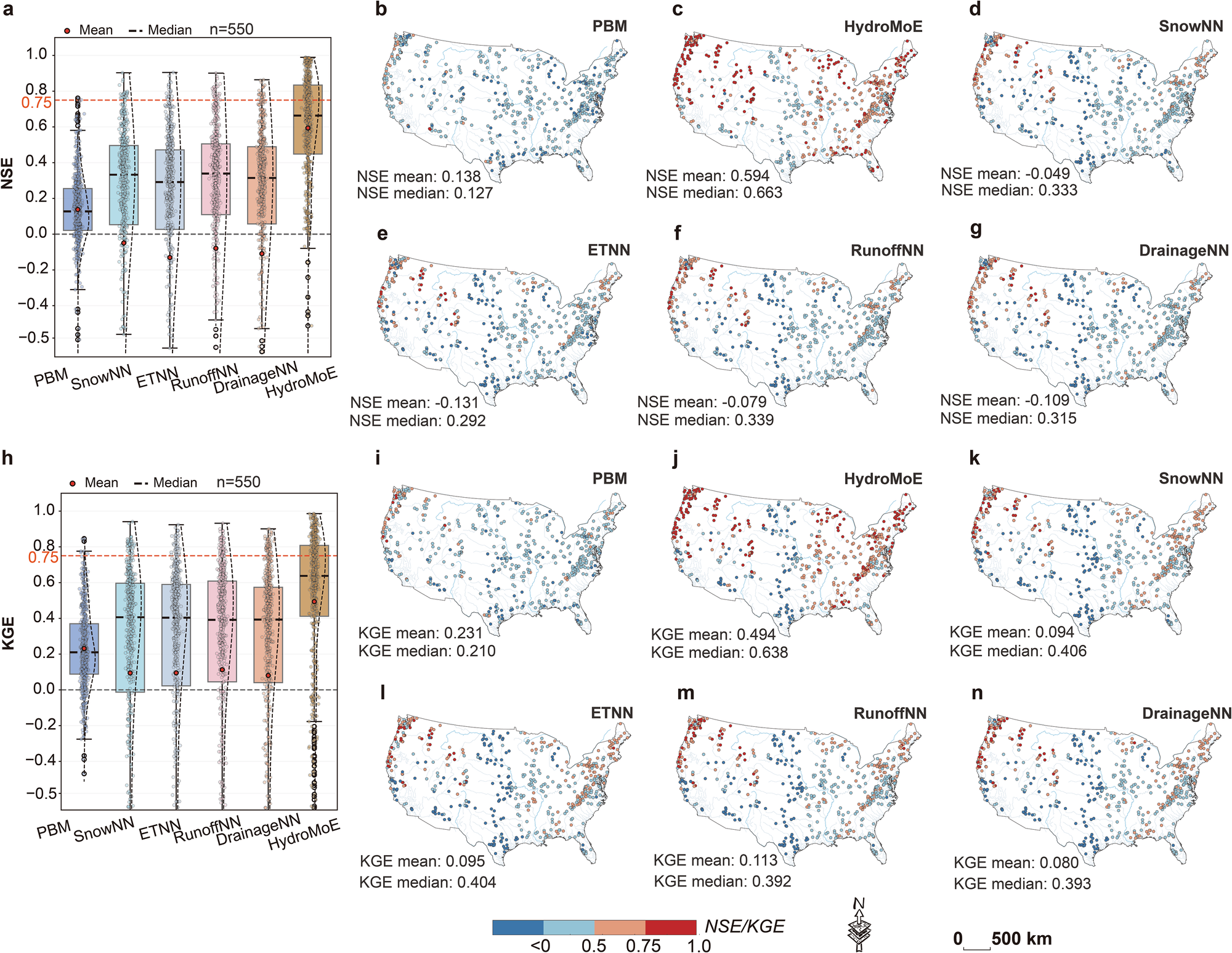
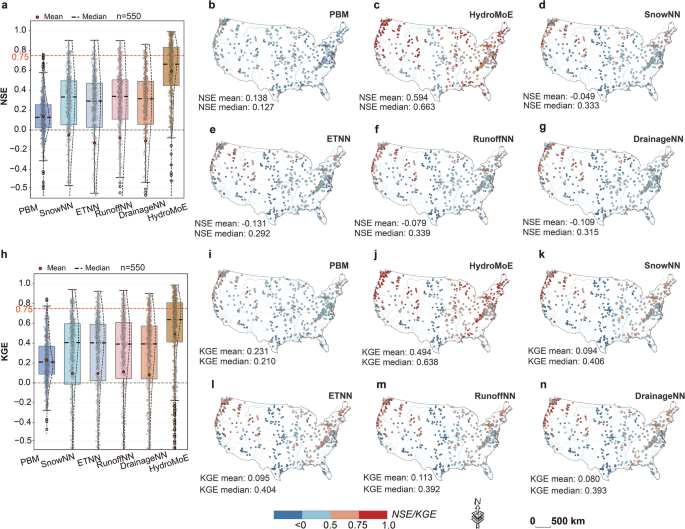

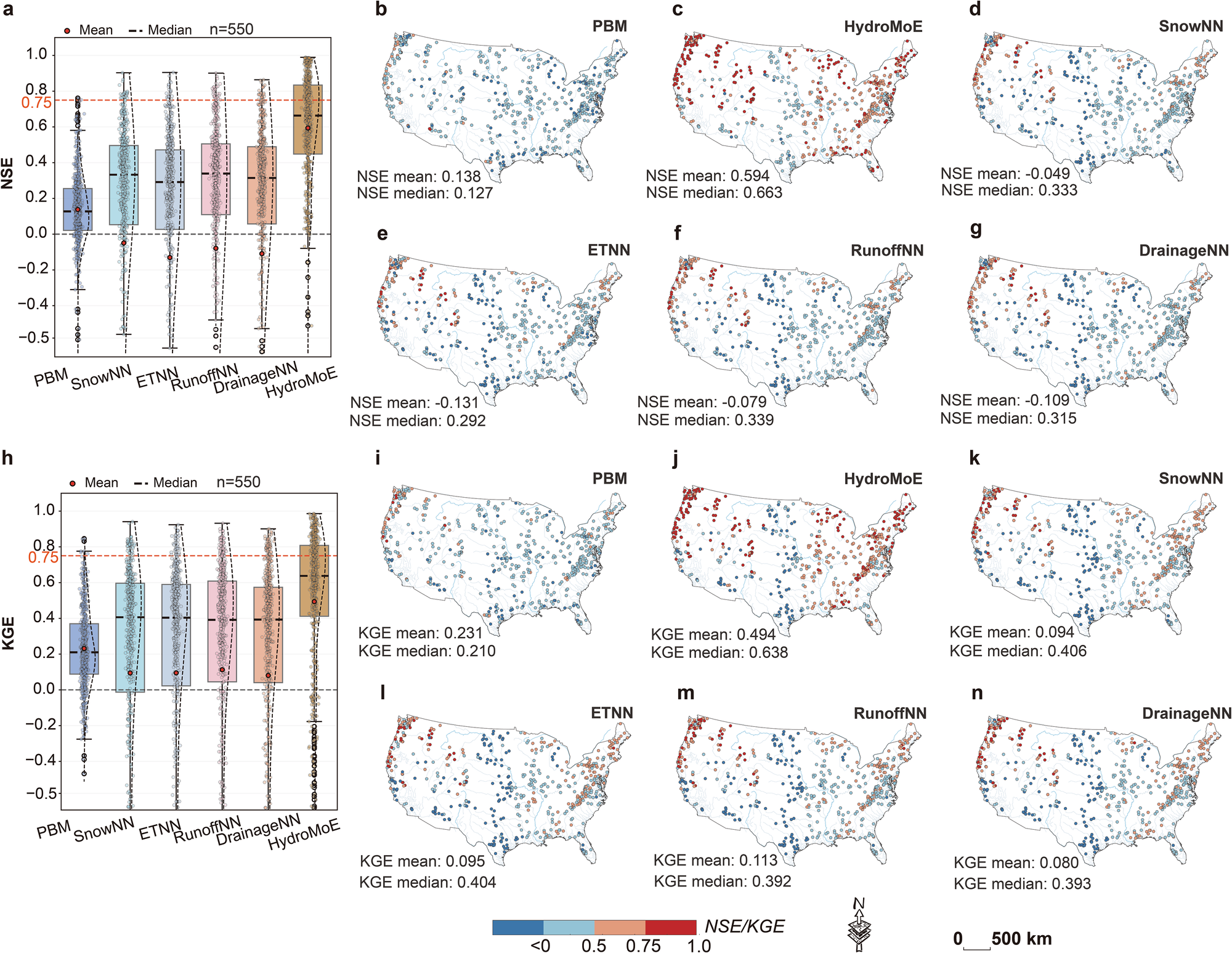
The Evolution of a Dilemma and a Flawed Paradigm
Hydrological modeling has historically evolved through distinct stages. First came the era of purely process-based models (PBMs)—built upon beautiful, rigorous physical laws. Yet, as we know, the Earth system is immensely complex. Scientists cannot always perfectly capture macroscopic physical laws under shifting climates. While the mechanisms are transparent, the predictions often fall short (just like we have "weather forecasting" rather than "weather certainty").
Then came the era of Deep Learning. AI models can simulate streamflow with astonishing precision, but they operate as black boxes, lacking mechanistic interpretability.
Since 2022, the community has recognized the need to couple physics with machine learning. However, we found ourselves deeply skeptical of a common early hybrid practice: sequentially feeding physical model outputs as inputs into deep learning models. We must ask a blunt question: if a physical model fundamentally miscalculates the runoff (yielding a low NSE) despite its transparent mechanisms, what good is its output? Feeding inherently biased or erroneous predictions into a black-box neural network risks compounding errors rather than uncovering true mechanisms—a classic case of "garbage in, garbage out."
This realization was a core motivation for our work. We didn't want a pipeline; we wanted a parallel competition. We asked: If we couple physics and AI, when should the model trust the physical equations, and when should it trust the neural network?
Think of it like consulting two top-tier medical experts. One relies on strict anatomical rules (the physical model), while the other relies on pattern recognition from millions of past cases (the AI). How does the system automatically know whose advice to prioritize under different conditions?
The Birth of HydroMoE and the Accuracy Struggle
This very question sparked our inspiration in early July of last year. We realized hydrology needed an intelligent "routing" mechanism. Thus, HydroMoE (Hydrological Mixture-of-Experts) was born.
Turning this conceptual spark into reality was an arduous journey. Building the underlying code took us over three months of intense programming and debugging. Furthermore, to be completely transparent, a persistent challenge we faced during development was pushing the overall predictive accuracy (NSE and KGE) higher while strictly maintaining physical constraints. We are still actively working on this in our ongoing research, because high-fidelity prediction is a prerequisite for discovering reliable hydrological laws.
In today's literature, it is not uncommon to see reports of NSEs soaring above 0.75 or 0.80 across the board. While inspiring, such extraordinary metrics can sometimes prompt us to step back and ask: are we achieving true predictive generalization, or simply overfitting to specific local conditions? Pushing accuracy is crucial, but it must be rooted in genuine hydrological reality rather than mathematical gymnastics.
A Call for Large-Sample Hydrology and a Unified Vision
This brings us to a vital call to action: we strongly urge our peers to test hybrid models on large-sample, diverse catchments. Discovering robust, universal hydrological rules requires evaluating frameworks across hundreds of basins, rather than tuning them to perfection on a select few.
Currently, countless researchers dedicate immense effort to building fragmented models for individual regions. Driven by the philosophy behind HydroMoE, we propose four core propositions for the future of hydrological modeling:
-
Learnable Structure : Architectures must dynamically adapt to prevailing environmental conditions.
-
Regional Transferability: Frameworks must move beyond local calibration toward robust, cross-climate generalization.
-
Process Interpretability: High accuracy must yield physically plausible insights.
-
Cognitive Extensibility : The framework must be open.
Our ultimate goal is to integrate all competing physical hypotheses into this architecture. Instead of developing a thousand different models for a thousand basins, we envision a single, unified "autonomous hydrological engine" where diverse physical theories compete, collaborate, and evolve alongside deep learning.
We are incredibly excited to share our work in Communications Earth & Environment. We hope HydroMoE serves as a stepping stone, and we warmly invite our peers to join us in pushing the boundaries of the third stage of hydrological modeling!
Authors: Wenrui Yuan, Shi Hu, Chesheng Zhan, Zhonghui Lin
Journal: Communications Earth & Environment
Volume: 7
Year: 2026
Published Online: 9 July 2026

Follow the Topic
-
Communications Earth & Environment
An open access journal from Nature Portfolio that publishes high-quality research, reviews and commentary in the Earth, environmental and planetary sciences.

Related Collections
With Collections, you can get published faster and increase your visibility.
High-resolution modeling for Earth system
Publishing Model: Open Access
Deadline: Feb 07, 2027
Soil microbiomes and carbon sequestration under global change
Publishing Model: Hybrid
Deadline: Mar 18, 2027


