Trapped in Time: The Cognitive Profile Behind Adolescent Suicide Attempts
Published in Behavioural Sciences & Psychology

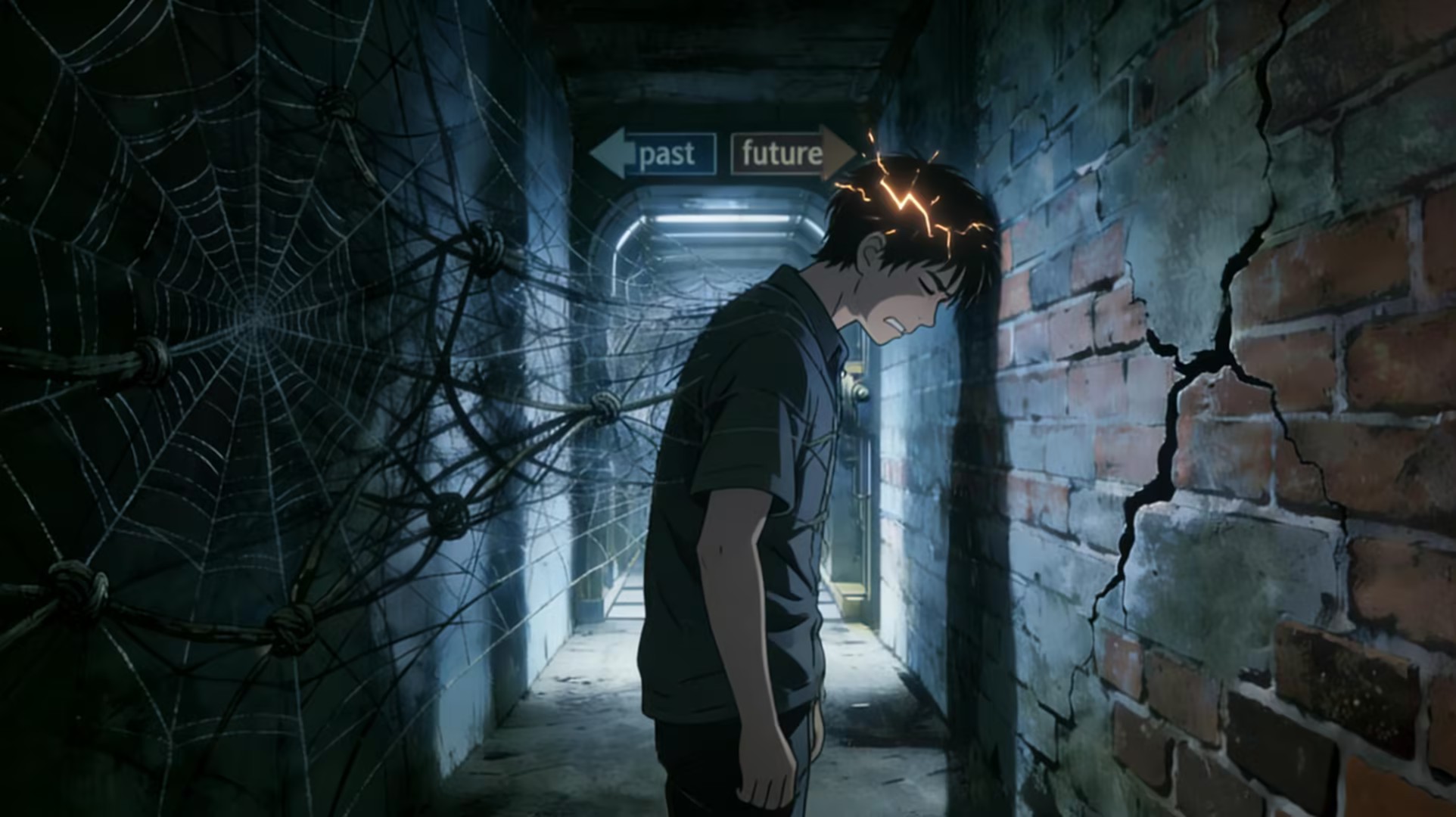





In our published paper, we captured this cognitive breakdown through two specific clinical lenses: past-oriented rumination and future-oriented hopelessness. We discovered that when these two forces joint together, they create a dangerous cognitive constriction.
The Spark: A Failure in Temporal Processing
Adolescent self-harm is a widely documented public health crisis. Yet, a critical puzzle remains: what specific cognitive profile distinguishes teenagers seeking immediate relief through self-injury from those driven toward more lethal behaviors like suicide attempts?
Adolescence is a critical period for forming a self-identity, a task that heavily relies on integrating past, present, and future experiences to build a coherent story of who we are. A healthy "mental time machine" allows us to draw strength from the past and project hope into the future.
However, in our research, we observed that many suffering youths exhibit extreme anomalies in how they process time. They become trapped in a dual cognitive shackle. On one side, they are relentlessly haunted by past-oriented rumination—repetitively focusing on negative past events and the causes of their emotional pain. On the other side, they are paralyzed by future-oriented hopelessness—holding entirely negative expectations and abandoning their goals for the future.
The Challenge: Disentangling the Web of Emotional Pain
Proving this was not easy. The existing literature presented a major gap: while past-oriented rumination and future-oriented hopelessness were known to be bad for mental health individually, they had never been jointly examined to see how they uniquely impact different forms of self-harm.
Furthermore, non-suicidal self-injury (NSSI) and actual suicide attempts (SA) are often lumped together, yet they serve fundamentally different functions. NSSI is typically used as a rapid pressure-release valve to escape immediate emotional pain. SA, conversely, involves a clear intent to die. We needed to know: Is a suicide attempt simply the result of severe general depression, or is it specifically driven by the total collapse of the mental time machine?
The Discovery: Unlocking the Dual Shackle
To find out, our team surveyed the high school students, asking them detailed questions about their mental health, their history of self-harm, how they view their past, and how they anticipate their future. By adopting a dimensional approach to mental health, we mapped where each teenager stood on the dimensions of rumination and hopelessness.
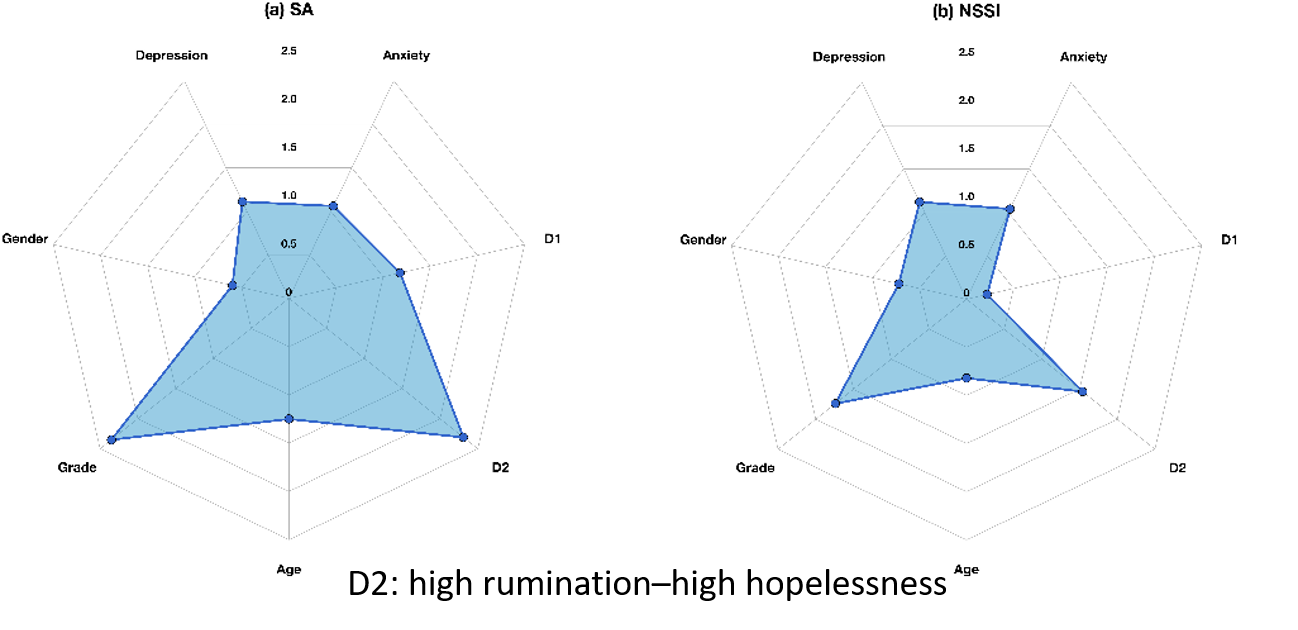
Using a pattern-finding algorithm called latent profile analysis, we looked for hidden clusters in the data. The results were remarkably clear. We identified three distinct cognitive profiles among the youth: a low-risk group, a moderate-risk group, and a highly vulnerable group (comprising about 8.09% of the teens) who exhibited "high rumination and high hopelessness".
Then came our Aha moment. We found that this high rumination–high hopelessness profile acted as a highly dangerous double cognitive shackle. Even after we statistically removed the effects of their general depression and anxiety, this specific time-trapped profile is uniquely and strongly associated with a history of suicide attempts.
Interestingly, this dual shackle had no specific relationship with non-suicidal self-injury (NSSI). NSSI was primarily just linked to how severe a teen's general depressive symptoms were.
What does this mean? It means that when a teenager is simultaneously anchored to a painful past and staring into a hopeless future, they experience a terrifying cognitive constriction known as "tunnel vision". Because their mental time travel abilities are so severely damaged, they literally cannot envision a scenario where things improve. To them, death becomes the only logical solution to escape their crisis.
Redefining Prevention: Repairing the Time Machine
These findings carry a profound and urgent message for clinical practice and public health. For years, the standard approach to preventing self-harm has been somewhat like playing whack-a-mole with symptoms—treating general depression, trying to soothe anxiety, or addressing just rumination or just hopelessness in isolation. Our research shows that for the most at-risk youths, this is not enough.
We must fundamentally reshape our prevention paradigms. We need phenotype-specific interventions that target this dual cognitive constriction simultaneously. Therapies should focus specifically on "time machine repair"—helping adolescents reconstruct a healthy capacity for Mental Time Travel. By teaching them how to safely process past memories and actively construct a hopeful, positive future self, we can break the double shackle before tunnel vision sets in.
Looking Forward and a Personal Reflection
Like all scientific endeavors, our story does not end here. While our data provides a crucial new lens, it is based on cross-sectional self-reports, meaning we captured a snapshot in time.
Through the Springer Nature Research Communities, we want to issue a call for global collaboration. In the future, we need longitudinal studies to track how these cognitive time-maps evolve as children grow. We are also eager to collaborate with cognitive neuroscientists and computational psychiatrists to understand the brain mechanisms underlying this impairment in mental time travel.
Behind the statistics and the complex algorithms, there is a heavy reality.
As we uncovered the profound anguish hidden behind the data, we were heartbroken by the sheer scale of their silent suffering—a heavy reality that transformed our scientific pursuit into an urgent mission to hand them a lifeline.
We didn't do this research just to publish a paper. We did it to hand parents, teachers, and clinicians a new key. For those adolescents desperately struggling in the narrow, dark space between an unforgiving past and a non-existent future, we hope this research helps unlock their cognitive shackles and gives them their time back.
Follow the Topic
-
Child and Adolescent Psychiatry and Mental Health
This is an open access, online journal that provides an international platform for rapid and comprehensive scientific communication on child and adolescent mental health across different cultural backgrounds.

Related Collections
With Collections, you can get published faster and increase your visibility.
Digitalization: Risks and Opportunities for Youth Mental Health
Digital technologies have become an integral part of the daily lives of children and adolescents. Online environments shape how young people communicate, learn, form identities, and seek support. While digitalization offers new opportunities for prevention, education, and mental health support, it also introduces emerging risks that may affect the well-being and development of young people. This special issue aims to bring together interdisciplinary research that critically examines both the risks and opportunities of digitalization for youth mental health. We particularly welcome contributions that deepen the understanding of how digital environments influence psychological well-being, social development, and access to care among children and adolescents.The goal of the special issue is to provide a balanced and evidence-based perspective, highlighting potential harms in digital spaces as well as innovative digital solutions that support prevention, intervention, and professional training.
We invite submissions of original research articles and systematic reviews addressing topics related to digitalization and youth mental health.
Topics of interest include, but are not limited to:
Risks in digital environments
- Online child sexual abuse and exploitation
- Cyberbullying and online harassment
- Digital neglect and parental mediation in the digital age
- Problematic or addictive internet and social media use
- Exposure to harmful or traumatic online content
- Online grooming and digital forms of victimization
- The relationship between digital media use and mental health outcomes (e.g., anxiety, depression, loneliness)
Opportunities and protective approaches
- Online mental health interventions for children and adolescents
- Digital prevention programs targeting youth mental health
- E-learning and digital training programs for professionals working with children and adolescents
- Tele-mental health and online counseling services
- Digital tools for early detection, screening, or support
- Online peer-support and community-based interventions
- Ethical, developmental, and policy perspectives on youth digital environments
Submission types
- Original research articles
- Systematic reviews and meta-analyses
We particularly encourage interdisciplinary contributions from psychology, psychiatry, public health, social work, education, criminology, digital media studies, and related fields. By bringing together research on both risks and opportunities, this special issue seeks to advance understanding of how digitalization can be shaped to protect and promote the mental health of children and adolescents.
All submissions in this Collection undergo the journal’s standard peer review process. Similarly, all manuscripts authored by a Guest Editor(s) will be handled by the Editor-in-Chief. As an open access publication, this journal levies an article processing fee (details here). We recognize that many key stakeholders may not have access to such resources and are committed to supporting participation in this issue wherever resources are a barrier. For more information about what support may be available, please visit OA funding and support, or email OAfundingpolicy@springernature.com or the Editor-in-Chief.
Publishing Model: Open Access
Deadline: Jan 22, 2027
Child and adolescent forensic psychiatry and mental health
The European Association for Forensic Child and Adolescent Psychiatry, Psychology and other involved Professions (EFCAP) collaborates with Child and Adolescent Psychiatry and Mental Health (CAPMH) to foster the publication of research focused on forensic psychiatric issues, such as etiology, phenomenology, course and treatment of impaired mental health and psychosocial functioning of juvenile offenders. As the situation of children and adolescents in contact with the justice system differs between countries in respect to for example criminal liability, placement or availability of prevention and intervention strategies, we should learn from different international perspectives. We invite forensic clinicians and researchers to share their knowledge about the origins of socially deviant behavior and the approaches regarding prevention and treatment. In addition, we would also like to include perspectives on early traumatic experiences due to victimization and maltreatment in both victims and perpetrators. Furthermore, research focusing on risk and protective factors is highly welcomed. Finally, we would like to stimulate publications with societal impact and influence on policy, an essential factor to improve forensic youth care.
Publishing Model: Open Access
Deadline: Ongoing