Varroa and the honeybee: Researchers help fight a modern parasite battle
Published in Social Sciences and Microbiology

The world has seen a significant decline in honeybee populations in the last several decades. The greatest threat to honeybee populations is the parasite, Varroa destructor. Varroa destructor is a tiny, crab-shaped mite about 1 mm in size that generally poses no threat to humans or animals. But for Western honeybees (Apis mellifera), the most common honeybee species in the world, it lives up to its villainous name.
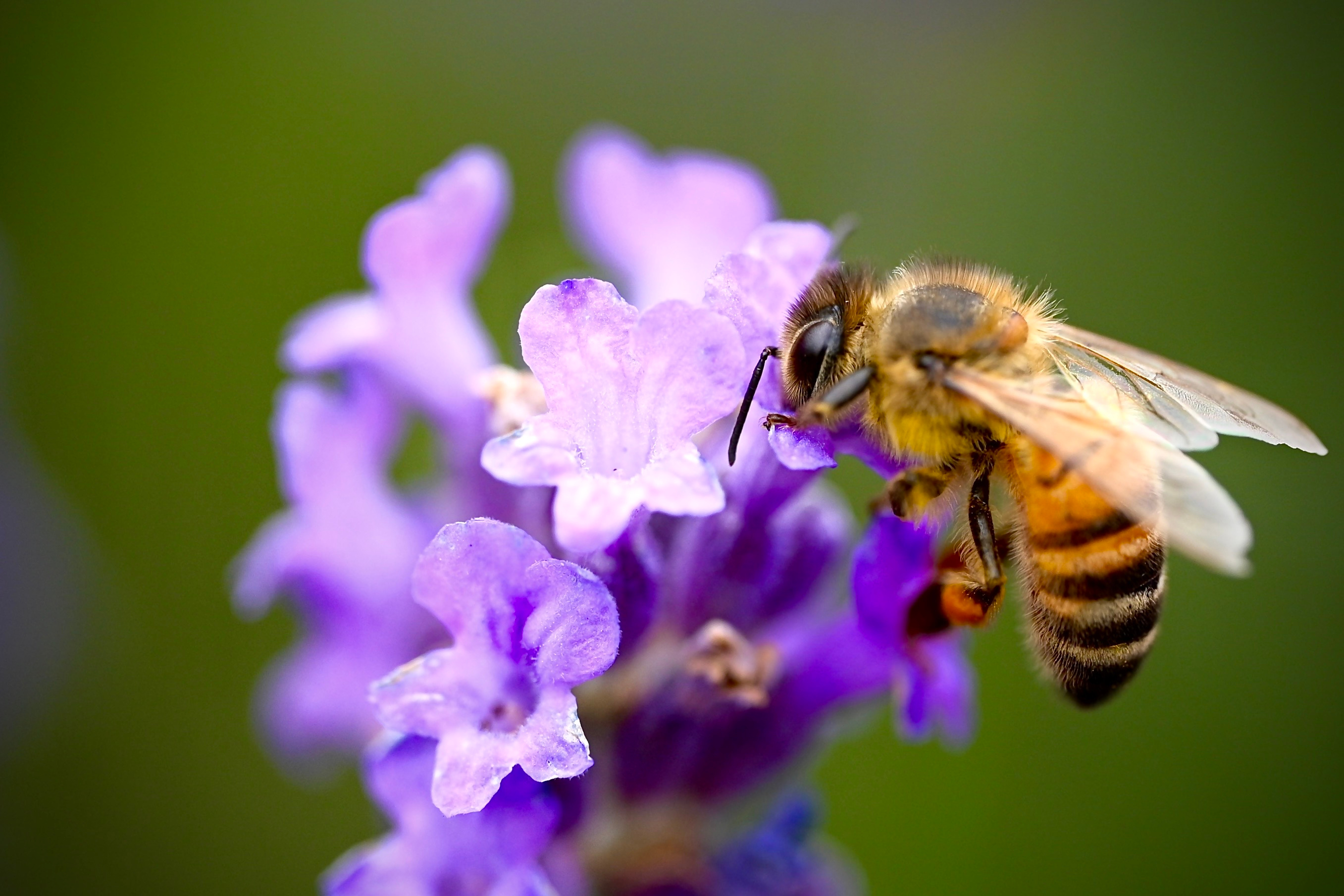
Varroa nests with honeybee larva in its brood cell, where it feeds on growing honeybee fat bodies, and infects the bee larvae with deadly viruses. Varroa has been determined responsible for a recent mass honeybee die-off event, where over 60% of US beekeepers’ colonies, in 2024-2025. This was the second mass die-off event since the turn of the millennium, with the first one in 2006-2007, which had multiple causes.
For these reasons, Varroa destructor has become the bane of beekeepers since it was first introduced to Western honeybee populations in the mid 20th century. The principal strategy to fight Varroa infestations is through chemical pesticides that target arthropods, also known as acaricides, or miticides. Principal among these is amitraz, which like other acaricides, is a potent neurotoxin that causes paralysis and death in Varroa.
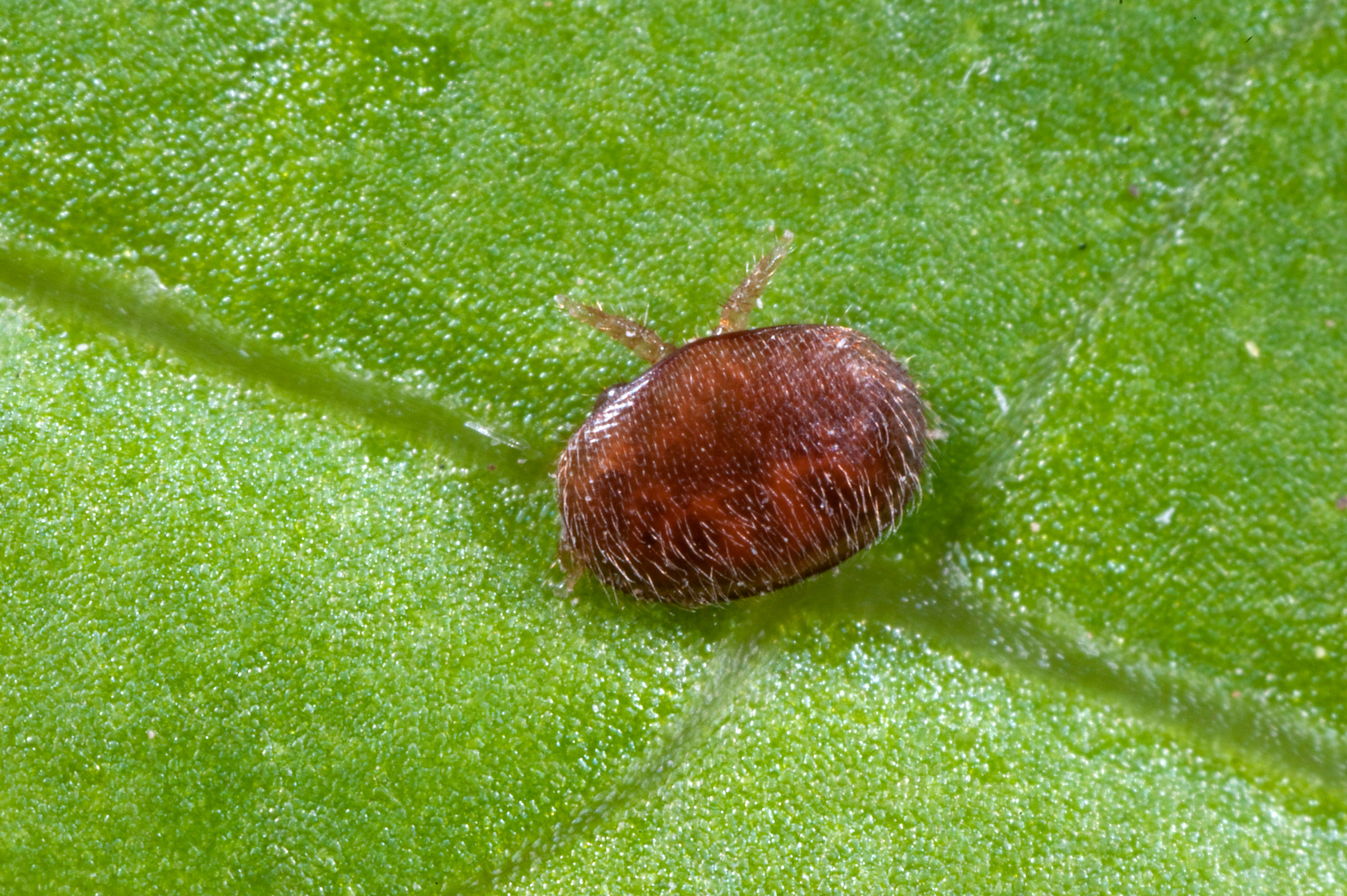
Varroa destructor. Robert Pickett via Getty Images.
However, these pesticides have significant limitations. These chemicals are also highly toxic to animals such as cats and horses and can also poison humans. Varroa, ever a dynamic foe, has also developed resistance to amitraz and other acaricides. These challenges, in light of ongoing bee colony losses, have sounded the alarm for researchers to help beekeepers figure out alternative strategies to fight the Varroa threat, and several are answering the call.
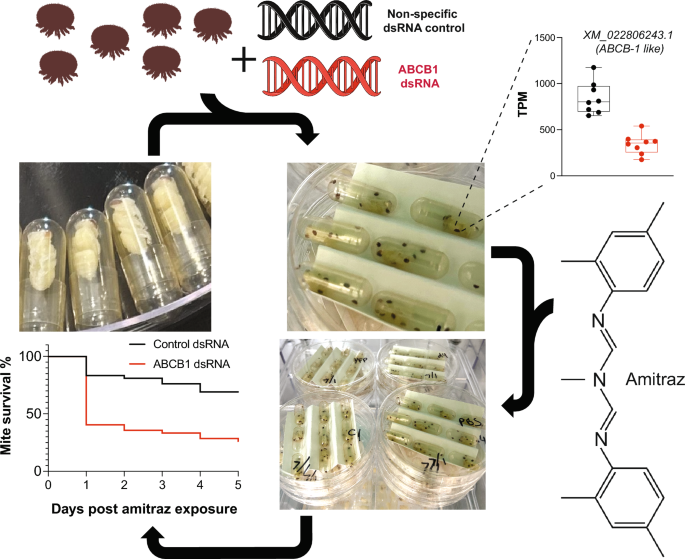
Vincent Ricigliano and his team at the USDA Agricultural Research Service focused on one of Varroa’s defense mechanisms against pesticides – specifically, a gene that codes for a protein transporter that helps Varroa and other arthropods clear toxic substances their system. Using RNA interference (RNAi), or a “gene silencing” technique, they were able to shut down one of Varroa’s detox mechanism so that amitraz could stay in their system. This technique helped increase the efficacy of amitraz, while importantly, the honeybees exposed to the dsRNA substance were not affected. They published their results in Parasites and Vectors earlier this year. You can also listen to Dr. Ricigliano talk about his work on the Beekeeping Today Podcast.
Another group of researchers tested a potential, entirely new alternative. Volker Herzig and his team looked to Varroa’s natural predators, venomous spiders. In their article published in npj Drug Discovery, they describe how they exposed Varroa mites to venoms from the Tasmanian cave spider and the Giant Japanese funnel web-spider and found encouraging effectiveness in killing the Varroa without affecting the bees.
Yet another research group turned to the kitchen cabinet.* They exposed Varroa to a bay leaf essential oil through a nanoemulsion, a novel drug delivery technique that uses nano-meter size carriers to more effectively bind drugs – or in this case, toxins – to their cellular targets. The method showed promising results, which were published in BMC Veterinary Research, and so offered a starting framework for a more organic possible alternative to amitraz.
A long road lies ahead in the battle against Varroa destructor. In the few short decades of this parasitic relationship, industrial beekeeping has created a feast for Varroa mites, and Varroa has mastered its infestation strategies to match the most vulnerable points in the honeybee’s life cycle. While other bee species have developed mechanisms to fight off Varroa after centuries or millennia of co-evolution, the Western honeybee has no defenses in its mere 60 years of exposure. Scientists are playing a fast catch-up game in the battle against a highly adapted parasite.
What are some things you can do to support wild honeybee populations in your area? The best way to help is to support honeybee habitats:
- Plant flowers and other pollinator-friendly plants outdoors
- Let “weeds” such as dandelion, clover, and goldenrod grow wild in the spring and fall
- Avoid the use of pesticides in your garden
- Support beekeepers by purchasing locally produced honey and beeswax products
* Thanks to @Blythe Terry for sharing this article with the BMC Collections Management and Acquisition Team Journal Club!

Follow the Topic
-
Parasites & Vectors
This journal publishes articles on the biology of parasites, parasitic diseases, intermediate hosts, vectors and vector-borne pathogens.
-
BugBitten
A blog for the parasitology and vector biology community.

Related Collections
With Collections, you can get published faster and increase your visibility.
Translational leishmaniasis
This collection focuses on leishmaniasis as a central model while also encompassing related parasites that share comparable biological traits, pathogenic mechanisms, and clinical relevance. The aim is to create a translational bridge between basic research and practical applications, highlighting insights that can be extended across the spectrum of kinetoplastids and other closely linked parasites.
Topics of interest include:
• Analytical and omics-based advances for parasite detection, monitoring, and characterization.
• Comparative biology of Leishmania and related parasites, with emphasis on shared mechanisms of infection and survival.
• Host-pathogen interactions and immune responses.
• Epidemiology and transmission dynamics, including drawing parallels between leishmaniasis and other parasitic infections.
• Translational strategies in drug discovery, vaccine development, and therapeutic interventions applicable to leishmaniasis and related parasitic diseases.
By linking leishmaniasis with other parasitic diseases of similar characteristics, this collection seeks to foster integrative approaches, stimulate cross-disciplinary dialogue, and accelerate the translation of knowledge into innovative diagnostic, preventive, and therapeutic solutions.
Publishing Model: Open Access
Deadline: Nov 27, 2026
Credelio Quattro
This collection was created to facilitate access to manuscripts published in Parasites & Vectors focusing on Credelio Quattro™ (lotilaner, moxidectin, praziquantel, and pyrantel chewable tablets).
Articles published in the collection have already gone through the systematic peer review process of the journal.
Publishing Model: Open Access
Deadline: Ongoing