The value of the unseen: how tiny animals stabilise estuarine ecosystems
Published in Earth & Environment and Ecology & Evolution


The challenge of monitoring
Scientists are recognised and awarded grant funding for groundbreaking hypothesis-driven research. Routine data collection builds knowledge more gradually and, as a result, can be viewed as less exciting or impactful.
At the same time, environmental resource managers are finding it increasingly difficult to secure funding for long-term monitoring programmes. Public finances are under pressure, and taxpayers ultimately bear the costs. Demonstrating the value of routine environmental monitoring to both the public and decision-makers is therefore essential if these programmes are to continue.
The research presented here (https://doi.org/10.1038/s42003-026-11028-8) would not have been possible without Auckland Council’s long-term commitment to environmental monitoring. Auckland Council is a unitary authority responsible for New Zealand’s most populated city and region. Although legislation in New Zealand requires councils to monitor the state of the environment, substantial discretion exists regarding how this monitoring is undertaken.
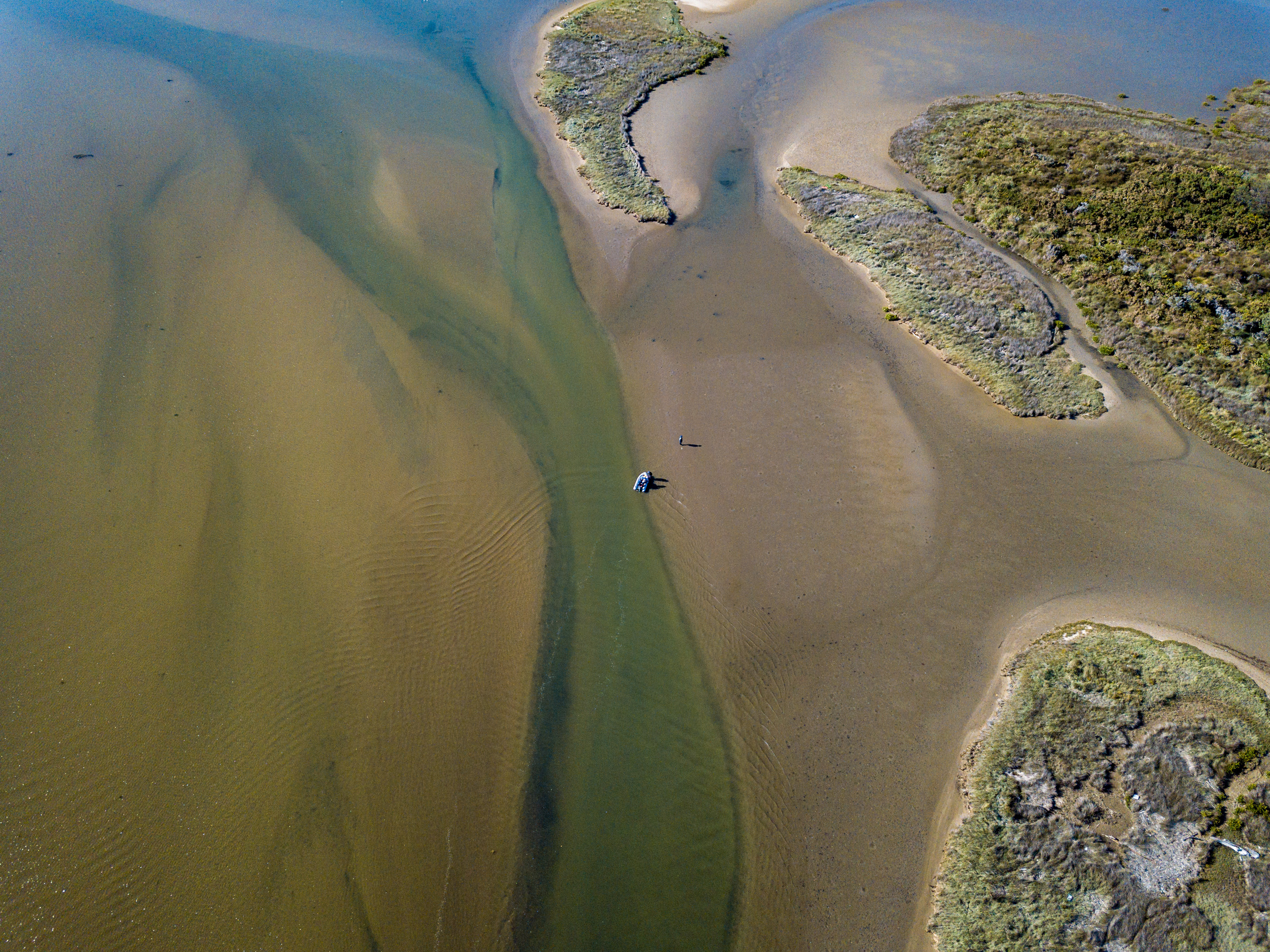
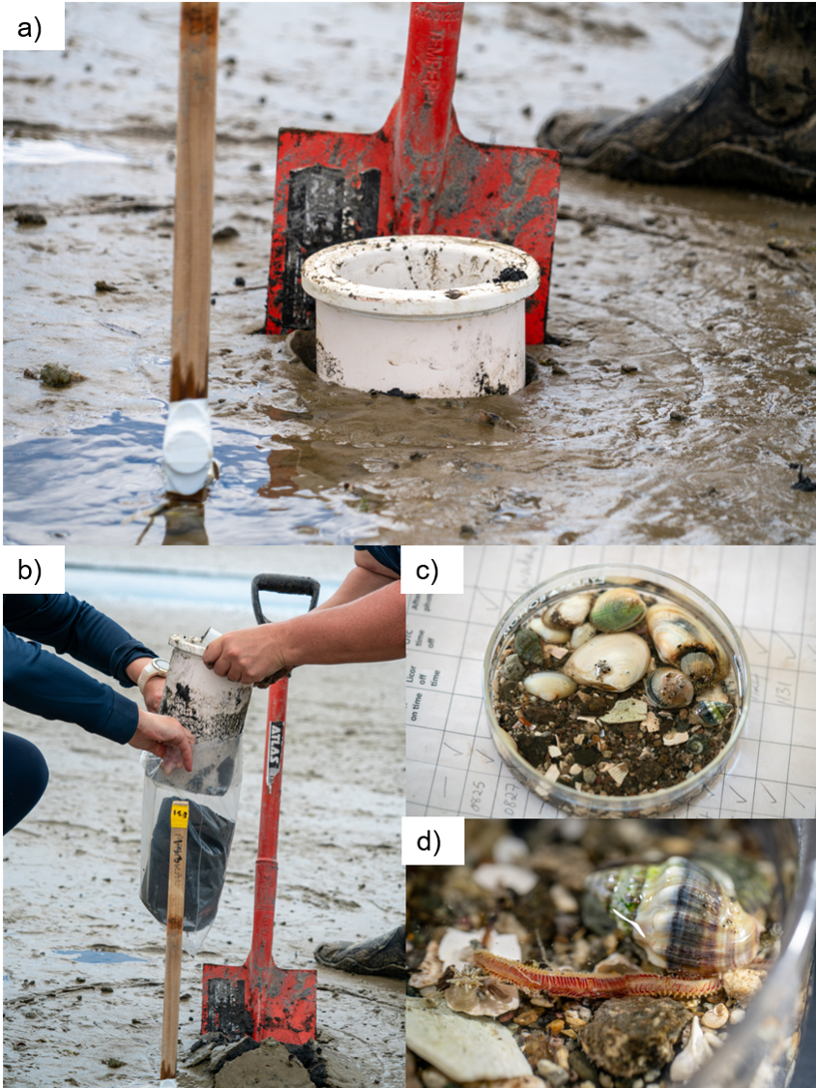
Auckland Council began monitoring the health of its estuaries in 1987. This included the collection of sediment cores from intertidal estuarine flats to measure sediment characteristics and quantify resident invertebrate animals known as macrobenthos (Figure 1). The same sized cores of sediment (13 cm internal diameter by 15 cm deep) have been collected to assess macrobenthos ever since (Figure 2).
Auckland Council’s monitoring programme has expanded over time to include 119 sites across thirteen estuaries. Earth Sciences New Zealand (formerly the National Institute of Water & Atmospheric Research, NIWA) has been continuously involved in the collection, processing, identification, and quality checking of the data, ensuring its quality and robustness. Auckland Council’s macrobenthic datasets are now some of the world’s longest and best. The identification of macroinvertebrates requires specialist expertise but provides extremely high information content per sample (often 100-200 individuals from 20-30 species of varying environmental sensitivities and functional roles), enabling powerful analyses from which to make inferences.
Data variability and idiosyncrasy
The expectation when collecting long-term data is that, eventually, signals will become statistically detectable above background variability. Yet, New Zealand’s central government agencies and regional councils have been frustrated with the lack of generality in time-series data analysis findings. For example, the magnitude and direction of effects of known stressors on macrobenthic species and communities has been shown to differ among estuaries and even among sites within estuaries. The idiosyncratic nature of responses muddles the message as to the benefits of limiting stress loads to estuaries. And it can lead to questions about the cost effectiveness of the long-term monitoring programmes themselves. Alternatively, it may signal the deeper reality that ecosystems are inherently complex. Understanding them likely requires both long-term data and new analytical approaches.
Collaboration across countries and disciplines
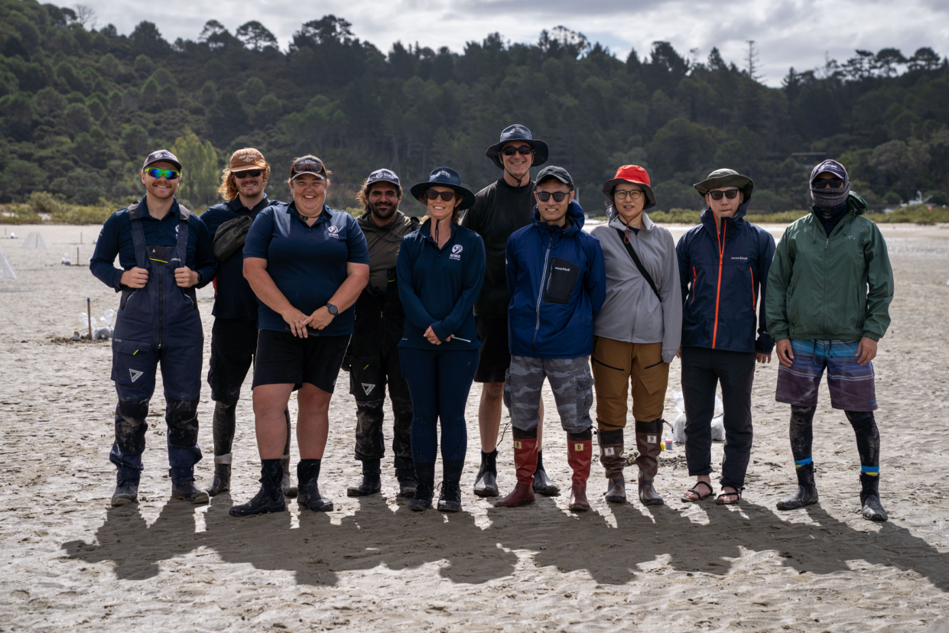
To address this challenge, researchers of terrestrial grassland and aquatic systems based at Yokohama National University in Japan (YNU) joined forces with marine ecology researchers at Earth Sciences New Zealand (ESNZ) (Figure 3). The project plan was to apply innovative techniques and theoretical frameworks being used by the YNU researchers in grasslands to the estuarine macrobenthic time-series data held by ESNZ. The collaboration involved a series of reciprocal visits during a two-year project timeframe, with multiple early career researchers and students benefitting from the exchanges. The relationships established with funding from a Royal Society of New Zealand Catalyst Seeding grant (JSP-NIW2301-JR) and the Japan Society and Technology Agency (JPJSBP120241001) have endured well beyond the life of the project and are ongoing with support from YNU and ESNZ.
The overarching aim of the collaboration was to better understand how biodiversity contributes to the stability and resilience of valuable natural ecosystems facing multiple stressors, including altered climate. Predicting relationships between biodiversity and stability remains challenging due to complex interactions between biological and environmental factors interplaying at multiple spatial and temporal scales. We sought to achieve more generality and clarity, while also secondarily demonstrating the value of long-term data collection.
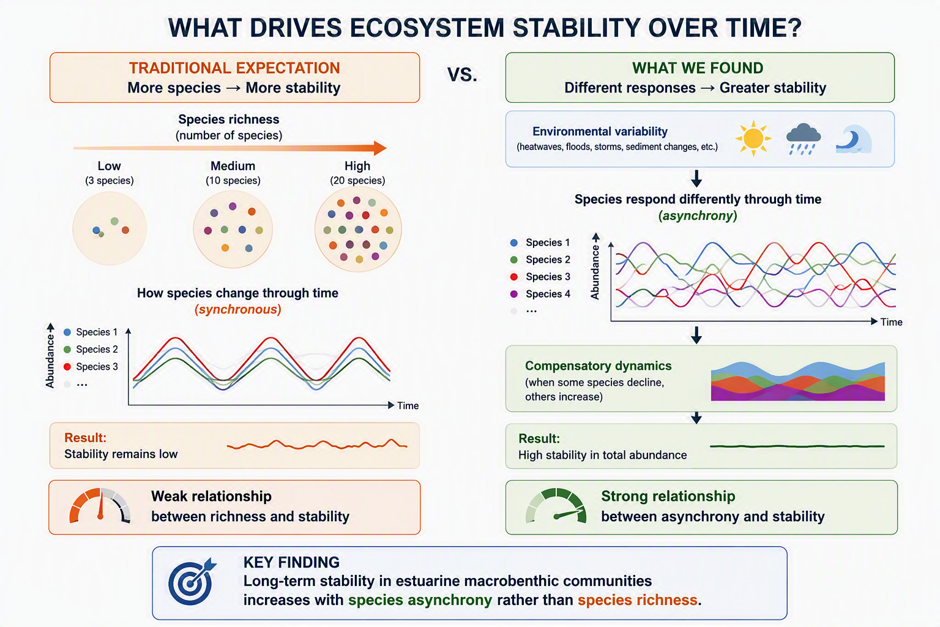
Our new research tested how macrobenthic community stability is affected by environmental variables and biodiversity metrics (see the full details here: https://doi.org/10.1038/s42003-026-11028-8). We focused on a property of ecological communities known as asynchrony, where up and down fluctuations in some species in a community are temporally out of sync with the fluctuations of other species. This is similar to ocean waves, where asynchrony results in dampening and synchrony results in amplification. Asynchrony in individual species abundances results in stability of overall community abundance. Theoretically, the more species that are present in a community, the greater the chances for asynchrony (and thus stability).
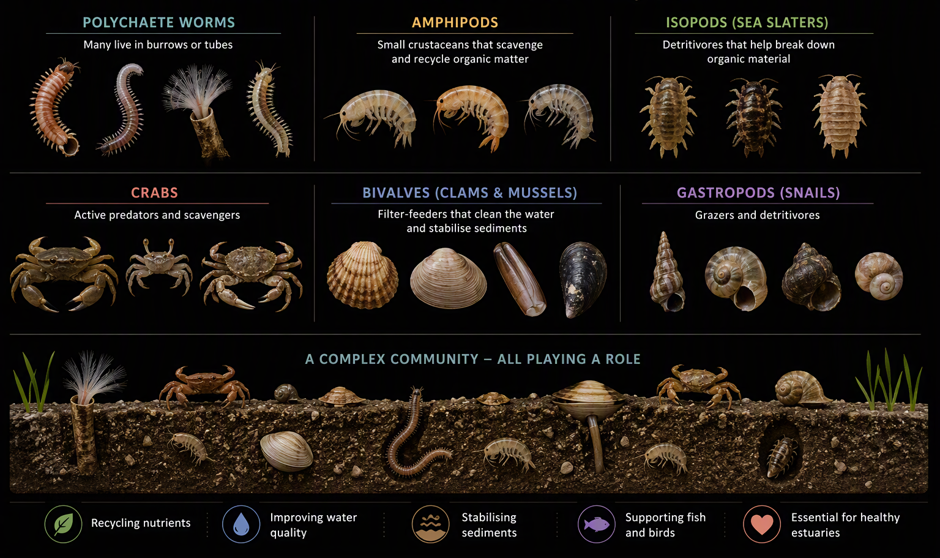
We demonstrated that asynchrony, rather than species richness per se, was the strongest and most consistent driver of community stability across estuaries over time and across spatial scales. Although the direction of the asynchrony–stability relationship was consistent, the magnitude of effects and the relative contributions of other environmental predictors varied among estuaries and across scales. Our results support the interpretation that compensatory dynamics (subsets of species increasing at the expense of others in response to environmental change), expressed as increased asynchrony, are a key stabilising feature of estuarine macrobenthic communities (Figure 4).
Added value and synergy
The value of this work extends well beyond the findings themselves. Together with a companion study ( https://doi.org/10.1038/s41467-026-70606-w), which showed that species’ biological traits can help predict how communities respond through time to multiple global change drivers, our research demonstrates the power of long-term ecological datasets to answer questions that were unimaginable when monitoring first began. Both studies were only possible because of decades of sustained investment by Auckland Council in estuarine environmental monitoring, creating a unique record of ecological change through time. By combining these invaluable datasets with expertise from scientists across different countries and disciplines, we can apply new analytical approaches, uncover deeper ecological patterns, and test whether local observations reflect broader ecological principles that ultimately provide stronger evidence to guide the management, restoration, and future health of estuarine ecosystems.
Follow the Topic
-
Communications Biology
An open access journal from Nature Portfolio publishing high-quality research, reviews and commentary in all areas of the biological sciences, representing significant advances and bringing new biological insight to a specialized area of research.

Related Collections
With Collections, you can get published faster and increase your visibility.
Healthy Aging
Publishing Model: Open Access
Deadline: Dec 31, 2026
DNA repair and human disease
Publishing Model: Hybrid
Deadline: Oct 31, 2026