What can a lobster fishery teach us about SDG 14?
Published in Ecology & Evolution and Sustainability
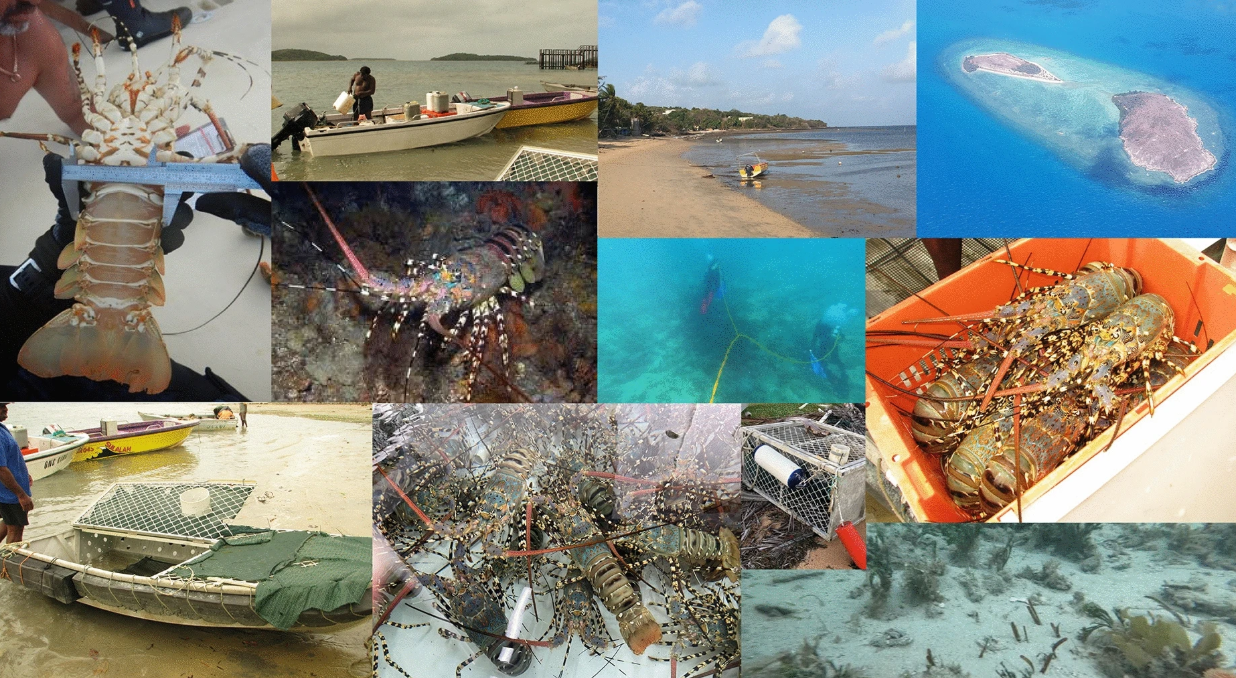


As the deadline for the United Nations Sustainable Development Goals approaches, there is increasing interest in understanding where progress is being made and what practical examples can offer useful lessons. A new, open access article in Reviews in Fish Biology and Fisheries takes this perspective to the ocean, using the Torres Strait tropical rock lobster fishery in northern Australia as a case study to assess progress toward SDG 14, the goal focused on conserving and sustainably using marine resources.
The fishery is unusual in several respects. Tropical rock lobster (Panulirus ornatus) is a high-value species that supports livelihoods in Torres Strait communities, where Indigenous peoples have managed and depended on marine resources for generations. The fishery is also jointly connected to Australia and Papua New Guinea through the species’ migratory life cycle and shared management arrangements.
Drawing on four decades of scientific monitoring, the authors evaluated progress across all ten SDG 14 targets. Their assessment highlights a combination of factors behind positive outcomes, including long-term ecological surveys, science-based stock assessment, precautionary fisheries management and strong participation from Indigenous fishers and communities. According to the study, the fishery currently meets the SDG 14 targets that can be assessed against present-day conditions and shows substantial progress toward the longer-term aspirational goals for 2030.
Ecological footprint
One aspect of the case study that stands out is the fishery’s relatively small ecological footprint. Lobsters are collected by hand rather than through trap-based methods, reducing impacts on habitats and limiting the amount of fishing gear deployed in the environment. The article also describes how monitoring programs have evolved over time, incorporating new technologies and extensive fishery-independent surveys while maintaining continuity in the data needed for management decisions.
The authors are careful not to present the fishery as a finished success story. Some targets remain works in progress, particularly those related to the impacts of ocean acidification, technology transfer and broader international cooperation that can help support sustainable fisheries and market access. The study also notes that external pressures, including marine pollution transported from outside the region and environmental variability affecting lobster recruitment, continue to require attention.
While the findings are specific to Torres Strait, the paper offers a useful example of how sustainability goals can be evaluated using long-term evidence rather than broad assumptions. For researchers working on fisheries, marine conservation, resource management or sustainability policy, it provides a detailed look at how local practices, community engagement and sustained scientific investment can be brought together to track progress toward global environmental objectives.
Author's note: I used Microsoft Copilot to assist in creating this post.

Follow the Topic
-
Reviews in Fish Biology and Fisheries
Reviews in Fish Biology and Fisheries is an international journal that publishes original and review articles on various aspects of fish biology, fisheries, and aquaculture.

What are SDG Topics?
An introduction to Sustainable Development Goals (SDGs) Topics and their role in highlighting sustainable development research.
Continue reading announcementRelated Collections
With Collections, you can get published faster and increase your visibility.
Sustaining Life Below Water: Conserving, managing, and protecting our marine and freshwater resources
In support of the UN Sustainable Development Goal SDG14 we are calling for submissions for this new collection on Sustaining Life Below WaterPlastic waste, overfishing, ocean acidification, increasing eutrophication are some of the major threats endangering our oceans, rivers and lakes. With this collection we aim to create a cross-disciplinary home for research articles, perspectives, and emerging topics addressing the conservation and sustainability of the use of our marine and freshwater resources. By putting scholarship supporting this UN Goal in the spotlight we hope to increase the scientific knowledge and awareness of the targets and indicators set by the UN Goal such as reducing marine pollution, strengthening resilience, restoring coastal ecosystems, minimizing the impacts of ocean acidification, reducing destructive fishing practices, providing access for small-scale fishers to marine resources and markets and more.
We call for submissions on (but not limited to) the following topics:
•Biotelemetry and bio-logging
•Dam removal policy and development
•Economic benefits to Small Island developing States and least developed countries through sustainable management of fisheries, aquaculture and tourism
•Effects of reef degradation on ecosystem goods and services
•Environmental DNA and RNA
•Environmental flows
•Fish migration and passage
•Fisheries-induced evolution
•Floodplain management
•Hydropower mitigation
•Links between reef health and human health
•Methods and case studies and their scientific assessment, to manage, protect, and restore wetlands, to prevent and significantly reduce wetland pollution, in particular from land-based activities, including sedimentation from poor land-use, plastic and nutrient pollution
•Physiology and health of wild fish
•Preventing and reducing (plastic) pollution/waste in particular from land-based activities, including marine debris and nutrient pollution
•Policy development in river and lake management
•Reducing/minimizing ocean acidification
•Regulating harvesting, ending of overfishing and destructive fishing practices, and science-based management plans to restore fish stocks
•Restoration goals in lake management River and lake restoration
•Strengthening resilience and restoration of coastal ecosystem Understanding and improving sustainable use of coral reef resources.
How to submit? Please use the Submit to this journal link from the participating journals. These journals can be viewed in the right menu. During submission you will be asked if you would like your article to be included in a Topical Collection. Select ‘Yes’ and select the name of this collection from the drop down menu: TC: Sustaining Life Below WaterSubmissions to the collection may be original research articles, perspectives or review articles. Please read the submission guidelines for each journal before submitting. Each submission will undergo thorough and rigorous peer review according to each journal’s peer review editorial policy. Accepted articles will be published in their respective journal and will benefit from being cross-linked as well on the collection page.
The following journals are participating in this collection:
•Aquatic Ecology
•Aquaculture International
•Aquatic Sciences
•Coral Reefs
•Environmental Biology of Fishes
•Estuaries and Coasts
•Fish Physiology and Biochemistry
•Fisheries Science
•Hydrobiologia
•Journal of Applied Phycology
•Journal of Coastal Conservation
•Journal of Ocean University China
•Limnology
•Marine Biology
•Marine Biotechnology
•Maritime Studies
•Ocean Science Journal
•Reviews in Fish Biology and Fisheries
•Thalassas: An International Journal of Marine Sciences
•Wetlands Ecology and Management
Publishing Model: Hybrid
Deadline: Ongoing