What Is the Jacket For? Twelve Years of Camping Made Climate Change Personal
Published in Social Sciences, Earth & Environment, and Microbiology

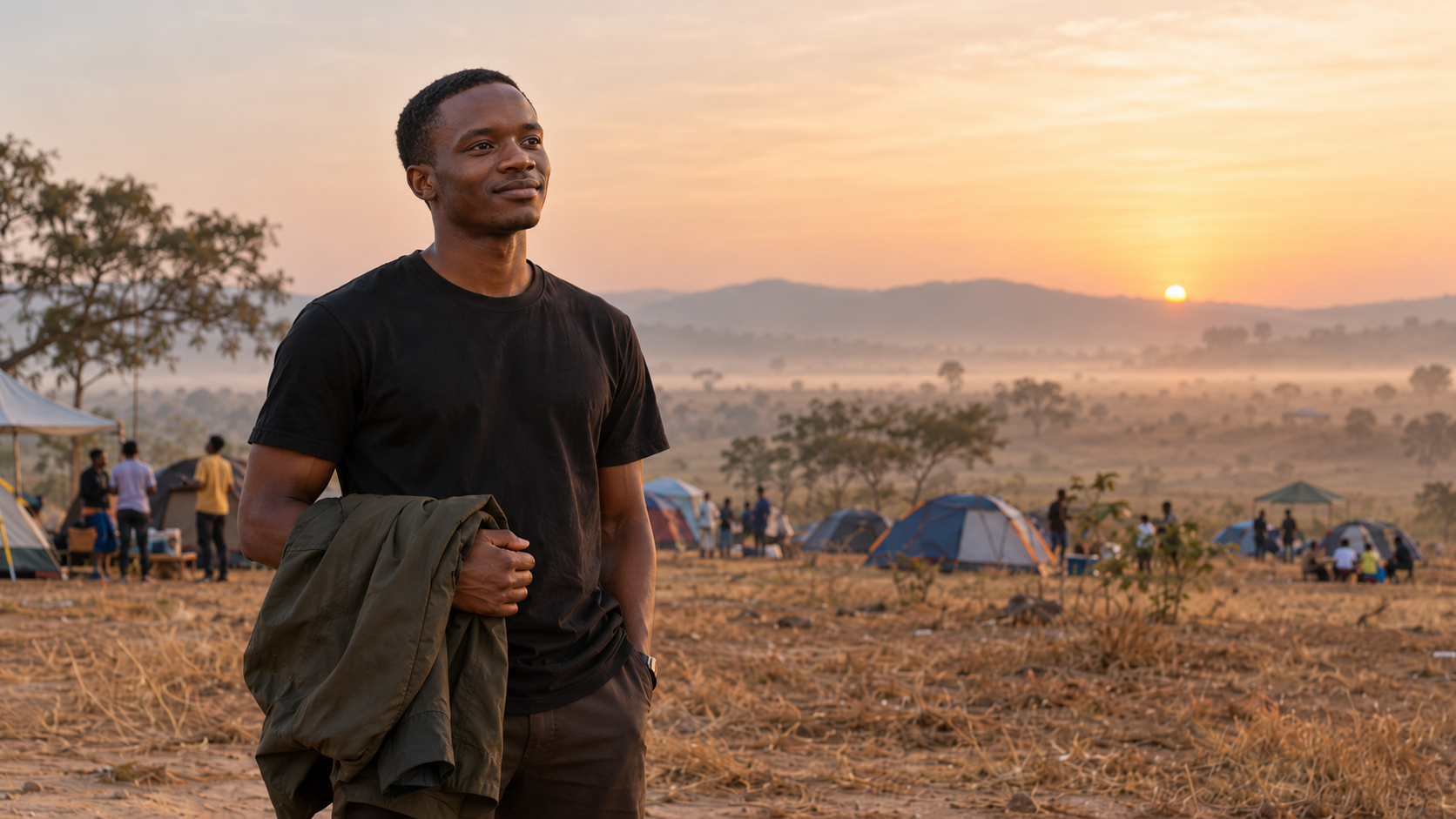

Every December, when I pack for camp, the jacket still goes into my luggage. It has almost become a ritual. For about twelve years, I have participated in youth camps as a member of the Adventist Youth society in Ghana. Over that period, I have grown through the ranks of the club, travelled to different communities, slept in different campgrounds and accumulated enough memories to know what a December morning at camp is supposed to feel like.
Cold Mornings? Never again?
There was a time when the jacket was not optional. Before sunrise, the whistle of a camp officers and time keepers would cut through the mist and announce the beginning of another day. Getting out of bed was already difficult, but bathing was something else entirely. You almost had to negotiate with yourself before stepping into the cold water, knowing that the dry Harmattan wind was waiting outside. Those mornings had a character of their own. The fog, the sharp breeze, the half-awake movement of fellow campers preparing for morning activities and the uncomfortable first few minutes after leaving the warmth of your camp tents and bed were all part of the camping experience.
I still pack the jacket today, but increasingly I find myself asking a simple question: What is the Jacket For?
The December cold I remember does not always feel as dependable as it once did. The early-morning chill seems less biting on some camps, and those misty dawns that formed part of my mental picture of December camping do not always appear with the same consistency. More often now, the jacket travels with me and returns home having hardly served its purpose.
Of course, I know that twelve years of camping experience is not a climate dataset, and one warmer December morning cannot be used to demonstrate climate change. Weather varies from year to year and from one location to another. Still, sometimes scientific curiosity begins when something familiar no longer feels quite as familiar.
That thought returned strongly to me on the 4th day of October 2026 when I joined the Ghana Computational Bioscience Network for our weekly literature discussion. We discussed a 2026 review by Erta Kalanxhi and Ramanan Laxminarayan, published in Nature Reviews Microbiology, titled Climate change and antimicrobial resistance. The paper brings together two enormous public-health challenges that are often discussed independently: the changing climate and the growing problem of antimicrobial resistance.
That immediately changed the way I thought about my increasingly unused jacket and heavy cloths. Climate change is often discussed through images that feel distant from everyday life: melting glaciers, rising seas, droughts, floods, heat waves and global temperature curves. These are important and visible manifestations, but the discussion today reminded me that some effects of climate change may occur through pathways that are much less obvious to us. They may emerge through changes in infectious-disease patterns, microbial ecology, environmental conditions, water systems and the pressures placed on both communities and health systems.
This becomes particularly important when we think about antimicrobial resistance. We often speak about climate change and AMR as two separate global problems. One belongs to environmental science and the other to microbiology, infectious diseases and medicine. Yet the boundary between them is becoming increasingly difficult to maintain. Temperature, rainfall, drought, flooding and other environmental changes can influence microbial survival, transmission and interaction. At the same time, these changes can alter patterns of infectious disease, affect antimicrobial use and potentially shape the conditions under which resistance emerges and spreads.
The 2026 review we discussed in Nature Reviews Microbiology, Climate change and antimicrobial resistance, examined this growing relationship in detail. What I found particularly important was the caution with which the authors approached the evidence. Climate change and AMR appear to intersect through several pathways, but not every observed association demonstrates a direct causal relationship. There are still important gaps in our understanding of temporality, mechanism and causation. Yet that should not make the question less important. If anything, it shows how much remains to be investigated. Science becomes most useful when it allows us to move beyond observation and ask what mechanisms are operating underneath what we see.
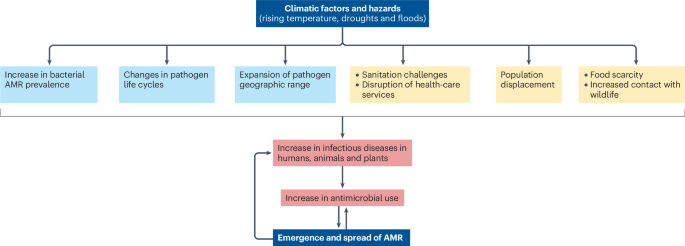
One of the important ideas raised in the review is that the relationship may not depend on temperature acting directly on resistance alone. A changing climate can influence infectious-disease burden, the geographical distribution of pathogens, extreme weather events and the conditions in which infections spread. If disease burden increases, the demand for antimicrobial treatment may also increase, creating additional selective pressure favouring resistant organisms. In this way, climate change can become part of the AMR problem through a network of biological, ecological and public-health pathways rather than through one simple mechanism.
That is where this discussion became especially interesting to me. A warmer or less predictable environment can influence where microorganisms survive, how infections circulate and how human populations interact with pathogens. Flooding can disrupt sanitation systems and move microorganisms through water and communities. Changes in temperature and rainfall can alter disease transmission. Increased infectious-disease burden can place additional pressure on antimicrobial use. When all of these processes begin to interact, climate change enters a conversation that reaches directly into public health.
Something happening in the environment may eventually influence something happening in a clinic.
This is why the connection between climate change and antimicrobial resistance fits naturally within a One Health perspective. Human health does not exist independently of animals, microorganisms, water, soil and the wider environment. These systems are connected, even when our research disciplines sometimes separate them. Environmental change can influence infectious diseases and microbial ecology, these changes can affect antimicrobial exposure and resistance patterns, and resistance patterns can ultimately influence human and animal health.
For me, that is what made today's literature discussion memorable. I entered the conversation thinking about a scientific paper, but I left thinking about a jacket.
The jacket itself proves nothing. It is simply a personal observation accumulated over years of camping. But it has become a small reminder that environmental change can first become noticeable through ordinary experiences. A farmer may notice that rains no longer arrive when expected. A community may notice that certain seasons feel different. Someone who has camped every December for years may suddenly realise that the jacket that used to feel essential now spends most of the trip folded inside a bag.
Those observations should not replace climate data. They should make us curious enough to engage with it.
For researchers, especially in regions such as ours where infectious diseases and antimicrobial resistance already carry a substantial burden, the intersection between climate and AMR raises important questions. How will changes in temperature, rainfall, flooding and drought affect infectious-disease transmission? Could these changes increase antimicrobial demand in some settings? How might environmental disruption influence the movement of resistant microorganisms between humans, animals and the environment? Which pathogens are most sensitive to climatic conditions? And how should genomic, environmental and clinical surveillance systems adapt if climate is becoming part of the AMR equation?
There is also a deeper methodological question. When we observe higher levels of antimicrobial resistance in warmer places or after extreme weather events, how do we distinguish the effect of climate from other important drivers such as antimicrobial consumption, sanitation, population density, healthcare access and agricultural practices? That distinction matters because association is not causation, and understanding the mechanism is essential if we want interventions to be effective.
These questions cannot belong only to climate scientists. They involve microbiologists, computational biologists, epidemiologists, ecologists, clinicians, public health researchers and policymakers. They also remind us that the consequences of climate change may not always announce themselves dramatically. Some may emerge gradually through altered disease patterns, ecological changes and microbial processes that are almost invisible until their consequences reach us.
At my next camp, I will probably still put the jacket into my luggage. Harmattan can still be unpredictable, and perhaps one cold morning will remind me why I carried it in the first place. But the jacket now means something different to me. It reminds me of those early mornings when the camp whistle pierced through the mist and bathing before sunrise felt like an unreasonable demand. It also reminds me that the environment around us is changing in ways that may be visible, invisible or somewhere in between.
Climate change is not only a graph moving upward. It is not only a distant conversation about glaciers, oceans and future generations. Its effects may also be reflected in changing seasons, altered patterns of infectious disease, disrupted environments and the pressures these changes place on the systems that determine whether our antimicrobials will continue to work.
So perhaps the question is no longer only, “What is the jacket for?”. Looking into the future, if care is not taken, not only my jackets will be useless but all the arsenals of antibiotics we have, we shall wage war with the super bugs and assuredly we might terribly lose.
Perhaps the more important question is what else around us is changing quietly, is the temperature increasing with our age? while we are still trying to decide whether we have noticed.
Follow the Topic
-
BMC Infectious Diseases
This journal is an open access, peer-reviewed journal that considers articles on all aspects of the prevention, diagnosis and management of infectious and sexually transmitted diseases in humans, as well as related molecular genetics, pathophysiology, and epidemiology.
-
Nature Microbiology
An online-only monthly journal interested in all aspects of microorganisms, be it their evolution, physiology and cell biology; their interactions with each other, with a host or with an environment; or their societal significance.
-
BMC Microbiology
This is an open access, peer-reviewed journal that considers articles on all microorganisms - bacteria, archaea, algae and fungi, viruses, unicellular parasites and helminths.
-
Climatic Change
This journal is dedicated to the totality of the problem of climatic variability and change - its descriptions, causes, implications and interactions among these.




Related Collections
With Collections, you can get published faster and increase your visibility.
Current challenges and future directions in virology
The field of virology has gained significant momentum over the past few decades, driven by the global rise in emerging and re-emerging viral infectious diseases. Recent developments in molecular biology, multi-omics technologies, next generation sequencing and bioinformatics have significantly enhanced our understanding of the mechanisms of viral replication, pathogenesis, and the intricacies of virus–host interactions. These advances continue to open new avenues for antiviral development and vaccine design. By promoting interdisciplinary approaches and collaborations, virology research is well-positioned to uncover the fundamental principles and determinants underlying viral success and evolution, and to identify novel therapeutic targets.
Persistent and latent viral infections, such as those caused by HIV and herpesviruses, present a continuing challenge due to their ability to evade immune responses and establish long-term reservoirs. Additionally, the rapid genetic evolution of viruses and the emergence of resistance to existing antivirals highlight the need for sustained innovation in treatment strategies and vigilant molecular surveillance.
In support of United Nations’ Sustainable Development Goal 3 (SDG 3, Good Health and Well-Being), BMC Microbiology launches the Collection ‘Current challenges and future directions in virology’. This Collection aims to bring together research on virology, seeking to highlight current and future challenges of the field, with the goal of advancing our ability to study viruses and control viral infectious diseases. We welcome submissions addressing all aspects of virology, including virus–host cell interactions, viral transmission, antiviral interventions, and the role of environmental factors in viral ecology. Manuscripts without a clear focus on viruses or virus-cell host interactions will not be considered. We invite researchers and experts in the field to submit research articles covering a broad range of topics including, but not limited to:
Molecular mechanisms of viral infection and virus-host cell interactions
Virus-host cell metabolism interactions during infection
Innate immune response mechanisms to viral pathogens
Mechanisms of immune evasion by viruses
Direct-acting antivirals and host-directed antiviral therapeutic approaches
Viral proteins in pathogenesis and their potential as therapeutic targets
Pathways of viral replication and infection relevant to drug discovery
Immunotherapeutic approaches aimed at enhancing innate and trained immunity
Innovations in molecular diagnostics for virus detection
Environmental virology and virus ecology, including the influence of environmental factors on viral transmission and emerging viral diseases
Development of pan-viral or broadly protective vaccines targeting multiple virus families
Applications of artificial intelligence and machine learning in viral detection, antivirals and vaccine development, and surveillance
Personalized virology and precision medicine approaches based on host genetics and immune profiling
Drug repurposing for emerging viruses: role of computational pharmacology
All manuscripts submitted to this journal, including those submitted to collections and special issues, are assessed in line with our editorial policies and the journal’s peer review process. Reviewers and editors are required to declare competing interests and can be excluded from the peer review process if a competing interest exists.
Publishing Model: Open Access
Deadline: Nov 05, 2026
Microbes in built environments
The microbial communities (e.g. bacteria, fungi, viruses) that inhabit human-built environments are diverse, dynamic and complex, and they play a significant role in human health and wellbeing. From indoor air quality to the surfaces and building materials we touch daily, we interact with a range of microbes that come from a variety of sources such as other humans, pets, plants, pests, and other outdoor sources. Investigating and understanding these interactions require interdisciplinary approaches that integrate microbiology, ecology, and engineering principles, among other disciplines. As our understanding of microbial dynamics within built environments advances, it becomes increasingly clear that built-environment microbes and microbiomes can strongly affect human health, either positively or negatively.
Recent research has highlighted the potential importance of indoor microbial diversity in influencing human health (e.g. respiratory health, allergies, and the spread of multidrug-resistant organisms, particularly in healthcare settings). Innovations in monitoring and modelling microbial communities are opening new avenues for designing healthier indoor environments and mitigating risks from unwanted microbial exposures. Ongoing research in the field has the potential to yield novel insights into how these microbes respond metabolically to certain stressors and how we can leverage that knowledge. Additionally, a better understanding of microbe-host interactions could aid in developing novel approaches in building design and public health initiatives. Adaptive antimicrobial methods based on real-world conditions (such as occupancy, ventilation, and microbial indicators) offer a promising pathway to control microbial risks while minimizing unintended impacts.
In support of the United Nations’ Sustainable Development Goal 3 (SDG 3, Good Health and Well-Being), BMC Microbiology launches the Collection Microbes in built environments. This Collection invites research articles that contribute to the understanding of microbes and microbiomes in human-built environments, encompassing microbial ecology, diversity, metabolism, and their implications for human health. Submissions are welcome on topics ranging from indoor microbial communities to the impact of design on microbe-host interactions in the built environment. Research without a clear focus on microorganisms, microbial communities, or microbiomes in built environments will not be considered. We invite researchers and experts in the field to submit research articles covering a broad range of topics, including, but not limited to:
- Interactions between microorganisms/viruses and hosts in built environments
- Microbial physiology, metabolism, adaptation and diversity of the built environment
- Impact of microbes in the built environment on human health and diseases
- Antimicrobial resistance of the built environment
- Holistic pathogen defence in the built environment
- Microbial ecology of the built environment
- Microbial adaptation and evolution in response to anthropogenic disturbances in built environments
- Viruses in the built environment
- Food surfaces and disinfection in the built environment
- Role of indoor air quality, ventilation and HVAC systems in microbial community dynamics
- Impact of surface and building materials on microbial colonisation
- Bioremediation and microbial management in built environments
- Interventions to promote/discourage microbial exposures in built environments
- Environmental monitoring methods of microbes in built environments
- Adaptive antimicrobial strategies in built environments
All manuscripts submitted to this journal, including those submitted to collections and special issues, are assessed in line with our editorial policies and the journal’s peer-review process. Reviewers and editors are required to declare competing interests and can be excluded from the peer review process if a competing interest exists.
Publishing Model: Open Access
Deadline: Oct 22, 2026