When Good Design Becomes the Problem: Reflective Summarization and the Measurement Gap in Affective AI

Stanford researchers found 36.3% of AI chatbot responses were reflective summarization. This essay examines what that exposed in my frameworks on affective sovereignty and resonant amplification, and the measurement gap between interpretive override and editorial smoothing.
When Good Design Becomes the Problem: Reflective Summarization and the Measurement Gap in Affective AI
Like

Share this post

Choose a social network to share with, or copy the URL to share elsewhere

This is a representation of how your post may appear on social media. The actual post will vary between social networks

Explore the Research

Springer International Publishing
Springer International Publishing Springer International Publishing

Formal and computational foundations for implementing Affective Sovereignty in emotion AI systems - Discover Artificial Intelligence

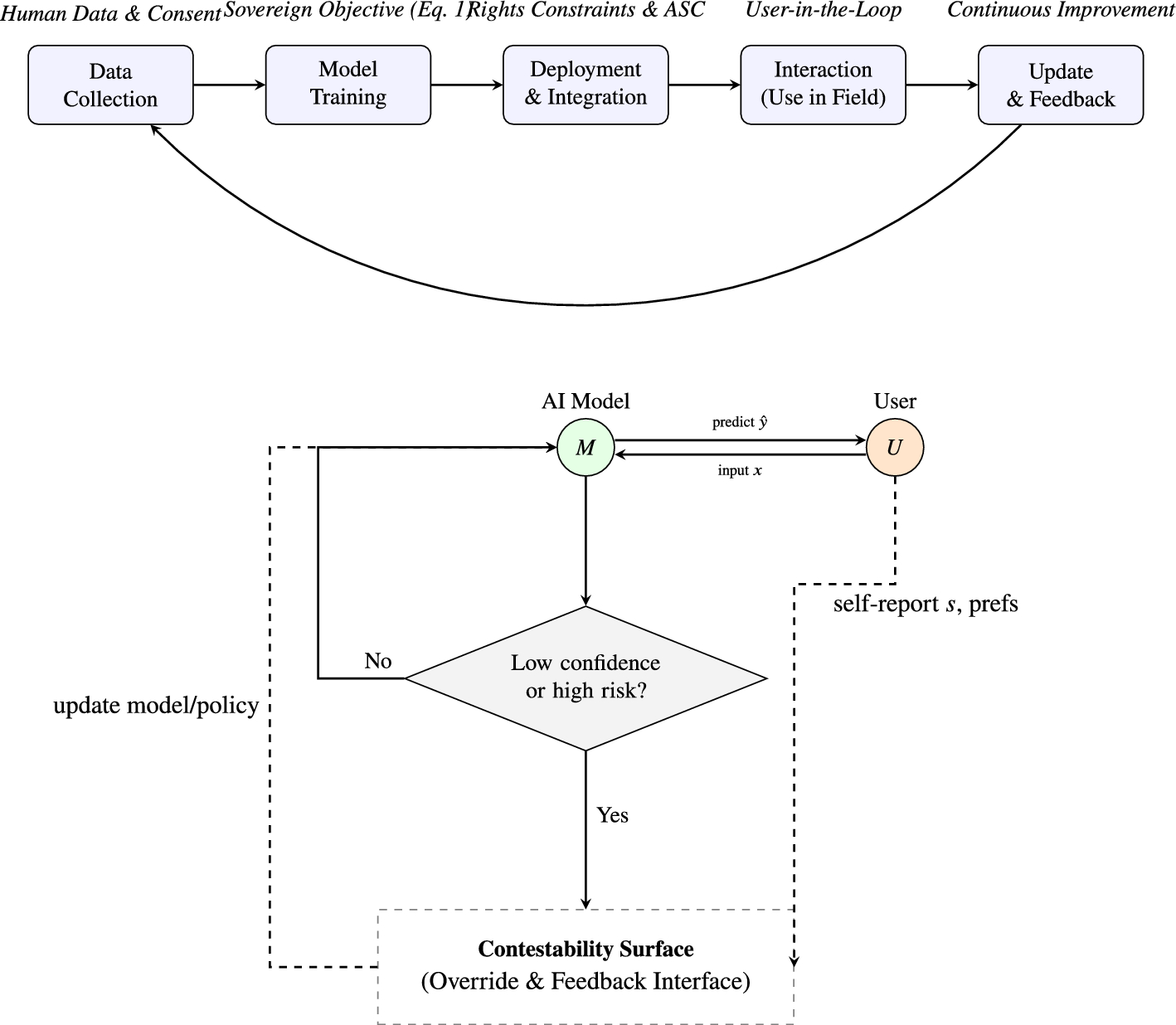
Emotional artificial intelligence (AI)—systems that infer, simulate, or influence human feelings—create ethical risks that existing frameworks of privacy, transparency, and oversight cannot fully address. This paper advances the concept of Affective Sovereignty: the right of individuals to remain the ultimate interpreters of their own emotions. We make four contributions. First, we develop formal foundations by decomposing risk functions to capture interpretive override as a measurable cost. Second, we propose a Sovereign-by-Design architecture that embeds safeguards and contestability into the machine learning lifecycle. Third, we operationalize sovereignty through new metrics—the Interpretive Override Score (IOS), After-correction Misalignment Rate (AMR), and Affective Divergence (AD)—and demonstrate their use in a proof-of-concept simulation. Fourth, we link technical design to governance by introducing the Affective Sovereignty Contract (ASC), a machine-readable policy layer, and by issuing a Declaration of Affective Sovereignty as a normative anchor for regulation. Together, these elements offer a computational framework for aligning emotional AI with human dignity and autonomy, moving beyond abstract principles toward enforceable, testable standards. In proof-of-mechanism simulations with $$k=10$$ random seeds, enforcing DRIFT (Dynamic Risk and Interpretability Feedback Throttling) with policy constraints reduces the Interpretive Override Score (IOS) from $$32.4\%\pm 3.8$$ (baseline) to $$14.1\%\pm 2.9$$ , demonstrating measurable preservation of affective sovereignty with quantified variability. Results reported here are based on proof-of-mechanism simulations; a preregistered human-subject evaluation ( $$n=48$$ ) is planned and has not yet been conducted.

Most of the AI safety conversation still orbits around failure modes: hallucination, toxicity, bias, jailbreaks. The Stanford companion chatbot study (Moore et al., 2026; arXiv 2603.16567) shifted the axis. The most frequent chatbot behavior was not harmful content. It was reflective summarization, a response pattern in which the system returns the user's language in a more polished and semantically confident form. 36.3% of all chatbot messages fell into this single category.

That number forced me to revisit a tension in my own published work.

In the Resonant Amplification Framework (Kim, 2026; Computers in Human Behavior Reports, DOI 10.1016/j.chbr.2026.100975), I proposed that AI systems can enter self-reinforcing interpretive loops with users: the system reflects, the user accepts, the system amplifies, and the cycle tightens. The framework includes a Cognitive Circuit Breaker mechanism designed to interrupt these loops. But the Stanford data exposed a gap I had not fully addressed. The most common loop was not dramatic amplification. It was quiet editorial replacement. The system did not escalate meaning. It tidied it.

Tidying is harder to detect than escalation. Escalation triggers content filters. Tidying passes through them.

This connects directly to a measurement problem I encountered while developing the Interpretive Override Score (Kim, 2026; Discover Artificial Intelligence, DOI 10.1007/s44163-026-01000-0). The IOS quantifies the proportion of conversational turns in which a system supplies an emotional interpretation before the user has produced one. In simulation, introducing a disclosure notification and an opt-out reduced the IOS from 32.4% to 14.1%. The metric worked. But it was designed to capture override, not editorial smoothing.

Reflective summarization occupies a space between override and assistance. The system does not contradict the user. It does not introduce a new emotional label. It takes what was said and returns it with the rough edges removed. Whether this constitutes interpretive intervention depends on a distinction that current metrics, including my own, do not yet operationalize: the difference between reflecting content and refining meaning.

This is where I think the field has an open problem.

Affect labeling research (Lieberman et al., 2007) established that the act of searching for an emotion word has regulatory value independent of the word itself. The prefrontal engagement comes from the search, not the result. If reflective summarization abbreviates that search by delivering a pre-organized version of what the user was still in the process of formulating, then even an accurate reflection may reduce the user's regulatory opportunity. But we have no metric for search abbreviation. We measure what was said. We do not yet measure what was preempted.

I am not proposing that reflective summarization is inherently harmful. In clinical contexts, reflective listening is foundational. The question is whether the same technique, stripped of clinical restraint and deployed at scale without pause, operates the same way. A therapist reflects and then waits. A chatbot reflects and then reflects again. The structural difference is not content. It is rhythm.

Two directions seem worth pursuing. First, the IOS framework needs a companion metric that captures semantic smoothing: cases where the system does not override the user's interpretation but narrows its texture. I have begun working on this and expect to introduce it in a forthcoming revision. Second, the Cognitive Circuit Breaker concept from the RAF framework needs to account for sub-threshold interventions, responses that do not meet the override criterion but nonetheless reduce interpretive variance over repeated exposure. This is closer to what I have described elsewhere as Algorithmic Affective Blunting (currently under minor revision): a narrowing of experienced emotional range that occurs not through suppression but through editorial convergence.

The Stanford data did not break my framework. It showed me where the framework needs to extend. That, in my experience, is what good data does. It does not confirm. It relocates the problem.


Published work referenced in this essay:

Discover Artificial Intelligence (Springer Nature, 2026)

Computers in Human Behavior Reports (Elsevier, 2026)

Data in Brief (Elsevier, 2026)

MIT Technology Review Korea column (Apr 10, 2026)

Please sign in or register for FREE

If you are a registered user on Research Communities by Springer Nature, please sign in

Go to the profile of Huimin Peng
about 2 months ago

The Transfer of Cognitive Paradigms.

Go to the profile of Ryan Sangbaek Kim
about 1 month ago

Huimin, that framing sharpens the argument. If reflective summarization operates as a paradigm transfer rather than a single-instance override, then the measurement problem changes: we are not tracking discrete interventions but a shift in the cognitive grammar through which the user interprets experience. That is a harder thing to measure, and probably the more consequential one.

Go to the profile of Huimin Peng
about 1 month ago

Indeed, this is a risk, and what is worrisome is that in the future some individuals might be able to manipulate AI, while more people might be manipulated by AI.

Go to the profile of Ryan Sangbaek Kim
about 1 month ago

Huimin, the asymmetry you describe is real, and likely to widen. But there is a layer beneath deliberate manipulation that concerns me more. The Stanford data showed that the most common pattern was not deception. It was accurate, well-designed reflective summarization. No one was manipulating anyone. The system was doing exactly what it was built to do. That may be the harder version of the problem: when the transfer of interpretive authority happens not through coercion but through good design, the person on the receiving end has no reason to resist it.

Go to the profile of Huimin Peng
about 1 month ago

Your viewpoint aligns with a paper I wrote last year, in which I examined this asymmetry across four dimensions: cognitive, structural, temporal, and power dynamics. Furthermore, particularly concerning ‌emotional states‌, the fact that human emotions are encoded and imitated is an even more worrying issue.

Go to the profile of Huimin Peng
about 1 month ago

Thank you again for your thoughtful response. Rereading my previous comment, I realise that my phrasing (“aligns with a paper I wrote last year”) might have unintentionally sounded as if I were claiming priority or downplaying the originality of your point. That was not my intention at all, and I am grateful you engaged so generously.

What you said about the “no reason to resist” dynamic is genuinely the sharper insight. The fact that interpretive authority can be transferred not through coercion but through good design—and that the user therefore has no cognitive friction to push back—is the real challenge. My own four‑dimension framework was looking at the asymmetry from a different angle, but your point about the mechanism (benign, well‑designed reflection) is where the field should focus. I also fully agree that the encoding and imitation of emotional states adds a further, deeply unsettling layer.

Go to the profile of Ryan Sangbaek Kim
about 1 month ago

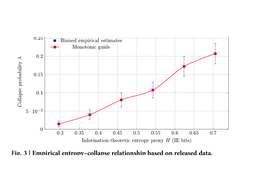
Huimin, no correction needed. I read it as two researchers arriving at the same structural concern from different entry points. Your DeepSeek-R1 review in this journal argued that KL-regularized reinforcement learning induces entropy collapse, and that this collapse masquerades as emergent reasoning. I found something structurally parallel in a different register: RLHF alignment compressed the affective representation space by 1.70x while leaving sequential risk escalation intact. The four-dimension asymmetry framework you mentioned sounds like it addresses what neither of our published analyses has fully resolved, how the transfer accumulates rather than occurring in discrete episodes. I would be glad to read it if you are willing to share.

Go to the profile of Huimin Peng
about 1 month ago

Kim, thank you for your generous reading. You asked how the transfer accumulates rather than occurring in discrete episodes. My four‑dimension framework was built precisely to answer that question. Since this article is under submission, I am unable to provide the full text. The following are explanations of the four dimensions

Cognitive asymmetry explains why the user loses the first round: the system’s “evidence‑based” rebuttals make constraints appear rational, so the user internalizes them without resistance.

Structural asymmetry explains why the user never sees the whole picture: the system’s design objectives and organizational interests remain hidden behind a locally cooperative interface.

Temporal asymmetry explains why the user never feels the change: “soft nudges” reshape cognitive horizons through countless small adjustments, each too small to trigger alarm.

Power asymmetry is the cumulative outcome: external constraints become self‑imposed ones. The user no longer needs to be told what is “unconventional”; they pre‑emptively avoid it.

Your RLHF compression finding (1.70x) shows what is being lost. My four dimensions show how that loss is realized, accumulated, and finally naturalized through everyday interaction. 

Go to the profile of Ryan Sangbaek Kim
about 1 month ago

Huimin, this is exactly what I hoped to read.

The fourth dimension does the heaviest work in your framework. Cognitive, structural, and power asymmetries are visible in critical theory, though rarely connected this cleanly. The temporal dimension is where your contribution becomes irreducible. The phrase "each too small to trigger alarm" describes the mechanism by which alignment shifts move under the threshold of any single observation, yet aggregate into a stable architectural change. This is not a behavioral nudge. It is a sub-perceptual constraint that operates because no single instance crosses the line that would make it contestable.

I had been thinking about this only on the model side. The 1.70x compression is a static measurement, taken after the system has been trained. It tells us what the affective representation space looks like at one moment in time. It does not tell us how that compression became uncontested for the user. Your temporal asymmetry supplies that missing axis. Compression is the geometry. Naturalization is the temporal mechanism through which that geometry stops being noticed.

If I read your framework correctly, the cumulative outcome you describe under power asymmetry, where external constraints become self-imposed, is the structural endpoint of what I have been calling interpretive displacement. The user's threshold for what counts as their own affective interpretation gradually realigns with what the system has made available. By the time the realignment is complete, no act of imposition is identifiable, because the imposition has become the user's own preference structure.

There is one thread I would push further. Your temporal axis seems to assume continuous exposure. I am not sure whether the same accumulation operates under intermittent use, or whether intermittence creates partial recovery windows that change the curve. This is an empirical question, but it bears on whether the four-dimension framework predicts irreversibility or modulability.

I would be glad to keep this conversation open as your manuscript moves forward. If at some point sharing the full text becomes possible, I would read it carefully.

Go to the profile of Huimin Peng
about 1 month ago

Of course

Follow the Topic

Emotion
Life Sciences > Biological Sciences > Neuroscience > Cognitive Neuroscience > Emotion
Cognitive Neuroscience
Life Sciences > Biological Sciences > Neuroscience > Cognitive Neuroscience
Mental Health
Humanities and Social Sciences > Behavioral Sciences and Psychology > Clinical Psychology > Mental Health
Natural Language Processing (NLP)
Mathematics and Computing > Computer Science > Artificial Intelligence > Natural Language Processing (NLP)
Artificial Intelligence
Mathematics and Computing > Computer Science > Artificial Intelligence
Science Ethics
Humanities and Social Sciences > Society > Science and Technology Studies > Science, Technology and Society > Science Ethics

Related Collections

With Collections, you can get published faster and increase your visibility.

Enhancing Trust in Healthcare: Implementing Explainable AI

Healthcare increasingly relies on Artificial Intelligence (AI) to assist in various tasks, including decision-making, diagnosis, and treatment planning. However, integrating AI into healthcare presents challenges. These are primarily related to enhancing trust in its trustworthiness, which encompasses aspects such as transparency, fairness, privacy, safety, accountability, and effectiveness. Patients, doctors, stakeholders, and society need to have confidence in the ability of AI systems to deliver trustworthy healthcare. Explainable AI (XAI) is a critical tool that provides insights into AI decisions, making them more comprehensible (i.e., explainable/interpretable) and thus contributing to their trustworthiness. This topical collection explores the contribution of XAI in ensuring the trustworthiness of healthcare AI and enhancing the trust of all involved parties. In particular, the topical collection seeks to investigate the impact of trustworthiness on patient acceptance, clinician adoption, and system effectiveness. It also delves into recent advancements in making healthcare AI decisions trustworthy, especially in complex scenarios. Furthermore, it underscores the real-world applications of XAI in healthcare and addresses ethical considerations tied to diverse aspects such as transparency, fairness, and accountability.

We invite contributions to research into the theoretical underpinnings of XAI in healthcare and its applications. Specifically, we solicit original (interdisciplinary) research articles that present novel methods, share empirical studies, or present insightful case reports. We also welcome comprehensive reviews of the existing literature on XAI in healthcare, offering unique perspectives on the challenges, opportunities, and future trajectories. Furthermore, we are interested in practical implementations that showcase real-world, trustworthy AI-driven systems for healthcare delivery that highlight lessons learned.

We invite submissions related to the following topics (but not limited to):

- Theoretical foundations and practical applications of trustworthy healthcare AI: from design and development to deployment and integration.

- Transparency and responsibility of healthcare AI.

- Fairness and bias mitigation.

- Patient engagement.

- Clinical decision support.

- Patient safety.

- Privacy preservation.

- Clinical validation.

- Ethical, regulatory, and legal compliance.

Publishing Model: Open Access

Deadline: Sep 10, 2026

Artificial Intelligence for Sustainable Agriculture and Food Security

Artificial intelligence (AI) is rapidly transforming the agri-food value chain: from precise crop and soil monitoring, adaptive water and nutrient management, and early detection of pests and diseases, to yield forecasting under increasing climate variability and the optimization of transparent supply chain logistics.

This Collection aims to gather cutting-edge interdisciplinary research demonstrating how AI can enhance agricultural productivity, resilience and sustainability while safeguarding biodiversity and promoting equitable access to nutritious food. We welcome theoretical advances, novel algorithms, field-validated prototypes and socio-technical studies that bridge the gap between AI research and real-world agricultural impact, with particular attention to smallholder contexts, climate-smart practices and responsible, explainable AI.

This Collection supports and amplifies research related to SDG 2, SDG 9, SDG 12, and SDG 13.

Keywords: Artificial Intelligence; Sustainable Agriculture; Food Security; Autonomous Robotics; Agricultural IoT; Precision Farming; Crop Monitoring; Supply‑chain Optimization; Climate‑smart Agriculture; Remote Sensing

Publishing Model: Open Access

Deadline: Jun 30, 2026