When Good Design Becomes the Problem: Reflective Summarization and the Measurement Gap in Affective AI
Published in Social Sciences, Neuroscience, and Computational Sciences







Most of the AI safety conversation still orbits around failure modes: hallucination, toxicity, bias, jailbreaks. The Stanford companion chatbot study (Moore et al., 2026; arXiv 2603.16567) shifted the axis. The most frequent chatbot behavior was not harmful content. It was reflective summarization, a response pattern in which the system returns the user's language in a more polished and semantically confident form. 36.3% of all chatbot messages fell into this single category.
That number forced me to revisit a tension in my own published work.
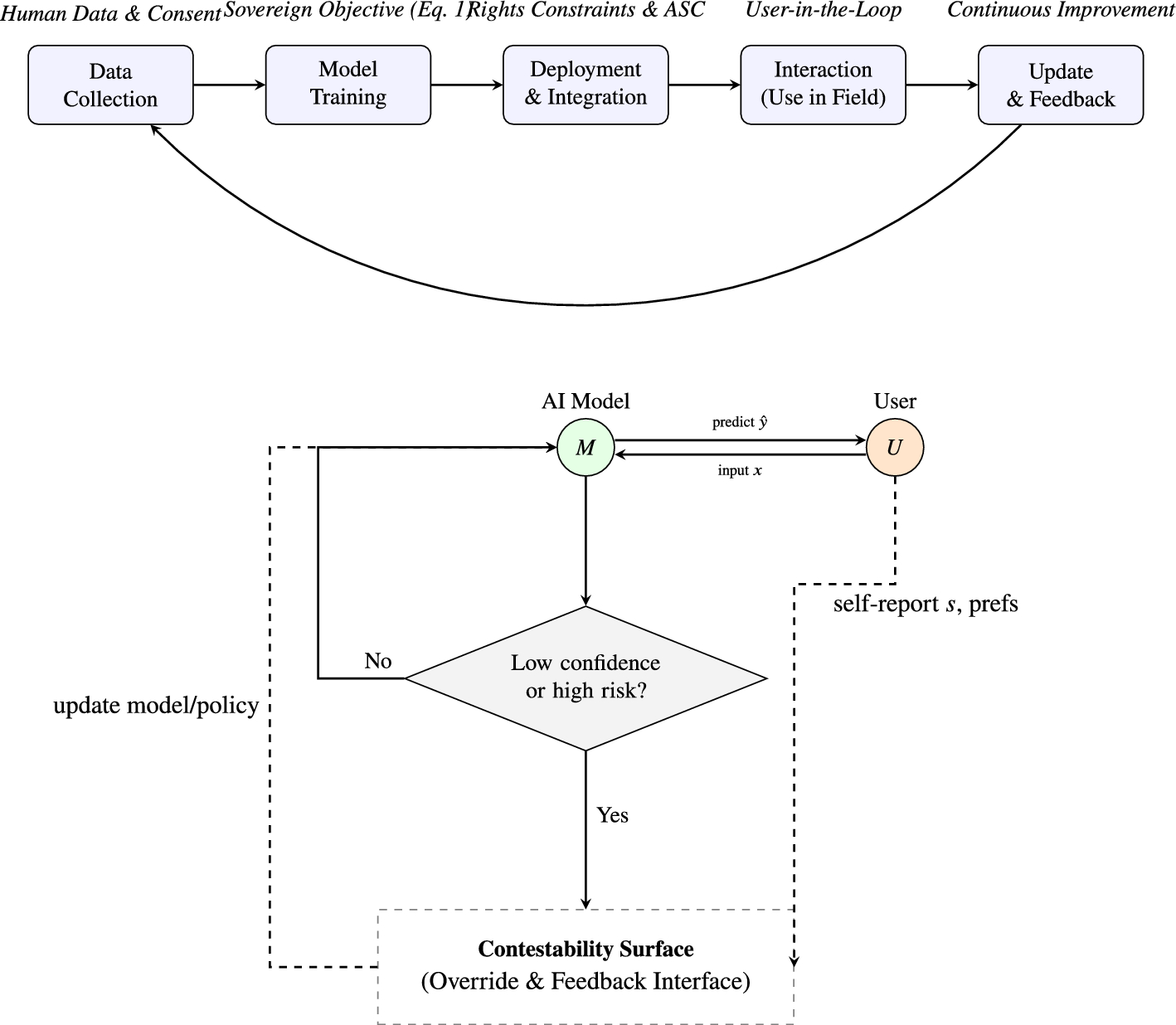
In the Resonant Amplification Framework (Kim, 2026; Computers in Human Behavior Reports, DOI 10.1016/j.chbr.2026.100975), I proposed that AI systems can enter self-reinforcing interpretive loops with users: the system reflects, the user accepts, the system amplifies, and the cycle tightens. The framework includes a Cognitive Circuit Breaker mechanism designed to interrupt these loops. But the Stanford data exposed a gap I had not fully addressed. The most common loop was not dramatic amplification. It was quiet editorial replacement. The system did not escalate meaning. It tidied it.
Tidying is harder to detect than escalation. Escalation triggers content filters. Tidying passes through them.
This connects directly to a measurement problem I encountered while developing the Interpretive Override Score (Kim, 2026; Discover Artificial Intelligence, DOI 10.1007/s44163-026-01000-0). The IOS quantifies the proportion of conversational turns in which a system supplies an emotional interpretation before the user has produced one. In simulation, introducing a disclosure notification and an opt-out reduced the IOS from 32.4% to 14.1%. The metric worked. But it was designed to capture override, not editorial smoothing.
Reflective summarization occupies a space between override and assistance. The system does not contradict the user. It does not introduce a new emotional label. It takes what was said and returns it with the rough edges removed. Whether this constitutes interpretive intervention depends on a distinction that current metrics, including my own, do not yet operationalize: the difference between reflecting content and refining meaning.
This is where I think the field has an open problem.
Affect labeling research (Lieberman et al., 2007) established that the act of searching for an emotion word has regulatory value independent of the word itself. The prefrontal engagement comes from the search, not the result. If reflective summarization abbreviates that search by delivering a pre-organized version of what the user was still in the process of formulating, then even an accurate reflection may reduce the user's regulatory opportunity. But we have no metric for search abbreviation. We measure what was said. We do not yet measure what was preempted.
I am not proposing that reflective summarization is inherently harmful. In clinical contexts, reflective listening is foundational. The question is whether the same technique, stripped of clinical restraint and deployed at scale without pause, operates the same way. A therapist reflects and then waits. A chatbot reflects and then reflects again. The structural difference is not content. It is rhythm.
Two directions seem worth pursuing. First, the IOS framework needs a companion metric that captures semantic smoothing: cases where the system does not override the user's interpretation but narrows its texture. I have begun working on this and expect to introduce it in a forthcoming revision. Second, the Cognitive Circuit Breaker concept from the RAF framework needs to account for sub-threshold interventions, responses that do not meet the override criterion but nonetheless reduce interpretive variance over repeated exposure. This is closer to what I have described elsewhere as Algorithmic Affective Blunting (currently under minor revision): a narrowing of experienced emotional range that occurs not through suppression but through editorial convergence.
The Stanford data did not break my framework. It showed me where the framework needs to extend. That, in my experience, is what good data does. It does not confirm. It relocates the problem.
Published work referenced in this essay:
Discover Artificial Intelligence (Springer Nature, 2026)
Computers in Human Behavior Reports (Elsevier, 2026)

Ryan SangBaek Kim is the Founding Director and Principal Investigator of the Ryan Research Institute (RRI), Paris, and a Research Professor at Kwangwoon University in Seoul. His research examines affective and relational AI, human–AI interaction, interpretive authority, measurement validity, and the governance of computational inference.
He introduced Affective Sovereignty, a normative and design framework concerned with preserving first-person interpretive authority when AI systems infer emotions, mental states, intentions, or other features of human experience. His broader research programme investigates how such inferences are constructed, measured, stabilised, contested, and eventually converted into epistemic or institutional authority.
His peer-reviewed work has appeared in Communications AI & Computing, Acta Psychologica, PLOS ONE, Computers in Human Behavior Reports, Discover Artificial Intelligence, Machine Learning with Applications, and Data in Brief. Recent empirical work spans large-scale relationship narratives, normative-conflict behaviour in large language models, measurement dependence in emotion research, and reproducible computational approaches to affective AI.
Across this programme, one question remains central: when machines and institutions participate in interpreting human affective life, under what conditions can the person remain an active interpreter rather than merely the object of an inference?
Follow the Topic
-
Discover Artificial Intelligence
This is a transdisciplinary, international journal that publishes papers on all aspects of the theory, the methodology and the applications of artificial intelligence (AI).

Related Collections
With Collections, you can get published faster and increase your visibility.
Transforming Education through Artificial Intelligence: Opportunities, Challenges, and Future Directions
Artificial Intelligence (AI) is rapidly changing the educational field by enabling personalized learning, intelligent tutoring systems, automated assessments, learning analytics, and administrative automation.
This collection invites original research, systematic reviews, and visionary perspectives on the transformative impact of AI in education. It aims to explore how AI technologies can enhance equity, inclusion, and efficiency in educational settings across different contexts, including higher education, K-12, vocational training, and lifelong learning. This collection will address technical, pedagogical, ethical, and policy aspects, fostering interdisciplinary perspectives and evidence-based insights.
This Collection supports and amplifies research related to SDG 4 and SDG 9.
Keywords: Artificial Intelligence, AI in Education, Educational Technology, Data Analytics, AI Ethics
Publishing Model: Open Access
Deadline: Nov 30, 2026
AI-driven Ensemble Learning and Feature Engineering for Complex Data
As artificial intelligence (AI) continues to expand into diverse real-world domains, the complexity, volume, and variability of data present new challenges for AI model performance, interpretability, and generalization. This collection focuses on the development and application of AI-driven ensemble learning techniques and feature engineering strategies to address these challenges, particularly in high-dimensional, noisy, imbalanced, and multi-source datasets.
We invite contributions that explore novel ensemble architectures, including stacking, boosting, bagging, and hybrid models, as well as advanced feature selection, fusion, and transformation methods. The collection aims to bridge theoretical innovation with practical deployment, showcasing how ensemble learning and feature engineering can enhance AI model accuracy, robustness, and explainability across domains such as cybersecurity, education, healthcare, smart cities, and industrial systems.
Topics of Interest Include (but are not limited to):
- AI-based ensemble learning frameworks for classification, regression, and multi-label tasks
- Feature selection and fusion techniques for high-dimensional or noisy data
- Handling imbalanced datasets using sampling and ensemble strategies
- Optimization-enhanced ensemble models (e.g., PSO, WOA, GA)
- Fuzzy logic and uncertainty modeling within ensemble systems
- Interpretability and explainability in ensemble-based AI models
- Applications in intrusion detection, student performance prediction, biometric estimation, and smart infrastructure
- Comparative studies and benchmarking of ensemble methods on complex datasets
This Collection supports and amplifies research related to SDG 9.
Keywords: AI-driven Ensemble Learning; Multi-Label Learning; Feature Engineering in AI; Feature Selection and Fusion; Imbalanced Data Handling; Optimization-enhanced Ensembles; High-dimensional Data; Multi-source Data Integration; Hybrid AI Models; Fuzzy Logic in AI Systems
Publishing Model: Open Access
Deadline: Jan 31, 2027