When rising CO2 failed to shield alpine vegetation from drought
Published in Ecology & Evolution and Plant Science





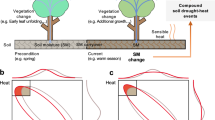

We started with a simple idea. For years, science has told us that rising atmospheric CO2 concentrations can help plants cope with drought. The logic is straightforward: with more CO2 in the air, plants don’t need to open their stomata — those tiny pores on their leaves — as wide to get the carbon they need. This means they lose less water to the atmosphere, improving their “water-use efficiency”. In a warming world, this mechanism seemed like a crucial buffer, especially for vulnerable ecosystems.
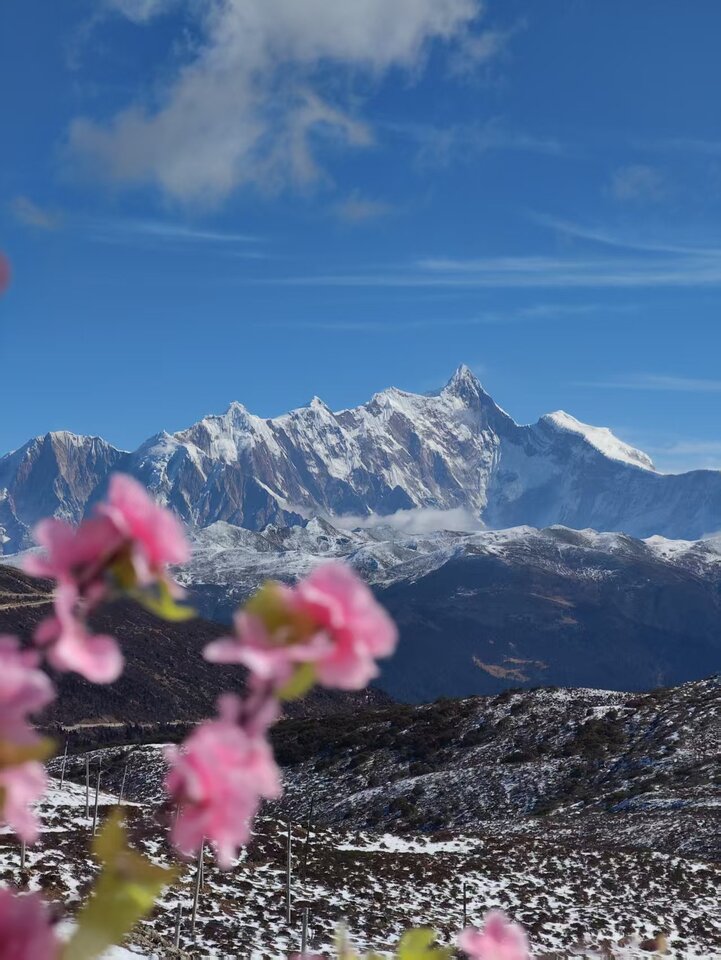
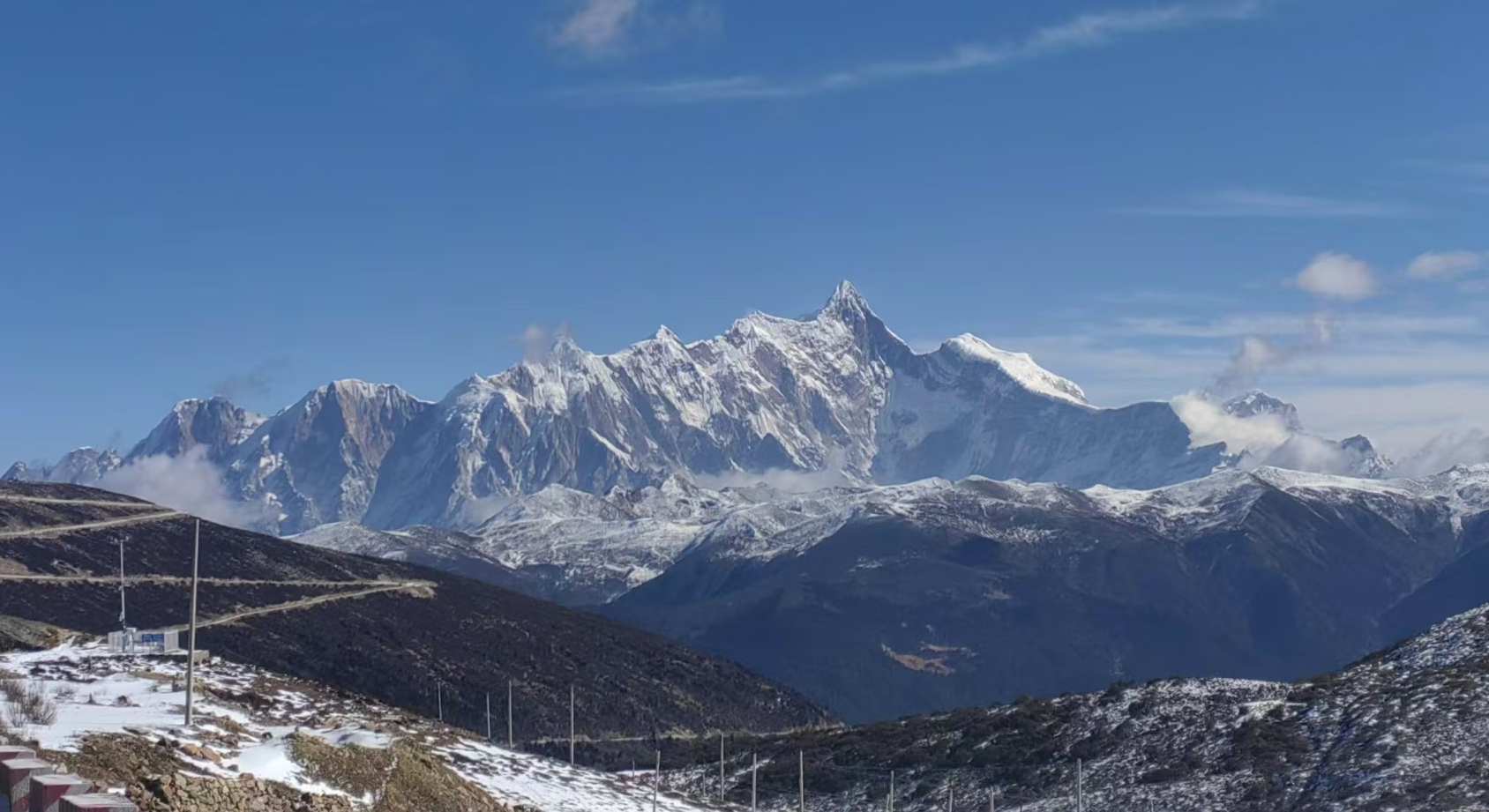
Our team wanted to see this in action on the Qinghai-Tibetan Plateau. Known as the “Asian Water Tower”, this high-altitude region feeds nearly a dozen major rivers that supply water to nearly two billion people. Understanding how its vegetation will fare under both rising CO2 and intensifying drought is critical, not just for the local ecosystem, but for regional water security. So, we set up our experiments expecting to find that rising CO2 would act as a shield, helping the plateau’s hardy alpine vegetation to ride out periods of drought.
The simulations, however, had other plans.
We used a sophisticated computer model called LPJ-GUESS, which simulates how vegetation grows, competes, and interacts with its environment. To isolate the effect of CO2, we ran two parallel simulations: one with historical rise in atmospheric CO2, and one where CO2 was held constant. The result was the exact opposite of what we expected. In the model, drought-induced declines in plant productivity were not lessened by higher CO2 — they were worse.
This was so counter to established theory that we went into a tailspin of double-checking. Was there a bug in our setup? Were our model parameters wrong? Had the unique, extreme conditions of this high-altitude ecosystem broken our assumptions? Our original motivation to study how vegetation mediates water cycles had suddenly hit a major roadblock.
The beauty of a model like LPJ-GUESS is that it allows you to play God — we can use it to pull apart the threads of cause and effect that are hopelessly tangled in the real world. We had isolated CO2, but another major player was co-varying with it in our simulations: temperature. The Qinghai-Tibetan Plateau is warming faster than the global average. We therefore ran a new experiment. This time, we removed the warming trend, holding temperature constant while still letting CO2 rise. And just like that, the results flipped.
In a world without warming, rising CO2 did buffer plants against drought, just as the textbooks said. This was our “aha!” moment. The problem wasn’t the CO2 itself, but its interaction with concurrent warming. In a cold, alpine ecosystem, even a modest amount of warming provides a significant boost to plant growth. But this growth comes at a cost. Lushier vegetation consumes more water, and a warmer atmosphere is thirstier, driving higher water losses from both plants and soil. This amplified water loss can be so strong that it completely cancels out the water-saving benefits of higher CO2. The plants’ need for water grew faster than their efficiency in using it, leaving them more, not less, vulnerable to drought.
To see if our findings were unique to our model, we looked at data from an international multi-model project called TRENDY. Across the broader pan-Arctic region, most models agreed: if you only increase CO2, plants handle drought better. But critically, none of those simulations were designed to test what happens when CO2 rise and warming happen together. Our Plateau-focused experiments had uncovered a critical blind spot. The classical expectation — that CO2 equals drought relief — may be fragile in the very places where temperature is the main engine of the ecosystem: high mountains and possibly the far north.
Sometimes, the most important discoveries come from being wrong. Our straightforward expectation led us to a much more complex, and frankly, more worrying reality. For the “Asian Water Tower” and other permafrost-dominated regions, the future is not a simple set of equations. The interaction between CO2 and warming creates a profound uncertainty, not just for the health of the vegetation, but for the very water security of the billions of people downstream. By sharing this story, we hope to show that in a rapidly changing world, we need to constantly re-examine our assumptions. The mechanisms we think we know don’t always work the way we expect when they’re all operate at once.
Follow the Topic
-
Communications Earth & Environment

An open access journal from Nature Portfolio that publishes high-quality research, reviews and commentary in the Earth, environmental and planetary sciences.
Related Collections
With Collections, you can get published faster and increase your visibility.
Climate extremes and water-food systems
Publishing Model: Open Access
Deadline: May 31, 2026
Archaeology & Environment
Publishing Model: Hybrid
Deadline: Mar 31, 2026

Please sign in or register for FREE
If you are a registered user on Research Communities by Springer Nature, please sign in