Why Explore Gender, Sex and Culture through an Asia Frame?
Published in Social Sciences

The Gender, Sexualities and Culture in Asia book series is a new forum for monographs and anthologies focusing on the intersections between gender, sexuality and culture across Asia. The series provides a distinctive space for the exploration of topics of growing academic concern, from non-normative cultures of sexuality in Asia, to studies of gendered identities cross the region. Series editors Stevi Jackson (The University of York), Olivia Khoo (Monash University) and I call for an urgent rethinking of Asia, not only in terms of a geographical location but also within diaspora and migration flows. Informed by inter-Asian theories and debates, we want to assert our position that reading across Asian sites is actually an increasing necessity in addressing gender and sexualities. Titles in the series include multi- and interdisciplinary research by scholars within Asia as well as in North American, European and Australian academic contexts. At this stage, we intend to cast the net widely in terms of topics, and to consider Asia not through a narrow geographic lens but as part of a shifting terrain that will include diasporic Asia and West Asia. Interdisciplinarity and intersectionality is the strength of the series.
Book titles in the series include Alicia Izharrudin’s Gender and Islam in Indonesian Cinema and Ting-Fang Chin's Everyday Gender at Work in Taiwan. Izharrudin examines the portrayal of gender in the Islami film genre released between 1977 and 2012 and situates gender within cultural representation circulating in the Indonesian public sphere. The book proposes that diverse images of masculinities and femininities emerge at the meeting point between contrasting interpretations of Islam and other public discourses of (trans)-nationalism and modernity. Izharrudin shows how shifts in the image of Muslim femininity and masculinity in the film Islami genre underline the political and social changes, which align the transition from Sukarno’s ‘Old Order’ (1945—1965) to Suharto’s New Order and the end of the latter.
Drawing on qualitative, in-depth interviews, Chin explores professional women’s experiences of gender in the Taiwanese workplace in the wake of the rapid transformation of the country's economy, identifying attitudes to gender in a heterosexist and heteronormative social culture. The book contributes to understanding women’s relationships with their superiors and peers at work and the strategies that they have used to negotiate with these role partners to achieve their own personal and career goals. It notes that compared to women in other East Asian economies, women in Taiwan have a more consistent career trajectory and that the local women’s movement and activism has brought Taiwan a long way in improving women’s employment rights, but argues that it is too soon to claim that gender inequality has been banished from the workplace.
Gender, Sexualities and Culture in Asia expands the field of Asian genders and sexualities by applying a cultural lens to current debates, including rural lives, migration patterns, religion, transgender identities, sex industry and family.
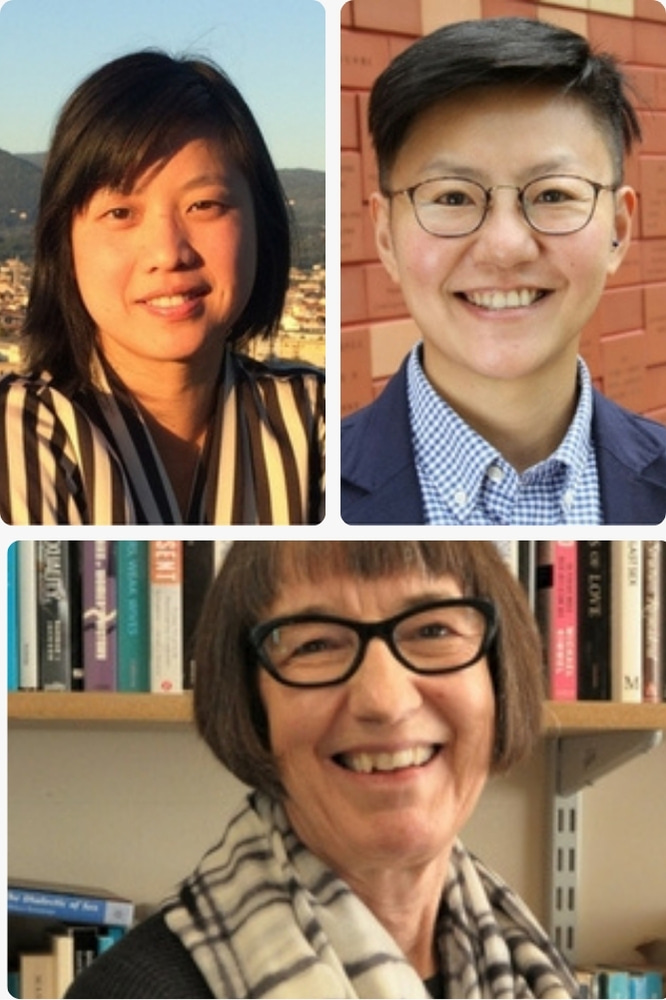 Stevi Jackson is Professor of Women’s Studies at the University of York, UK. Her research interests include families and intimate relationships, the sociology of gender and sexuality and feminist sociological theory.
Olivia Khoo is Associate Professor in Film and Screen Studies at Monash University.
Denise Tse-Shang Tang is Assistant Professor in Cultural Studies at Lingnan University, Hong Kong. She is an interdisciplinary ethnographer specializing in gender, lesbian sexualities, social spaces and cultural politics in Chinese societies.


I commission monographs, PalgravePivots, edited volumes, textbooks, trade titles, handbooks and major reference works in sociology from and on the APAC region. I am particularly interested in publishing cutting-edge critical research on intersectional inequalities, race & ethnicity (specifically Indigeneity, postcolonialism & decolonisation), cultural sociology, digital sociology, sociology of work and social stratification; as well as migration, and childhood, youth and family studies (global remit).
I welcome proposals for the following book series:
NEW SERIES: Digital Childhoods
NEW SERIES: Platform Societies
Critical Studies in Risk and Uncertainty
Migration, Diasporas and Citizenship
New Femininities in Digital, Physical and Sporting Cultures
Palgrave Macmillan Studies in Family and Intimate Life
Studies in Childhood and Youth
Follow the Topic
-
Palgrave Macmillan
Palgrave Macmillan is a world-class publisher of books and journals with more than 175 years’ experience in the Humanities and Social Sciences.

Introducing: Social Science Matters
Social Science Matters is a campaign from the team at Palgrave Macmillan that aims to increase the visibility and impact of the social sciences
Continue reading announcement