Why globalization might be pushing cultures farther apart
Published in Social Sciences, Economics, and Law, Politics & International Studies
It's common to think that modernization and globalization are shrinking cultural differences. But in a new article, I lay out (what I think is surprising) evidence that cultures around the world are becoming more different in the modern world, not more similar.
People have the strong intuition that modernization is erasing cultural differences. For example, people point out that the same Netflix shows and Starbucks lattes are available in many parts of the world. 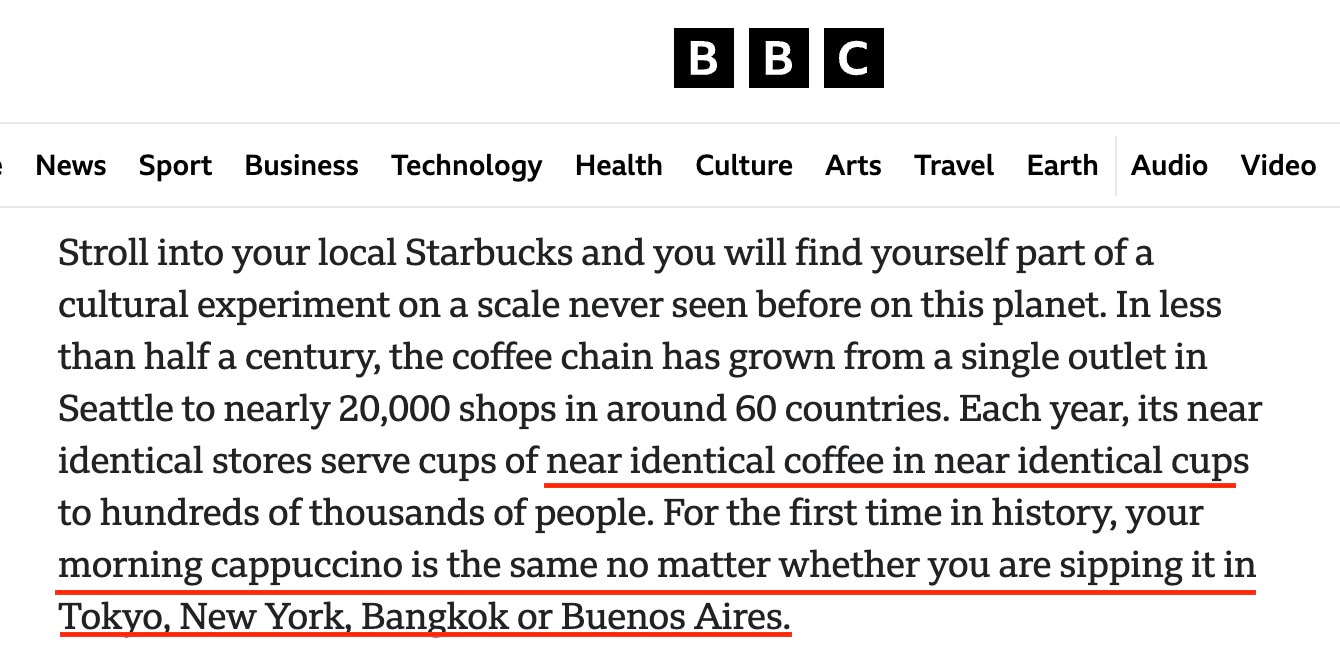
This is one way modernization could be shrinking cultural differences. People in Iowa are eating sushi, and people in Thailand are eating halal American burgers, spotted by my co-author Hamid.

There's some evidence that fits with this. One small language goes extinct every 10 days, according to one estimate. And as countries modernize, they seem to take similar paths of increasing divorce rates, more people living alone, and falling birth rates.
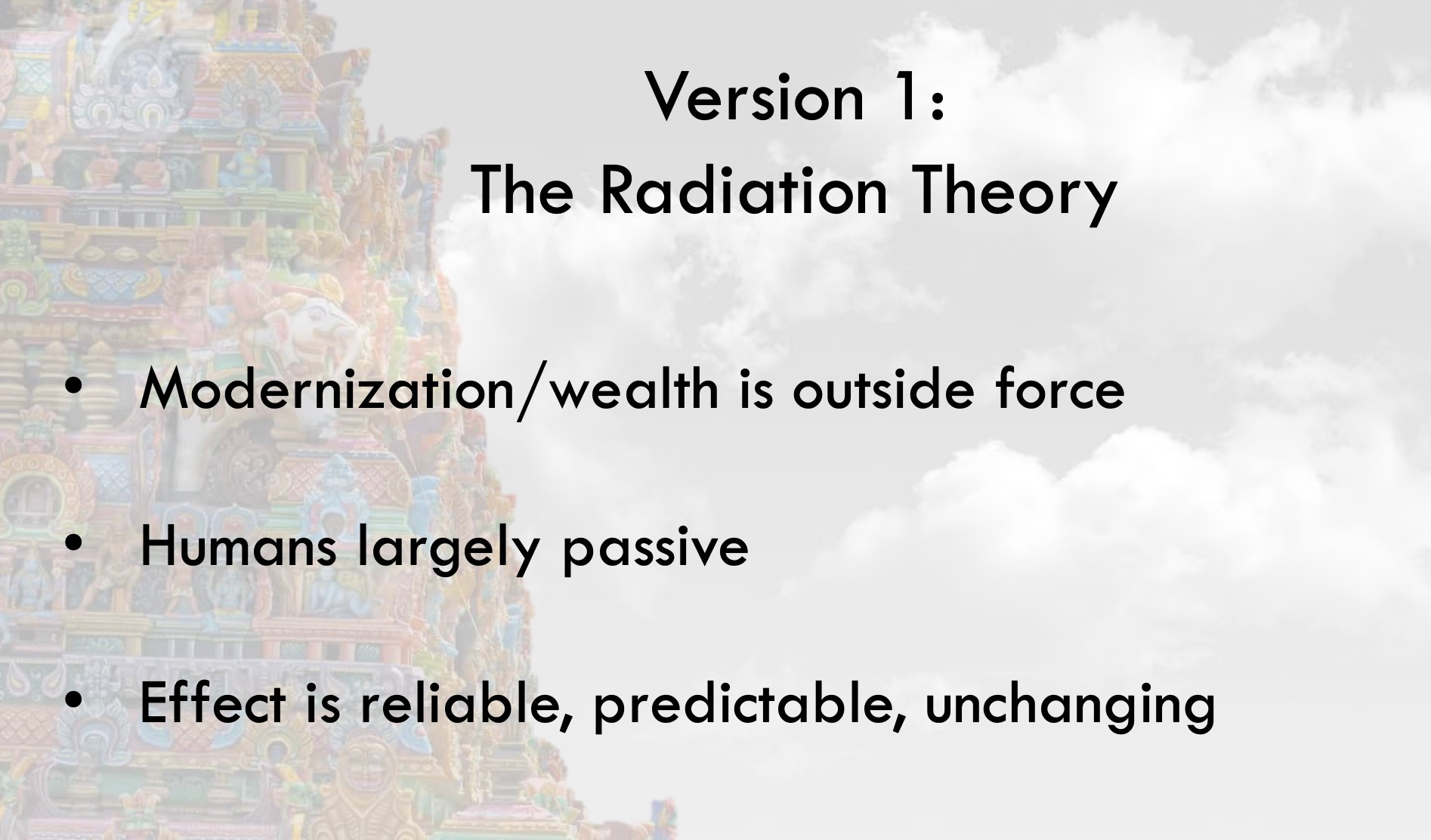
These patterns can explain why (I think) many people have a "radiation theory" of modernization. The idea is that modernization works like radiation to weaken traditional culture.

Radiation weakens people like modernization weakens traditional culture. And like radiation, the effect doesn't matter what the people getting "hit" by modernization think or believe. It has a similar effect whether it's in New Guinea or Burkina Faso.
Some Evidence That Cultures Are Moving Farther Apart
But the data on people's actual psychology shows a much more interesting story. When we look at people's attitudes and values, there's some evidence that cultural differences are actually becoming larger.
For example, consider the World Values Survey. Researchers tallied up all the questions about values in survey going back to the 1980s to calculate how different values are around the world. From the 1980s to 2020, cultures became more different, not more similar.
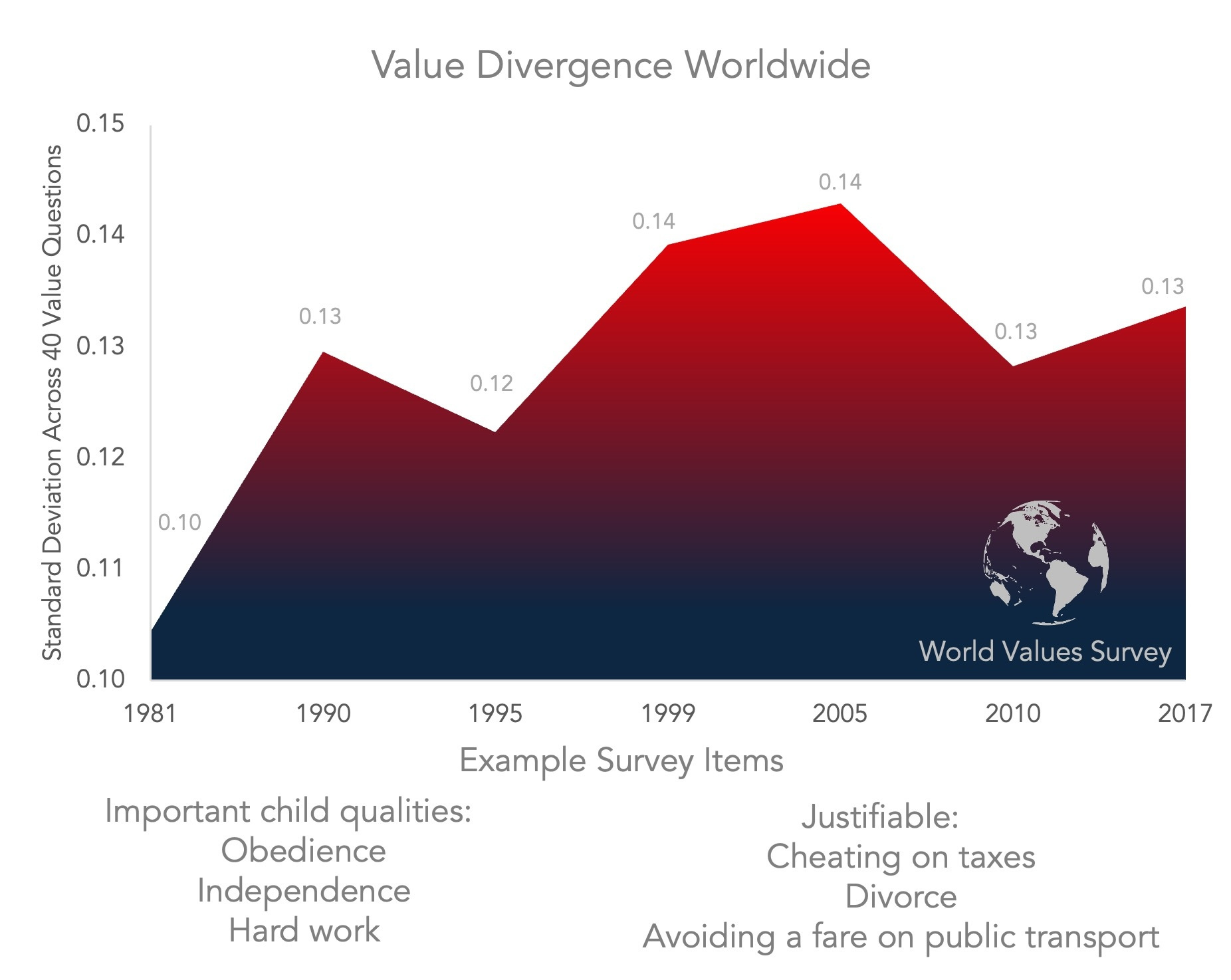
Here's an example of what that means. People around the world used to agree more about the morality of suicide and the importance of teaching children perseverance. Now people agree less than they used to.
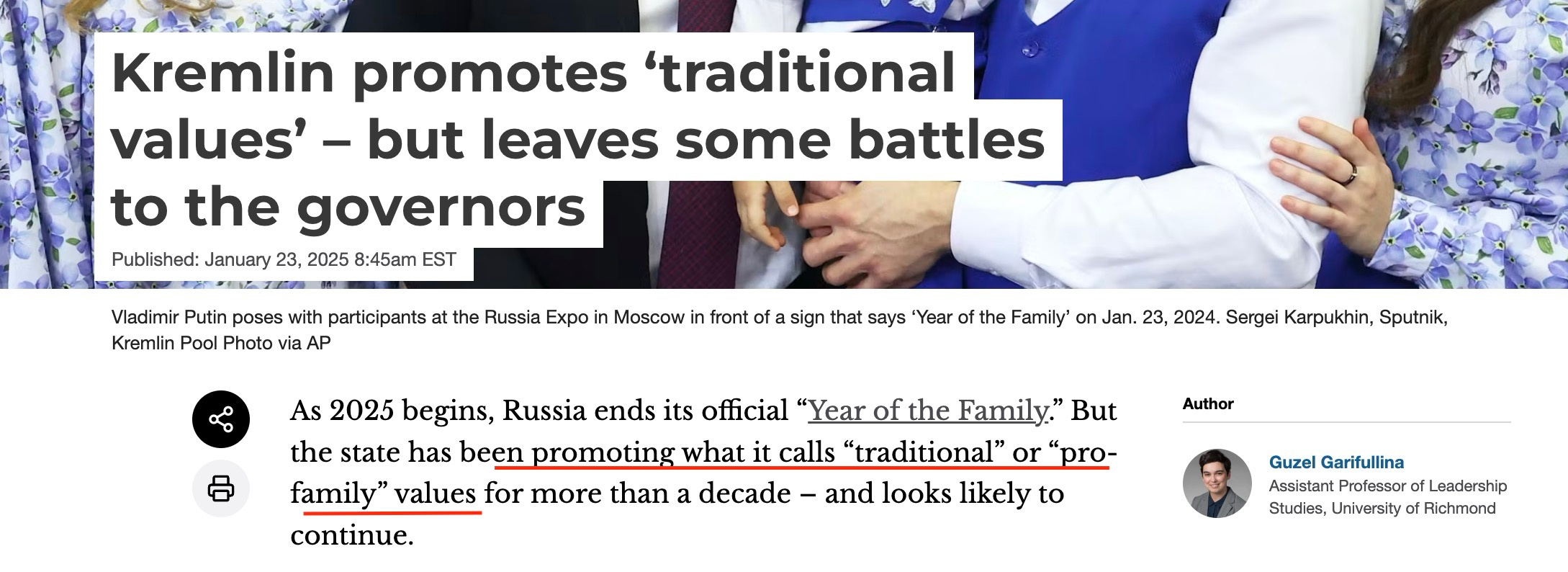
Why is this happening? One idea is that it has something to do with new political rivalries and Trump-like politicians changing world order. For example, observers have described how Russia is promoting family values as an antidote to what it sees as harmful Western liberal values.
If that's the theory, it'd have a hard time explaining why cultural differences are widening within China. My research team measured cultural differences in China between the rice-growing south and the wheat-farming north.
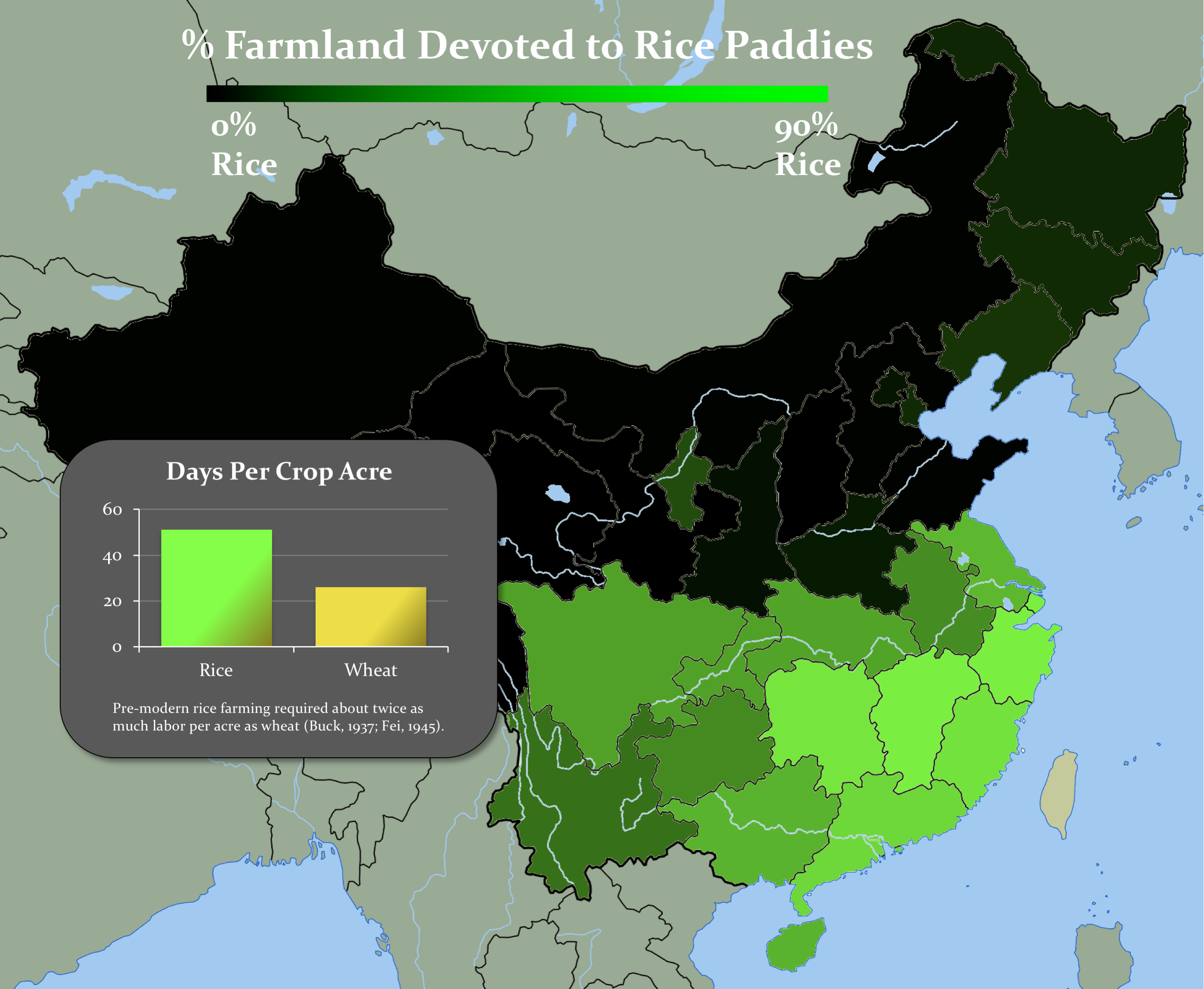
Rice required more labor and coordination than crops like wheat in northern China. That could explain why southern China scores higher on markers of collectivism, like tight social norms, living with extended family, and nepotism.
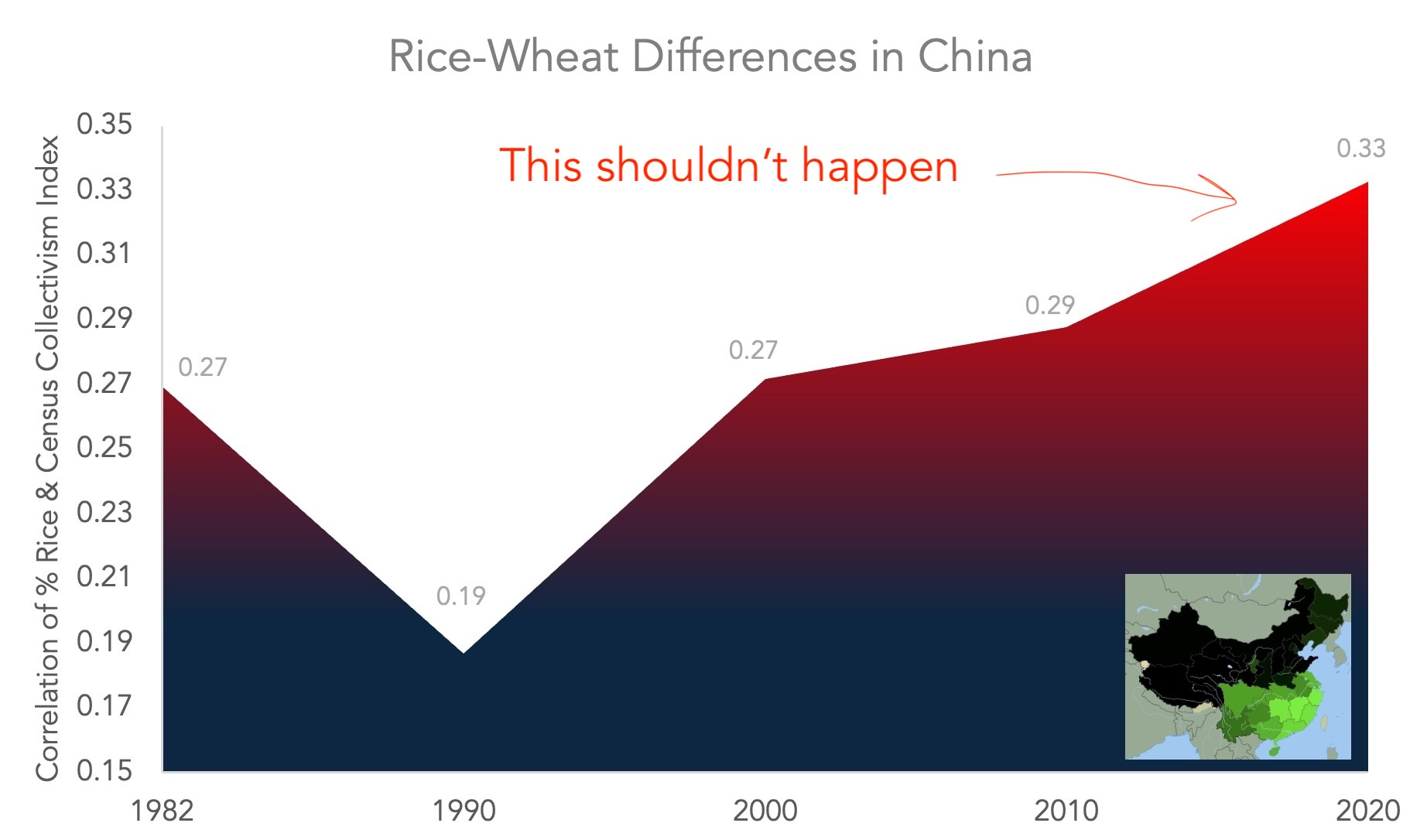
My team wanted to track how those rice-wheat cultural differences are changing as China modernizes. To do that, we used a method cultural psychologists have been using for decades--tracking patterns in Census data.
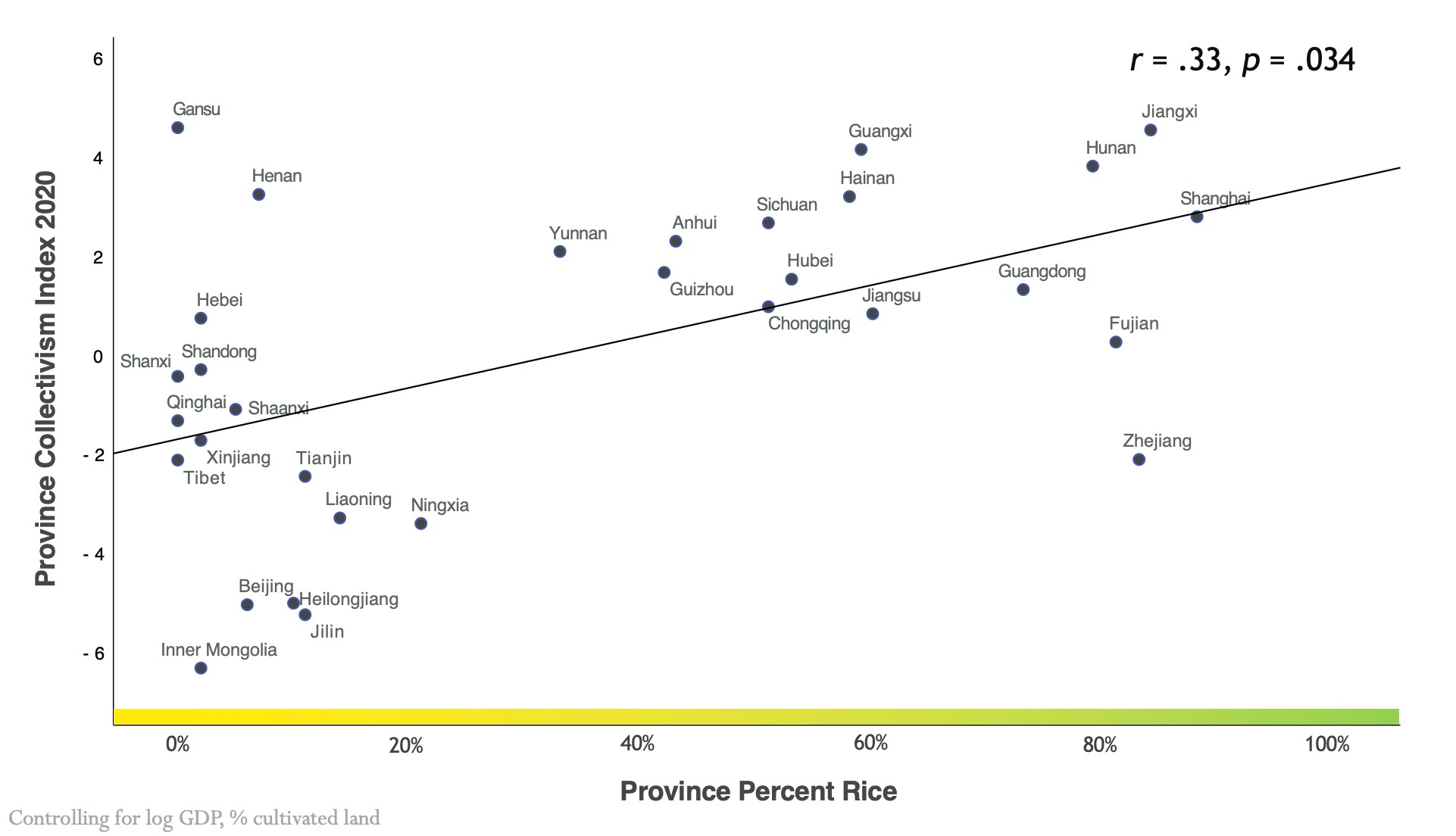
My team created a collectivism index for provinces and prefectures in China using data on living alone, living with extended family, divorce rates, and other factors. Because it uses Census data, we can rewind from 2020 to the 1980s.
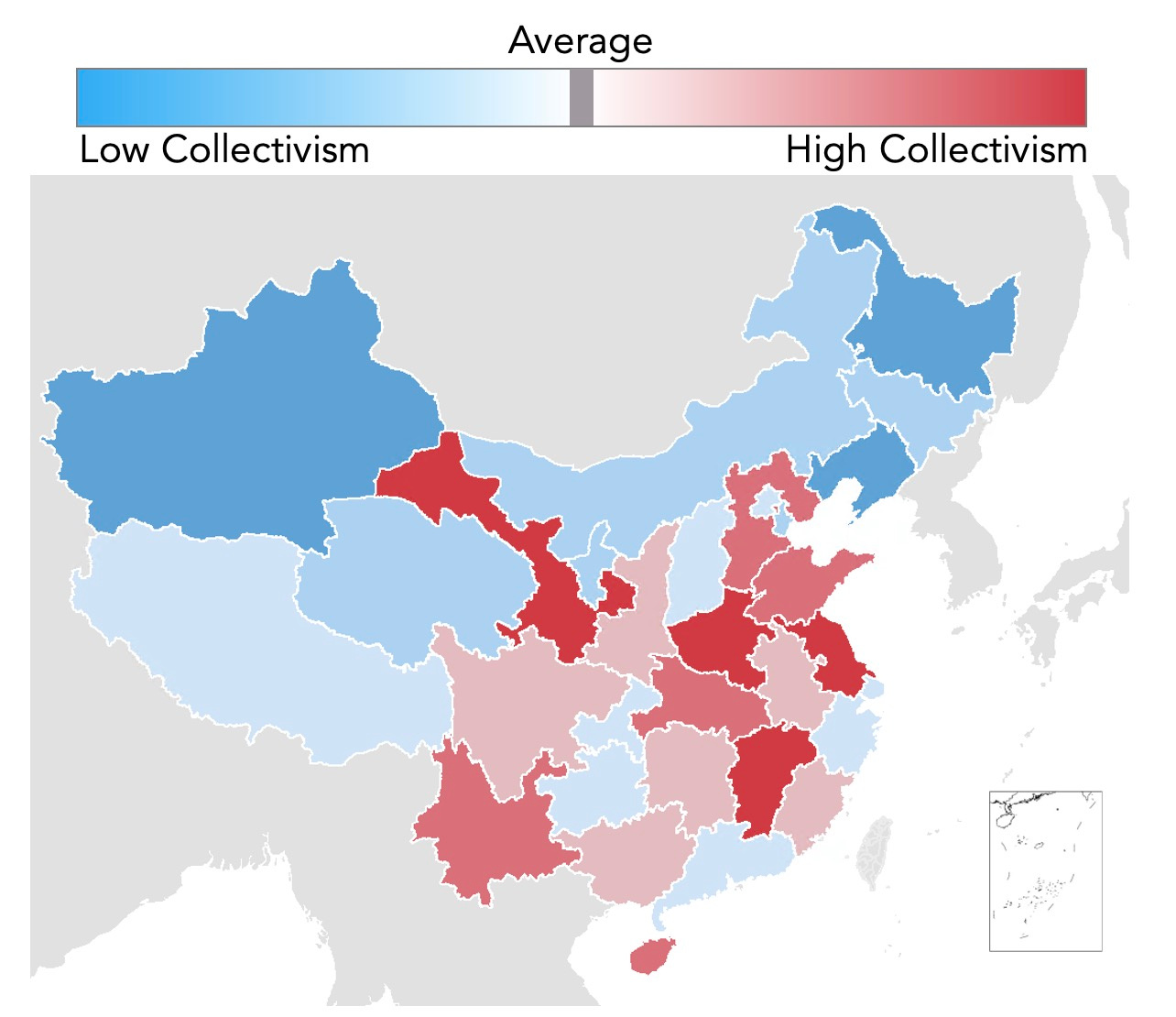
Collectivism should be higher in rice areas. It was, but the relationship was weak. In 1990, the correlation between rice and collectivism was not significant.
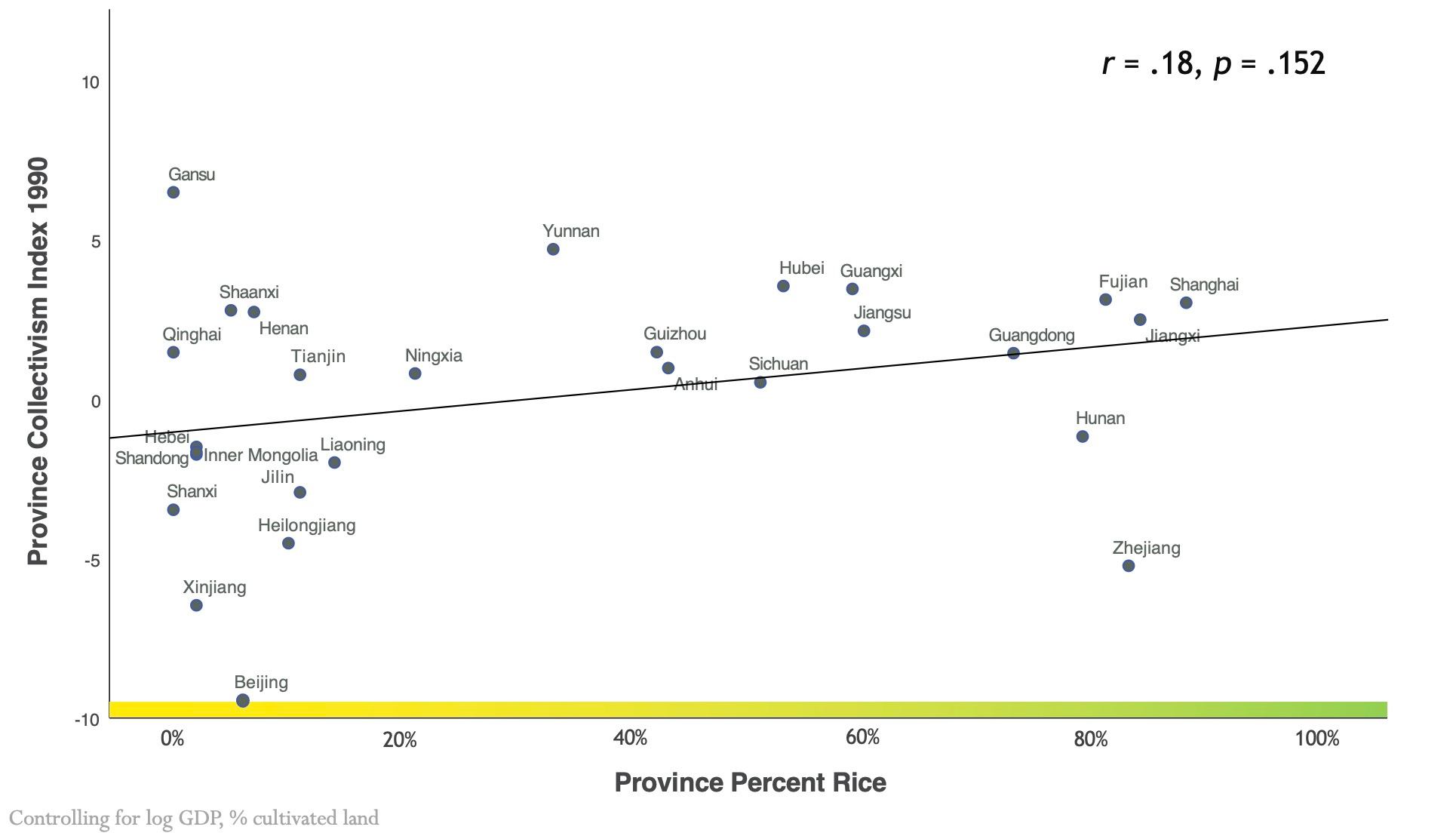
But by 2020, that correlation grew stronger. Rice-wheat differences were now larger and statistically significant.
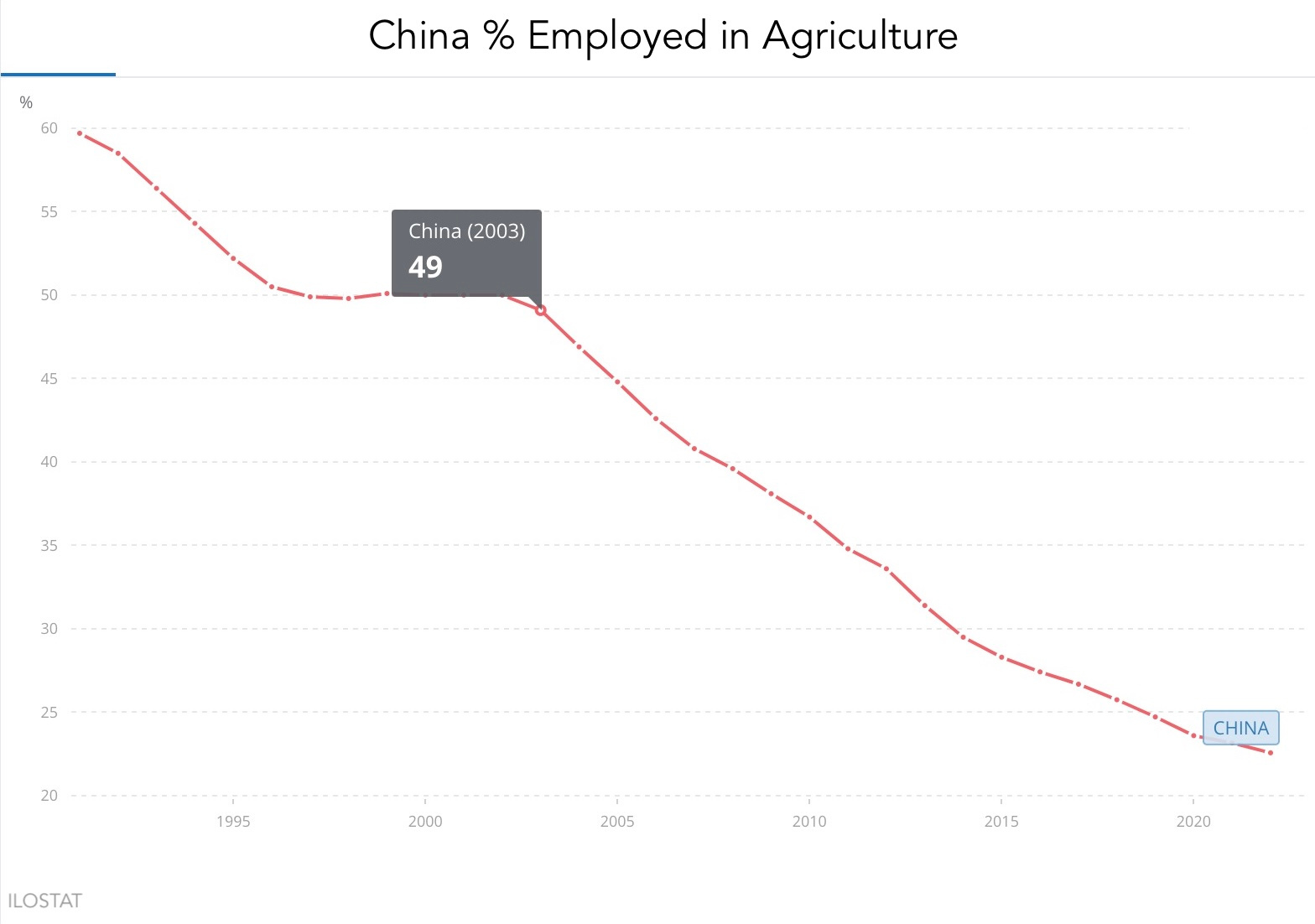
That's odd because people in China are leaving farming. In 2003, China dipped below 50% employment in agriculture for the first time in modern history.
The Seed Theory
I offer an explanation for these strange trends. I call it the "seed theory." It's the idea that modernization sometimes acts like water on a seed, increasing cultural differences.

Modernization can act like water on a seed because modernization brings wealth and technology. That gives people choice. People make choices depending on the values and beliefs in their culture. So the effect of money depends on who that money hits (unlike radiation).

That can explain why rice-wheat differences grew when China experienced 40 years of insane economic growth. And it can explain why modernization increased liberal social values in the West, but not in Asia or Africa. Perhaps the West has different seeds—ones rooted in individual freedom.
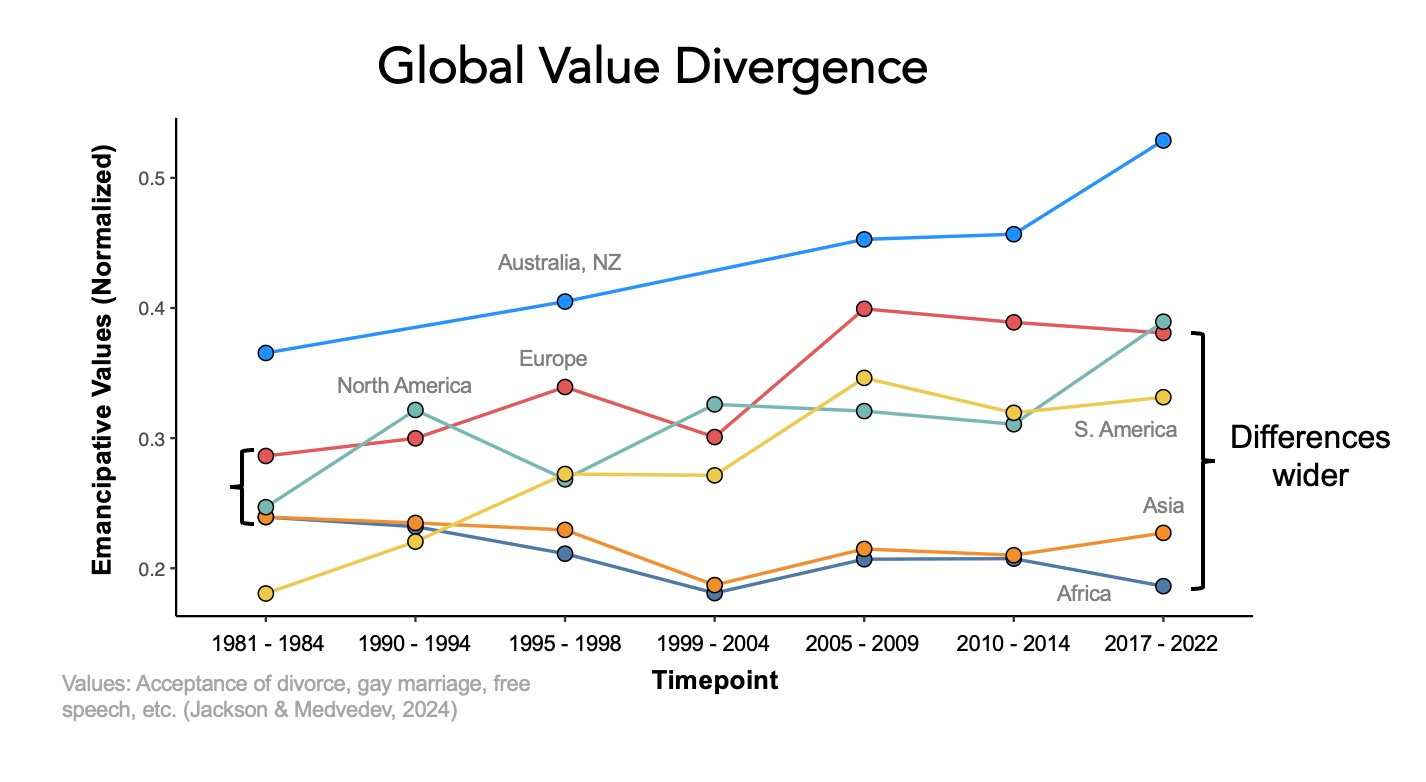
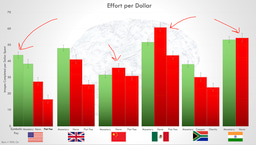
Asia, and Africa were smaller in the 1980s thatn2020.
This isn't to deny the declines in linguistic diversity and the spread of global chains like McDonald's. There's a reason people think modernization is irradiating cultures. But there's enough misfit puzzle pieces to start asking why at least some cultural differences are increasing with modernization.

I'm an Associate Professor holding the Robert Cialdini Endowed Professorship at Arizona State University, where I research culture. I study how rice and wheat agriculture have given northern and southern China two very different cultures, including whether people move chairs in Starbucks. I also study how people misunderstand collectivism (people often forget the suspicion!) and how the power of money over psychology is bigger in Western cultures.