Why We Still Can't Spin Silk Like a Silkworm or Spider
Published in Bioengineering & Biotechnology and Materials
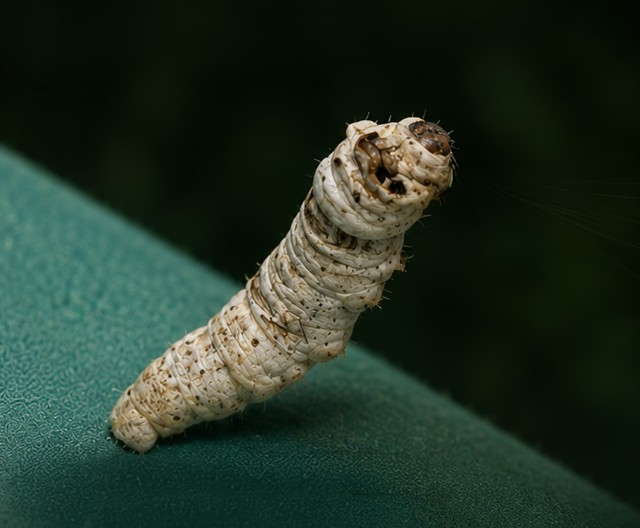




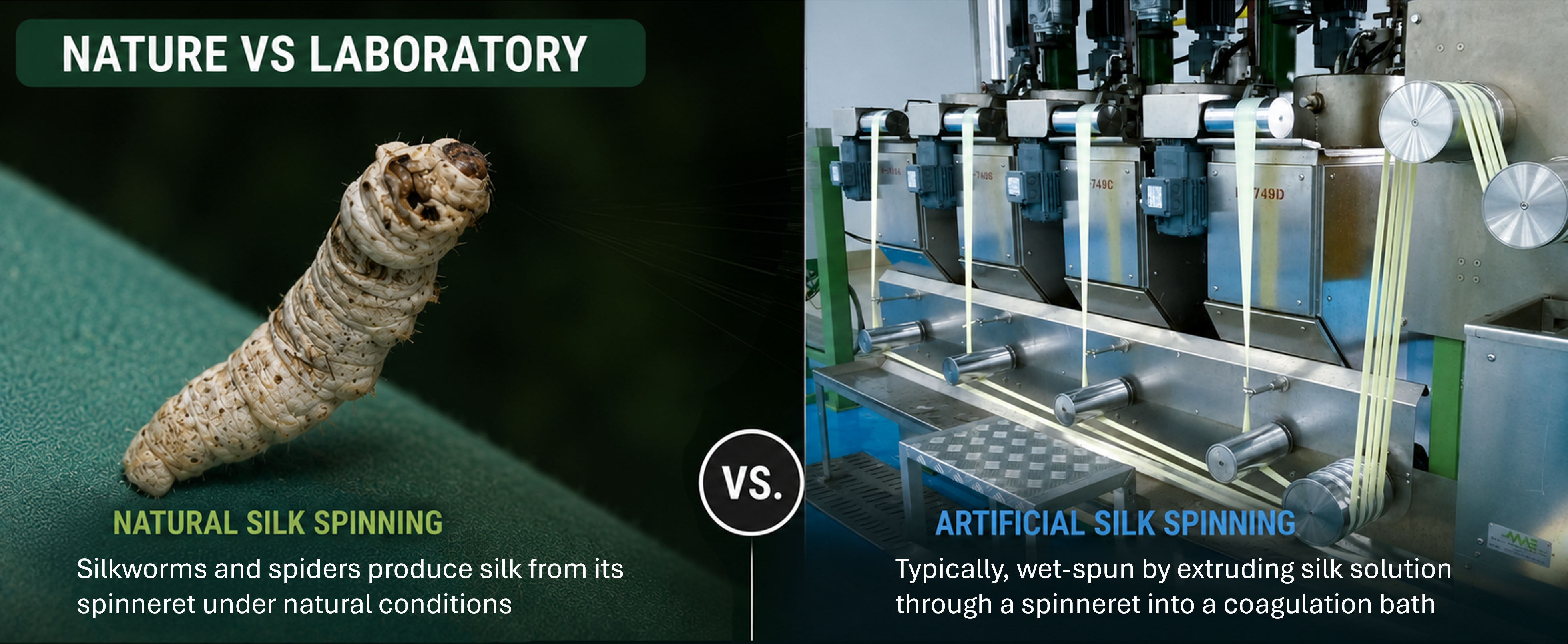
Silk has fascinated scientists, engineers, and textile manufacturers for generations. It is lightweight, biodegradable, produced using only water at room temperature, 1000x more energy efficient than polyethylene, and possesses an extraordinary combination of strength and flexibility. Some silks are so tough that, weight for weight, they rival many advanced synthetic materials.
Given these impressive properties, it is no surprise that researchers have spent more than 100 years trying to understand how nature spins silk and how we might reproduce it in the laboratory.
For decades, the dominant assumption was straightforward: if artificial silk fibres were weaker than natural silk, then the silk proteins themselves must be the problem. Almost a reverse on the idiom "fresh ingredients lead to good food."
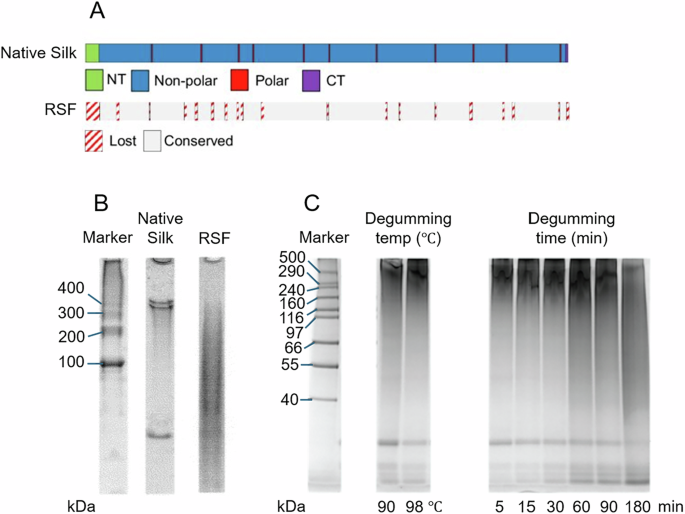
Natural silk proteins are extremely large and highly organised. When scientists dissolve silk fibres and reform them into new materials, a process known as regeneration, the proteins are often damaged. Likewise, when silk proteins are produced using biotechnology (recombinant), they are usually shorter and simpler than those found in nature.
As a result, much of artificial silk research focused on rebuilding or preserving these large protein molecules. The goal was simple: make the artificial proteins more like the natural ones.
And it worked, at least partly.
Closing the Molecular Gap
Over the last two decades, researchers have developed improved methods for preserving silk proteins during processing and have engineered increasingly sophisticated recombinant silk proteins.
These advances have dramatically improved the performance of artificial silk fibres.
In some cases, regenerated or recombinant silks can now produce fibres whose toughness rivals, or even exceeds, that of certain natural silks. This achievement would have been considered impossible only a few decades ago.
Yet a puzzling problem remains.
Despite matching natural silk in some mechanical properties, artificial systems still fail to reproduce many aspects of how silk behaves inside the animal before spinning.
This suggests that we may have been asking the wrong question.
Instead of focusing solely on the silk proteins themselves, perhaps we should be paying more attention to the environment in which they are stored and spun.
Nature Does More Than Make Silk Proteins
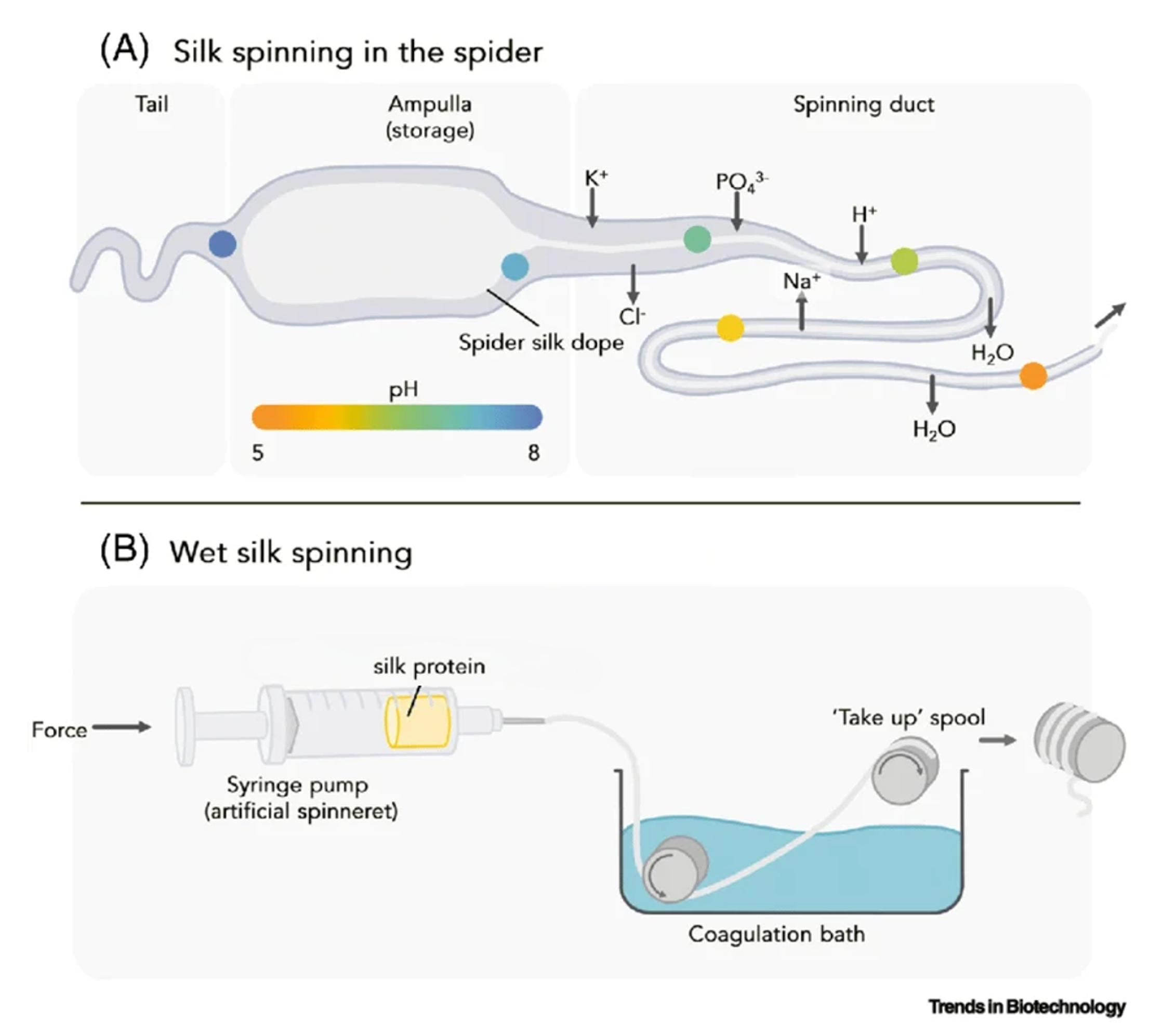
Inside a silkworm or spider, silk proteins do not simply float in solution waiting to become fibres.
They exist within a highly regulated environment where factors such as pH, salt concentration, water content, flow, and mechanical stress are constantly changing.
As the proteins move through the silk gland, these conditions guide them through a series of transformations that eventually produce a highly organised fibre.
One of the most intriguing discoveries in recent years is that silk proteins can undergo a process known as liquid-liquid phase separation.
This phenomenon, which is increasingly recognised throughout biology, occurs when molecules separate into distinct liquid droplets, similar to how oil separates from water.
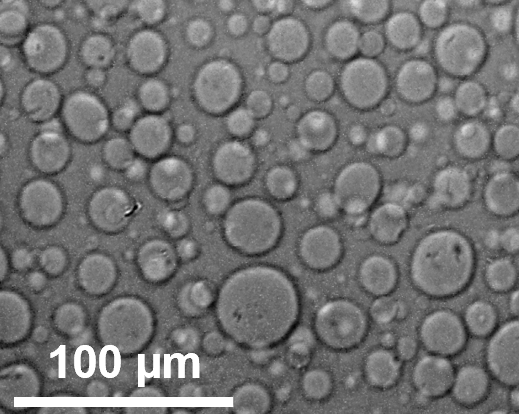
Researchers believe these droplets help organise silk proteins before spinning, potentially making it easier for them to align and assemble into strong fibres.
Because of this, liquid-liquid phase separation has become one of the most exciting topics in silk research.
However, our analysis revealed something unexpected.
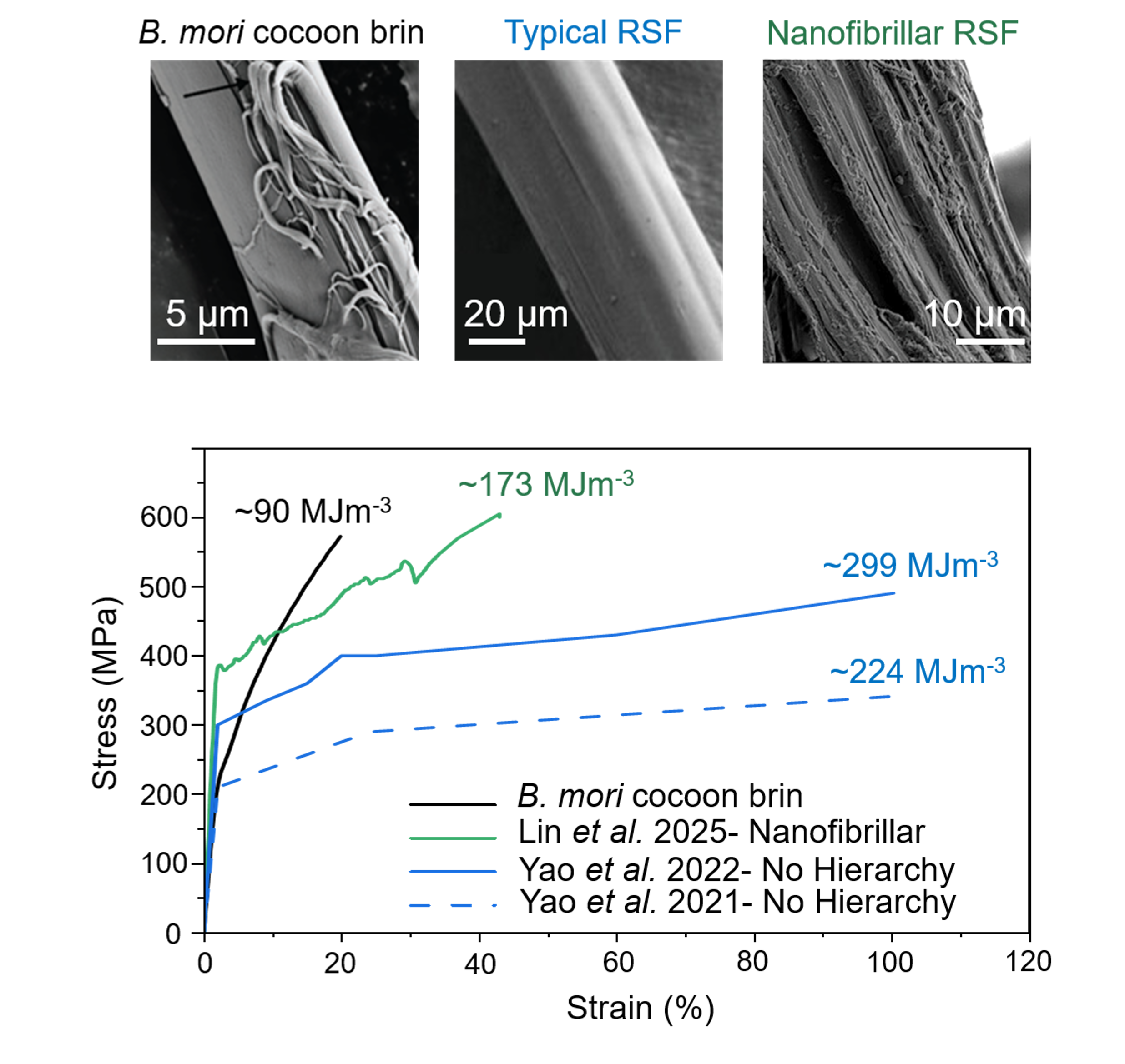
While liquid-liquid phase separation and hierarchical structures can often be recreated in artificial silk systems, they do not always lead to better fibre performance.
In other words, simply recreating one feature of natural silk assembly does not automatically reproduce the final result.
Looking Beyond the Molecule
Our work compares three major approaches to artificial silk production:
- Regenerated silk fibroin, produced by dissolving degummed natural silk fibres.
- Recombinant silk proteins, produced through biotechnology.
- Regenerated undegummed silk, which dissolves natural silk fibres and preserves more of silk's natural molecular complexity.
Each approach offers different insights into how silk works.
What emerged from this comparison is a common theme: molecular structure matters, but it is not the whole story.
In fact, when molecular integrity is preserved, many of the remaining differences between artificial and natural silk appear to arise from the surrounding environment rather than the major structural proteins (e.g. fibroin or spidroin) themselves.
Natural silk is not a single purified protein.
It is a complex mixture containing many different components interacting together under constantly changing conditions. These interactions help control how silk proteins remain stable, organise themselves, and eventually transform into fibres.
Artificial systems, by comparison, are often much simpler.
As a result, they may lack the compositional complexity and dynamic environmental cues needed to fully reproduce nature's spinning process.
The Next Generation of Artificial Silk Research
For many years, the challenge of artificial silk seemed to be a molecular problem: use bigger, better preserved, proteins.
Today, that challenge is evolving.
Our findings suggest that future breakthroughs may depend less on further improving protein design and more on recreating the sophisticated environment of the silk gland itself.
This means understanding how factors such as ions, water content, flow, confinement, and phase separation work together to shape fibres as they form. It also means looking beyond the major silk proteins to the smaller components that are present in much lower amounts but may play an important role in helping nature spin such exceptional materials.
Rather than asking, "How do we make silk proteins?", researchers may increasingly ask, "How do we recreate the conditions that allow silk proteins to behave like they do in nature?"
Answering that question could help unlock not only better artificial silks, but also new strategies for manufacturing advanced materials and fibres under environmentally friendly conditions.
After all, silkworms and spiders have spent hundreds of millions of years perfecting their spinning technology.
Despite a century of research, we are only beginning to understand how sophisticated that technology truly is.

Follow the Topic
-
Communications Materials
A selective open access journal from Nature Portfolio publishing high-quality research, reviews and commentary in all areas of materials science.

Related Collections
With Collections, you can get published faster and increase your visibility.
Orbitronics and unconventional spin-orbit torque for next-generation magnetic memory and spin logic devices
Publishing Model: Open Access
Deadline: Oct 31, 2026
Smart windows for sustainable buildings
Publishing Model: Open Access
Deadline: Oct 31, 2026