Widespread ecological responses and cascading effects of the 2021 western North American heatwave
Published in Ecology & Evolution





When the heatwave hit Western North America in June 2021, we weren’t prepared. As ecologists, we knew that the frequency of extreme temperature events was increasing. But the 2021 heatwave, popularly known as the 2021 “heat dome”, arrived with less than a week of warning from weather forecasters. Temperatures skyrocketed more than 10°C above long-term averages, and stubbornly stayed there for seven days (June 25-July 2). The town of Lytton, in southwestern British Columbia, Canada recorded a temperature of 49.6°C - the highest temperature ever recorded in Canada - before tragically burning to the ground. We would learn later that this was the sixth most extreme heatwave in the world since 1960.
The human costs of the heatwave were immediate and obvious: in British Columbia alone, more than 600 deaths over that period could be attributed to the heatwave.
But what about the myriad species of wildlife that were also at the heatwave’s mercy? Some impacts were obvious: the loss of an estimated billion marine invertebrates along the shoreline made headlines. Beyond this, however, little was known about the heatwave’s ecological impacts and we suspected that they were widespread.
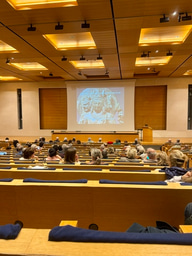
To answer these questions, we put together a weeklong meeting of interested researchers, funded by the University of British Columbia’s Biodiversity Research Centre and organized by the Canadian Institute of Ecology and Evolution. We kicked off the working group with a public symposium, and then put out the call for ecological data collected before and during or after the heatwave. The data came from many sources, including camera trap images of wildlife, acoustic recordings of bats, radiotelemetry of hawks, and automated monitors of beehive masses. Many graduate students were caught by the heatwave in the middle of their thesis research, such as Katie Goodwin who was counting fruitset on alpine lupine, Amelia Hesketh who was conducting experiments with barnacles, and Brian Timmer who had been monitoring intertidal seaweed communities. Ironically, Sandra Emry was in the midst of experimentally heating intertidal communities for her doctorate when the heatwave overwhelmed these treatments. Other data came from provincial and federal government researchers, environmental consultants, First Nations, research foundations and academics from multiple universities. We also made use of citizen science records, like Audubon's eBird. By pulling these records together in a formal meta-analysis, comparing responses before versus during or after the heatwave, we could test ideas about what determined the response of species to the heat wave. Many of the most impacted species were sessile: fixed in place by roots, shells, or holdfasts, and therefore unable to avoid the heat by moving.
We also wanted to explore the impacts at larger scales, on entire ecosystems. One way that we could do this was by combining satellite-derived data on temperature and vapour pressure deficit (the evaporative demand of the atmosphere) with ecophysiological models to estimate effects on photosynthetic efficiency and the rate at which plant biomass is produced at landscape levels. We found high variation in responses both between plants of different physiologies, and between different bioclimatic zones. This meant that in the drier 60% of British Columbia, plants were less efficient at photosynthesizing and gross primary production declined. The effects of the heatwave could also lead to further disturbances within ecosystems. By collating regional records of streamflows, we found that the heatwave shifted the seasonal timing of snowmelt, altering the hydrology of montane watersheds. Similar collating of regional wildfire records showed a spike in wildfire activity immediately after the heatwave.
In the end, we were able to pull together information on the ecological effects of the 2021 heat dome from remote sending, ecophysiology models, regional databases, long-term monitoring, camera and bioacoustic monitors, citizen science surveys, field experiments, image analysis and opportunistic observations. While this mixed-methods approach allowed us to provide a broad overview of the effects of the heatwave, the opportunistic nature of the analysis means that not all important species and systems are represented. As the frequency of extreme events will only increase as climate change progresses, we need to proactively build integrated biodiversity research and monitoring networks to monitor the effects of future extreme events and propose management interventions. With 2026 forecast to be one of the hottest years on record globally, the time is now for such urgent initiatives.
Photograph shows a mountain goat panting during the heatwave, taken on June 27th 2021 by a camera trap. Credit: UBC WildCo and BC Ministry of Water, Land, and Resource Stewardship
Follow the Topic
-
Nature Ecology & Evolution

This journal is interested in the full spectrum of ecological and evolutionary biology, encompassing approaches at the molecular, organismal, population, community and ecosystem levels, as well as relevant parts of the social sciences.
Related Collections
With Collections, you can get published faster and increase your visibility.
Biodiversity and ecosystem functioning of global peatlands
Publishing Model: Hybrid
Deadline: Jul 27, 2026
Understanding species redistributions under global climate change
Publishing Model: Hybrid
Deadline: Jun 30, 2026
Please sign in or register for FREE
If you are a registered user on Research Communities by Springer Nature, please sign in