World Health Day 2026: Together for health. Stand with science
Published in Sustainability and Public Health








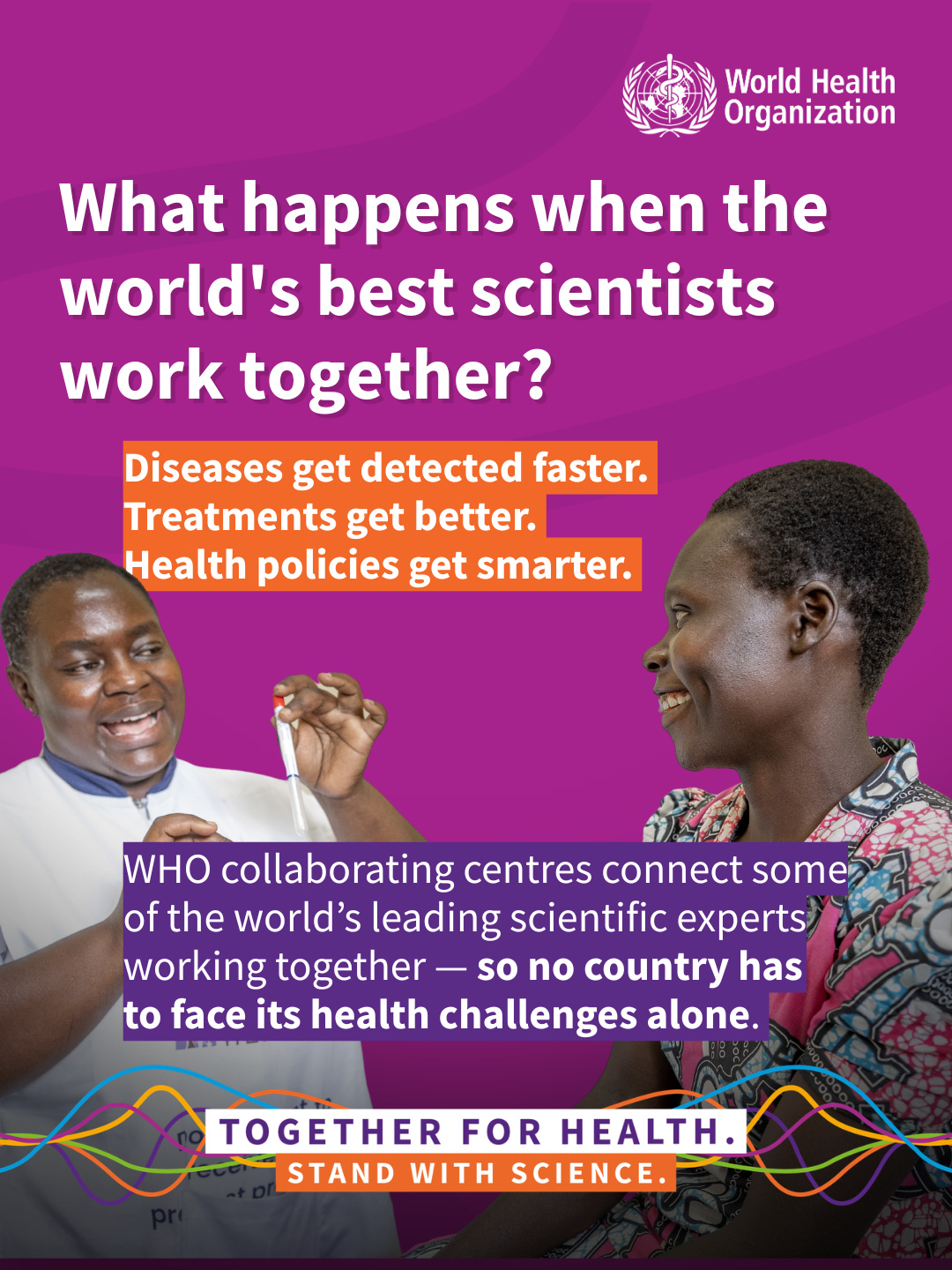
World Health Day is celebrated annually to draw attention to a health topic of concern to people worldwide. This year, the campaign “Together for health. Stand with science” raises awareness about how the power of scientific collaboration protects the health of people, animals, plants, and the planet.
Highlights from Springer Nature Journals
The highlights collection begins with research looking at the ethics of data mining in healthcare, specifically key challenges, existing frameworks, and future directions for the responsible use of health data. Complementing this is a systematic review that maps trends and patterns in human viral pathogens from 1900 to 2024; this offers valuable insights into how digital surveillance and long‑term datasets can strengthen global preparedness.
 Vaccines, confidence, and infectious disease
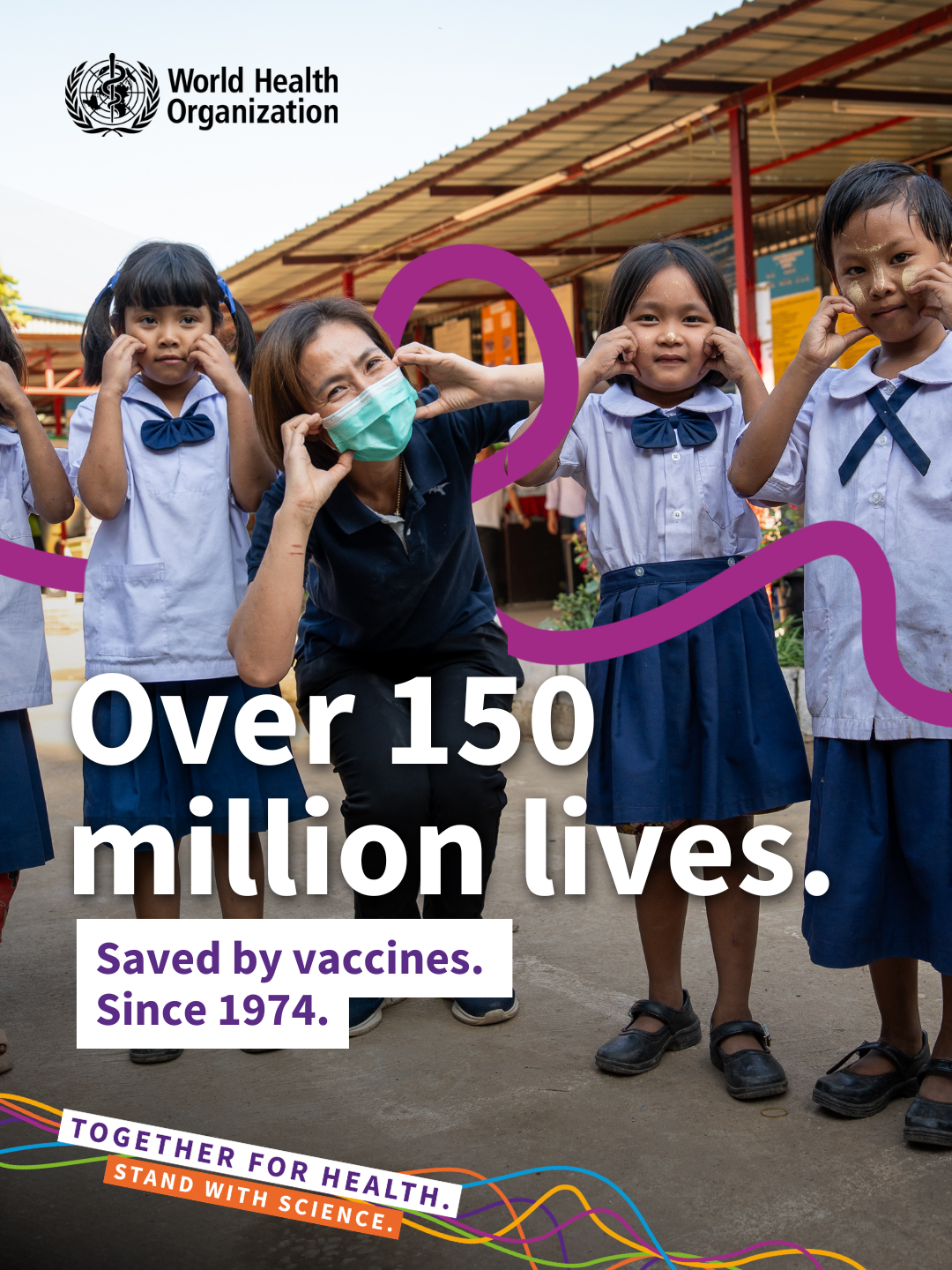
Several articles explore public attitudes toward vaccines and hesitancy. A mixed-methods study combining machine learning and thematic analysis investigates modifiable risk factors of vaccine hesitancy during the COVID‑19 pandemic. Another article considers vaccine confidence, focusing on how public perceptions may shape the introduction of new tuberculosis vaccines.
Regulation, policy, and sex‑informed researchEvidence‑based regulation is highlighted in work from the Organization for the Study of Sex Differences and the Society for Women’s Health Research, which supports FDA action on menopausal hormone therapy and encourages more comprehensive sex‑informed updates to drug labels. This is important for integrating sex and gender considerations into regulatory decision‑making.
Child and adolescent healthSeveral studies address health needs across early life stages. An umbrella review assesses the effectiveness of school‑based oral health education interventions on oral health status and hygiene behaviours among schoolchildren. Another investigation evaluates the potential risks and benefits of prenatal selective serotonin reuptake inhibitor medications, examining implications for both maternal mental health and child development.
Equity, inclusion, and global collaborationA narrative review explores how Global Collaborative Evidence Networks can strengthen global health equity through improved governance, power sharing, and participation. Alongside this, research on co‑produced interventions shows how collaborative approaches can help increase clinical trial participation among people from ethnically diverse communities and support more inclusive research designs.
Collections calling for submissions
Book Chapters
Springer Nature Research Communities
Conclusion
If you want to get involved in World Health Day this year, you can visit the WHO World Health Day Call to Action for tools and guidance on supporting science-led health for people, animals, and the planet every day, not just on World Health Day.
Follow the Topic
-
BMC Global and Public Health
An open access, transparent peer review journal publishing outstanding and influential research and opinion of broad interest to all professional communities involved in global and public health research, policy-making, implementation and delivery worldwide.
-
BMC Infectious Diseases
This journal is an open access, peer-reviewed journal that considers articles on all aspects of the prevention, diagnosis and management of infectious and sexually transmitted diseases in humans, as well as related molecular genetics, pathophysiology, and epidemiology.
-
BMC Medicine
This journal publishes outstanding and influential research in all areas of clinical practice, translational medicine, medical and health advances, public health, global health, policy, and general topics of interest to the biomedical and sociomedical professional communities.
-
Nature Communications
An open access, multidisciplinary journal dedicated to publishing high-quality research in all areas of the biological, health, physical, chemical and Earth sciences.
-
Scientific Reports
An open access journal publishing original research from across all areas of the natural sciences, psychology, medicine and engineering.
-
Nature Mental Health
This journal takes an expansive view of the relationship between mental health and human health. It brings together innovative investigation of the neurobiological and psychological factors that underpin psychiatric disorders to contemporary work examining the effects of public health crises.
-
ISRCTN: The UK’s Clinical Study Registry
A primary clinical trial registry recognised by WHO and ICMJE that accepts studies involving human subjects or populations with outcome measures assessing effects on human health and well-being, including studies in healthcare, social care, education, workplace safety and economic development.
-
Globalization and Health
This is a pioneering transdisciplinary journal that situates public health and well-being within the dynamic forces of global development.
-
Health Research Policy and Systems
This journal covers all aspects of the organisation and use of health research – including agenda setting, building health research capacity, and how research as a whole benefits decision makers, practitioners in health and related fields, and society at large.
-
Evidence-Based Dentistry
Evidence-Based Dentistry (EBD) aims to create a dialogue between dental practitioners and dental researchers, in order to drive new research and promote the use of the best available evidence to inform clinical decision making.
-
Biology of Sex Differences
This journal is unlike any other scientific journal: articles focus on sex differences in all aspects of an individual or organism. Everything from molecules to behavior and from studies of cellular function to clinical research studies are reported in this journal.
-
Communications Earth & Environment
An open access journal from Nature Portfolio that publishes high-quality research, reviews and commentary in the Earth, environmental and planetary sciences.
-
BioData Mining
This is an open access, open peer-reviewed, informatics journal encompassing research on all aspects of Artificial Intelligence (AI), Machine Learning, and Visual Analytics, applied to high-dimensional biological and biomedical data.
-
Communications Sustainability
An open-access journal publishing high-quality, editorially selected and peer-reviewed advances in all sustainability-related areas of science, including the natural and social sciences as well as engineering.
-
Communications Health
This is an open access journal from Nature Portfolio publishing high-quality research, reviews and commentary in all population health-related areas of research.















Related Collections
With Collections, you can get published faster and increase your visibility.
Environmental exposure, maternal health and child health
BMC Global and Public Health is pleased to announce a call for papers for our upcoming collection entitled Environmental exposure, maternal health and child health, guest edited by Dr. Nuria Güil from the Barcelona Institute for Global Health, Spain, Dr. Pengfei Guo from University of South Carolina, USA and Dr. Wei Li from Yale University, USA. The aim of the collection is to capture global efforts and novel approaches in this multi-disciplinary area. Maternal and child health is a substantial domain of global public health, with outcomes that shape individual well-being and societal development. Pregnancy and early life are periods of heightened biological sensitivity, during which exposures exert lasting effects. Complications such as hypertensive disorders, gestational diabetes, and perinatal mental health challenges, as well as birth and child outcomes including preterm birth, growth restriction, and neurodevelopmental impairment, highlight the need for continued research and intervention to reduce risks and promote health equity.
Environmental exposures are increasingly recognized as critical and modifiable determinants of maternal and child health. Adverse exposures such as ambient air pollution, environmental tobacco or cannabis smoke, contaminated water, pesticides, endocrine disruptors, heavy metals, noise, light pollution, natural disasters, and other emerging pollutants contribute to reproductive and developmental risks, often acting in mixtures and interacting with social or neighborhood determinants. At the same time, positive environmental influences such as access to clean air and water, green space, safe housing, and supportive community environments, have been shown to promote healthier pregnancies, enhance child neurodevelopment, and reduce stress for families. Advancing knowledge of both harmful and protective pathways is essential for developing effective interventions, guiding policy, and addressing environmental challenges that threaten maternal and child health.
We are now inviting the submission of manuscripts of outstanding interest covering the breadth of multi-disciplinary studies, ranging from observational to interventional that are focused on the effect of environmental exposure on maternal and child health. We envision this work to inform future research, conceptual frameworks, intervention development, and policy advancement.
Sample foci of papers include:
- Epidemiological studies on environmental exposures (e.g., air pollutants, per- and polyfluoroalkyl substances, pesticides, heavy metals, plastics, greenspace, noise, climate-related hazards) and maternal, fetal, and child health outcomes
- Environmental tobacco or cannabis secondhand smoke exposure and postpartum physical and mental health on maternal and child health (e.g., postpartum depression and anxiety, maternal sleep and recovery, breastfeeding outcomes, infant respiratory illness and neurodevelopment)
- Population-level insights into contextual pathways and disparities (e.g., social determinants, neighborhood environment, climate vulnerability) that influence reproductive, perinatal, and developmental health outcomes
- Policy, intervention, and prevention strategies to reduce environmental risks and improve maternal and child health globally
- Interactions between environmental exposures and social determinants of health
- Novel data collection/assessment tools (e.g., mixture, exposome, or omics approaches)
This Collection supports and amplifies research related to SDG 3: Good Health and Well-being.
We encourage work from local, regional and global partnerships and collaboration among scientists from multi-disciplinary fields and using multiple methodologies. We ask that authors be attentive to the use of non-stigmatizing/preferred language in their manuscripts as outlined in relevant language guidelines for their respective fields.
All manuscripts submitted to this journal, including those submitted to collections and special issues, are assessed in line with our editorial policies and the journal’s peer-review process. Reviewers and editors are required to declare competing interests and can be excluded from the peer review process if a competing interest exists.
Publishing Model: Open Access
Deadline: Oct 30, 2026
Personalized medicine in infectious diseases
BMC Infectious Diseases invites submissions for a Collection on Personalized medicine in infectious diseases.
The field of personalized medicine is rapidly advancing, particularly among infectious diseases, where the traditional ‘one-size-fits-all’ treatment approaches are increasingly inadequate. As our understanding of the genetic, environmental, and lifestyle factors influencing disease susceptibility and treatment response grows, this Collection aims to explore innovative strategies and technologies that can enhance the application of personalized medicine in combating infections.
Recent advancements in genomics, pharmacogenomics, and bioinformatics are transforming the application of personalized approaches for infectious diseases. These developments have enabled the identification of specific biomarkers that inform individualized treatment strategies, improving patient outcomes and minimizing adverse effects. In parallel, advances in molecular diagnostics and tailored antimicrobial therapies offer new opportunities to address the escalating challenge of antimicrobial resistance.
Improved understanding of host-pathogen interactions and the genetic determinants of infections may support the development of targeted antiviral and antimicrobial strategies that enhance their effectiveness, while limiting the emergence of resistance. Research in this area may also enable personalized antimicrobial dosing and optimized treatment guidelines that balance individual patient benefits with broader public health considerations.
This Collection welcomes original research articles on topics including but not limited to:
- Tailored antimicrobial therapy in infectious diseases
- Patient-specific interventions to improve clinical outcomes
- Personalized strategies to address antimicrobial resistance
- Precision medicine approaches in antiviral therapy
- Novel methodologies for disease modelling and therapeutic targeting
- Precision diagnostics, including biomarker validation and metagenomic sequencing
- Model-informed personalized dosing in infectious diseases
- Therapeutic drug monitoring in anti-infective therapy
This Collection supports and amplifies research related to SDG 3 (Good Health and Well-being).
All manuscripts submitted to this journal, including those submitted to collections and special issues, are assessed in line with our editorial policies and the journal’s peer review process. Reviewers and editors are required to declare competing interests and can be excluded from the peer review process if a competing interest exists.
Publishing Model: Open Access
Deadline: Dec 16, 2026