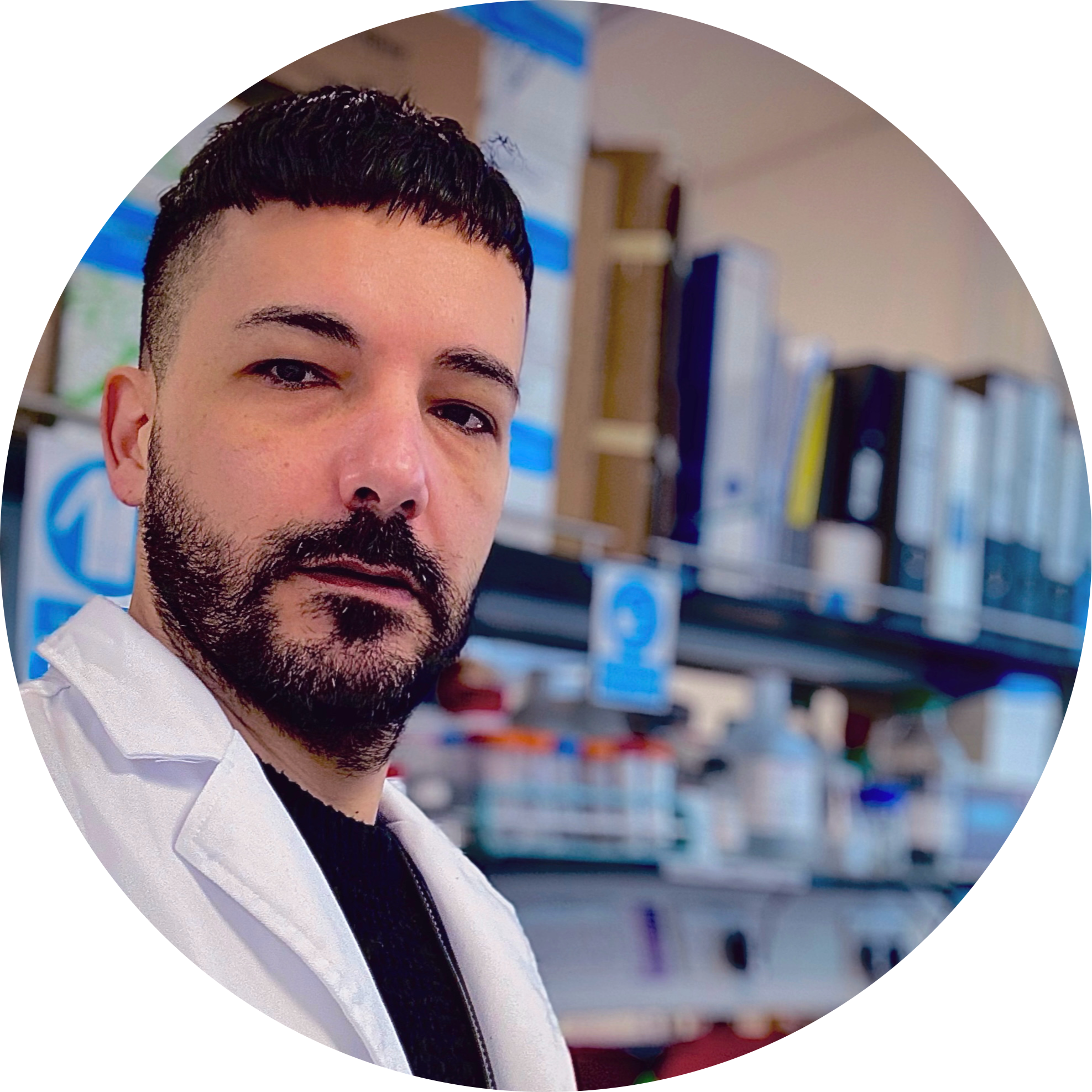
About Michelangelo Certo
Dr. Michelangelo Certo is a distinguished researcher at the forefront of inflammation and metabolism. He earned his MSc in Pharmaceutical Chemistry and Technology with honours in 2010, followed by a PhD in Cellular Biochemistry and Pharmacology in 2013, both from the University of Calabria, Italy. His early research at the Centre of Preclinical and Translational Pharmacology focused on unravelling the intricate interplay between the immune system and the brain during ischemic injury, with the goal of identifying groundbreaking immunotherapeutic strategies for stroke.
Recognized for his expertise in Pharmacology by the Department Council at the School of Pharmacy, University of Calabria in 2015, Dr. Certo soon after secured a prestigious Research Fellowship from the Italian Society of Pharmacology. This opportunity led him to University College London, where he expanded his research into the realm of chronic pain, applying his deep understanding of inflammatory pathways to uncover novel therapeutic targets.
Throughout his career, Dr. Certo has been driven by a passion for decoding the inflammatory mechanisms that govern immunity, with a strong emphasis on translational medicine. His work spans cell trafficking, target identification, therapeutic exploitation, and the development of reparative and regenerative therapies. In 2017, he transitioned to Barts and The London School of Medicine and Dentistry at Queen Mary University of London, where he explored the metabolic regulation of immune cell function and the role of key metabolites—such as lactate and fatty acids—as powerful signaling molecules in immune-inflammatory responses.
In 2018, Dr. Certo joined the College of Medicine and Health at the University of Birmingham, where he currently serves as a Senior Research Scientist in Metabolism and Inflammation. His research delves into the complex crosstalk between metabolic and inflammatory pathways, investigating their roles in stroke (funded by the University of Birmingham) and chronic inflammatory diseases, including atherosclerosis (funded by the British Heart Foundation) and Sjögren's syndrome (funded by the Medical Research Council). In addition to his research, he also serves as BMSU Departmental Lead, playing a pivotal role in advancing biomedical research and innovation within the university.
With a career dedicated to bridging fundamental research and therapeutic applications, Dr. Certo continues to push the boundaries of knowledge in inflammation, metabolism, and disease intervention.
Current research project
Dr Michelangelo Certo’s research explores the intricate interplay between metabolic and inflammatory pathways, with a particular focus on how metabolic alterations in inflammation-driven diseases shape immune cell behaviour. These disruptions are not only instrumental in triggering inflammation but also play a key role in sustaining and amplifying it. His work specialises in understanding the metabolic regulation of T cell-mediated immune responses, investigating critical aspects such as cell migration, differentiation, and cytokine production—both under normal physiological conditions and within the context of disease.
A central pillar of his research examines the profound impact of lactate accumulation, which can occur locally in inflamed tissues or systemically during acute and chronic inflammation. His findings have revealed how lactate triggers intracellular metabolic rewiring, significantly influencing immune-inflammatory responses across a range of human diseases. These insights have broad implications for disease progression and the development of targeted therapeutic interventions.
In addition to these areas, Dr Certo investigates the role of lactate in post-stroke inflammation. Ischaemic stroke, caused by an interruption in blood flow to the brain, initiates a cascade of inflammatory responses that can exacerbate neuronal damage and hinder recovery. His research aims to disrupt this cycle by blocking lactate uptake into T cells, thereby reducing the harmful inflammatory burden following a stroke. By targeting lactate transport, his work seeks to mitigate post-stroke inflammation and pave the way for novel therapeutic strategies that improve patient outcomes.