Could the future of diagnosing and treating brain disorders lie within nanoscale vesicles?
Published in Biomedical Research

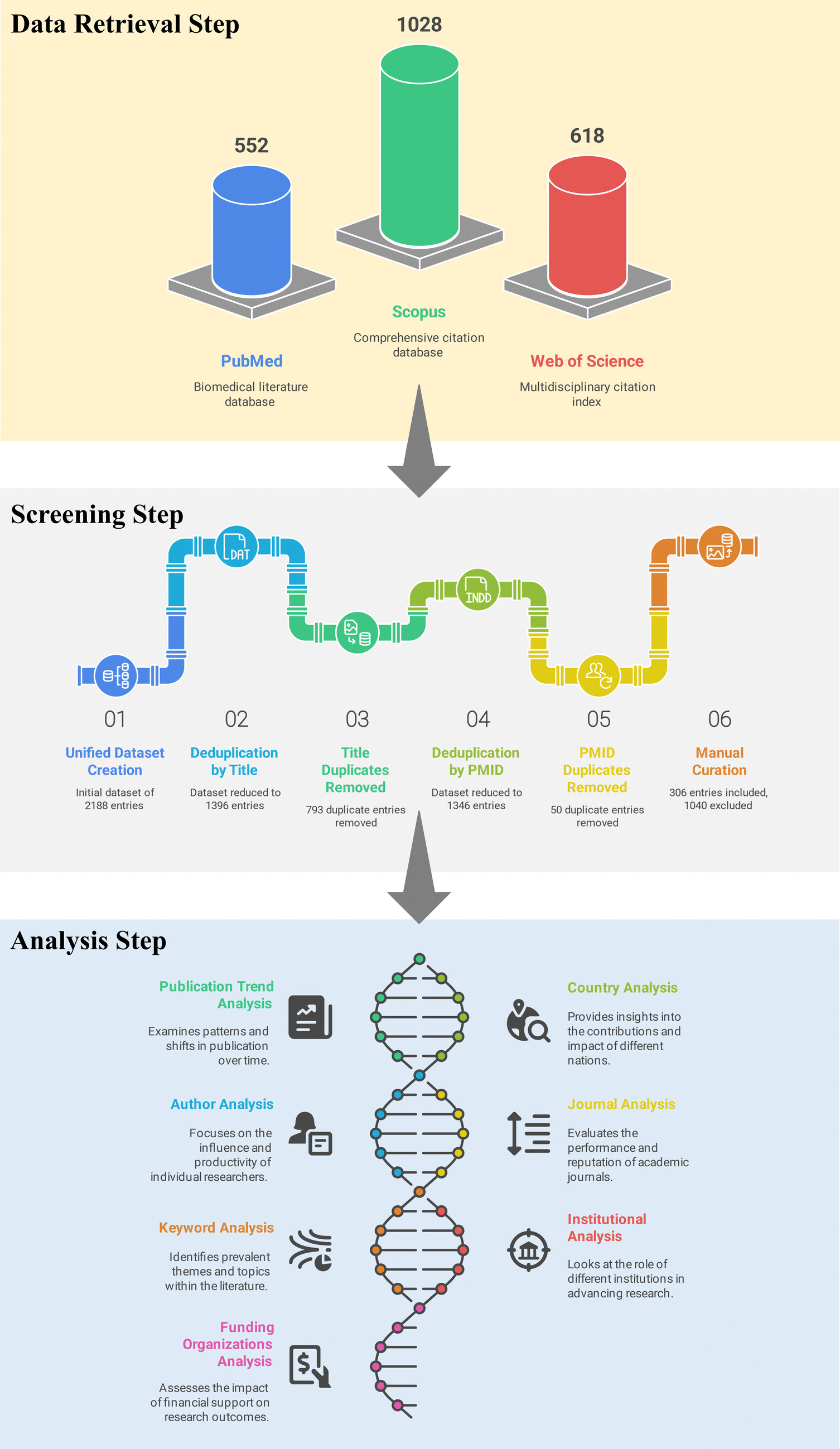

Our recent bibliometric analysis covering the period from 2000 to 2025 highlights how bdEV research has evolved from a niche area into a globally interconnected and interdisciplinary domain.
Key insights shaping the field:
- 📈 Accelerated Growth
After limited activity prior to 2016, bdEV research expanded rapidly from 2018 onward, reaching a peak in publication output in 2024. - 🌍 Global Research Landscape
The United States and China lead this domain. The United States continues to demonstrate strong citation impact, while China has shown remarkable growth and recently surpassed the US in annual publication volume. - 🔬 Emerging Hotspots
The field is increasingly focused on translational applications. bdEVs are being actively investigated as biomarkers and therapeutic vectors for neurodegenerative disorders such as Alzheimer’s disease, Parkinson’s disease, and ALS, as well as psychiatric conditions including major depressive disorder and schizophrenia. - 🏛️ Leading Institutions
Institutions such as University of California and Johns Hopkins University are among the most influential contributors, driving both productivity and innovation.
The trajectory is clear: a shift from foundational mechanistic studies toward clinically actionable insights, multi-omics integration, and precise biomarker validation.
Watch the video to understand how bdEVs are bridging molecular biology and clinical neurology.
What do you see as the most promising application of bdEVs over the next five years? Share your perspective in the comments.
#Neuroscience #ExtracellularVesicles #Biomarkers #TranslationalMedicine #Neurology #ResearchTrends #bdEVs

Dedicated researcher with 5+ years of experience in molecular biology, bioinformatics, and cell biology. Specializes in cancer biology, stem cells, molecular psychiatry, computational biology and bone biology. Experienced in molecular docking, dynamic simulation, and cell culture, with a focus on drug target discovery and validation using in-vitro techniques. Also specializes in biomarker discovery and AI-ML applications in biological research.
Follow the Topic
-
Neuroinformatics
This is a specialized journal that publishes original articles and reviews with an emphasis on data structure and software tools related to analysis, modeling, integration, and sharing in all areas of neuroscience research.