20,000 years of history in a single flower: what Silene ciliata teaches us about the past, present and future
Published in Earth & Environment, Ecology & Evolution, and Plant Science


Starting point: before the rupture
The story of the alpine plant Silene ciliata, which we published in our article in the journal Heredity1, begins around 30,000 years ago, just before the last great glaciation froze the planet. At that time, populations of Silene ciliata in the Central System, a mountain range located in the centre of the Iberian Peninsula, were connected along the altitudinal gradient of the mountains, which provided them with ecological and genetic continuity.
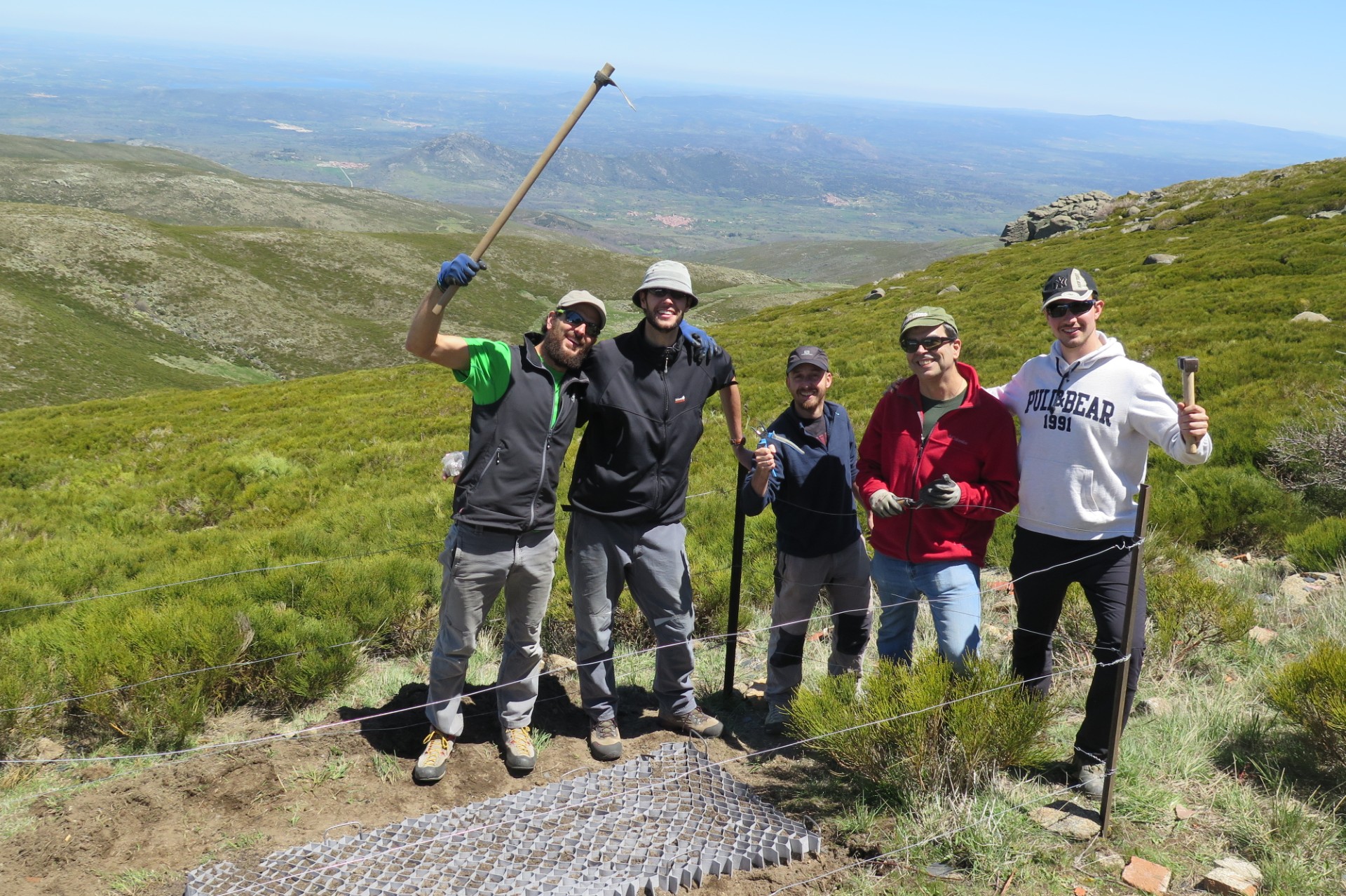
My story began in 2013, with a backpack, a notebook, and the naïve feeling of being at the beginning of a manageable project. In July of that year, together with members of the Global Change Research Institute of Rey Juan Carlos University, I climbed the main mountains of the Central System with enthusiasm to collect seeds of Silene ciliata and begin a scientific experiment. Our objective was to understand the adaptive value of these populations in relation to climate change. However, without knowing it, I was beginning to walk a path of emotions that would help me better understand myself and my work as a researcher.

The rupture: the Last Glacial Maximum
In 2015, I ventured into a scientific territory that I had barely explored until then. It was a new field for me, which inevitably generated doubts and a certain fear of the unknown. At that time, we sequenced the DNA, that is, the genetic information, of the plants that we had previously collected in the mountains. Thanks to this genetic information, we achieved something extraordinary: travelling more than 20,000 years back in time. We did not use a time machine, but rather a scientific tool known as coalescent demographic models. These models make it possible to reconstruct the history of populations (animals, plants, or microorganisms) from their DNA, revealing what they were like in the past, how they changed over time, and how they came to be what they are today.
The peak of the Last Glacial Maximum is dated approximately between 21,000 and 22,000 years before present. At that time, large ice sheets covered extensive areas of North America and Europe. Sea level was about 100 metres lower than today, and mean global temperatures were between 6 and 8 °C colder than at present. The result was a hostile landscape that forced populations of Silene ciliata to split into two distinct trajectories. Some populations descended from the mountains in search of more tolerable climatic conditions, while others managed to survive on the summits, taking advantage of local microclimates known as glacial microrefugia. This rupture had profound demographic and evolutionary consequences, extreme isolation between groups, a marked reduction in population size, a phenomenon known as a bottleneck, and the onset of divergent evolutionary trajectories.
Waiting in the ice: persistence and isolation
For several millennia, the climate remained extremely cold and stable. Populations remain ecologically trapped in their refugia, and evolutionary processes continue to operate invisibly under extreme conditions. In the summit microrefugia, populations are small and isolated. Our genetic analyses indicate that they accumulated positive selection under constant selective pressure. Populations that migrated following their climate enjoyed greater demographic stability and maintained good genetic health.
Returning to our present time, during the period between 2015 and 2018 nothing seemed to be happening. It was as if our research were also buried under the ice, waiting to move forward. However, between one postdoctoral contract and the next, I continued to move forward together with my colleagues at the IICG and, with the collaboration of Santiago González‑Martínez from the French INRAE, analysing the genetic information of Silene populations. It was long work with no immediate visible results. In the face of a major challenge, curiosity and the desire for self-improvement sought to compensate for the anxiety of failing to meet expectations.
A change of course: expansion and new beginnings
Around 17,000 years ago, a progressive deglaciation began, together with a rise in global temperatures, allowing glaciers to retreat and the rapid creation of ice‑free alpine habitats. At this point, the world began to open up again: populations that had migrated to lower elevations started to recolonise the mountains in a stepwise manner. This process gave rise to the formation of new populations from very few individuals, a phenomenon known as the “founder effect”. It arises when a population originates from a very small number of individuals and, purely by chance, its DNA becomes impoverished and biased from the outset, shaping its future evolutionary trajectory.
Secondary contact between the two groups of populations that had become isolated during glaciations may have occurred around 10,000 years ago, during the early–middle Holocene, a period characterised by a relatively warm and stable climate². From this point onwards, the current altitudinal configuration of Silene ciliata populations was gradually established. As in many other long‑term processes, there were failed attempts by Silene individuals that gave rise to new populations which ultimately did not persist. Attempts lost to the passage of time.
Our own scientific journey seemed to be subject to the same laws we were studying. Filled with uncertainty, in 2022 we embarked on our own process of academic conquest. The goal was to publish our findings on Silene ciliata in a prestigious scientific journal. For several years, we made multiple unsuccessful attempts in different journals, accompanied by their corresponding review processes and rejections. In most cases, we encountered honest and efficient reviewers and editors. However, there were a few exceptions that filled me first with sadness, then with anger, and finally with resignation. Nevertheless, we were resilient, and ultimately found in the journal Heredity the perfect home for the story of Silene ciliata and the mountains that host it.

Picture 2: A general view of the central massif of the Sierra de Gredos, which is home to the highest point of the Central System (Pico Almanzor, 2,591 m above sea level). Author: Javier Morente López.
The lesson of time: looking back to see the future
When we began our research almost 15 years ago, we interpreted the system from the present: climate change threatens Silene ciliata populations located at low elevations, while those on the summits appear to be in good condition. Human ignorance be strikingly bold, and we decided to label the former as “marginal” and the latter as “optimal”. We had not considered that evolution operates on scales of thousands of generations. The constraints imposed by ice continue to leave their mark today. What we see coexisting today on the same mountain has 25,000 years of history behind it. Our analyses of genetic diversity indicate that what we call “marginal” populations are, in fact, in good genetic health. Their current tendency towards extinction is because a new, accelerated climate change is subjecting them to new selective pressures. In short, new threats and opportunities have emerged that Silene populations in the Central System must face. It is likely that many low‑elevation populations will become extinct, a paradoxical outcome, as they constitute the genetic reservoir adapted to warmer conditions that could save high‑elevation populations³˒⁴. Losing them would be catastrophic: we would be throwing away the keys to heat adaptation just when high‑elevation populations need them most.
We are witnessing a new evolutionary journey. As always, it will unfold on timescales that exceed a human generation. We will not be here to see it. Over this time, I have learned a great deal about genetic evolution, but it has also been a lesson in the value of long‑term thinking and the importance of emotions. For Silene ciliata, everything we have studied occurred in the final moments of its history. For me, it has occupied a third of my life. These days I am reading the book The Good Ancestor by Roman Krznaric⁵, which argues for the need to adopt long‑term thinking as an alternative to the pursuit of rapid reward. The climatic and social challenges we face invite us to take it seriously. Today, we are changing the climate faster than during the ice age that separated its populations for millennia. And we are doing so without even granting ourselves the time to think in the long term.
References.
- Lara-Romero, C; Iriondo, J. M; García-Fernández, A; Morente-López, J; Sacristán-Bajo, S; González-Martínez, SC. 2026. Adaptive value of marginal populations: integrating selective signals, neutral processes and temporal scales. Heredity, 1-14. https://doi.org/10.1038/s41437-026-00844-7
- Boxleitner, M; Musso, A; Waroszewski, J et al. Late Pleistocene – Holocene surface processes and landscape evolution in the central Swiss Alps. Geomorphology, 295, 306-322. https://doi.org/10.1016/j.geomorph.2017.07.006
- Morente-López, J; Lara-Romero, C; Garcia-Fernádez, A; Rubio-Teso, ML; Prieto-Benítez, S; Iriondo, JM. 2021. Gene flow effects on populations inhabiting marginal areas: origin matters. Journal of Ecology, 109: 139-153. https://doi.org/10.1111/1365-2745.13455
- Sacristán-Bajo, S; Lara-Romero, C; García-Fernández, A; Prieto-Benitez, S; Morente-López, J; Rubio Teso ML; Torres, E; Iriondo, JM. 2025. Assisted gene flow management to climate change in the annual legume Lupinus angustifolius: from phenotype to genotype. Evolutionary Applications,18, e70087. https://doi.org/10.1111/eva.70087
- Krznaric, R. The Good Ancestor: How to Think Long Term in a Short‑Term World. London, UK: WH Allen (Ebury Publishing), 2020

Follow the Topic
-
Heredity
The official journal of the Genetics Society, covering a broad range of topics within the field of genetics.