A colorful biofilm: detection of three bacterial vaginosis-associated species by PNA-FISH
Published in Microbiology


In our recently published paper on npj Biofilms and Microbiomes, we developed a new multiplex protocol for the detection of three different bacterial species associated with bacterial vaginosis (BV).
BV is a polymicrobial infection, where hundreds of different species can be present, and it is associated with the development of a multispecies biofilm on the vaginal epithelium. Some of the species present in BV seem to have a preponderant role on the development of infection.
Peptide nucleic acid (PNA) probes are widely used for targeting microorganisms in a variety of samples, and coupled with fluorescence in situ hybridization (FISH) analysis it allows the detection of specific species.
In this work, we were able to target three of the most common BV-associated species namely, Gardnerella spp., Fannyhessea vaginae, and Prevotella bivia, and detect them by PNA-FISH.
After the theoretical evaluation of the PNA probes, we performed several in vitro experiments to confirm the sensitivity, specificity, and efficiency of the probes. In an in vitro triple-species biofilm, we could detect the specific species and the result is a colorful biofilm. We could thus observe the structure of the biofilm and the organization of the species within the biofilm (Figure 1).
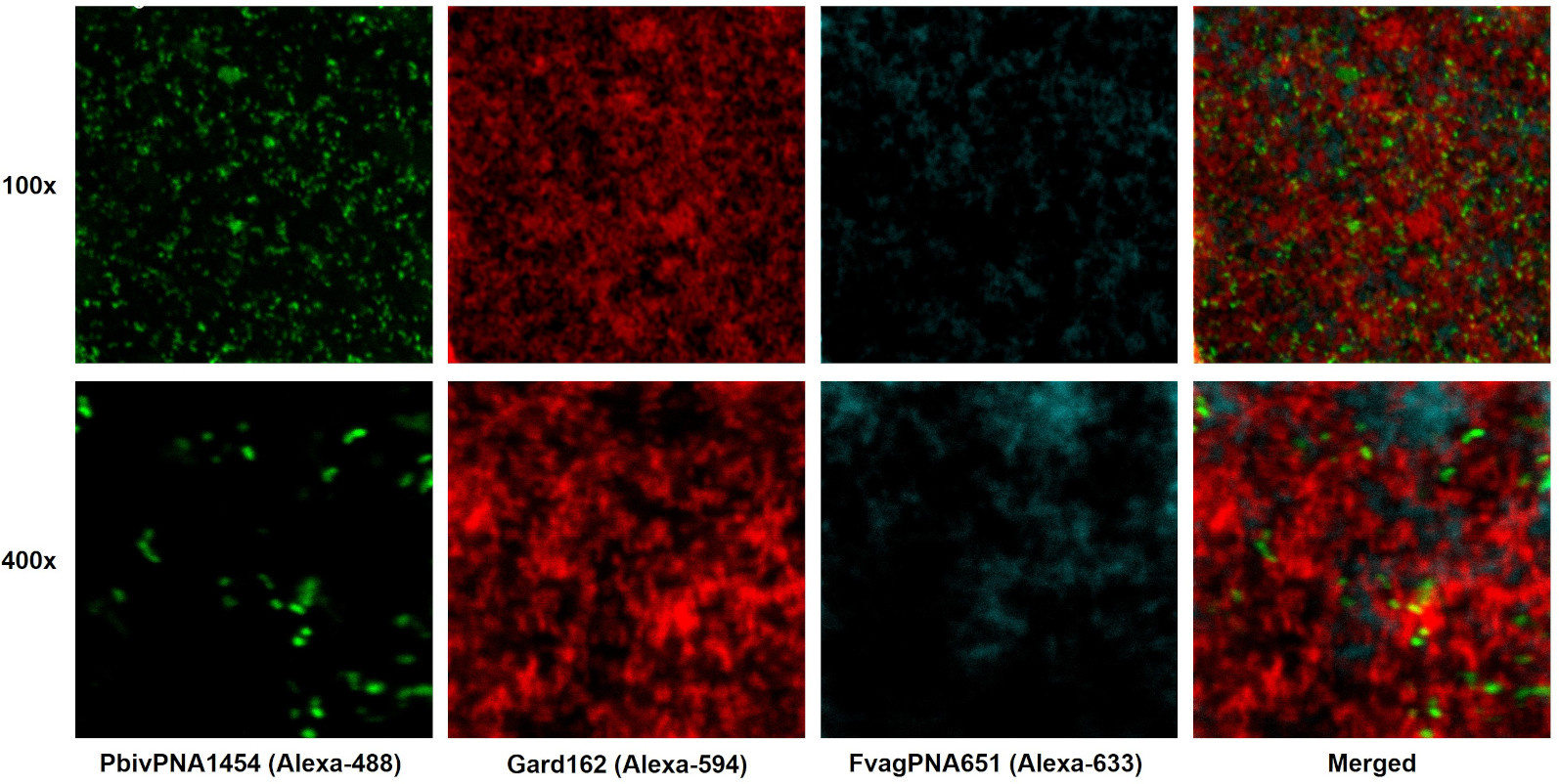
Figure 1: Confocal laser scanning microscopy images of triple-species biofilms analyzed by PNA-FISH, acquired using two different magnifications (100x and 400x).
Although this new approach can represent possible progression to overcome some of the limitations that the traditional methods for diagnosis of this infection present, it is a great achievement for the observation, analysis, and study of polymicrobial biofilms in BV.

Follow the Topic
-
npj Biofilms and Microbiomes
The aim of this journal is to serve as a comprehensive platform to promote biofilms and microbiomes research across a wide spectrum of scientific disciplines.

Related Collections
With Collections, you can get published faster and increase your visibility.
Antibiotic Resistance in the Environment
Publishing Model: Hybrid
Deadline: Apr 24, 2027
Microbial endocrinology
Publishing Model: Open Access
Deadline: Oct 21, 2026