A comprehensive review of emerging environmental contaminants of global concern
Published in Chemistry, Earth & Environment, and Ecology & Evolution




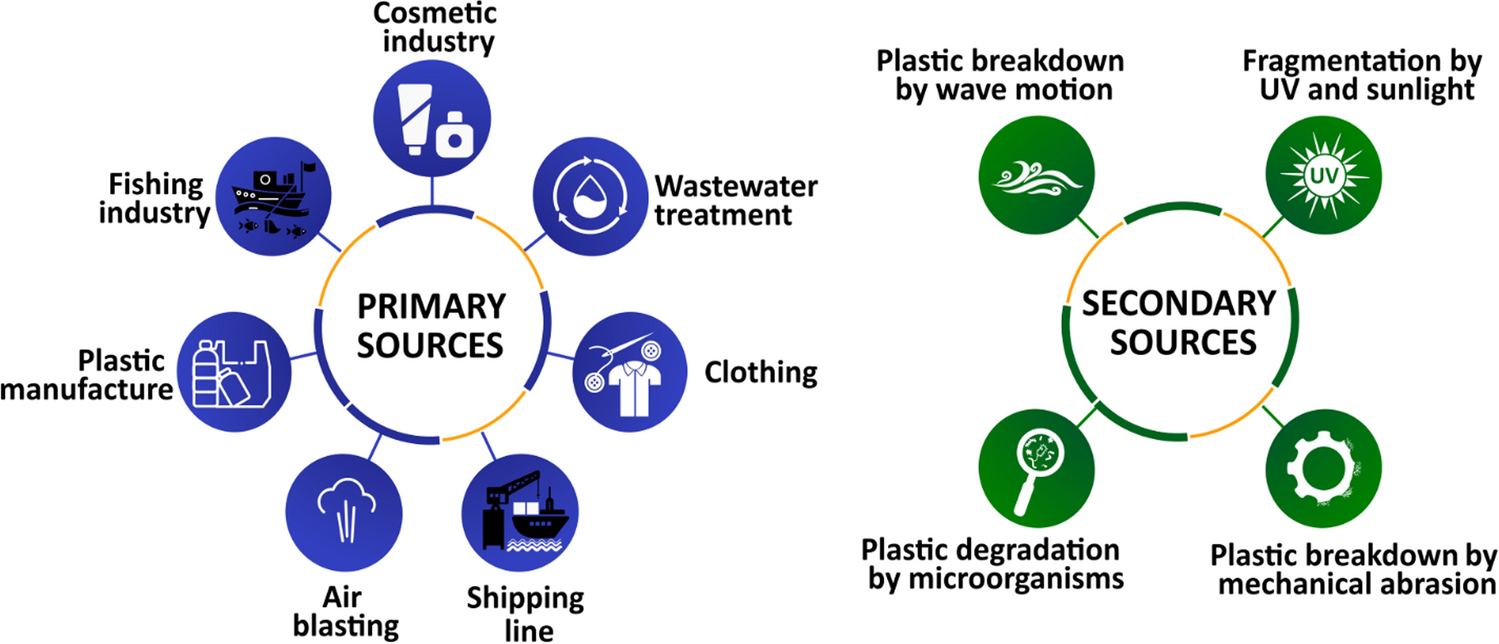

Over the past century, human progress has brought incredible benefits to society, but it has also introduced substances into the environment that we are only now beginning to fully understand. These substances, often called emerging contaminants, include pharmaceuticals, personal care products, plastics broken down into micro and nano fragments, chemicals that disturb hormonal systems, and a group of persistent compounds known as PFAS. For a long time, these substances remained unnoticed because they were present in very small amounts and could not be easily detected with earlier technologies. Yet, as science and analytical tools have advanced, it has become clear that they are widespread in water, soil, air, and even in the food we eat. Their presence raises serious questions about their potential risks to ecosystems, animals, and humans.
The main problem is that these contaminants are not usually part of routine monitoring programs and are rarely covered by existing regulations. Despite this, research has shown that they can cause real harm. Pharmaceuticals and personal care products, for example, may accumulate in rivers and lakes after passing through wastewater systems, affecting fish and other aquatic organisms. Endocrine-disrupting chemicals can interfere with hormones, leading to developmental and reproductive problems in both wildlife and people. PFAS, often called “forever chemicals” because of their resistance to natural breakdown, are now found in blood samples around the world and have been linked to cancers, immune problems, and liver damage. Microplastics and nanoplastics, meanwhile, have been detected not only in oceans but also in agricultural soils, raising concerns about food safety and long-term health. The issue is compounded by the fact that many of these pollutants can travel long distances, meaning that even remote and supposedly pristine areas are not spared.
To better understand these contaminants, researchers have relied on a variety of methods. Traditional tools like gas chromatography and liquid chromatography have been useful in separating and identifying compounds, while mass spectrometry has provided the sensitivity needed to detect them in very low concentrations. More advanced combinations, such as LC–MS/MS, allow scientists to confirm the presence of pharmaceuticals, pesticides, and endocrine disruptors even at trace levels. Molecular and biochemical tools like ELISA, PCR, and biosensors have also proven valuable for detecting biologically active contaminants and pathogens. These approaches have revealed just how widespread emerging contaminants are, and they continue to improve our ability to monitor them more accurately.
The findings from studies across the globe are alarming. Microplastics have been discovered in seafood, suggesting that they can enter the human body through diet. Pharmaceuticals, such as antibiotics and hormones, have been shown to disrupt aquatic life and contribute to the rise of antibiotic resistance, which is already a major global health threat. PFAS have been detected in drinking water near industrial sites, military bases, and firefighting training grounds, raising concerns for entire communities. Endocrine-disrupting chemicals have been linked to altered reproductive behavior in fish and developmental issues in children. The fact that these contaminants are found everywhere from heavily industrialized regions to untouched natural reserves shows that they are not a local problem but a global one.
What makes the challenge even more complex is that these substances often act together, creating combined effects that are difficult to predict. A single contaminant might appear safe at low concentrations, but when mixed with others, the risks can multiply. Furthermore, because many of these chemicals persist in the environment, their impact can build up over time. Bioaccumulation means that organisms at the top of the food chain, including humans, are particularly vulnerable.
Despite the seriousness of the problem, data on emerging contaminants are still limited in many parts of the world, especially in developing countries where monitoring facilities are scarce. Wastewater treatment plants, which are often the first line of defense, are generally not designed to remove these substances. As a result, they pass through treatment systems and enter rivers, lakes, and soils. Agricultural practices, including the use of treated sludge as fertilizer, also add to the spread. With urbanization and industrialization on the rise, the release of these substances is likely to increase unless urgent action is taken.
The review highlights that tackling this challenge requires a comprehensive approach. Science alone cannot solve the issue; there must also be strong policies and widespread public awareness. Regulations need to catch up with science by including emerging contaminants in water quality standards and setting limits for their presence. International cooperation is essential, as contaminants move across borders through air, water, and trade. Communities must also be educated about safer disposal practices, especially when it comes to unused medicines and plastic waste. On the technological side, investment in advanced treatment systems, including bioaugmentation and engineered bioreactors, could help reduce contamination. Nature itself offers some solutions: certain bacteria and fungi have shown potential for breaking down plastics, while plants and microbes can be used in bioremediation strategies for other pollutants.
In summary, emerging contaminants represent a hidden but growing threat to both ecosystems and human health. They come from everyday products and activities, yet their impacts extend far beyond what we see. They disturb natural processes, contribute to global health crises like antibiotic resistance, and put future generations at risk. What sets them apart from traditional pollutants is their invisibility, persistence, and complex interactions within the environment. The progress of analytical science has made their detection possible, and now it is our responsibility to act on this knowledge.
The recommendations from this body of work are clear. First, research must continue to expand, especially in under-studied regions, to build a fuller picture of the scale of contamination. Second, governments need to establish clear guidelines and enforceable regulations for monitoring and controlling these substances. Third, industry and society must reduce the release of contaminants at the source by rethinking product design, limiting the use of hazardous compounds, and promoting alternatives. Fourth, global partnerships are needed to share data, develop common standards, and coordinate responses. Finally, individuals can contribute by making conscious choices, reducing single-use plastics, disposing of medications properly, and supporting policies that protect the environment.
Addressing emerging contaminants will not be simple, but ignoring them will have far greater costs. By combining scientific innovation, effective policy, and community engagement, the growing risks can be reduced. The issue calls for immediate attention, not just from scientists and regulators, but from everyone who relies on clean water, safe food, and a healthy environment, which means all of us.
Get full article here - https://link.springer.com/article/10.1007/s44274-025-00259-x

Follow the Topic
-
Discover Environment
This is a transdisciplinary, open-access journal that provides a leading platform for the rapid dissemination of knowledge and advances covering the research and innovation that is taking place across the environmental sector.

Related Collections
With Collections, you can get published faster and increase your visibility.
Monitoring environmental pollution and impact on health
The intensification of human activities and the expansion and densification of urban areas cause various damages to the environment, necessitating continuous monitoring to assess the impact and extent of potential risks to both the environment and human health, in order to ensure urban sustainability.
This collection, “Monitoring Environmental Pollution and Impact on Health,” invites contributions that utilize tools related to health impact assessment, human health risk, ecological risk, data modeling, geospatial data, and Geographic Information Systems (GIS) to analyze impacts within urban environments. We also encourage the publication of research on the dynamics of pollution and health in rural and peri-urban areas, interdisciplinary studies between environmental sciences and public health, epidemiology, and urban planning for a holistic assessment of the multifaceted impacts of pollution on human well-being. In addition, studies that contribute actionable policy recommendations for local governments, environmental agencies, or public health institutions dealing with urban pollution are welcome. Research (time series or longitudinal studies) that demonstrate public health trends related to chronic exposure to pollutants, aiming for a better understanding of long-term urban sustainability issues, are also encouraged. Studies addressing health risks for vulnerable populations (such as children, the elderly, or low-income communities) exposed to environmental pollution in densely populated areas are of particular interest. We welcome studies on participatory monitoring and the development of citizen science, empowering communities to act in collaboration with local environmental health surveillance managers. Research involving satellite pollution monitoring and remote sensing is also encouraged. Comparative studies on pollution and health across different regions, identifying critical hotspots and globally replicable mitigation strategies, are of interest. We also welcome research that investigates environmental justice and urban socio-demographic inequalities/disparities in health due to environmental pollution. Review studies and meta-analyses exploring trends, methodologies, and gaps in urban environmental health research are also welcome.
Keywords: Health impact assessment, Environmental quality monitoring (air, water, and soil), Pollution sources and emissions, Spatial analysis, Geospatial technology, Climate change, Urban sustainability, Machine learning, Ecological risk assessment, Human health risk assessment
This Collection supports and amplifies research aligned with the following Sustainable Development Goals (SDGs): SDG 11.
Publishing Model: Open Access
Deadline: Feb 28, 2027
Water Environment: Addressing Global Water Challenges
Water is an indispensable natural resource, yet it faces escalating threats from pollution, climate change, and human activity. The Water Environment: Addressing Global Water Challenges section of Discover Environment Journal is dedicated to publishing innovative research on the dynamics of water systems—tracing their journey from source to fate while examining the interplay between natural processes and anthropogenic influences. This section delves into critical domains, including chemical hydrology, watershed and basin science, glacier environments, and land-use impacts. We welcome contributions that address pressing issues such as water pollution, the transport and transformation of contaminants, hydrological modeling, and sustainable water management strategies. We place particular emphasis on the consequences of land-use changes on hydrological cycles, the stability of glacier-fed water systems, and effective approaches to safeguarding freshwater and marine ecosystems.
Key topics include:
Chemical Hydrology: Analysis of water composition, pollutant behavior, and geochemical interactions shaping water quality.
Basin and Catchment Science: Investigations into watershed hydrology, sediment transport, and hydrogeomorphological processes.
Glacier Environments: Research on cryospheric hydrology, glacier-fed rivers, and the influence of climate change on water availability.
Land-Use Systems: Examining the effects of agriculture, urbanization, deforestation, and industry on water resources.
Water Pollution & Remediation: Addressing emerging contaminants (e.g., microplastics, pharmaceuticals, PFAS), nature-based solutions, and policy frameworks for water protection.
Sustainable Water Management: Innovations in water conservation, resilience-building strategies, and alignment with Sustainable Development Goals (SDGs), particularly SDG 6 (Clean Water and Sanitation).
Methodological advancement in water research
Furthermore, to enhance the scope and impact of the section, we strongly encourage submissions that:
• Include case studies from underrepresented regions, particularly Sub-Saharan Africa and small island states, to showcase diverse hydrological challenges and locally relevant water management solutions.
• Promote the integration of traditional ecological knowledge and community-based water governance practices to enhance the cultural relevance and sustainability of proposed water stewardship strategies.
• Explore transboundary water issues, including shared aquifers and river basins, to highlight the importance of cooperation and policy in sustainable resource management.
• Emphasize the value of coupling remote sensing and GIS technologies with in-situ hydrological data for improved water quality monitoring and modeling accuracy across scales.
• Focus on emerging contaminants such as microplastics, pharmaceuticals, and PFAS in both freshwater and marine environments, reflecting current global research priorities.
• Give greater attention to groundwater-surface water interactions and their implications for long-term water availability, especially under changing climate and land-use patterns.
• Highlight the role of climate change scenarios and projections in shaping adaptive water management frameworks, particularly in glacier-fed and drought-prone regions.
• Feature interdisciplinary collaborations between hydrologists, ecologists, social scientists, and engineers to propose holistic and inclusive water resource solutions.
• Promote alignment of all submissions with SDG targets, especially SDG 6 (Clean Water and Sanitation) and SDG 13 (Climate Action), to strengthen policy relevance.
• Include policy briefs or synthesis articles that translate technical findings into actionable guidance for water managers and decision-makers.
By fostering interdisciplinary collaboration and highlighting diverse perspectives, the Water Environment: Addressing Global Water Challenges section serves as a vital platform for advancing knowledge on global water challenges and informing policy for sustainable water stewardship.
This Collection supports and amplifies research related to: SDG 6 & SDG 13
Keywords: Water Systems, Water Pollution, Climate Change, Land-Use Impacts, Sustainable Water Management, Emerging Contaminants, Hydrological Modeling, Interdisciplinary Collaboration, SDG 6 (Clean Water and Sanitation), Chemical Hydrology, Watershed Science, and Glacier Environments.
Publishing Model: Open Access
Deadline: Dec 30, 2026