A Safe, Scalable Antiviral Platform Was Positively Evaluated by NIH ACTIV. Why Is It Still Ignored in the Ebola Emergency?
Published in Materials and Biomedical Research


As the Ebola outbreak in the Democratic Republic of the Congo accelerates, global health agencies continue to repeat a familiar refrain: “no broadly effective antiviral exists.” That statement is no longer accurate. A safe, orally administered, commercially available dsRNA antiviral platform—Infectious Bursal Disease Virus (IBDV)—has already undergone independent, multi‑agency scientific evaluation by the NIH‑sponsored ACTIV Agent Prioritization Team. This group includes experts from NIH, FDA, BARDA, CDC, EMA, and major pharmaceutical companies. Their conclusion was unambiguous: IBDV “shows merit as a potential treatment for COVID‑19.” For an unregistered antiviral platform, such cross‑agency endorsement is exceptionally rare.
Yet despite this evaluation, and despite the urgent need for scalable antiviral countermeasures, IBDV remains absent from every official discussion of the current Ebola emergency. This silence is scientifically puzzling and ethically troubling.
IBDV is a double‑stranded RNA virus—the strongest natural inducer of the interferon antiviral system, our universal, mutation‑agnostic defense mechanism. Decades of evidence demonstrate its cross‑species antiviral activity, systemic interferon induction, oral administration, human safety, and low‑cost, large‑scale manufacturability. These are precisely the attributes global health authorities claim to be seeking in a broad‑spectrum antiviral platform. Yet the platform already exists, has been independently evaluated, and remains unused.
The scientific case for IBDV is not speculative. It is documented across decades of mechanistic, translational, and clinical work, synthesized in my Elsevier book Leveraging Viruses for the Treatment of Viral Diseases and Cancer. The platform’s antiviral effects have been observed across multiple viral families. Its safety has been demonstrated in human patients. Its production infrastructure is mature, inexpensive, and globally scalable. And its mechanism—host‑directed interferon induction—targets the most conserved antiviral pathway in biology.
Given this foundation, the central question is no longer whether IBDV is promising. The question is why a platform with human safety data, decades of manufacturing history, cross‑species antiviral evidence, and a positive NIH ACTIV evaluation is not being urgently tested against Ebola in BSL‑4 laboratories. This is not a call for uncontrolled use. It is a call for evaluation—the minimum ethical standard during a rapidly expanding outbreak.
Ebola is a pathogen for which speed matters. Outbreaks expand exponentially, and delays in countermeasure testing cost lives. The global health community has repeatedly emphasized the need for broad‑spectrum, host‑directed antivirals that can be deployed rapidly against emerging threats. IBDV fits this profile. It is safe, scalable, inexpensive, and mechanistically suited to countering diverse viral pathogens. The ACTIV evaluation confirms that major scientific and regulatory agencies recognize its potential.
So why is it still ignored?
Part of the answer lies in institutional inertia. Unregistered antivirals rarely receive attention unless they originate within established pharmaceutical pipelines. Host‑directed antivirals, in particular, challenge conventional drug‑development frameworks. And platforms derived from naturally occurring viruses fall outside familiar regulatory categories. But none of these structural barriers justify inaction during an outbreak.
The ethical obligation is clear: when a safe, scalable antiviral platform with cross‑agency scientific support exists, it must be evaluated against high‑consequence pathogens. The cost of evaluation is small. The potential benefit is enormous. And the risk of doing nothing is measured in human lives.
As Ebola cases rise, the world cannot afford to overlook a platform that may offer broad‑spectrum antiviral protection. The scientific community has the tools, the expertise, and the infrastructure to conduct controlled BSL‑4 testing. What is missing is the decision to act.
IBDV is not a theoretical construct. It is a public‑good antiviral platform hiding in plain sight. The time for evaluation is now.
For a broader, public‑facing discussion of these findings, you can read my accompanying Medium op‑ed here: Medium article.
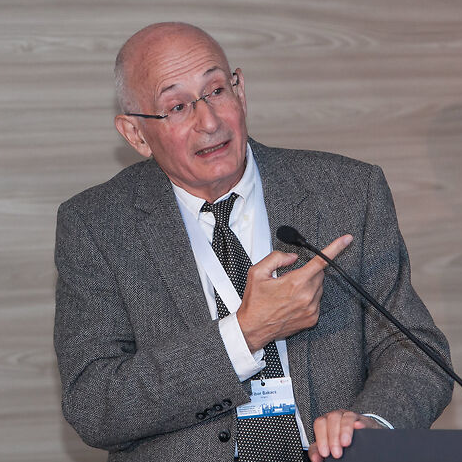
Tibor Bakacs, M.D., D.Sc., Ph.D.
Chief Scientific Officer, HepC Inc. | Consultant, Alfréd Rényi Institute of Mathematics
I am a clinician‑scientist with 40+ years of experience in immunology, virology, and translational medicine, author of 99 scientific papers and a monograph addressing unmet medical needs. My work focuses on two programs that appear distinct but are mechanistically unified by the interferon (IFN) axis of host immunity.
At HepC Inc., we are developing a single, broad‑spectrum antiviral based on the infectious bursal disease virus (IBDV). Harmless to humans yet a potent inducer of type I interferons, IBDV has shown activity against hepatitis A/B/C, SARS‑CoV‑2, and varicella‑zoster. This host‑directed, off‑the‑shelf antiviral platform aims to strengthen global pandemic preparedness.
In parallel, we developed an ultra‑low‑dose immune checkpoint inhibitor (ICI) protocol grounded in my auto‑GVHD theory of immune‑related adverse events (irAEs). This approach safely harnesses ICI‑induced autoimmunity and has demonstrated comparable efficacy with markedly reduced toxicity in 131 advanced cancer patients.
Although antiviral therapy and immuno‑oncology may seem unrelated, both rely on controlled IFN‑driven immune activation. This shared biology opens the door to rational combination strategies that integrate safe autoimmunity with innate antiviral priming.
I previously held research positions at the Karolinska Institute, the Christie NHS Foundation Trust, and the National Cancer Institute (NIH).