Accidental diode laser-induced full-thickness macular hole: a case report
Published in Physics and General & Internal Medicine
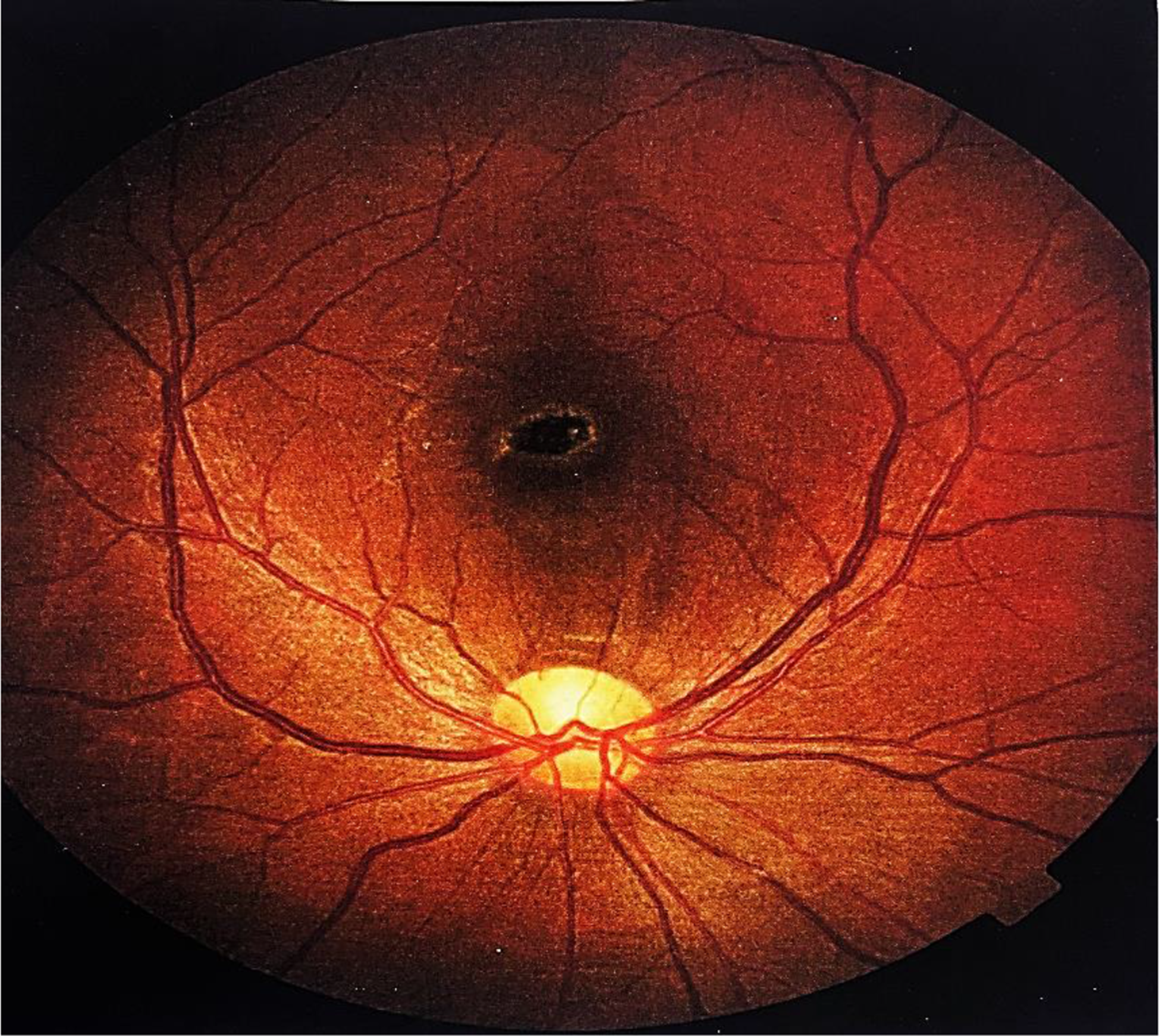

Our paper presents a case report of a 24-year-old woman who suffered a full-thickness macular hole (FTMH) in her right eye due to accidental diode laser exposure during a hair removal session at a beauty center. The incident resulted in severe visual loss, with her visual acuity reduced to hand motion level. Optical coherence tomography (OCT) confirmed the FTMH, revealing complete disruption of the foveal retinal layers. Surgical intervention, including pars plana vitrectomy and gas tamponade, achieved anatomical closure, but the visual prognosis remains poor due to retinal damage. This highlights the need for stringent laser safety protocols in nonmedical settings. Read the full paper here.
https://link.springer.com/article/10.1186/s12886-025-03970-8

Follow the Topic

Related Collections
With Collections, you can get published faster and increase your visibility.
Advancement in thyroid eye disease
BMC Ophthalmology is calling for submissions to our Collection on Advancement in thyroid eye disease.
Thyroid eye disease (TED), also known as Graves' orbitopathy, is an autoimmune disease characterised by inflammation and enlargement of the extraocular muscles and adipose tissue in the orbit. This condition is commonly associated with hyperthyroidism and can significantly affect patients' quality of life, leading to significant ocular morbidity with symptoms such as proptosis, diplopia, and ocular discomfort. The underlying pathophysiology involves complex immunological mechanisms, including the production of autoantibodies and the activation of orbital fibroblasts.
Recent advances in the study of thyroid eye disease (TED) include improvements in imaging techniques, enhancing the diagnosis and monitoring of orbital inflammation and structural changes such as fibrosis. In parallel, the emergence of targeted therapies, particularly those acting on the IGF‑1 receptor and related signalling pathways, has shown significant promise in reducing disease activity, limiting progression, and improving patient outcomes.
Future research into TED may reveal novel biomarkers for early diagnosis and prognosis, aiding in the identification of patients at risk for severe forms of the disease. Moreover, the development of personalised treatment regimens, guided by genetic and molecular insights, could revolutionise the approach to managing TED. This Collection welcomes contributions that include:
- Mechanisms of orbital inflammation in TED
- Research on treatments and diagnosis
- Novel therapeutic targets in thyroid eye disease
- Imaging advancements in the assessment of TED
- Patient-reported outcomes in thyroid eye disease management
All manuscripts submitted to this journal, including those submitted to collections and special issues, are assessed in line with our editorial policies and the journal’s peer-review process. Reviewers and editors are required to declare competing interests and can be excluded from the peer review process if a competing interest exists.
Publishing Model: Open Access
Deadline: Mar 30, 2027
Pediatric eye screening
BMC Ophthalmology is calling for submissions to our Collection on Pediatric eye screening.
Pediatric eye screening plays a pivotal role in the early detection and management of visual disorders in children, including amblyopia, refractive errors, and strabismus. Timely identification of these conditions is essential for preventing long-term visual impairment and supporting optimal visual development during critical growth periods.
Recent research has explored the impact of early screening on educational outcomes, the cost-effectiveness of different screening models, and the integration of screening programs into primary care and school settings. Emerging studies are also investigating telemedicine approaches, artificial intelligence-assisted diagnostics, and community-based interventions to expand reach and equity.
The aim of this Collection is to highlight research that addresses the clinical, technological, and public health dimensions of pediatric eye screening. Therefore, this Collection welcomes research articles that include, but are not limited to, the following topics:
- Screening methods and protocols for detecting visual disorders in children
- Implementation strategies and program evaluation in diverse settings
- Outcomes of early detection and intervention on visual and developmental health
- Innovations in screening technology, including AI and telemedicine
- Comparative studies of screening approaches and cost-effectiveness
All manuscripts submitted to this journal, including those submitted to collections and special issues, are assessed in line with our editorial policies and the journal’s peer-review process. Reviewers and editors are required to declare competing interests and can be excluded from the peer review process if a competing interest exists.
Publishing Model: Open Access
Deadline: Jan 04, 2027