Assessing technological and sustainable performance in maritime transport through the SFA metafrontier framework
Published in Economics


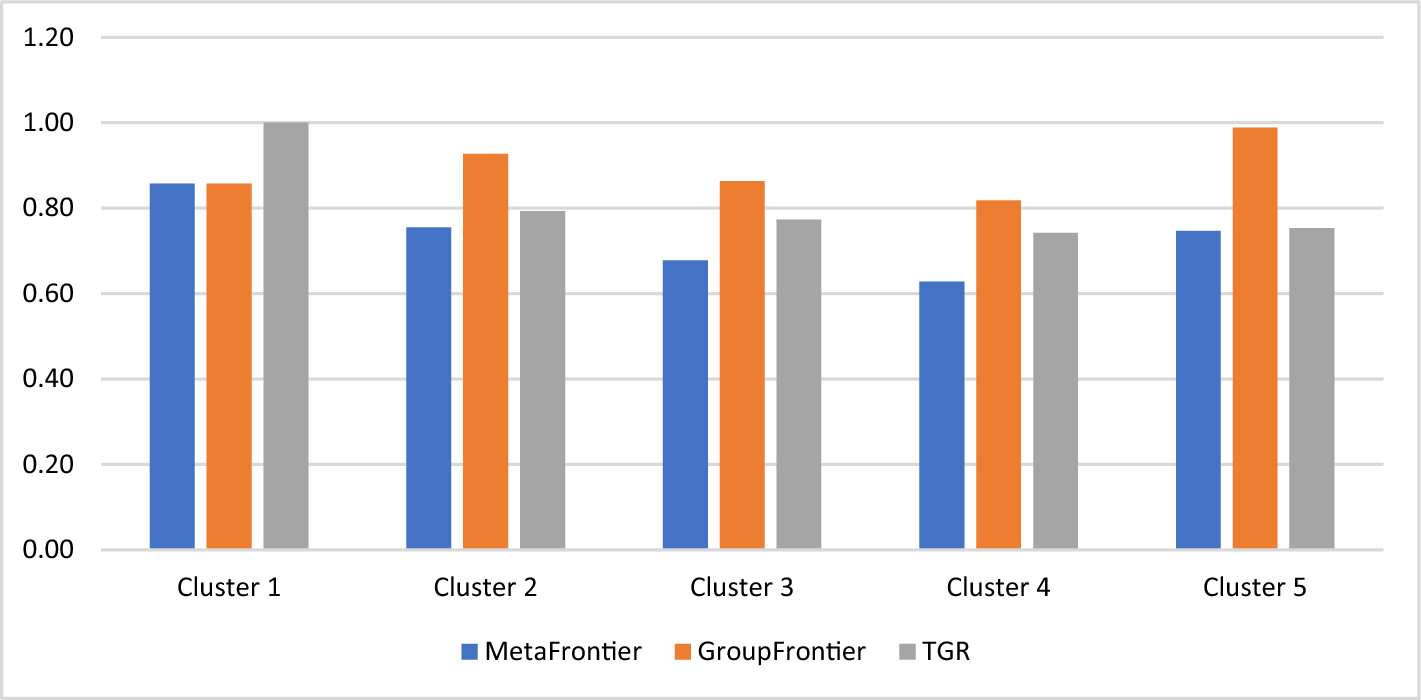

This paper addresses these gaps by asking: How do variations in technological advancement influence the sustainable efficiency of major global ports? We examine 50 leading ports worldwide over 2000–2023 using Stochastic Frontier Analysis (SFA) within a metafrontier framework, which allows efficiency to be measured relative to both group-specific frontiers and a global best-practice frontier. Within this setting, we quantify the Technology Gap Ratio (TGR) to capture the distance between group technologies and the metafrontier (Battese et al., 2004;, et al., 2008). In line with work that incorporates environmental externalities into performance analysis (Gu et al., 2025), our model embeds key sustainability factors alongside conventional inputs.
The study makes three contributions. First, it develops an Environmental Indicator (EI) that aggregates port-level practices—renewable energy use, waste management, air-quality monitoring, onshore power supply, and incident response—thus providing a composite measure aligned with international reporting. Second, it applies an SFA-based metafrontier with a flexible translog specification to capture non-linearities, factor interactions, and time-varying technological change across heterogeneous environments (Kumbhakar & Lovell, 2000; Battese et al., 2004). Third, by combining environmental and operational dimensions in a global, cross-cluster dataset, it delivers comparative evidence on where and how technological gaps constrain sustainable efficiency—thereby generating actionable insights for policy and management.
Conceptually, we distinguish between sustainable ports and green ports: the former integrate environmental, economic, and social objectives, while the latter emphasize minimizing environmental impacts through clean technologies and eco-efficient operations. This distinction matters because the technological gap—the degree to which a port’s available technology lags behind the global frontier—directly conditions its capacity to operationalize sustainability strategies at scale.
However, while the literature is rich in documenting best practices and emerging technologies, there is limited empirical evidence comparing ports across different regions and technological levels. In light of the growing environmental demands facing the maritime industry, this study sets out to explore how variations in technological advancement affect port sustainability. Specifically, it aims to measure and analyze the technological efficiency gaps across leading global ports between 2000 and 2023, using a metafrontier stochastic frontier analysis approach. The goal is to generate empirical evidence that can inform strategic decisions for advancing green port development through technological innovation.The hypothesis guiding this study is During the period 2000–2023, ports with smaller technological gaps and greater adoption of environmental technologies tend to achieve higher sustainability performance.
A sustainable port and a green port are conceptually linked: both prioritize environmental responsibility, but while a sustainable port integrates social, economic, and ecological dimensions, a green port specifically focuses on minimizing environmental impact through clean technologies and eco-efficient operations. Importantly, the technological gap between ports directly affects their capacity to implement sustainability measures; thus, closing this gap is essential for advancing the green and sustainable transformation of global port systems.
The distinctive contribution of this study lies in its methodological innovation and empirical scope. First, it proposes and applies an Environmental Indicator (EI) to quantify port-level environmental performance, using a composite of normalized sub-indicators aligned with international benchmarks. Second, it utilizes the Stochastic Frontier Analysis (SFA) to assess port efficiency in resource usage. Finally, by applying the metafrontier framework, the study enables comparative efficiency assessments across heterogeneous technological environments, thus identifying specific technological gaps.
This article is structured as follows. Section 1 introduces the study, while Section 2 reviews the relevant literature. Section 3 describes the SFA-based metafrontier methodology applied to evaluate port efficiency and technological gaps, as well as the sample, variables, and clustering criteria for the 50 ports analyzed. Section 4 presents the empirical results, including efficiency scores by cluster and a comparative assessment of performance. Section 5 discusses the findings and outlines their managerial, practical and policy implications. Finally, Section 6 summarizes the main conclusions and highlights possible directions for future research.
Delfin-Ortega, O.V. Assessing technological and sustainable performance in maritime transport through the SFA metafrontier framework. Discov Sustain 6, 1319 (2025). https://doi.org/10.1007/s43621-025-02200-x

Follow the Topic
-
Discover Sustainability
A multi-disciplinary, open access, community-focussed journal publishing results from across all fields relevant to sustainability research whilst supporting policy developments that address all 17 of the United Nations Sustainable Development Goals (SDGs).

Related Collections
With Collections, you can get published faster and increase your visibility.
Food, Societies and Sustainability: Contemporary Concerns around Local Food Production and Consumption
Food goes far beyond nutrition. It reflects sociocultural identities and territorial heritage, consumption dynamics, economic development, public policies, sustainability concerns, food production, distribution and consumption. Understanding food production and food products, practices and strategies offers key insights into both historical traditions and contemporary lifestyles. Around the world, food and drink serve as powerful symbols of identity and attract interest through diverse value chains, economic interests and cultural expressions. On the other hand, traditional and local food systems contribute to cultural heritage, biodiversity conservation and sustainability matters from environmental, sociocultural and economic concerns.
The Collection "Food, societies and sustainability: Contemporary concerns around local food production and consumption" explores how food is locally produced, promoted and protected through public and private initiatives, food-based experiences, media platforms, and sustainable dietary and productive practices. It encourages contributions that examine how food concerns are shaped in contemporary societies, how globalization is affecting local food cultures, emphasizing the role of food as both tangible and intangible cultural heritage. Food preferences, food stereotypes, and attitudes towards food sustainability, analysed through the lenses of generational gaps and gender differences are also welcomed. This Collection seeks original research and case studies using both qualitative and quantitative methods.
Keywords: Food Systems, Food culture, Food Production, Locality, Heritage, Tourism, Gastronomy, Agricultural Biodiversity, Livestock Biodiversity, Food Sustainability, Regenerative Tourism.
This Collection supports and amplifies research related to SDG 2, SDG 3, SDG 4, SDG 5, SDG 10, SDG 12, and SDG 17.
Publishing Model: Open Access
Deadline: Sep 30, 2026
Weather and Climate Extremes: A Special Reference to Multidisciplinary Research and Policy Developments
This Collection, titled "Weather and Climate Extremes: A Special Reference to Multidisciplinary Research and Policy Developments," focuses on the increasing global challenges posed by extreme weather events and climate phenomena. As these events intensify due to changing climate patterns, their impacts on ecosystems, infrastructure, human health, and socioeconomic systems become more pronounced, necessitating a multidisciplinary approach to understanding and addressing these complexities.
The Collection aims to bring together research from diverse fields, including atmospheric sciences, hydrology, ecology, engineering, public health, and social sciences. It encourages innovative contributions that explore cutting-edge solutions to predict, manage, and mitigate the effects of climate extremes. Topics may include advanced modelling techniques, nature-based solutions, climate-resilient infrastructure, risk assessment frameworks, and strategies for equitable policy development. The emphasis is placed on integrating scientific understanding with actionable solutions that address vulnerability, resilience, and adaptation.
Moreover, this Collection seeks to foster cross-disciplinary collaborations to bridge the gap between scientific research and policy implementation. By highlighting case studies, theoretical advancements, and practical approaches, it aims to advance the dialogue on climate resilience and inform decision-making processes globally. This platform aspires to serve as a critical resource for researchers, practitioners, and policymakers striving to navigate the escalating challenges of a changing climate.
Given the increasing frequency and intensity of climate extremes, this topic holds critical importance. Such extremes profoundly affect ecosystems, infrastructure, and human livelihoods, demanding coordinated efforts across disciplines to analyse risks, develop mitigation strategies, and inform policy. This Collection seeks to bring together cutting-edge research and innovative approaches from diverse fields, bridging scientific understanding and actionable policy frameworks. The proposed focus areas include, but are not limited to:
• Advances in modelling and forecasting weather and climate extremes
• Impacts on ecosystems, agriculture, water resources, and public health
• Nature-based solutions and climate-resilient infrastructure
• Interdisciplinary frameworks for risk management and adaptation planning
• Policy advancements addressing vulnerability, resilience, and equity
This call aims to engage a broad community of researchers, practitioners, and policymakers to enhance global discourse and support evidence-based decision-making by emphasising multidisciplinary contributions.
This Collection supports and amplifies research related to SDG
Keywords: Weather Extremes Modeling; Climate Change Impacts; Risk Assessment Frameworks; Nature-Based Solutions (NbS); Resilient Infrastructure Design; Equitable Policy Development; Interdisciplinary Climate Research; Adaptation and Mitigation Strategies; Socioeconomic Vulnerability Analysis; Extreme Event Forecasting
Publishing Model: Open Access
Deadline: Feb 28, 2027