Behind the Book: Disinfection By-Products in Water
Published in Chemistry, Earth & Environment, and Ecology & Evolution
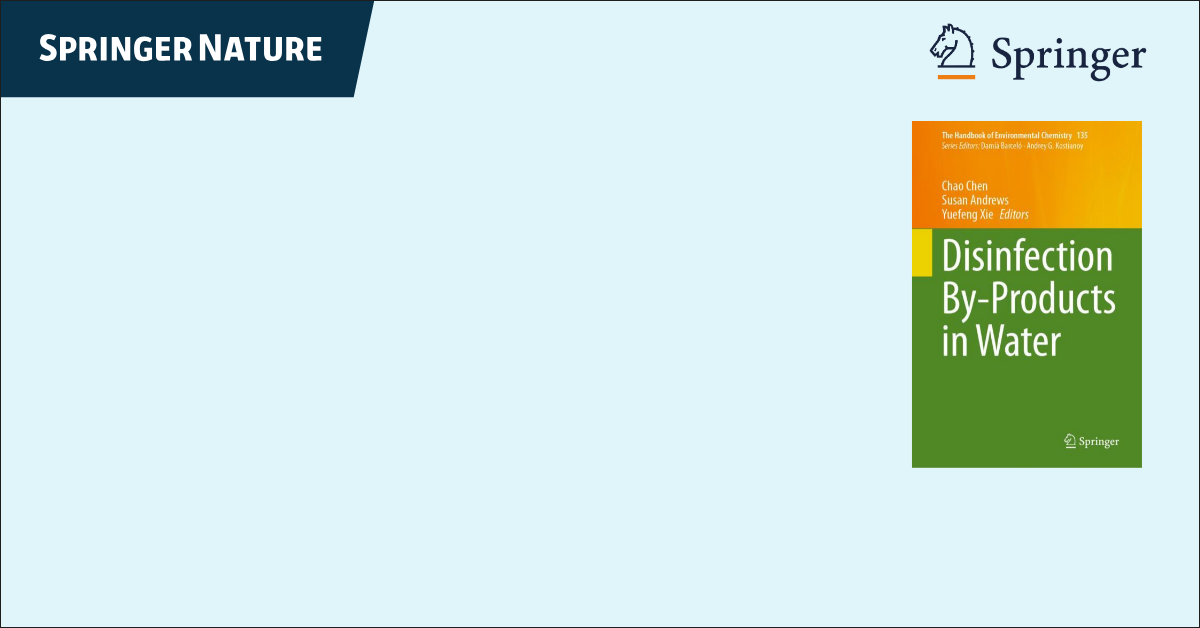






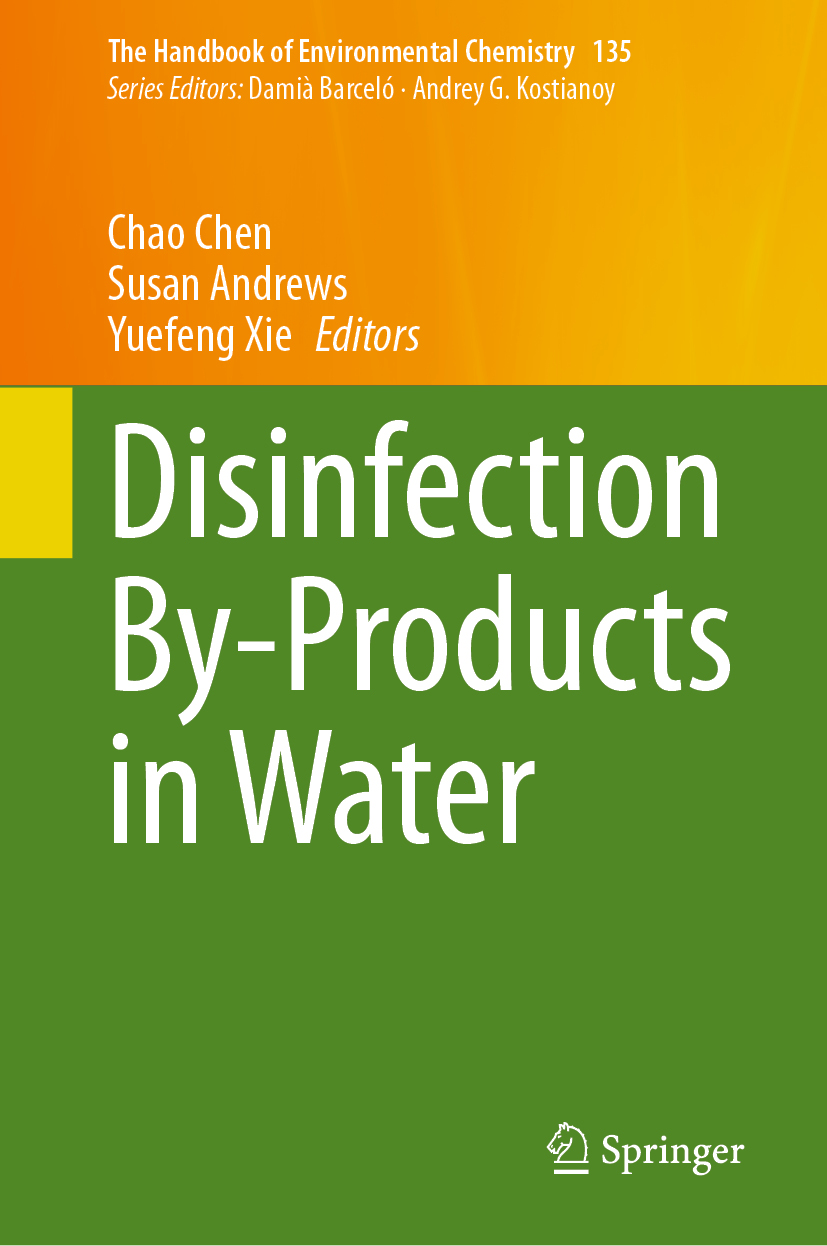
On the occasion of #WorldWaterDay, we revisit a book published by Springer at the end of 2024 , commemorating 50 years since Dr. Rook’s discovery of trihalomethanes in chlorinated tap water.
Edited by Chao Chen, Susan Andrews, and Yuefeng Xie, this book reviews disinfection by-products (DBPs) in water, highlighting DBPs’ impact on water safety and public health, recent advancements, and future research directions.
- Take a look at the book: Disinfection By-Products in Water
- Get 20% off with this code: SPRAUT
Interview with the Book Editors: Chao Chen, Susan Andrews, and Yuefeng Xie
1. What inspired you to compile this comprehensive review on disinfection by-products (DBPs) in water, and how does it commemorate the 50th anniversary of Dr. Rook's groundbreaking report?
The idea of this book began with a 2023 email from Prof. Damià Barceló, the editor-in-chief of the Handbook of Environmental Chemistry series supported by Springer Nature. Prof. Barceló invited the editors to write this book on Disinfection By-Products as one part of this series. We believe it effectively coincides with and commemorates the 50th anniversary of Dr. Rook’s groundbreaking report, i.e. the discovery of trihalomethanes in chlorinated tap water. Since that report was published, there has been significant progress in the analysis, regulation, and removal of DBPs. To provide a deeper understanding of Dr. Rook's pioneering research, the first chapter of this book also offers a comprehensive summary of the history of water disinfection and DBP research, with a particular focus on Dr. Rook’s groundbreaking study.
2. What makes this book different and unique from other books?
All three editors have dedicated their entire academic careers to the study of DBPs. Alone, they bring over 100 years of research experience in this field, but there are also over 20 more authors contributing 18 chapters to this book. All together, they represent three main regions of global DBP studies—North America (Canada and the United States), East Asia (e.g. China), and Europe (e.g. the U.K.)—where much of the significant DBP research has been conducted.
3. Why is it crucial for society to understand the impact of DBPs on water quality and public health, and why it is crucial for researchers and policymakers to focus on this area?
Some form of disinfection will always be crucial to maintaining safe drinking water by preventing acute microbial waterborne disease. However, disinfectants will react with both natural and man-made chemicals in source water to yield disinfection by-products, some of which may be associated with chronic (long-term) health effects such as carcinogenicity, hepatotoxicity and cytotoxicity. This book provides information to show how researchers and engineers in the water industry are working together to better balance addressing the microbial and chemical risks associated with drinking water. It also shows that while significant advancements have been made, the work is not yet done and must continue.
4. How do DBPs in drinking water affect communities, particularly vulnerable populations, and what are the broader public health implications?
As mentioned before, certain DBPs can be associated with some adverse health effects including carcinogenicity, hepatotoxicity, cytotoxicity, and mutagenicity. People are exposed to disinfection byproducts (DBPs) every day through the consumption of disinfected drinking water, and although the concentrations of DBPs are generally quite low and extremely unlikely to result in short-term effects, the effects of long-term exposure to even very low concentrations remains uncertain. As such, the potential health risk of exposure to DBPs has been an increasing global concern in the field of drinking water safety. Recent epidemiological studies support the association between exposure to DBPs and bladder cancer risk. However, no consistent relationships have been observed for colon, rectal, and other cancers. More epidemiological and toxicological studies are needed to understand the broader public health implications.
5. In what ways does this book contribute to raising awareness about the importance of safe drinking water and the challenges posed by DBPs?
Many water professionals are already concerned about DBP formation. A typical early response to the problem was to consider simply reducing the amount of disinfectant used, however, that approach was quickly abandoned because it tended to compromise the drinking water’s biological safety. Now, we work to optimize both the disinfectant type and dose, as well as remove DBP precursors from water as much as possible before a disinfectant is applied. This book describes some of these strategies and demonstrates that DBPs can be effectively removed and/or controlled.
6. How does the research on DBPs align with the UN Sustainable Development Goals, particularly those related to clean water and sanitation (SDG 6) and good health and well-being (SDG 3)?
Disinfection is crucial for ensuring safe drinking water. Research on DBPs will assist water professionals in minimizing the risks associated with these by-products, helping to achieve a better balance between reducing microbial and chemical risks.
7. In what ways do DBPs impact everyday life, including their presence in swimming pools and food? What measures can individuals take to reduce their exposure?
In swimming pools, DBP formation results from pool chemicals (disinfectants) reacting with organic materials released by swimmers. Therefore, enforcing pre-swim hygiene regimes, such as showering before entering the pool, can help reduce the formation of pool DBPs. In addition, some pools are using recent research to include newer disinfection techniques (e.g. ozone, ultraviolet treatment). While these processes may not completely replace chlorine-based disinfectants, often they can help to reduce the amount needed to maintain safe swimming pool water.
For DBP concerns in the kitchen, individuals can ask their tap water supplier to provide them with a water quality report which includes the DBP detection results. Then, they can decide if they want to take some extra measures to further reduce DBP concentrations. For example, point-of-use carbon filters are effective in removing DBPs, offering individuals a way to reduce their future long-term exposure.
8. The book addresses the relationship between energy consumption, climate change, and DBP formation. How do these factors interplay, and what are the implications for sustainable water management?
Shale gas production and mercury control in coal power plants introduce bromide into water resources, promoting the formation of more toxic brominated DBPs. Additionally, climate change leads to more algae blooms, which introduce increased natural organic matter into water, further promoting DBP formation. As well, wild fires change the characteristics of organic matter in adjacent water sources that might be used to produce drinking water, altering the DBP formation in that tap water. To better manage safe drinking water, water professionals need more information on preventing pollution from various activities and events to provide more effective DBP control.
9. What has been the most significant advancement of the recent years in this field?
In our view, understanding the impact of climate change and energy production on DBP formation has been one of the most significant advancements in the field. In addition, developments in chemical analysis and toxicity testing to enable the screening of more emerging DBPs and their precursors have also been very significant advancements.
10. What are the current challenges in assessing the toxicity and health risks of DBPs, and how is ongoing research addressing these challenges?
Many studies have focused on the toxicity and health risks of individual DBPs. However, it is equally important to examine the toxicity and health risks of DBP mixtures commonly found in water, as these mixtures can exhibit synergistic and antagonistic effects. As well, there has always been some uncertainty as to the extent to which toxicity test results can be directly applicable to humans, but we have become ever increasingly confident in these results as new tests have been developed in response to ongoing research.
11. In your view, how can this book serve as a resource for educating the public and policymakers about the importance of managing DBPs in water systems?
In the very least, elements of this book will provide the public and policymakers in a variety of areas with an increased awareness of the presence of DBPs and the work being done to control them in their water. For example, public and water policymakers can better understand the importance of protecting water sources and the challenges for water treatment plants to provide safe tap water. Moreover, energy policymakers can learn from this book about the impact of energy production practices on DBP production and the potential health impacts.
12. Looking ahead, what future perspectives and research directions do you see as critical for advancing our understanding and management of DBPs in water systems?
The use of AI in DBP analysis and interpretation, particularly in identifying the pathways of DBP formation and degradation, holds significant promise. AI can also serve as a powerful tool for prescreening for possible DBPs with high health risks.
Additionally, regulating DBPs as groups, rather than as many individual compounds, would be more cost-effective and efficient. Along with that, comprehensive DBP analysis will always be a challenge and expense, especially given the ever-increasing list of DBPs that can be detected, so identifying, regulating and minimizing the most toxicologically significant of these will be an ongoing challenge.