Behind the Paper: Advancing Fairness in Ocular Imaging with Mobile Cameras
Published in Biomedical Research



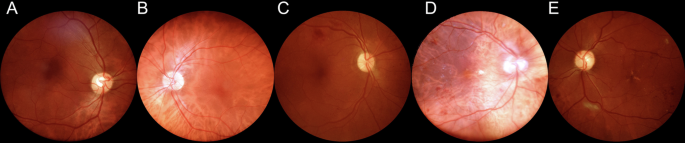

In the domain of AI for healthcare, transformative advances are often tempered by a harsh reality: the data we rely on rarely represents the populations that need it most. As an ophthalmologist working in a low- and middle-income country, I have witnessed firsthand how limited access to cutting-edge medical imaging perpetuates disparities in care. This challenge inspired our team to develop mBRSET—a dataset uniquely assembled from mobile retinal images captured with handheld cameras in real-world, resource-constrained environments.
Rethinking the Status Quo
Traditional retinal imaging relies on high-cost, tabletop fundus cameras that are typically available only in well-funded hospitals. Although these systems produce high-quality images, they are impractical for many regions where medical infrastructure is limited. Moreover, current benchmarks for AI fairness in healthcare often fall short of capturing the complexities of real-world settings. Data collected under controlled conditions tends to miss crucial socioeconomic dimensions. Conventional datasets often lack representation because they predominantly feature data from affluent, urban settings. They also use simplistic labeling that focuses mainly on disease status without providing context on factors like education or insurance, and they overlook the variability inherent in real-world data acquisition.
Building mBRSET: A Data-Driven Response
Our approach was to flip the script. Collaborating with a local research group, we set out to create a dataset that truly reflects the diversity and challenges of low- and middle-income countries. Unlike conventional datasets sourced from large hospitals in major U.S. cities, mBRSET was gathered during the Itabuna Diabetes Campaign in Bahia, Brazil. We used handheld retinal cameras that are far more accessible in under-resourced settings, capturing images in community environments where factors such as illumination, focus, and image artifacts are everyday realities. In addition to standard clinical markers, our dataset includes comprehensive demographic information—such as treatment details, education levels, and insurance status—that provides a robust foundation for fairness analyses.
Reflecting on our efforts, I have often considered whether our current evaluation benchmarks truly capture the nuances of fairness when demographic variables like socioeconomic status come into play. Controlled datasets cannot mimic the shifting data distributions of real-world environments, and our dataset’s inclusion of diverse imaging conditions helps bridge that gap.
The Impact and the Road Ahead
mBRSET is not just a dataset—it is a catalyst for change. By representing populations that are typically overlooked, our work opens the door to research examining whether retinal AI models exhibit biases based on income, education, or insurance status. Our extensive experiments have already established robust benchmark results, demonstrating that even with images captured from portable devices, state-of-the-art models can achieve commendable performance. More importantly, these experiments highlight areas where fairness improvements are needed.
Looking ahead, we hope that mBRSET will inspire the development of new fairness metrics that capture the intricate balance between model performance and equitable treatment across diverse groups. We also envision further research into enhancing model robustness in the variable conditions of resource-constrained settings, ultimately informing policies and practices that ensure AI-driven tools benefit every segment of society—especially those who have long been left on the margins.
Reflecting on this journey reminds me that advancing fairness in AI is as much about rethinking our data as it is about refining our algorithms. Through mBRSET, we are taking an important step toward a future where AI in healthcare truly serves all.
Follow the Topic
-
Scientific Data
A peer-reviewed, open-access journal for descriptions of datasets, and research that advances the sharing and reuse of scientific data.

Related Collections
With Collections, you can get published faster and increase your visibility.
10 years of the FAIR principles
Publishing Model: Open Access
Deadline: Nov 14, 2026
Data to support cancer treatment, diagnosis, and disease understanding
Publishing Model: Open Access
Deadline: Jan 02, 2027