Beyond the pipeline: how advocacy writing shaped my scientific leadership career
Published in Social Sciences
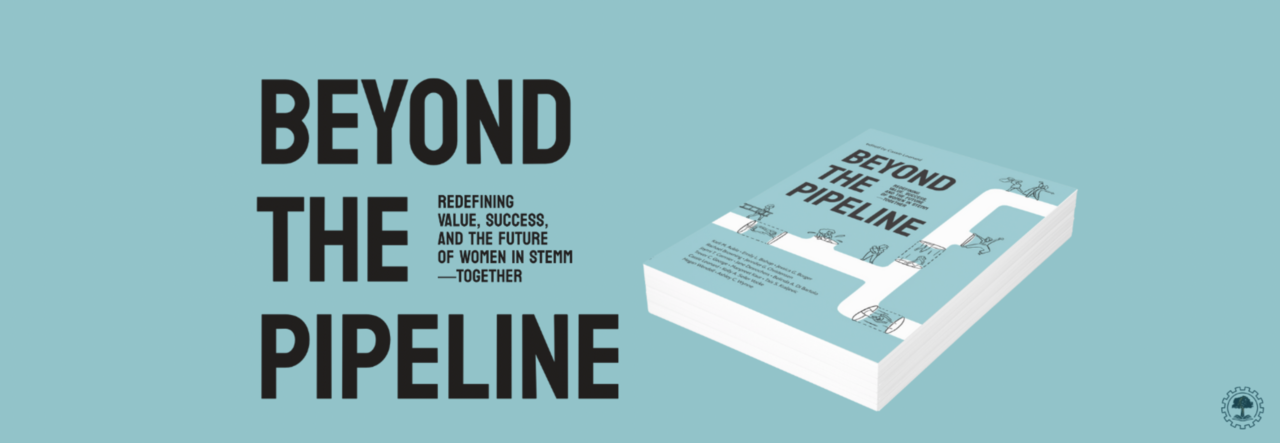
Early in my career, I was taught that success in science depended on publications, grant income and steady progression along a clearly defined pathway. The loss of researchers at each career stage, particularly women, was routinely explained as the “leaky pipeline.” Over time, it became clear that this language did more than describe loss, it normalised it. By framing inequity, job insecurity, opaque promotion processes and unachievable performance metrics as attrition, we avoid asking harder questions about who the system serves, who it excludes and why.
As PhD-trained scientists, we occupy a privileged position in society. We are granted authority, credibility and access to audiences that many people, including those most affected by inequity, do not have. Our voices can reach institutions, funders and the public. If they are never used to lift others or challenge structural barriers, they do not create change, they create noise.
Advocacy in science is often framed as risky, particularly for early-career researchers. Yet advocacy draws directly on core scientific skills: analysing evidence, interrogating systems and communicating clearly. Writing beyond academic journals, through professional outlets, policy forums and mainstream media, allows scientific expertise to reach policymakers, funders and governments who shape national priorities.
The value of advocacy extends well beyond individual influence. Effective advocacy educates communities about how science works and why inequities persist, counters misinformation and clarifies what evidence tells us about change. It strengthens the scientific workforce by amplifying underrepresented voices, retaining expertise that might otherwise be lost, and demonstrating leadership beyond the laboratory.
At a national level, sustained scientific advocacy matters economically. Public investment in research and discovery underpins innovation, workforce capability and long-term GDP growth. When scientists engage constructively with policy, they help ensure funding decisions reflect evidence, societal need and the true return on discovery.
Science will not become more equitable or impactful through research and publication alone. Those with security, status and platforms should not wait for permission to speak. Our responsibility is not only to use our voices, but to amplify others, educate our communities and help shape policies that allow science and society to thrive.
I advocated as an early career researcher for gender equity in medical research funding in Australia - it made me noticed, created change, demonstrated impact and contributed to my accelerated upward academic career trajectory. You can make impact beyond grants and papers. Advocacy will help you and bring those you advocate for with you.

I am an immunologist, educator, bestselling author and nationally recognised advocate for diversity and inclusion in STEMM. After 14 years as an academic researcher in the UK, supported by prestigious MRC funding at UCL and the University of Edinburgh, I transitioned to education leadership in Australia. I have led the design of flagship graduate programs at Monash University, WEHI and the University of Melbourne, and now serve as Director of Education at Monash’s School of Translational Medicine. An editor at Immunology & Cell Biology, I amplify diverse voices in science. I am a frequent media contributor, author of Beyond the Pipeline, and recipient of multiple national awards for education, equity and leadership.
Follow the Topic
Introducing: Social Science Matters
Social Science Matters is a campaign from the team at Palgrave Macmillan that aims to increase the visibility and impact of the social sciences
Continue reading announcement
Please sign in or register for FREE
If you are a registered user on Research Communities by Springer Nature, please sign in