Bioprinting: A path Beyond Organic Creation
Published in Bioengineering & Biotechnology, Materials, and Protocols & Methods
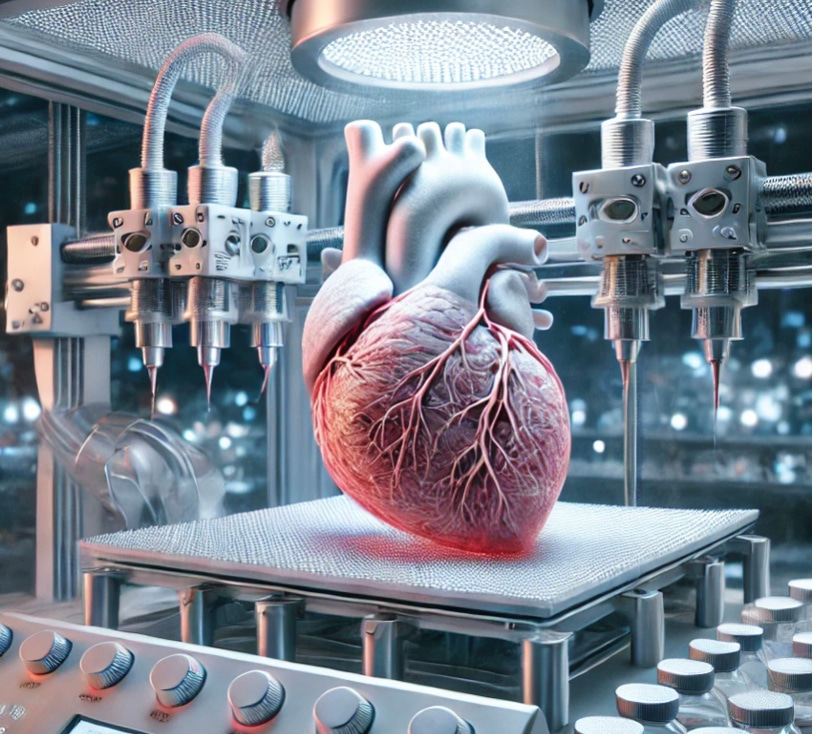


3D bioprinting of human tissues is a groundbreaking technology for creating patient-specific tissues for transplantation, drug screening, and disease modeling. To understand the field, let’s start with a simple question: Do you know the differences between the four terms we generally use in Bioprinting research?
The terms are as follows;
- 3D Bioprinting
- 3D Printing
- Additive manufacturing
- Biofabrication
Answers:
3D bioprinting is a specialized type of 3D printing that uses living cells and biomaterials to create living, functional tissues/ organoids/ organs.
3D printing is a general term for creating 3D objects layer by layer from digital models.
Additive manufacturing is its industrial form that has a full workflow with multiple steps in the manufacturing process, used for making parts in industries such as aerospace, automotive, and other machinery.
Biofabrication is the broader field that includes 3D bioprinting but also involves other techniques like cell assembly and scaffold-based approaches for building biological structures.
In short: 3D Bioprinting = Living Materials; 3D Printing = general; Additive Manufacturing = industrial; Biofabrication = all biological construction techniques.
Feel free to add your thoughts on this.

Dr. Soja Soman is a scientist and inventor working in the frontier areas of 3D Bioprinting, Microfluidics, Medicine, and Biomedical Engineering. She is affiliated with New York University and holds a PhD in Biotechnology. Dr. Soja is the pioneering biologist who established the state-of-the-art 3D Bioprinting research lab at the New York University Abu Dhabi, the first of its kind in the region. Dr.Soja is passionate about pushing the boundaries of technology-driven translational medicine.