

Biofilms are communities of bacteria, fungi, protozoa or algae that adhere to each other or surfaces. While biofilms involved in waste water treatment and bioremediation are beneficial, many others involved in corrosion and infections are harmful. One of the main issues of biofilms relevant in the context of human health is their increased tolerance to disinfectants and antibiotics. As a result, biofilms on medical implants are difficult to eradicate leading to recalcitrant infections. It is believed that the tolerance is due to the fact that biofilms act as diffusion barriers for antibiotics.
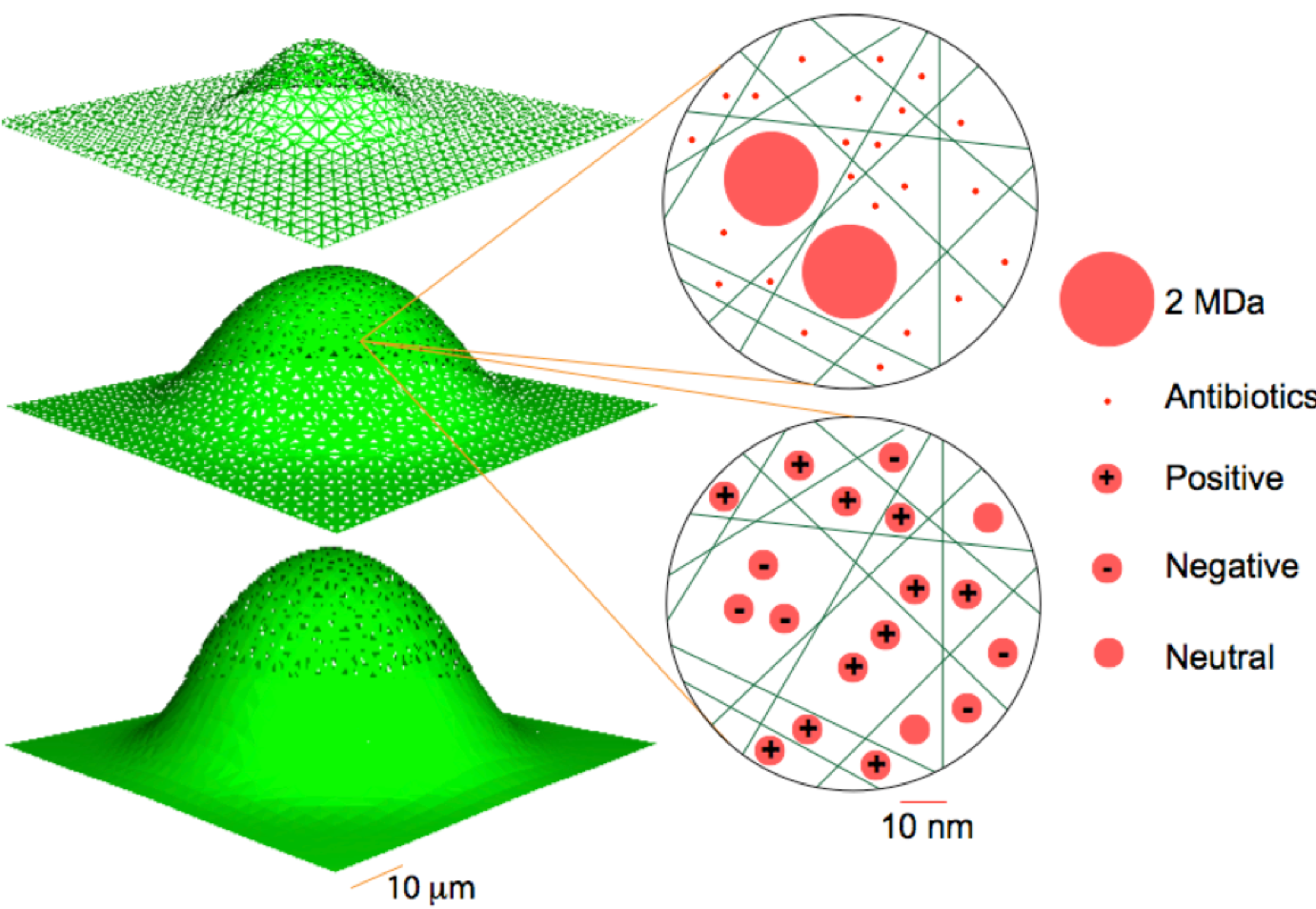
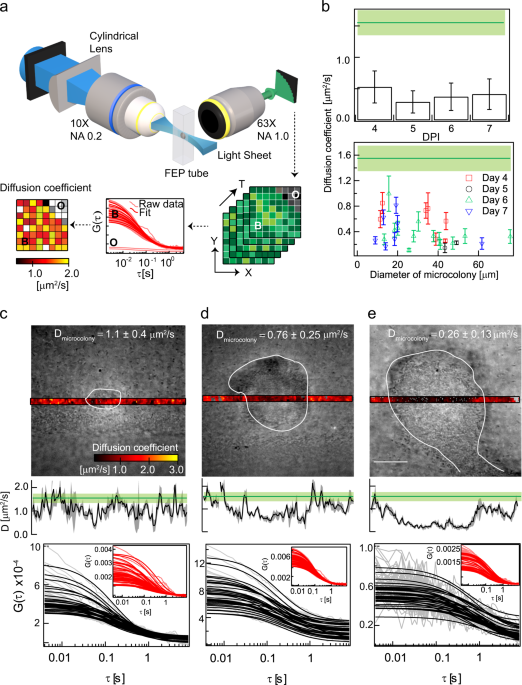
To study whether biofilms indeed act as diffusion barriers to antibiotics, we used an analytical technique called Fluorescence Correlation Spectroscopy (FCS) to investigate the diffusion of molecules in Pseudomonas aeruginosa biofilms in this study. FCS quantifies the diffusion coefficient of molecules by analysing the fluctuations in fluorescence emitted by the molecules. FCS was performed in biofilms using a novel microscopic imaging modality called Single Plane Illumination Microscopy (SPIM). SPIM illuminates only a cross-section of the sample using a laser light sheet, thus eliminating unnecessary photodamage to the biofilm sample. In this study, SPIM based FCS was used to investigate the influence of molecular size and charge on diffusion within bacterial microcolonies to determine whether the structure of biofilms could be a reason for the reduced efficacy of antibiotics.
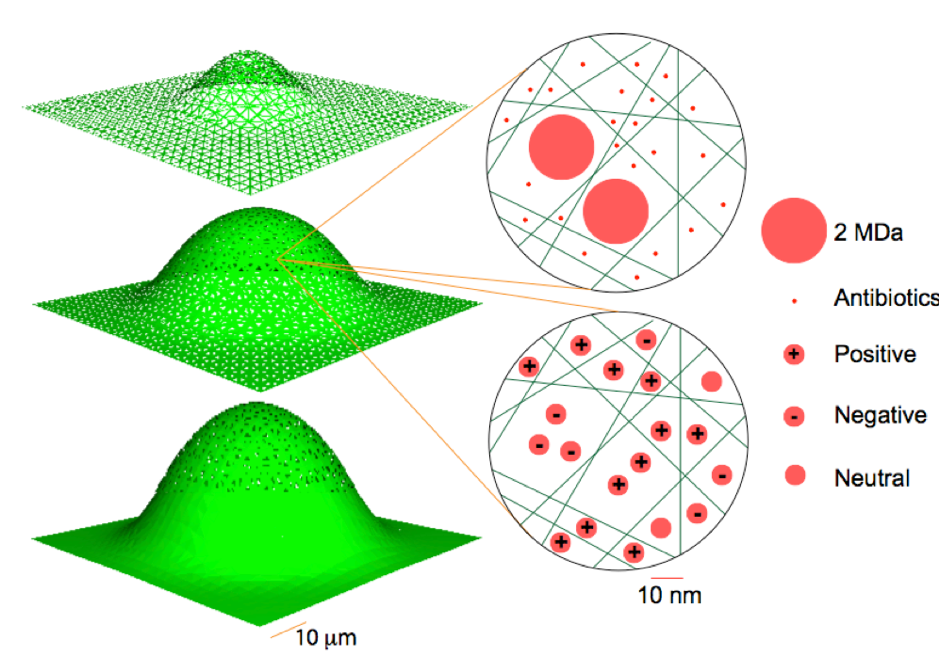
The results showed that molecules approximately 20 times the size of antibiotics penetrated into P. aeruginosa biofilms suggesting that the pore size of biofilms is larger than the size of antibiotics and hence there are no limitations attributed to the size of the molecule. The results also showed that positively charged molecules (including the antibiotic tobramycin) readily accumulated and diffused inside the biofilm. Together, these results suggest that diffusion limitations do not contribute to the observed tolerance in clinically relevant biofilms for antimicrobials. This study also suggests that agents with an outer, positively charged surface would have the highest penetration compared to neutral or negatively charged molecules. Quantification of the diffusion coefficient of molecules in living biofilms will aid in efficient strategising of the time-course of the addition of biofilm removal agents. Such biofilm removal agents aid in the management of biofilms not only in recalcitrant infections in a clinical setting but also in the management of biofilms leading to corrosion in an industrial setting.

Follow the Topic
-
npj Biofilms and Microbiomes
The aim of this journal is to serve as a comprehensive platform to promote biofilms and microbiomes research across a wide spectrum of scientific disciplines.

Related Collections
With Collections, you can get published faster and increase your visibility.
Microbial endocrinology
Publishing Model: Open Access
Deadline: Oct 21, 2026
AMR and microbiome
Publishing Model: Open Access
Deadline: Apr 01, 2027


Please sign in or register for FREE
If you are a registered user on Research Communities by Springer Nature, please sign in