Call for papers: Human Admixture and Migration
Published in Protocols & Methods and Genetics & Genomics

What is this collection about?
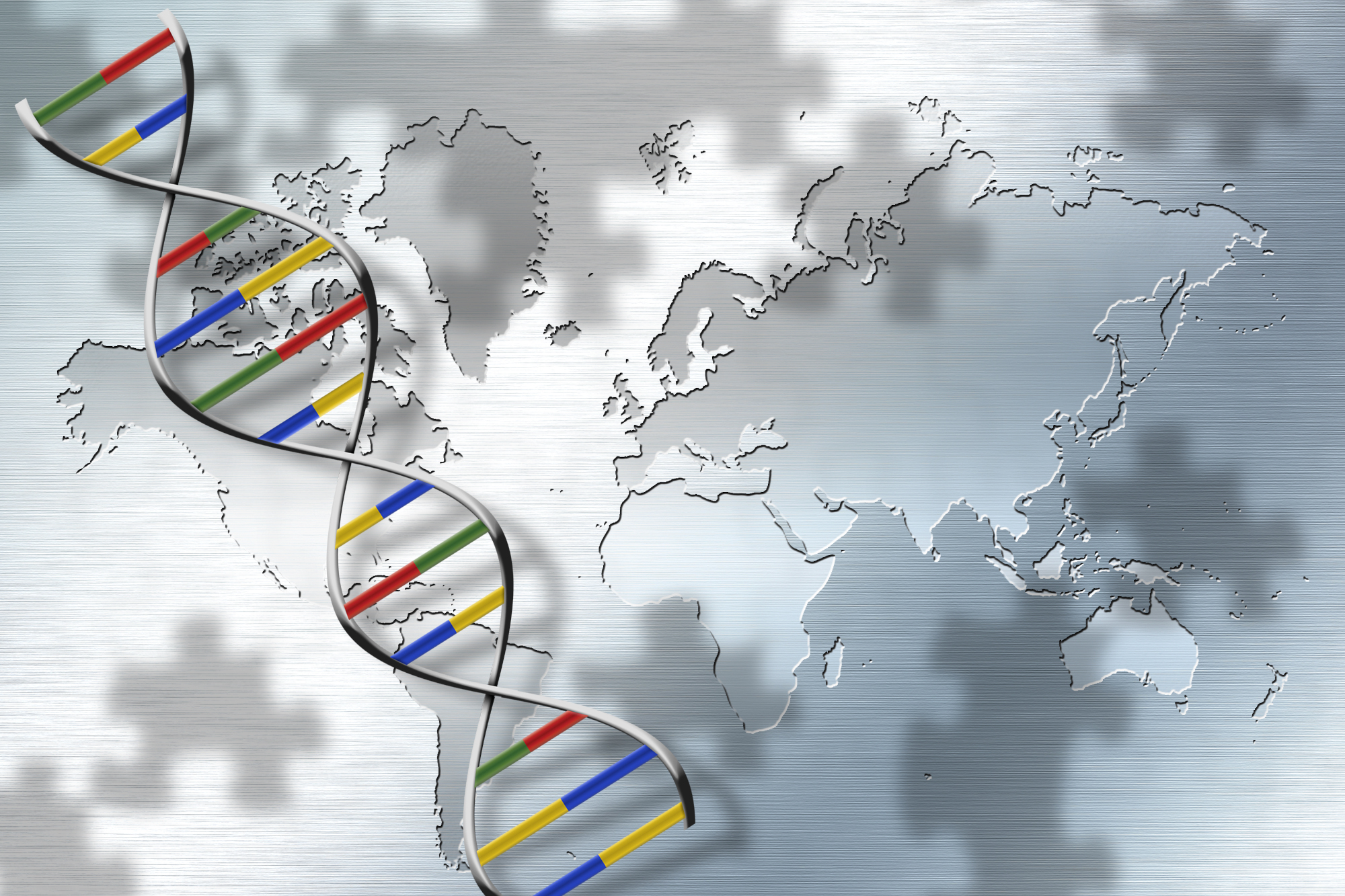
Human populations have been shaped by migration, mixture, and adaptation over thousands of years, leaving detectable traces in genetic variation. With the rapid development of ancient DNA sequencing and large-scale genomic datasets, researchers are now able to reconstruct past population movements and better understand how genetic diversity relates to health and disease.
In this cross-journal Collection, Nature Genetics, Nature Communications, Communications Biology and Scientific Reports welcome submissions that leverage ancient or modern genetic data to investigate human population shifts, admixture events, and their implications for human biology and health. Studies may include analyses of ancient or modern DNA, population genomics, evolutionary genetics, and genome-wide association approaches that provide insights into human demographic history.
Why is this collection important?
Understanding our human genetic past is central to both evolutionary biology and modern medicine. Insights from ancient or modern DNA and population genomics are reshaping our knowledge of how populations migrated, interacted, and adapted to new environments. At the same time, these approaches are increasingly helping to explain present-day patterns of disease risk and health disparities.
This Collection brings together work across multiple journals, providing a platform for interdisciplinary research spanning evolutionary genetics, archaeology, biological anthropology, and biomedical science. By highlighting advances in both ancient and modern genetic analysis, it aims to deepen our understanding of human diversity and its relevance to health.
Why submit to this collection?
Collections like this one help promote high-quality science and ground-breaking research. They are led by Guest Editors and In-House Editors who are experts in their fields and supported by a dedicated team of Commissioning Editors and Managing Editors at Springer Nature. Collection manuscripts typically see higher citations, downloads, and Altimetric scores, and provide a one-stop-shop on a cutting-edge topic of interest.
Who is involved?
Communications Biology is edited by both in-house professional editors and Editorial Board Members.
Guest Editors for Communications Biology:
Pavel Flegontov, PhD, University of Ostrava, Czech Republic
Pavel Flegontov received his PhD in Molecular Biology from Moscow State University, Russia, in 2008. From 2009, he worked on the genomics and metabarcoding of microbial eukaryotes at the Institute of Parasitology, Czech Academy of Sciences, in České Budějovice, Czechia. Since October 2013, he has led a research group at the University of Ostrava, Czechia, where his research focuses on the archaeogenetics of Eurasia and methodological development in population genetics. He is also affiliated with David Reich’s group (Department of Human Evolutionary Biology, Harvard University).
Cesar Fortes-Lima, PhD, Johns Hopkins University, USA
Cesar Fortes-Lima obtained his PhD from Paul Sabatier University (France) in 2015, after he completed postdoctoral training at CNRS-MNHN (France), Uppsala University (Sweden), and Johns Hopkins University (JHU, USA). He is currently a faculty member at the Department of Genetic Medicine (JHU), where he works in Human Population Genomics and Evolutionary Biology, and is also affiliated with the Human Evolution Program at Uppsala University. His main research achievements centered on leveraging genomic variation to dissect the evolutionary forces driving migration, admixture, and selection across human populations from Africa and worldwide.
Nature Genetics is edited by in-house professional editors.
Nature Communications is edited by in-house professional editors.
Scientific Reports is managed by in-house professional editors and edited by Editorial Board Members.
Our editors work closely together to ensure the quality of our published papers and consistency in author experience.
How can I submit my paper?
Visit the Collection page to find out more about this collection and submit your article.
Follow the Topic
-
Communications Biology
An open access journal from Nature Portfolio publishing high-quality research, reviews and commentary in all areas of the biological sciences, representing significant advances and bringing new biological insight to a specialized area of research.
-
Nature Communications
An open access, multidisciplinary journal dedicated to publishing high-quality research in all areas of the biological, health, physical, chemical and Earth sciences.
-
Scientific Reports
An open access journal publishing original research from across all areas of the natural sciences, psychology, medicine and engineering.
-
Nature Genetics
This journal publishes the very highest quality research in genetics, encompassing genetic and functional genomic studies on human and plant traits and on other model organisms.




Related Collections
With Collections, you can get published faster and increase your visibility.
Phytochemicals and health
Publishing Model: Open Access
Deadline: Oct 28, 2026
Mechanisms and impact of 3D genome organisation
Publishing Model: Hybrid
Deadline: Nov 30, 2026