
Introduction
The Arctic has warmed about three to four times faster than the globe over the past few decades, accompanied by climate temperature increases. Understanding the future of the Arctic climate and its global impact is essential. In this context, the accuracy of climate models becomes a key factor. Climate models are crucial tools for scientists to simulate and understand the complex interactions within the climate system and to provide projections about future climate conditions. The accuracy of these models is vital for providing insights that help policymakers, governments, and communities make informed decisions to plan, act, and adapt to the Arctic’s changing conditions.
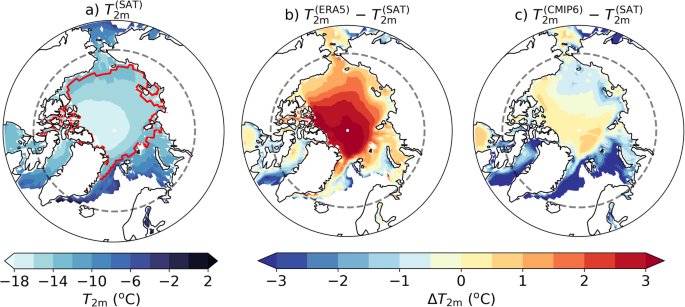
The latest Intergovernmental Panel on Climate Change (IPCC) Sixth Assessment Report, along with various studies, pointed out that many climate models simulated a colder Arctic than what is observed. Addressing and investigating this critique has led to a thorough examination of how accurately Arctic climate is represented in climate models in this study.
Bridging the Knowledge Gap
In November 2022, Tian Tian, a Research Scientist at the Danish Meteorological Institute who specializes in climate model development to address biases, particularly focusing on the influence of Arctic sea ice on global climates, participated in the 6th WMO/WCRP Working Group on Numerical Experimentation (WGNE) workshop on systematic errors in weather and climate models. The workshop gathered experts in modelling Earth systems, including the atmosphere, ocean, cryosphere, waves, land-surface, and atmospheric composition, to collectively tackle systematic errors in weather and climate models, aiming to refine understanding across various timescales.
After giving a presentation on improving surface heat flux over the Arctic with the coupled climate model EC-Earth3 to remedy cold bias in the Arctic, a conversation between Tian and the scientists from the numerical weather prediction (NWP) community spurred. They pointed out that the commonly used reference data in the climate modeling community, namely the reanalyses, might not be as accurate as previously assumed.
The NWP community relies on the best available local observations for accurate weather forecasts, while the climate modelling community typically does not incorporate regional (in-situ or satellite) observational data and often prioritizes globally complete and consistent datasets for model evaluation. This preference arises from the need for broader-scale inputs in climate modeling, leading to limited integration with the latest regional observations.
Many criticisms regarding climate models simulating a too cold Arctic climate are often grounded in comparisons with the ERA5 reanalysis data, rather than satellite observations. ERA5 is indeed a state-of-the-art reanalysis product, offering high-resolution, accurate, and consistent global atmospheric data, which is invaluable for the scientific community. However, it is crucial to remind users about the limitations of ERA5, particularly in data-sparse regions like the Arctic, where certain parameters may exhibit reduced accuracy. This challenge is common among other global reanalysis products as well.
This is when the motivation for this study sparked.
“The idea [for] the paper was inspired [from personal conversations that arose] at the workshop. It [drew my attention] to the knowledge gap between the numerical weather prediction and the climate modelling community”, reflected Tian.
The numerical weather prediction community acknowledged biases in atmospheric reanalysis and forecast models, especially after Batrak and Müller's paper in 2019 highlighted a warm bias in the Arctic due to poor representation of snow and sea-ice insulation effects. Tian and Shuting, as experienced climate modellers, saw the integration of this knowledge with climate modeling as a crucial focus for further investigation.
Importance of Satellite Observations
Referencing new data to tackle the presumed cold bias in climate models, Tian and the team highlighted that evaluating climate models using satellite observations became a crucial benchmark.
In collaboration with remote sensing specialists Jacob L. Høyer, Pia Nielsen Englyst, and Suman Singha, the team introduced a high-resolution satellite-based dataset. This dataset, which derives surface air temperatures over Arctic sea ice from satellite retrievals, offers an expanded perspective not previously accessible, thus improving climate model assessments in the region.
With this satellite-derived product as a reference for the climate model evaluation, the team found that reliance on ERA5 reanalysis, leads to an incorrect conclusion of the Arctic being too cold in climate models. On the contrary, by factoring in satellite observations, it was found that ERA5 depicted an Arctic that is too warm, particularly in the winter.
These findings highlight the key role of integrating new observational data for benchmarking climate models in the Arctic.
The Message
Coinciding with the IPCC Seventh Assessment Report cycle, this study comes at an opportune moment to resolve the bias from the IPCC Sixth Assessment Report.
For those in the climate modelling community, Shuting Yang sends a take home message:
“The climate modelling community needs to pay attention to newly available datasets - those which might not be converted to what we usually work with, but which contain very important information. We now have several decades of satellite observations where we can gather key knowledge.”
The impactful reach of Nature Communications Earth & Environment provides a vital platform to raise awareness of the findings from this study among the climate modelling community and beyond.

Follow the Topic
-
Communications Earth & Environment
An open access journal from Nature Portfolio that publishes high-quality research, reviews and commentary in the Earth, environmental and planetary sciences.

Related Collections
With Collections, you can get published faster and increase your visibility.
Ecological resistance and resilience under global change
Publishing Model: Open Access
Deadline: Apr 07, 2027
Hazards in Mountain Regions
Publishing Model: Open Access
Deadline: Nov 02, 2026