Conducting the Rhizosphere Symphony: How Much Do Plants Change Their Tune?
Published in Microbiology
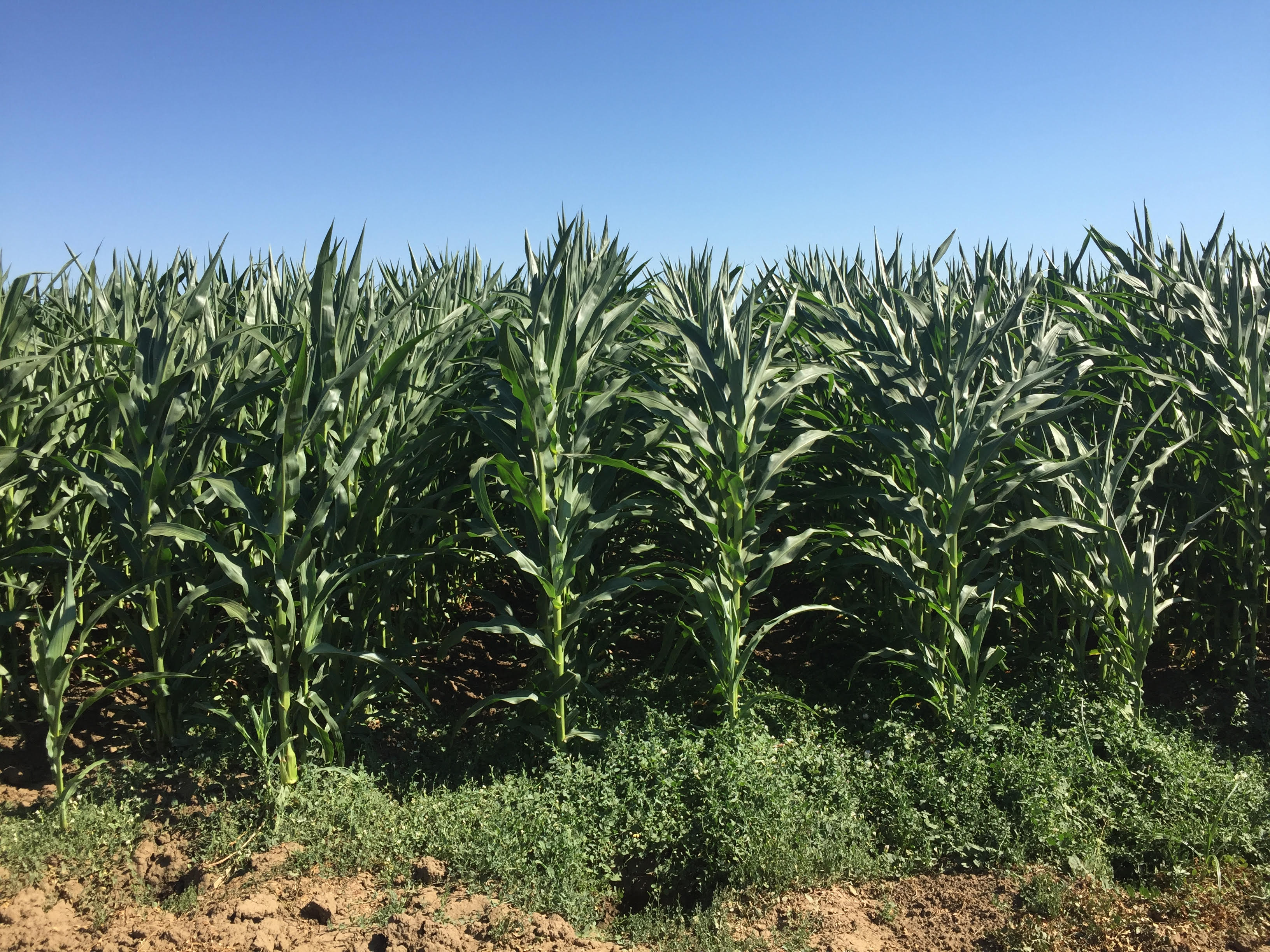


The rhizosphere has long been described as the zone of influence of plant roots1, but roots are not the only influence on soil microorganisms in this important region. Agricultural management practices such as fertilization and crop rotation shape soil physical and chemical properties and influence which bacteria and fungi survive and thrive. Upon establishment, plant roots then recruit a subset of microorganisms from bulk soil, establishing the unique microbial community that will inhabit the rhizosphere in a sort of one-time “rhizosphere snapshot” driven by host selection. At least, that’s how the story was thought to go.
However, while sampling for other projects at the Russell Ranch Century Experiment, a long-term agricultural system trial initiated 25 years ago, we started to question whether complex, dynamic rhizosphere processes are really established in such a static manner. For example, this trial has shown differences in the amount of soil organic matter and the soil microbial communities between conventional, organic, and integrated management systems. It has also shown variation in the availability of nutrients such as nitrogen from organic and synthetic sources even when the total amount applied is constant2. Wouldn’t plants require different root-associated microbial communities, then, in organic systems where nutrients must be obtained through mineralization of cover crops and compost rather than readily available synthetic fertilizer? Instead of a “rhizosphere snapshot”, what if plant roots are active conductors of an ongoing “rhizosphere symphony”, with each plant genotype upregulating specific microbial taxa and functions as a conductor brings together different sections of instruments?
We hypothesized that a single maize genotype would recruit management-system-specific rhizosphere communities in plots under long-term organic management as compared to the conventionally managed plots. To understand how plants shape not only which microbes are present but also how they interact with one another and what they do, we investigated microbial taxonomic composition, co-occurrence networks, and nitrogen-cycling functional genes.
We found that plant selection does moderate the influence of agricultural management on rhizosphere microbial communities, although bacteria and fungi respond differently from one another. A single maize genotype recruited management-system-specific taxa and shifted N-cycling pathways in the rhizosphere, distinguishing this soil compartment from bulk soil. Plant effects acted as an equalizing influence on bacterial communities, making rhizosphere microbiomes from conventional and organic systems more similar to one another in diversity and network structure than communities from their respective bulk soils. In contrast, fungal community composition was mainly affected by management practices, but network arrangements were mostly driven by plants.
Our finding that plants change their tune in different management systems highlights the essential role of roots in orchestrating rhizosphere microbiome assembly and processes. With further research into the underlying mechanisms, we may be able to manipulate the sound of the symphony by talking to the conductor: plant-driven strategies may be instrumental in maximizing beneficial rhizosphere interactions for sustainable agricultural productivity.
1. Hiltner, L. Über neuere Erfahrungen und Probleme auf dem Gebiete der Bodenbakteriologie unter besonderer Berücksichtigung der Gründungung und Bräche. Arbeiten der Deutschen Landwirtschafts-Gesellschaft 98, 59–78 (1904).
2. Wolf, K. M. et al. The century experiment: the first twenty years of UC Davis’ Mediterranean agroecological experiment. Ecology 99, 503–503 (2018).

Follow the Topic
-
Microbiome
This journal hopes to integrate researchers with common scientific objectives across a broad cross-section of sub-disciplines within microbial ecology. It covers studies of microbiomes colonizing humans, animals, plants or the environment, both built and natural or manipulated, as in agriculture.

Related Collections
With Collections, you can get published faster and increase your visibility.
Oncobiome
This collection of papers delves into the burgeoning field of oncobiome research, exploring the intricate relationship between cancer and the microbiome. The oncobiome encompasses the diverse microbial communities residing in and on the human body, which influence cancer development, progression, and treatment responses. By examining these interactions, our aim is to unravel the complex mechanisms through which the microbiome impacts oncogenesis and therapeutic outcomes.
This compilation highlights cutting-edge research, offering insights into potential diagnostic markers and novel therapeutic strategies, thereby advancing our understanding of cancer biology and paving the way for innovative, microbiome-targeted cancer treatments.
This is a cross-journal collection between:
Experimental Hematology and Oncology
Articles will undergo the standard peer-review process of the journal to which they are submitted and are subject to either the BMC editorial policies or those of BJC Reports. Articles will be added to the Collection as they are published. The Editors have no competing interests with the submissions which they handle through the peer review process. The peer review of any submissions for which the Editors have competing interests is handled by another Editorial Board Member who has no competing interests.
Publishing Model: Open Access
Deadline: Ongoing
The Apple Microbiome
Microbiome and Environmental Microbiome are calling for submissions to our Collection on the Apple Microbiome.
With world apple production estimated at 84 million tons, the microbiome of the apple has significant implications for agriculture, food security, and human health. Understanding the complex interactions between apple plants and their associated microbial communities can lead to improved crop management strategies, enhanced fruit quality and longevity, and sustainable agricultural practices. Recent advances have highlighted the role of specific bacteria and fungi in promoting plant health and resilience against specific pathogens. Moreover, detailed profiling of these microbial communities, revealing their diversity and functional potential facilitate exciting future developments, such as the identification of beneficial microbial consortia for biocontrol and the formulation of tailored probiotic treatments for both plants and humans. By advancing our collective understanding in this area, we can work towards a more sustainable and resilient agricultural system.
Topics of interest include but are not limited to:
-Microbial diversity and function associated with apples
-Effects of soil health and rhizosphere interactions on apple production
-Impact of climate change on the apple microbiome
-Role of the apple microbiome in fruit quality
-Microbiome-driven strategies for disease resistance
This collection is open for submissions from all authors on the condition that the manuscript falls within both the scope of the collection and the journal it is submitted to.
All submissions in this collection undergo the relevant journal’s standard peer review process. Similarly, all manuscripts authored by a Guest Editor(s) will be handled by the Editor-in-Chief of the relevant journal. As an open access publication, participating journals levy an article processing fee (Microbiome, Environmental Microbiome). We recognize that many key stakeholders may not have access to such resources and are committed to supporting participation in this issue wherever resources are a barrier. For more information about what support may be available, please visit OA funding and support, or email OAfundingpolicy@springernature.com or the Editor-in-Chief of the journal where the article is being submitted.
Publishing Model: Open Access
Deadline: Sep 30, 2026