DA: towards distribution adaptive test-time adaptation in dynamic wild world
Published in Mechanical Engineering and Business & Management




Key Experimental Findings
1. Limitations of Conventional TTA
Empirical analysis revealed that no single batch normalization (BN) strategy fits all scenarios. While Test-time BN suits static domains, it fails in mixed ones.Furthermore, standard back-propagation in heterogeneous streams was found to degrade accuracy by over 3% and significantly increase computational overhead, acting as a "double-edged sword."
2. Intelligent Distribution Discrimination
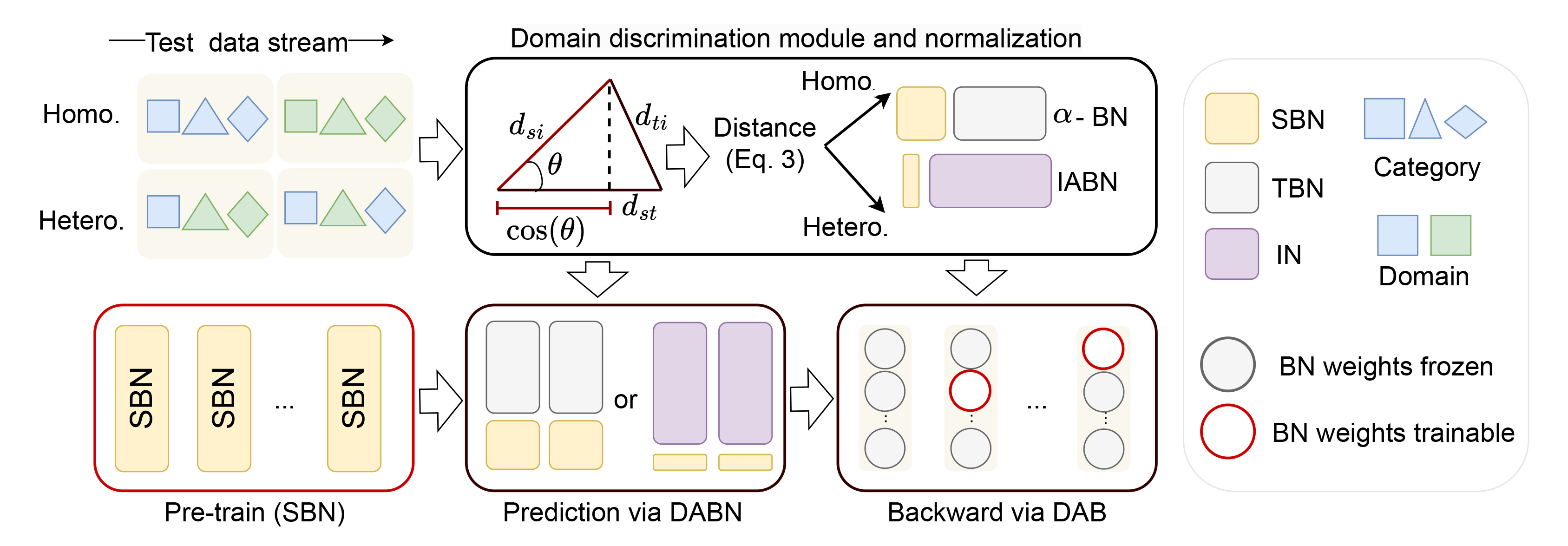
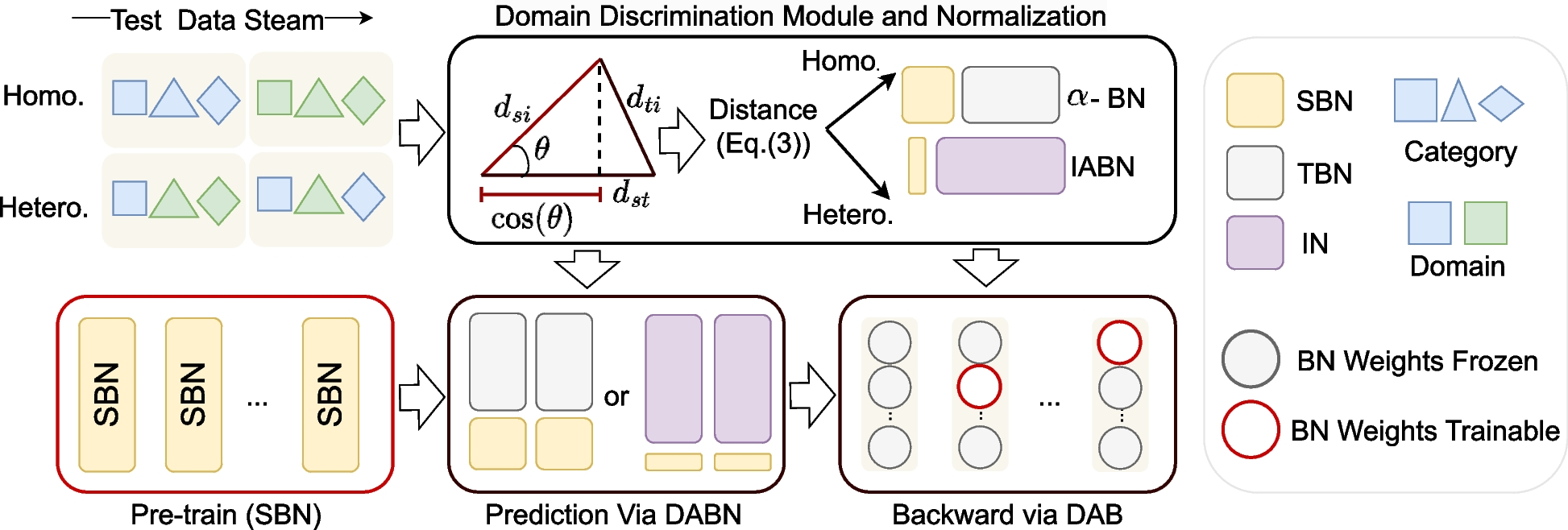
The proposed distribution discriminator module (DDM) utilizes an Instance Normalization-based projection to effectively distinguish between homogeneous (static) and heterogeneous (mixed) batches in real-time.This detection enables distribution adaptive batch normalization (DABN) to dynamically aggregate statistics (SBN, TBN, IN), ensuring optimal feature representation for any data pattern.
3. Superior Performance and Efficiency
On benchmarks like CIFAR-10-C and ImageNet-C, DA outperformed state-of-the-art methods (e.g., NOTE, TENT) by approximately 10% in specific mixed-domain settings while maintaining high accuracy in static scenarios.By implementing selective backward propagation, the method reduced memory consumption by approximately 75% compared to full-update approaches, demonstrating exceptional efficiency.
Technological Implications
The findings directly address the stability and cost issues of deploying AI models in changing environments. By adaptively selecting normalization and update strategies, this work enables:
Autonomous Systems: Enhancing perception reliability in self-driving cars across rapidly changing weather, lighting, and sensor conditions.
Smart Manufacturing: Allowing quality inspection systems to adapt to different product variants on production lines without manual recalibration.
Edge AI Deployment: The lightweight, memory-efficient nature of DA makes it ideal for resource-constrained IoT devices requiring real-time responsiveness.
Challenges and Future Directions
While the study establishes a robust TTA framework, several avenues remain for exploration:
1. Complex Domain Shifts: Further refining the DDM architecture to handle highly diverse and extreme domain combinations beyond current benchmarks.
2. Privacy-Preserving Adaptation: Investigating the integration of DA with federated learning frameworks for distributed, secure systems.
3. Multi-Modal Expansion: Extending the approach to handle multi-modal data streams, such as combining video and lidar for robotics.
Toward Robust and Efficient AI
This work demonstrates that a one-size-fits-all TTA solution is achievable by intelligently differentiating data patterns. By eliminating the trade-off between robustness and accuracy, the DA framework paves the way for resilient AI systems capable of operating safely and efficiently in the unpredictable "wild world" of real-life applications.
Follow the Topic
-
Moore and More
This is the first top-tier journal dedicated to Beyond Moore technology in the field of integrated circuit.