Designing motivating learning environments
Published in Computational Sciences, Education, and Arts & Humanities



Based on the self-determination theory, we want to help practitioners design motivating learning environments that support students' psychological needs of autonomy, competence, and relatedness.
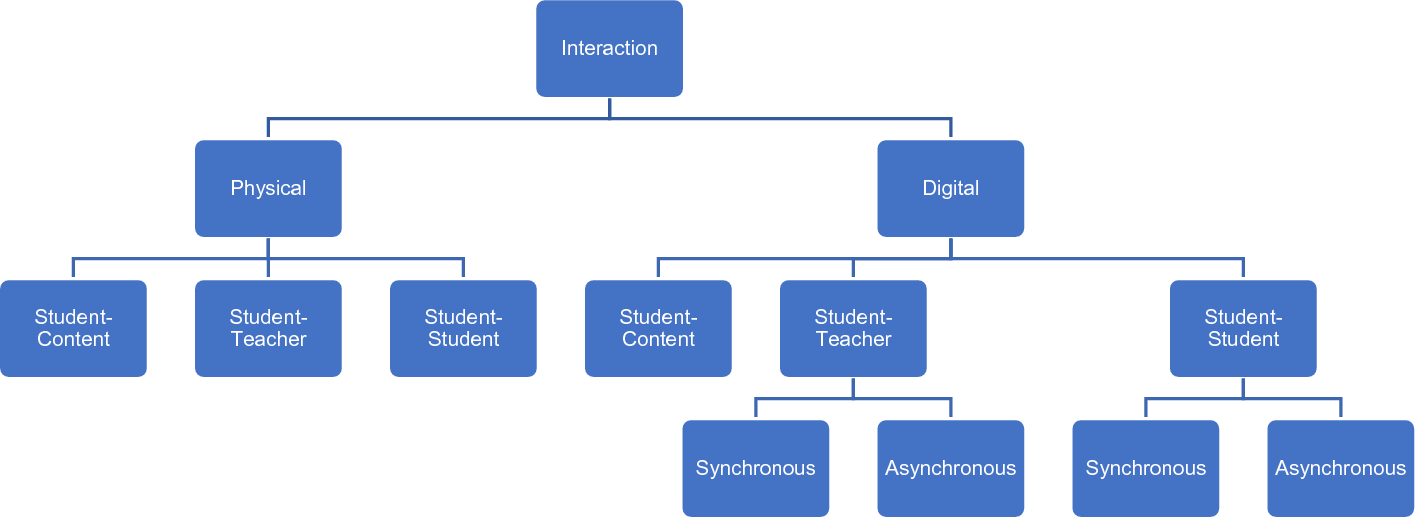
We have developed design guidance that helps teachers support students’ needs by designing a combination of delivery methods. Practitioners can choose between offline delivery methods, online delivery methods, or a combination of both (i.e., blended learning environments). Delivery methods facilitate interactions. The guidance categorizes these interactions into physical and digital interaction categories. Offline delivery methods can facilitate both physical and digital interactions. In contrast, online delivery methods facilitate only digital interactions.
The design guidance prescribes three design principles. The first principle prescribes that a combination of delivery methods should give students choices in time and place to support their need for autonomy. The second principle prescribes that a combination of delivery methods should adapt to students' competency levels to support their need for competence. The third principle prescribes that a combination of delivery methods should stimulate students' relationship building with peers and teachers to support their need for relatedness.
The design guidance distinguishes eight interaction categories. We have defined these categories by extending the three kinds of interactions of Moore (student-teacher, student-student, students-content). Then, we ranked these eight interactions on their unique characteristics to give students choices in time and place, adapt to students' competency levels, and stimulate students' relationship building. Finally, we offer design phases to help practitioners apply the guidelines.
This article is a conceptual paper and gives new insights to practitioners. It was a great adventure to write his kind of paper, but it was extremely time-consuming. It took us almost four years to write this paper. After writing, the next challenge was to publish this conceptual paper. We had new ideas based on literature, but there was no proof for these ideas. We were very happy that the journal "Learning Environment Research" gave us the chance to publish this kind of research.
We hope that in the future it will be easier for researchers to publish conceptual papers. New ideas will bring the field further.

Follow the Topic
-
Learning Environments Research
This journal advances our understanding of the physical, psychosocial, and pedagogical aspects of learning environments and how these influence student learning and outcomes.