Disease-Modifying Therapies Used to Treat Multiple Sclerosis and the Gut Microbiome: A Systematic Review Explained
Published in General & Internal Medicine

by Sharon Roman[i]
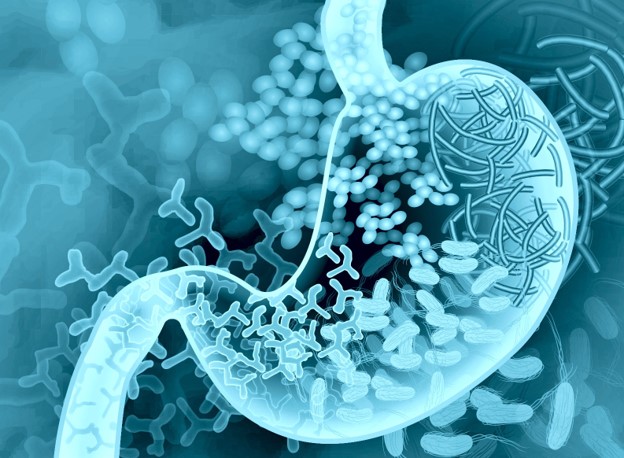
The gut microbiome plays a fundamental role in the development and function of both the immune system and the central nervous system. An imbalance in the gut microbial community, and its interactions with the immune system and brain are believed to be associated with the development of immune-mediated neurological disorders. Multiple sclerosis (MS) is an immune-mediated, demyelinating, and neurodegenerative disease, whose primary target is the central nervous system. Evidence of the role of the gut microbiota in MS and its impact on disease risk and progression is growing.
Differences in gut bacterial communities (taxa-level) have been found between people with MS (pwMS) and those without MS; however, studies included some pwMS who were also taking a disease modifying therapy (DMT). While there are over 20 different DMTs approved to treat MS worldwide, the effect these DMTs have on altering the gut microbiota remain unknown. Researchers conducted a comprehensive review of studies spanning the last 15-years and examined the relationship between MS DMTs and the gut microbiome, including the gut microbiota’s composition and function in pwMS.
Gut microbiota diversity, taxa-level (communities) and functional capacity findings
Of the 410 studies found, the researchers narrowed the review to 11, totaling 1243 people with MS (71% female, 85% relapse-remitting); 821 had used a DMT and 473 had never used a DMT, including 51 people who had their gut microbiota assessed before and after starting a DMT.
No study found a difference in gut microbiota alpha-diversity (the variety of species within a [stool] sample) between those using a DMT and those not. One study found a difference in beta-diversity (the differences between samples) between interferon-beta users and DMT non-users. Taxa-level (microbial communities) differences were examined in all studies, but most combined different DMTs such that results could not be attributed to a specific DMT. Two or more studies reported 8 genera (a taxonomic category ranking above species and below family) and 1 species that were different in the same direction (higher or lower) between DMT users and non-users. People with MS who used a DMT had a lower relative abundance of enzymes to break down carbohydrates and lower ability to breakdown glucose, fatty acids or other fuel molecules, but these results were based on a limited number of studies (and pwMS) and could not be linked to a specific DMT.
Whether specific DMTs alter the MS gut microbiome remains unknown
The potential impact of the DMTs used to treat MS on the composition and functionality of the gut microbiota is of growing interest and importance. Advancing our knowledge of the interaction between DMTs and the MS gut microbiome may lead to a better understanding of the direct relationship between MS and the gut microbiota. Additionally, it may provide insights into how the DMTs affect the MS gut and, by extension, people with MS.
While there were consistent taxa-level findings, these results expose key gaps in the understanding of if, and how, specific DMTs alter the MS gut microbiome. The results support further investigation to help refine the understanding of the role of DMTs and the gut microbiome play in influencing MS disease activity. A better comprehension of the role of the DMTs on the gut microbiome may ultimately lead to more personalized treatment of MS, improving management and long-term outcomes
[i] Vancouver, BC, Canada
Twitter: @SRoman_SPQR
C.C. Tsai, S. Jett, H. Tremlett. Disease-Modifying Therapies Used to Treat Multiple Sclerosis and the Gut Microbiome: A Systematic Review. Journal of Neurology. Accepted 8Nov2023. Ms. No. JOON-D-23-02529R1

Follow the Topic
-
Journal of Neurology
Journal of Neurology is a peer-reviewed international journal focused on all aspects of clinical neurology from diagnosis to treatment.