Effect of thrombus composition on first pass recanalization and bleeding in acute ischemic stroke patients

This study aims to explore how the composition of blood clots affects treatment outcomes in patients with acute ischemic stroke undergoing mechanical thrombectomy.
Effect of thrombus composition on first pass recanalization and bleeding in acute ischemic stroke patients
Like

Share this post

Choose a social network to share with, or copy the URL to share elsewhere

This is a representation of how your post may appear on social media. The actual post will vary between social networks

Explore the Research

SpringerLink
SpringerLink SpringerLink

Effect of thrombus composition on first pass recanalization and bleeding in acute ischemic stroke patients - Journal of Thrombosis and Thrombolysis

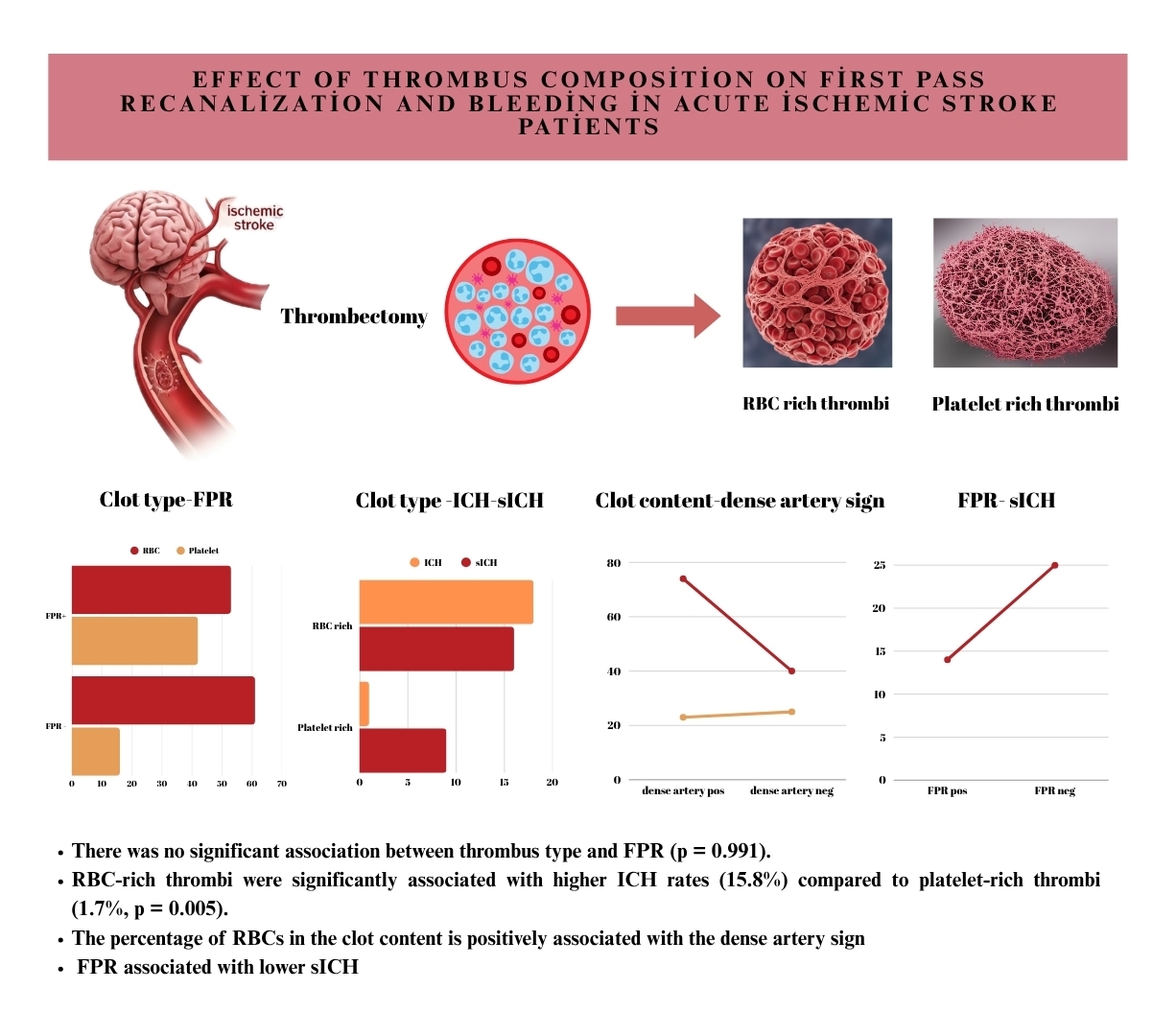
In acute ischemic stroke, the first-pass effect, the occurrence of complete reperfusion after a single pass during endovascular therapy (EVT), is linked to favorable clinical outcomes. This study aimed to investigate the association between thrombus composition and first-pass recanalization (FPR), as well as symptomatic intracranial hemorrhage (sICH), in AIS patients undergoing mechanical thrombectomy (MT). We retrospectively analyzed thrombi retrieved from 172 patients treated with MT. Clots were classified as RBC-rich or platelet-rich. FPR was defined as a modified Thrombolysis in Cerebral Infarction (mTICI) score of 2b or 3 after a single device pass. Associations with FPR and hemorrhagic outcomes were assessed. A total of 172 patients (91 women, 81 men; mean age 71 years) who were treated with mechanical thrombectomy were included in the study. First-pass recanalization (FPR) was achieved in 55.2% of the patients (95/172). There was no statistically significant relationship between clot composition and FPR (p = 0.991). The rate of intracranial hemorrhage (ICH) was 15.8% in the RBC-dominant group and 1.7% in the fibrin/platelet-dominant group. A statistically significant association was found between clot composition and ICH (p = 0.005), whereas no significant relationship was observed between clot composition and symptomatic intracranial hemorrhage (sICH) (p = 0.975). Successful FPR was associated with a lower rate of sICH (p = 0.003). The percentage of RBCs in clot composition was positively correlated with the presence of the dense artery sign. Gender was not significantly associated with clot composition (p = 0.455), and neither gender nor age showed a significant relationship with FPR (p = 0.316 and p = 0.470, respectively). These findings indicate that while clot composition does not significantly affect the success of FPR, it is significantly associated with the risk of intracranial hemorrhage. This underscores the potential clinical relevance of clot histology in predicting post-thrombectomy outcomes, beyond the well-established importance of FPR itself. Future studies with larger and more diverse patient cohorts are warranted to further elucidate these associations and optimize treatment strategies.

Specifically, it investigates whether clots rich in red blood cells (RBCs) or those dominated by platelets and fibrin influence the likelihood of achieving first-pass recanalization (FPR)—a successful reopening of the blocked artery in a single attempt—and the risk of bleeding complications. While clot composition was not significantly linked to FPR success, it was strongly associated with the risk of intracranial hemorrhage. These findings suggest that clot histology could play a key role in predicting post-treatment complications, highlighting its potential clinical value beyond the known importance of achieving FPR.

Follow the Topic

Interventional Radiology
Life Sciences > Health Sciences > Radiology > Interventional Radiology
Stroke
Life Sciences > Health Sciences > Clinical Medicine > Diseases > Cardiovascular Diseases > Vascular Diseases > Cerebrovascular Disorders > Stroke