Exploring the Link Between Human Mobility and Energy Consumption in Urban Iran
Published in Social Sciences, Earth & Environment, and Arts & Humanities
Explore the Research

 elsevier.com
Page restricted | ScienceDirect
Skip to main content
Introduction
Urbanization and rapid population growth have placed immense pressure on cities worldwide, particularly in terms of energy consumption and transportation systems. In our recent study, published in the Journal of Urban Management, we investigated the intricate relationship between human mobility and energy consumption across Iran’s 31 provinces. Our findings shed light on how these factors influence urban policy and planning, offering valuable insights for sustainable development.
Key Findings
-
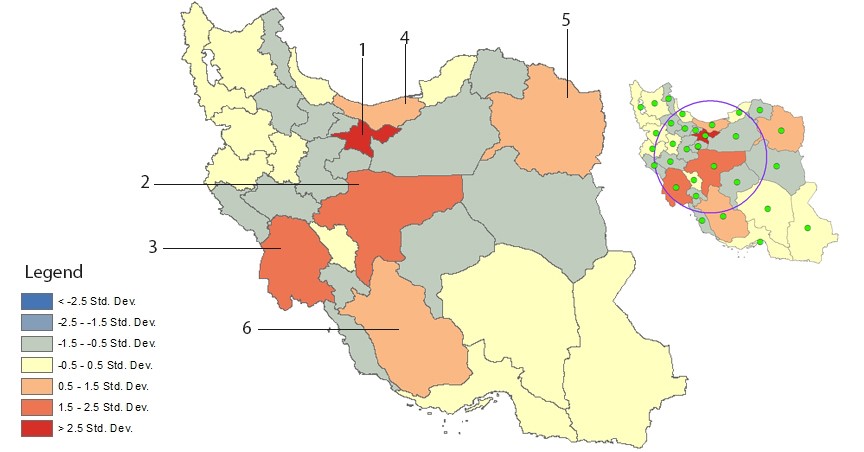
Tehran Leads in Energy Consumption and Mobility
As Iran’s capital, Tehran emerged as the province with the highest energy consumption and human mobility. This is driven by its dense population, administrative centrality, and surrounding dormitory towns that absorb excess residents. The city’s energy demands and transportation patterns set a benchmark for other provinces. -
Industrial Hubs Follow Closely
Provinces like Isfahan (home to steel industries) and Khuzestan (a hub for oil and refineries) ranked second. Their high energy use is tied to industrial activity and the resulting workforce mobility. -
Tourism and Pilgrimage Drive Mobility in Other Regions
Mazandaran (a tourist destination near Tehran), Khorasan Razavi (a pilgrimage site), and Fars (rich in historical tourism) showed significant energy consumption due to travel and tourism-related mobility. -
Regional Disparities Highlight Development Gaps
Our spatial analysis revealed that energy consumption and mobility are concentrated in central and northwestern Iran, underscoring developmental imbalances. Eastern provinces lag due to weaker infrastructure and economic opportunities.
Methodology
We employed Geographically Weighted Regression (GWR) and factor analysis to map the spatial dynamics of energy use (electricity, oil, gas) and mobility indicators (road networks, transit volumes, vehicle density). Data from 2019—the most recent available—was sourced from Iran’s Energy Balance and Statistical Yearbooks.
Implications for Urban Policy
-
Public Transport Expansion: Prioritizing efficient transit systems can reduce energy demands and regional inequalities.
-
Decentralization: Encouraging economic growth in underdeveloped eastern provinces could balance mobility patterns.
-
Smart City Integration: Data-driven planning, aligned with global climate goals (e.g., the Paris Agreement), is critical for sustainable urban management.
Why This Matters
Iran’s unique position as an energy producer and its diverse geography make it a compelling case study. Our research not only informs local policymakers but also offers a model for other regions grappling with similar challenges. By linking mobility to energy use, we highlight pathways to greener, more equitable urban futures.
Final Thoughts
This study underscores the need for holistic urban strategies that address both energy efficiency and mobility. As cities grow smarter, understanding these interdependencies will be key to mitigating environmental impacts and enhancing quality of life.
Read the full paper here (link to the article) and join the conversation on sustainable urban development!
Tags: #UrbanPlanning #EnergyConsumption #SmartCities #Iran #Sustainability #HumanMobility