February Highlights from Mathematics, Physical and Applied Sciences Communities
Published in Earth & Environment, Physics, and Computational Sciences

February has been a vibrant month across the Mathematics, Physical and Applied Sciences Communities. From global awareness moments such as World Wetlands Day and Love Data Week, to cutting edge advances in atmospheric science, AI creativity, and volcanology, researchers continue to push boundaries across disciplines. In this roundup, we bring together standout Behind the Paper stories and community updates that showcase both scientific discovery and the people and journeys behind the research.
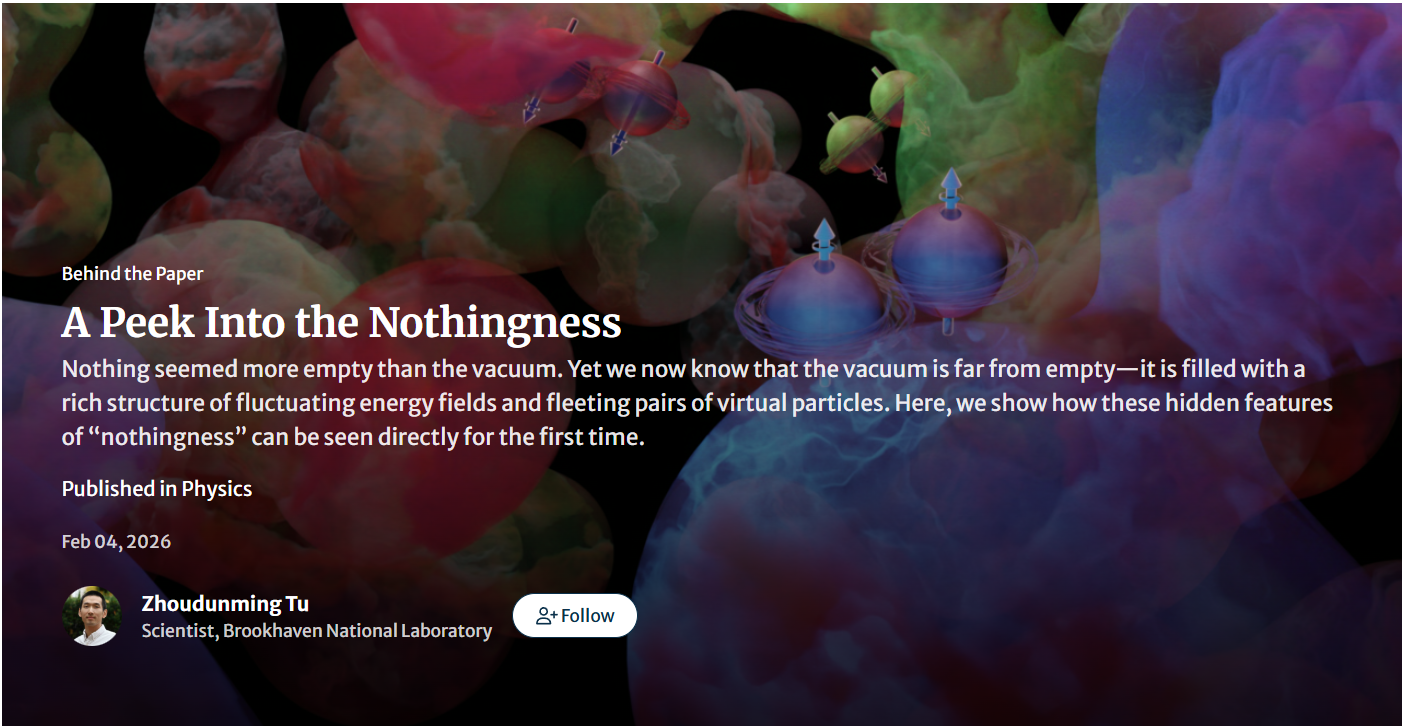
From a Simple Question to a Surprising Discovery
What if “nothingness” isn’t empty at all? In a study published in Nature, @Zhoudunming Tu explores how high-energy collisions can reveal the hidden structure of the quantum vacuum. This work opens a new window into one of nuclear physics’ biggest mysteries: how quarks transform into stable matter. It also highlights how real particle collisions can act as nature’s own quantum device, probing entanglement dynamics beyond today’s quantum hardware.
The journey took years of funding, collaboration, and deep analysis of STAR experiment data, but it highlights the essence of scientific discovery: following bold ideas to wherever they lead. Read the Behind the Paper post to explore the full story.
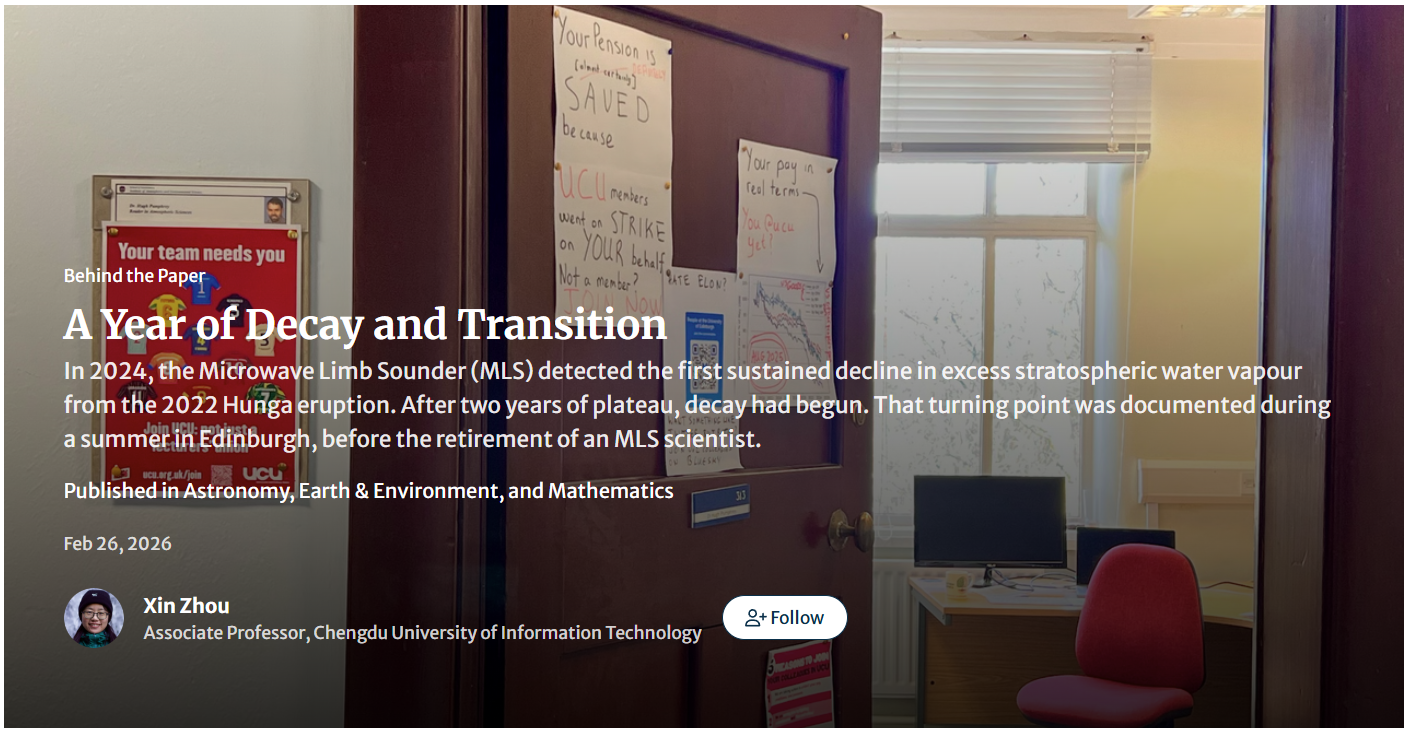
When Will the Hunga Water Finally Decline?
@Xin Zhou captures a pivotal moment in the aftermath of the 2022 Hunga eruption: the first sustained drop in excess stratospheric water vapour after two years of near-constant levels. Using Microwave Limb Sounder observations and TOMCAT modelling, the study published in Communications Earth & Environment identified a sharp ~55 Tg decrease in water vapour, allowing researchers to better estimate how long this unusual atmospheric perturbation will affect climate.
Read the Behind the Paper post to learn how this work reflects a collaborative scientific journey shaped during a summer in Edinburgh.
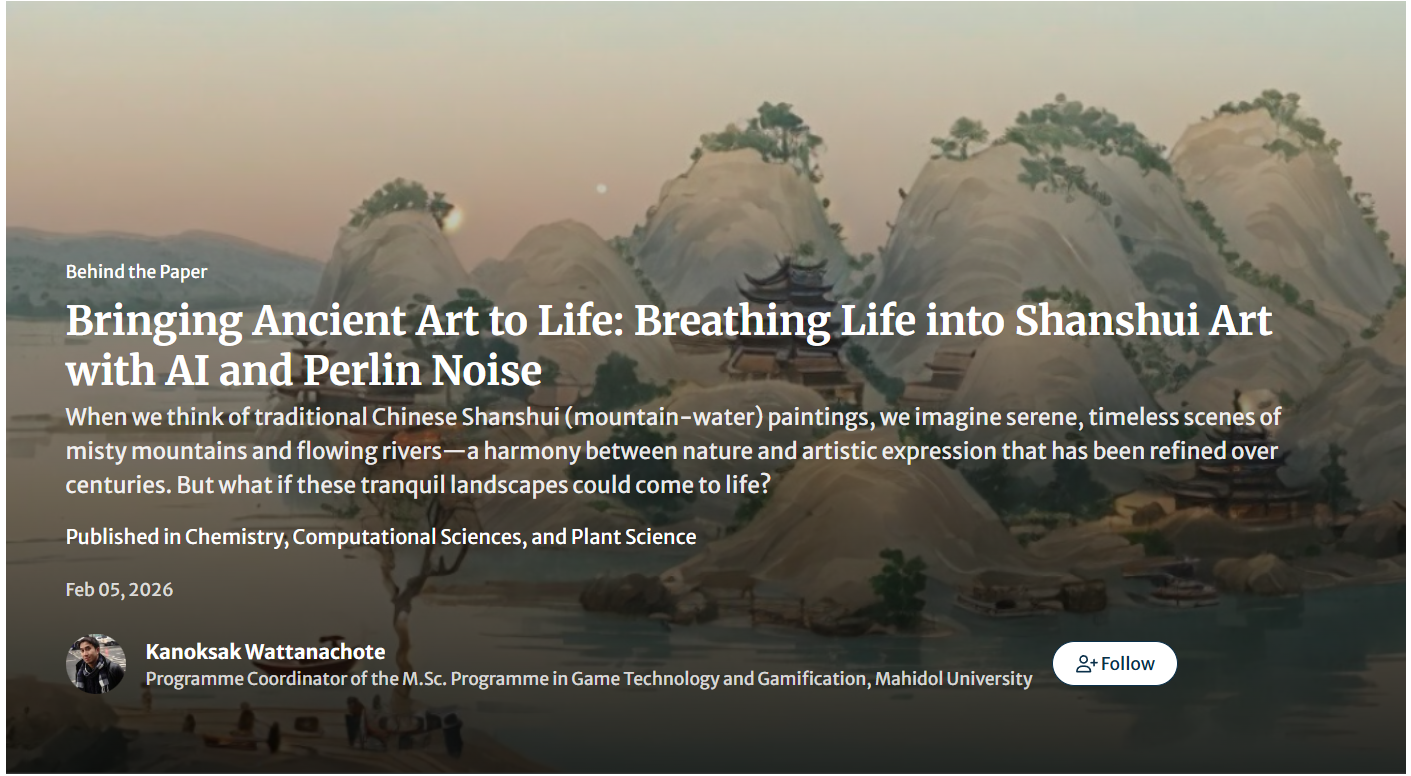
Can AI Bring Traditional Shanshui Paintings to Life?
@Kanoksak Wattanachote explores how generative AI can animate classical Chinese Shanshui art while preserving its distinctive aesthetic. In the study published in Discover Artificial Intelligence, the team combines Perlin Noise, diffusion models, and ControlNet to guide structure and style, overcoming the challenge of limited training data and complex artistic features.
By extending the workflow with AnimateDiff and targeted prompt design, the approach transforms still landscapes into coherent animations with flowing water and drifting clouds. The work highlights a promising bridge between cultural heritage and modern AI creativity. Read the Behind the Paper post to discover the full story.
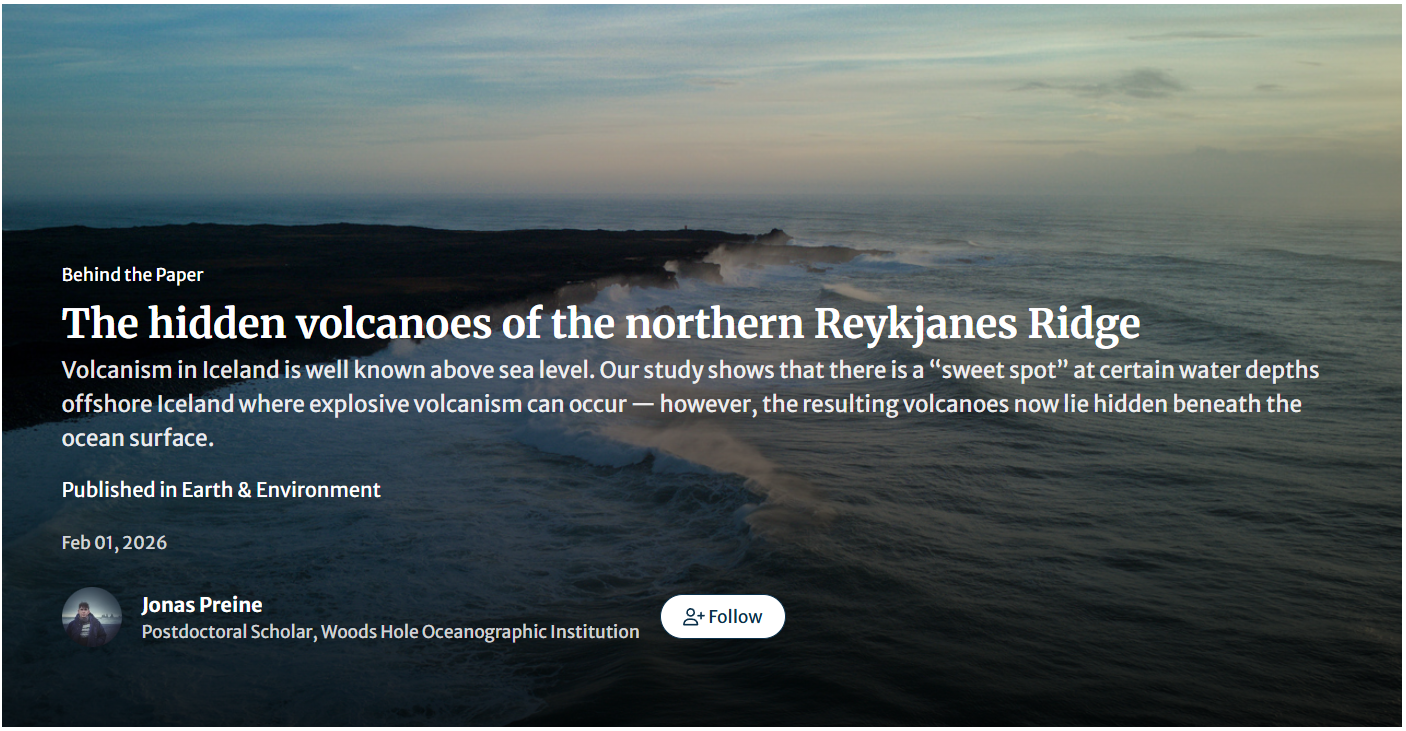
Could Explosive Volcanoes Be Hiding Beneath Iceland’s Offshore Ridge?
@Jonas Preine and colleagues report that volcanism along the northern Reykjanes Ridge is not uniformly gentle lava flow activity as once assumed. Using seismic reflection and seafloor imaging, the team identified a depth- dependent “sweet spot” around ~300 m where magma interacting with seawater can drive explosive, volcaniclastic dominated eruptions.
These results, published in Communications Earth & Environment, suggest shallow sections of mid- ocean ridges worldwide may host more explosive activity than previously recognised, reshaping how scientists interpret marine volcanic deposits and related hazards. Explore the Behind the Paper post to learn how this discovery emerged.
Love Data Week
Love Data Week, which is celebrated from the 9th until 13th of February, aims to raise awareness and foster a community around research data. The Springer Nature’s Research Data Community provides a space for researchers, data professionals and enthusiasts to discuss ideas, share best practices and promote data sharing.
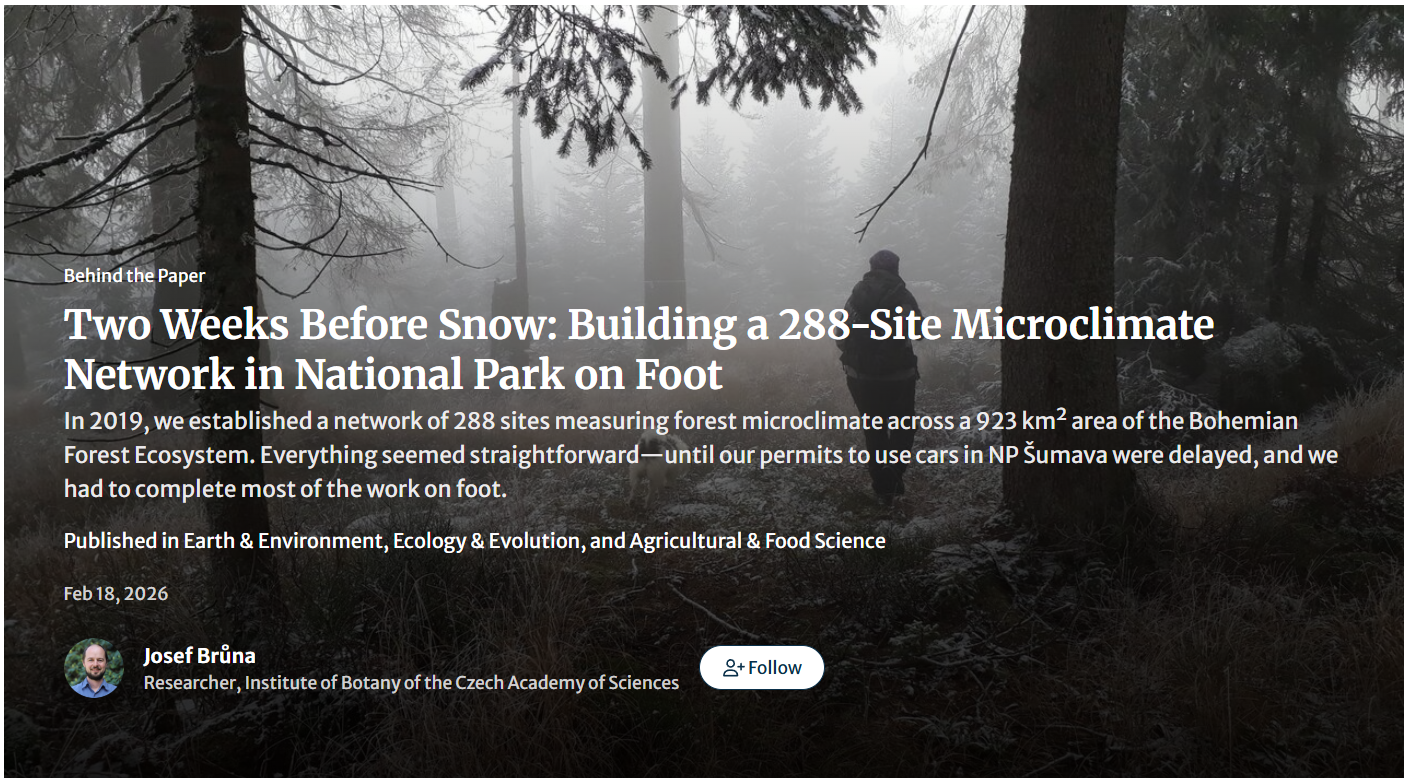
Racing the First Snow: Establishing a 288-Site Forest Microclimate Network
What happens when fieldwork plans meet real- world obstacles? In a Behind the Paper post, @Josef Brůna recounts the race against time to install a dense forest microclimate network across the Bohemian Forest ecosystem after vehicle permits were delayed. Carrying heavy equipment across challenging terrain, the team successfully established all 288 monitoring sites just before the first snowfall. Published in Scientific Data, their efforts now support high resolution temperature grids that are advancing biodiversity research, species modelling, and forest management. Read the Behind the Paper post to explore the full fieldwork story.
Looking for more reading?
Here are some further highlights to explore.
Upcoming Nature Forum Event: The Future of Sensing Technologies
The upcoming Nature Forum on The Future of Sensing Technologies shared by @Andres Perez will take place in Seoul, South Korea, on 13 April 2026. The meeting will convene leading researchers to explore emerging trends, key challenges, and new opportunities shaping next-generation sensing and measurement.
Editor Story: Dr. Patrice Brehmer
In this From the Editor post written by @Shital Bonde , Dr. Patrice Brehmer shares reflections from his role on the Scientific Reports Editorial Board, offering insights into peer review, reproducibility, and the evolving landscape of fisheries research. Drawing on his interdisciplinary work in marine ecology and ecosystem- based management, he highlights the importance of openness, diversity in reviewer selection, and supporting early career researchers worldwide.
World Wetlands Day
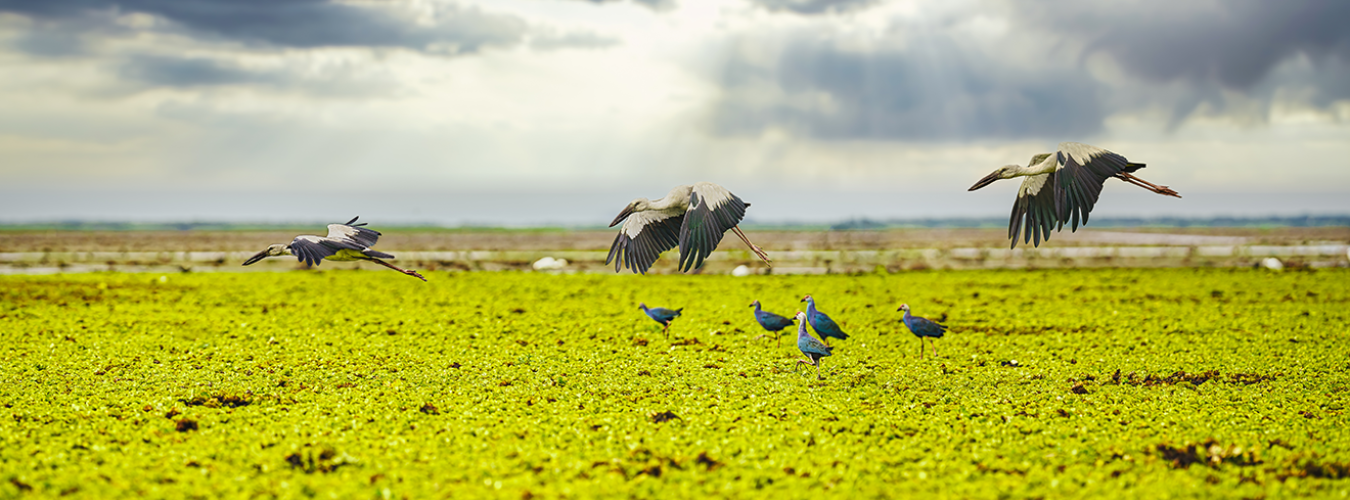
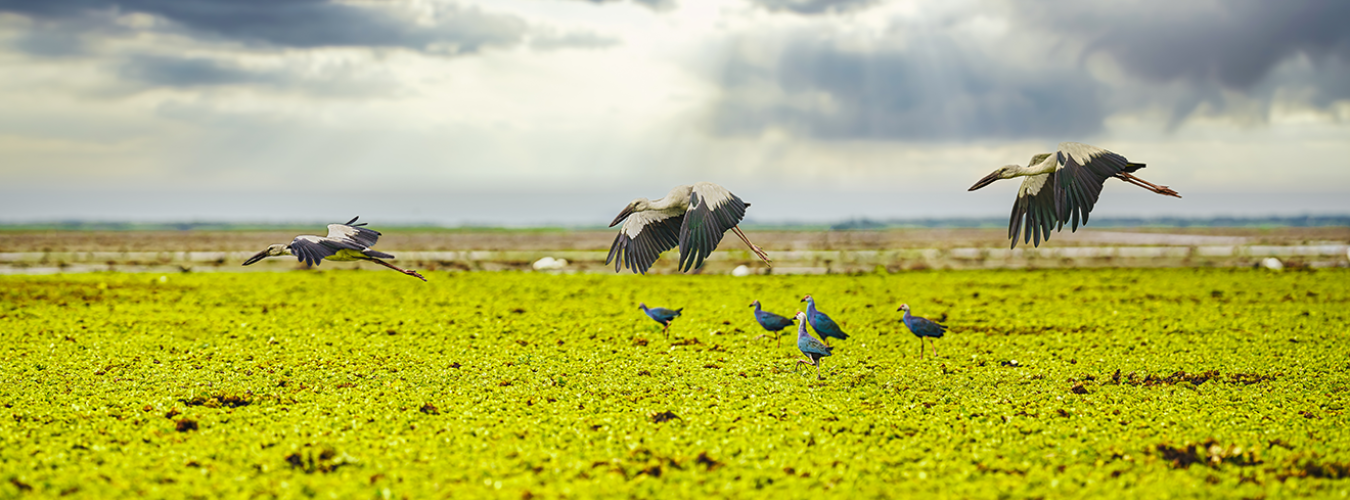
Photo:Mongkolchon/Adobe Stock
Did you know that the 2nd of February marks World Wetlands Day? According to the United Nations, although wetlands cover only around 6% of the Earth’s land surface, they support about 40% of all plant and animal species. These vital ecosystems play a key role in flood control, water purification, food supply, and tourism, supporting the livelihoods of around one billion people worldwide.
World Wetlands Day 2026, under the theme “Wetlands and traditional knowledge: Celebrating cultural heritage”, highlights the deep connections between wetlands and the cultural practices, traditions, and knowledge systems of communities around the world.
Call for Papers: Engineering and Management of Urban Wetlands Collection
This Collection shared by @Faija Miah and @Thomas Hein welcomes original research articles on strategies for urban wetlands conservation, including engineering and nature-based solutions for flood control, wastewater treatment and restoration of water bodies.
Submission deadline: 22 May 2026
We hope these February highlights offer fresh insight and inspiration from across our Communities. Whether you are interested in data, climate, AI, or field- based research, there is more to explore in the full Behind the Paper posts and editor features above. Stay connected with the Mathematics, Physical and Applied Sciences Communities for more research stories, opportunities, and updates in the months ahead.
Further readings:
Passionate about connecting researchers and amplifying their voices through digital engagement. As Manager for the Research Communities by Springer Nature, I work with researchers to showcase their discoveries and experiences.
With a strong interest in public engagement and creative science communication, I’m dedicated to making research more accessible and inspiring wider conversations around scientific discovery and innovation.
Follow the Topic
-
Nature
A weekly international journal publishing the finest peer-reviewed research in all fields of science and technology on the basis of its originality, importance, interdisciplinary interest, timeliness, accessibility, elegance and surprising conclusions.
-
Scientific Data
A peer-reviewed, open-access journal for descriptions of datasets, and research that advances the sharing and reuse of scientific data.
-
Communications Earth & Environment
An open access journal from Nature Portfolio that publishes high-quality research, reviews and commentary in the Earth, environmental and planetary sciences.
-
Discover Artificial Intelligence
This is a transdisciplinary, international journal that publishes papers on all aspects of the theory, the methodology and the applications of artificial intelligence (AI).
-
Nature Sensors
Publishing fundamental, applied, and engineering research across the full spectrum of sensing technologies, spanning biological, computational, engineering, and systems domains.





Related Collections
With Collections, you can get published faster and increase your visibility.
10 years of the FAIR principles
Publishing Model: Open Access
Deadline: Nov 14, 2026
High-resolution modeling for Earth system
Publishing Model: Open Access
Deadline: Feb 07, 2027