July Highlights from Mathematics, Physical and Applied Sciences Communities
Published in Earth & Environment and Electrical & Electronic Engineering
Welcome to our July highlights from the Research Communities, featuring stories that celebrate research discoveries, publishing insights and the people behind them.
This month, we’re sharing a selection of highlights that showcase not only the latest research insights, but also the passion, persistence and people behind the work. We hope you enjoy exploring these stories and discovering something new from our Communities.
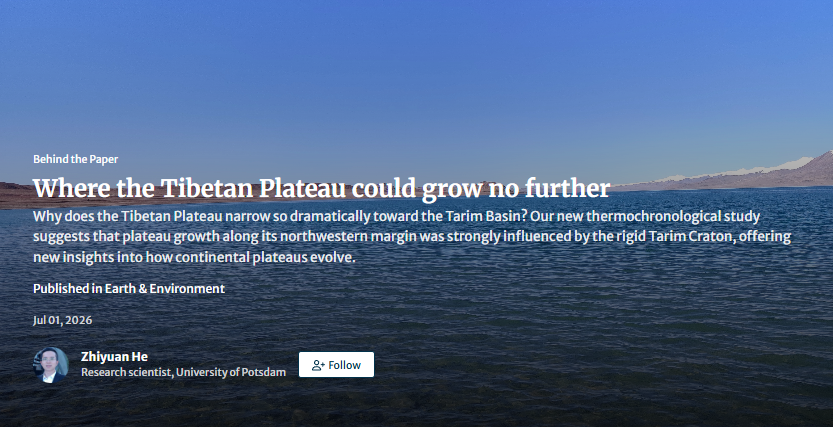
Why does the Tibetan Plateau suddenly stop growing?
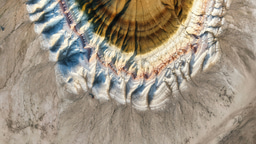
Have you ever looked at a map of the Tibetan Plateau and wondered why it stretches so far east but narrows so dramatically in the northwest? @Zhiyuan He takes us into one of the most remote parts of Tibet to explore how a seemingly simple observation led to a much bigger question about mountain building and the role of the ancient Tarim Craton. The blog, published alongside as a Behind the Paper look into the research paper published in Communications Earth & Environment, tells the story of fieldwork, cutting-edge thermochronology, and tectonic detective work.
One thing I particularly enjoyed about this post is how it balances the science with the human side of research. From hiking more than 20 km a day at elevations above 5,000 metres to overcoming unexpected laboratory challenges, it offers a fascinating look at what happens behind the scenes before new geological insights emerge.
Read the Behind the Paper post to discover the journey behind the research and the questions that continue to shape our understanding of plateau evolution.
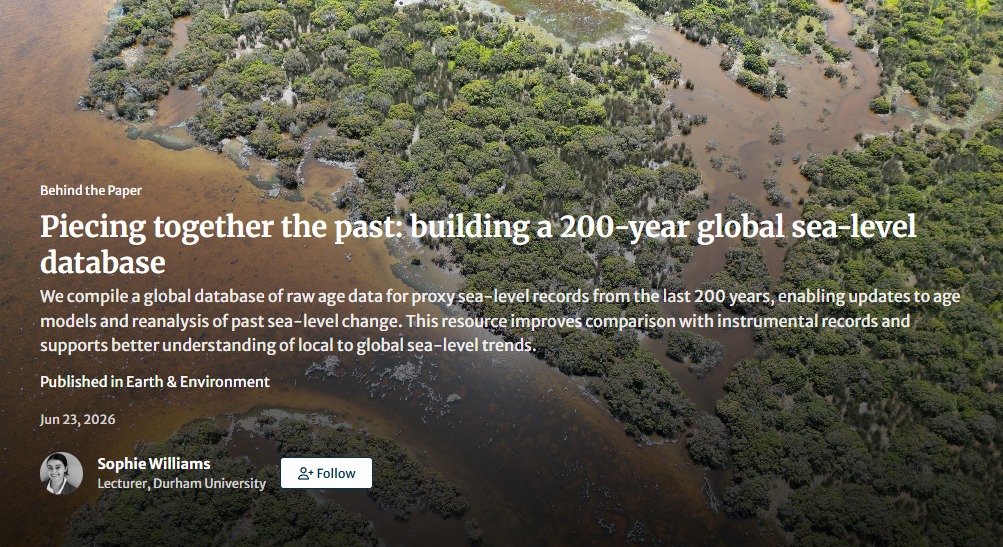
Rebuild 200 years of sea-level history from scattered pieces of data
@Sophie Williams shares the remarkable story behind building P-1800SLD, a new global database that brings together raw age data from sea-level reconstructions spanning the last two centuries. What sounds like a data compilation project quickly became a years-long detective story of tracking down forgotten files, reconnecting with researchers, and piecing together decades of scientific work.
Beyond the database itself, Sophie reflects on the persistence, collaboration, and generosity that underpin open science. It's a fascinating reminder that behind every dataset is a community of people whose collective efforts make future discoveries possible.
Read the Behind the Paper post to discover the full story.
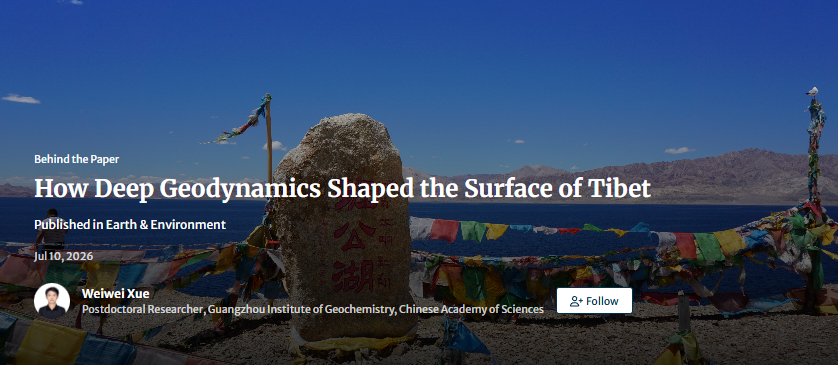
The hidden story beneath Tibet's dramatic landscape
@Weiwei Xue takes us behind the scenes of a study that combines field geology, thermochronology, geophysics, and petrology to explain why different parts of the Tibetan Plateau evolved in different ways. The journey highlights how integrating diverse datasets and perspectives can reveal patterns that individual studies alone might miss.
Beyond the research published in Nature Geoscience, the post offers an honest reflection on the value of collaboration and data synthesis in tackling complex geological questions.
Read the Behind the Paper post to explore the story behind the discovery.
Meet the Editor: Dr Patrice Brehmer
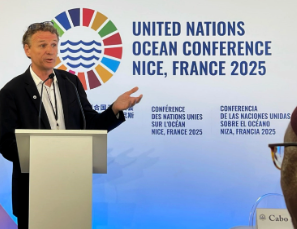 Ever wondered about who the people behind the journals are? In this latest Editor Story, published by @Shital Bonde, Dr Patrice Brehmer, Editorial Board Member of Scientific Reports, shares his career journey, research interests, and what motivates him as an editor.
It’s a great opportunity to get to know the people behind the scenes who help shape research and publishing.
Read the full editor story, shared by @Shital Bonde , to discover more about Patrice’s journey and experiences as an editor.
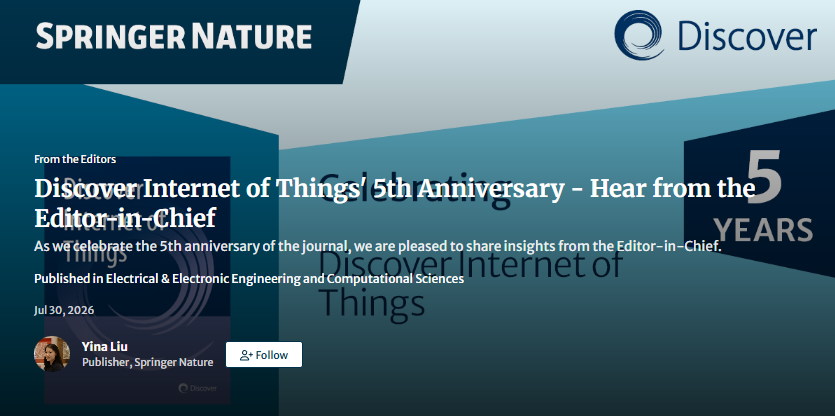
Celebrating 5 Years of Discover Internet of Things
Discover Internet of Things is celebrating its fifth anniversary! In this special post, the journal's Editor-in-Chief, Prof. Ishfaq Ahmad reflects on the journal's growth, highlights key milestones, and shares thoughts on the future of IoT research. Whether you've published with the journal or are simply interested in the field, it's a wonderful look back at five years of progress.
Read the anniversary post shared by @Yina Liu to hear the Editor-in-Chief 's reflections.
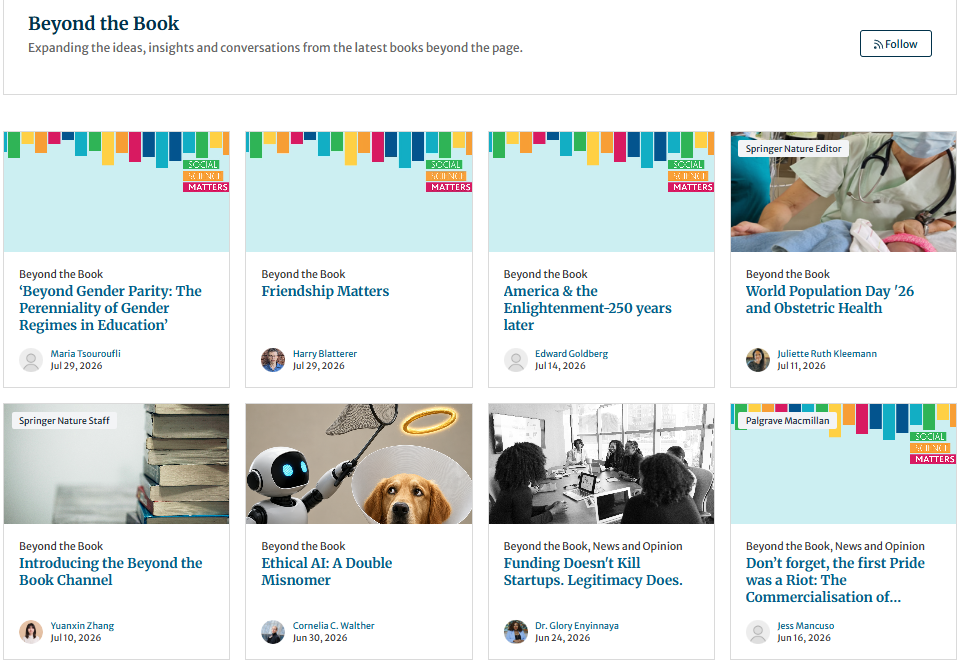
Beyond the Book channel has been launched!
Every book has a story; from the ideas that inspire it to the people and collaborations that bring it together. We're excited to introduce the new Beyond the Book channel, where authors, editors, and researchers can share the experiences and insights behind their books.
In this introductory post, @Yuanxin Zhang introduces the new channel and what readers can expect from this new space.
Explore Beyond the Book and discover the stories waiting to be shared.
From uncovering the geological forces that shaped the Tibetan Plateau to exploring the people, datasets and collaborations behind scientific discoveries, July brought a diverse collection of stories from across the Research Communities.
This month, we’re sharing a selection of highlights that showcase not only the latest research insights, but also the passion, persistence and people behind the work. We hope you enjoy exploring these stories and discovering something new from our Communities.
Explore more research breakthroughs:
- June Highlights from Mathematics, Physical and Applied Sciences Communities
- July Highlights from the Medicine and Life Sciences Research Communities
- July Highlights from the Humanities & Social Sciences Communities
Passionate about connecting researchers and amplifying their voices through digital engagement. As Manager for the Research Communities by Springer Nature, I work with researchers to showcase their discoveries and experiences.
With a strong interest in public engagement and creative science communication, I’m dedicated to making research more accessible and inspiring wider conversations around scientific discovery and innovation.
Follow the Topic
-
Scientific Reports
An open access journal publishing original research from across all areas of the natural sciences, psychology, medicine and engineering.
-
Nature Geoscience
A monthly multi-disciplinary journal aimed at bringing together top-quality research across the entire spectrum of the Earth Sciences along with relevant work in related areas.
-
Discover Internet of Things
This is an open access, community-focussed journal publishing research from across all fields relevant to the Internet of Things (IoT), providing cutting-edge and state-of-art research findings to researchers, academicians, students, and engineers.


Related Collections
With Collections, you can get published faster and increase your visibility.
Phytochemicals and health
Publishing Model: Open Access
Deadline: Oct 28, 2026
Soil microbiomes and carbon sequestration under global change
Publishing Model: Hybrid
Deadline: Mar 18, 2027