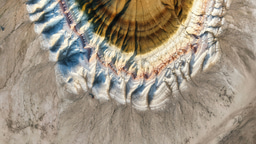
August Highlights from Mathematics, Physical and Applied Sciences Communities
Published in Earth & Environment, Materials, and Sustainability


August brought plenty of thought-provoking stories from across our Mathematics, Physical and Applied Sciences Communities. From unexpected behaviours in materials and surprising changes in Arctic sea ice to new perspectives on climate adaptation and a remarkable journey through Amazonian climate history, this month’s Behind the Paper stories show how research often takes us somewhere we didn’t quite expect.
We’re also looking ahead to September, with the return of Springer Nature’s Breaking Barriers virtual conference, bringing researchers and experts together to explore gender equality and the challenges shaping research and society today.
Here are some of the highlights from the past month.
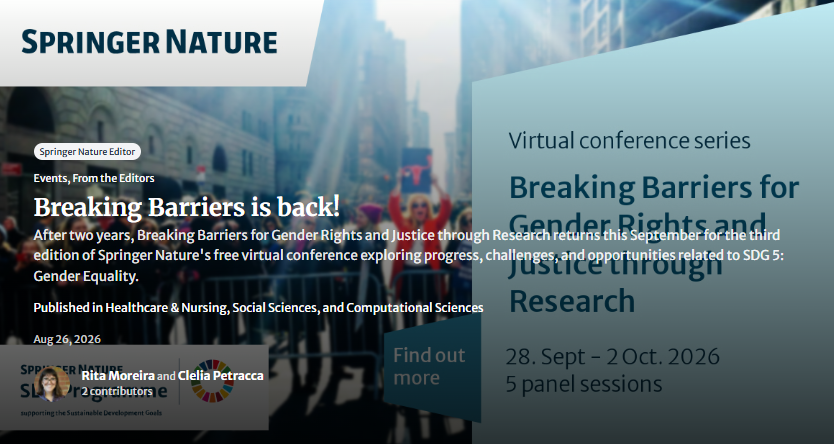
Breaking Barriers is back!
After two years, Springer Nature’s free virtual conference returns this September for its third edition, bringing researchers, policymakers, practitioners and advocates together for five days of conversations around SDG 5: Gender Equality. From leadership and menstrual health to AI, the online manosphere and equity in research, this year’s programme tackles some of the biggest questions shaping gender rights and justice today.
Guided by this year’s UN Women International Women’s Day theme, “Rights. Justice. Action. For all Women and Girls,” the conference is all about connecting research with real-world change. Whether there’s one session that catches your attention or you want to follow the full programme, register to join the conversation live and hear from experts around the world! Take a look at the posts shared by @Rita Moreira and @Clelia Petracca for more details.
Register to attend live!
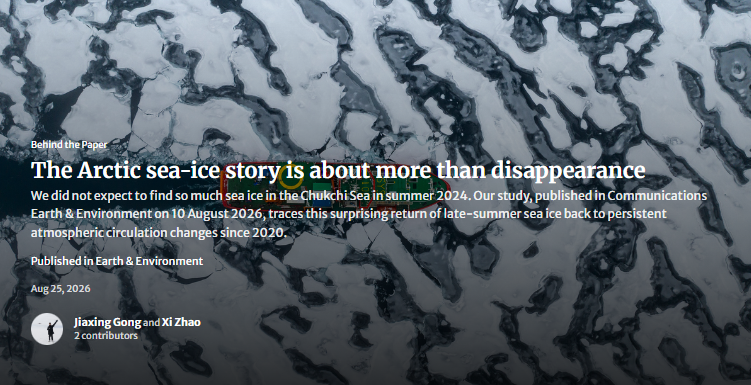
The Arctic ice refused to disappear
Have you ever wondered what happens when an expected trend suddenly takes an unexpected turn? After years of declining summer sea ice, the Chukchi Sea looked remarkably different in 2024, with ice persisting late into the summer and creating unexpected challenges for research vessels. What first looked like an unusual event turned out to be part of a pattern that had been building since 2020.
In their new study in Communications Earth & Environment, @Jiaxing Gong and colleagues show how persistent changes in atmospheric circulation helped create conditions that allowed the ice to survive. Read this Behind the Paper post to explore how one surprising Arctic summer revealed a much more complex story of a changing climate.
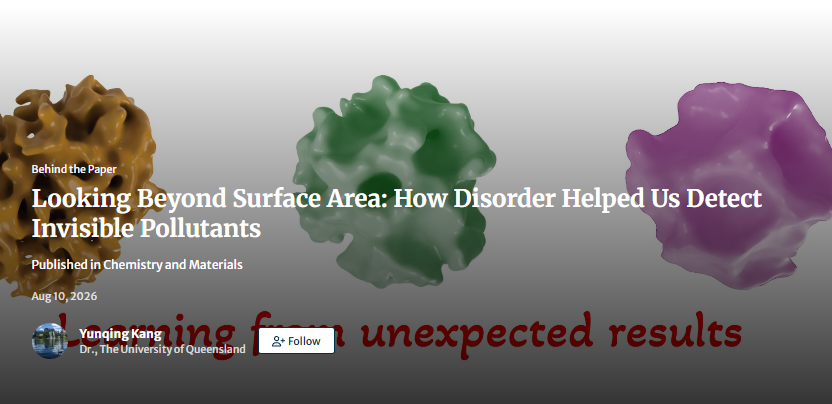
What if disorder is exactly what makes a material better?
Why would a material with less surface area deliver a stronger signal? That surprising result set @Yunqing Kang and the team on a journey to understand what was really happening inside their amorphous Rh–Se material. Their work, published in Nature Communications, reveals how pore structure and atomic disorder can influence electronic behaviour and make it possible to detect persistent environmental pollutants that are notoriously difficult to capture.
From a result that didn’t fit the textbook expectation to clear Raman signals from challenging pollutants, this Behind the Paper story is a reminder that science doesn’t always follow the path we expect and that unexpected results can be where the most interesting discoveries begin. Read the Behind the Paper post to find out how looking beyond surface area changed the way the team understood their material.
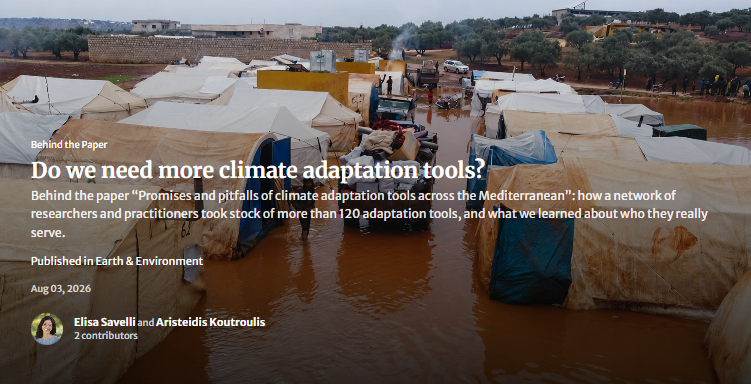
Are we building too many climate adaptation tools?
Across the Mediterranean, there’s no shortage of tools designed to help communities respond to climate change. But are they actually reaching the people who need them most? In her Behind the Paper story, @Elisa Savelli and @Aristeidis Koutroulis take us behind a collaborative effort involving more than 50 researchers and practitioners who reviewed 122 existing adaptation tools and found that being free and publicly available doesn’t necessarily make a tool accessible or useful.
The story raises some refreshingly uncomfortable questions: Who are these tools really built for? What happens when they don’t speak the right language, fit the local context, or reflect how climate risks actually unfold? Rather than simply calling for more tools, the team makes the case for better, more inclusive ones and for making better use of what already exists. Curious about what they found? Read this Behind the Paper post.
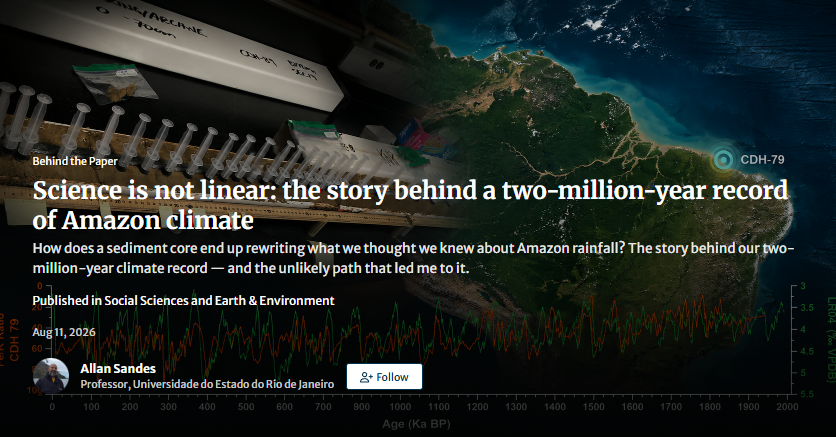
When science takes an unexpected path
@Allan Sandes shared a story that goes far beyond climate data. A 32-metre sediment core revealed an extraordinary 1.93-million-year record of Amazonian climate, challenging the simple idea that glacial periods always meant a drier Amazon. But behind the discovery is another story - Allan’s journey from growing up in a favela in Brazil to becoming a scientist, and the people and opportunities that helped make that journey possible.
Published in Communications Earth & Environment, the research offers a new perspective on how Amazon rainfall has changed through deep time, while Allan’s story reminds us that science is shaped by the people who get the chance to do it. Read Allan Sandes’ Behind the Paper to discover the science, the unexpected journey, and why “science is not linear.”
From materials that challenged expectations to climate stories that revealed a more complicated picture than first imagined, this month’s highlights had one thing in common: the most interesting discoveries don’t always follow the path we expect.
Behind each paper is not only a scientific question, but also a story of curiosity, persistence, collaboration and the people who make research happen. We hope these stories gave you a chance to look beyond the findings and discover some of the thinking and experiences behind the research.
Thank you for being part of our community, and we’ll be back next month with more stories, insights and opportunities from across Mathematics, Physical and Applied Sciences.
Explore more research breakthroughs:
- July Highlights from Mathematics, Physical and Applied Sciences Communities
- Quarterly Highlights from Mathematics, Physical and Applied Sciences Communities
- August Highlights from the Medicine and Life Sciences Research Communities
- August Highlights from the Humanities & Social Sciences Communities
Passionate about connecting researchers and amplifying their voices through digital engagement. As Manager for the Research Communities by Springer Nature, I work with researchers to showcase their discoveries and experiences.
With a strong interest in public engagement and creative science communication, I’m dedicated to making research more accessible and inspiring wider conversations around scientific discovery and innovation.
Follow the Topic
-
Nature Communications
An open access, multidisciplinary journal dedicated to publishing high-quality research in all areas of the biological, health, physical, chemical and Earth sciences.
-
Communications Earth & Environment
An open access journal from Nature Portfolio that publishes high-quality research, reviews and commentary in the Earth, environmental and planetary sciences.


📢 Introducing: # Mental Health
Mental Health is a Topic created to increase visibility and impact of research in this area and facilitate exchange amongst researchers.
Continue reading announcementRelated Collections
With Collections, you can get published faster and increase your visibility.
Ecological resistance and resilience under global change
Publishing Model: Open Access
Deadline: Apr 07, 2027
Women's Health
Publishing Model: Hybrid
Deadline: Ongoing