August 2026 Highlights from the Health & Clinical and Life Sciences Research Communities
Published in Healthcare & Nursing, Ecology & Evolution, and Microbiology

August brought another great selection of research and stories from across our Health & Clinical and Life Sciences Research Communities. This month we explore World Breastfeeding Day and the BMC Ecology and Evolution and BMC Zoology Image competition, which inspired me to share other great photography posted on the Research Communities for World Photography Day.
Here are a few highlights worth revisiting.
World Breastfeeding Week
Every year from 1-7 August, World Breastfeeding Week brings global attention to the importance of breastfeeding for the health and wellbeing of mothers and infants, while highlighting the need for stronger support, policies, and systems to help families breastfeed. This year’s theme is 'Breastfeeding for a Sustainable Start in Life: Strengthen What Works' which calls for evidence-based approaches that protect, promote and support breastfeeding across healthcare systems, workplaces, communities and families.

To mark the week, @Saliha Bayir and @Tovah Aronin have brought together a selection of recent research highlights and collections exploring breastfeeding, including maternal and infant health, public health policy, donor human milk, fertility, and cancer prevention. It’s a great starting point for discovering the latest research and exploring the wider evidence around breastfeeding and health.
Read the whole post to explore the research highlights and collections brought together for World Breastfeeding Week 2026.
Explore the Topics: Public Health, Nursing, Health Care, Maternal and Child Health
World Photography Day
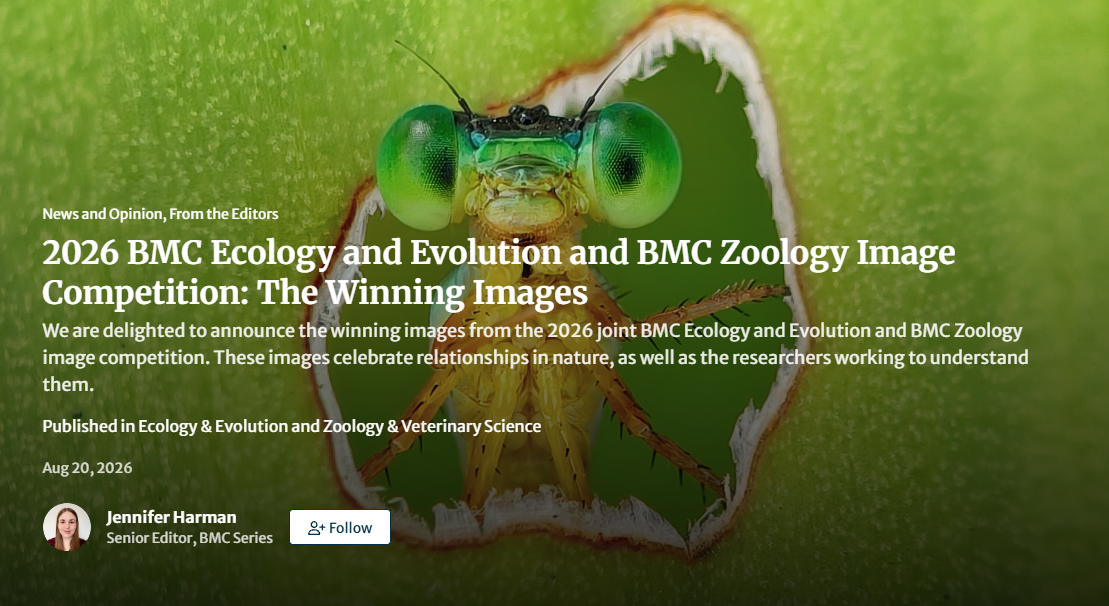
Celebrating the winning images from the 2026 BMC Image Competition
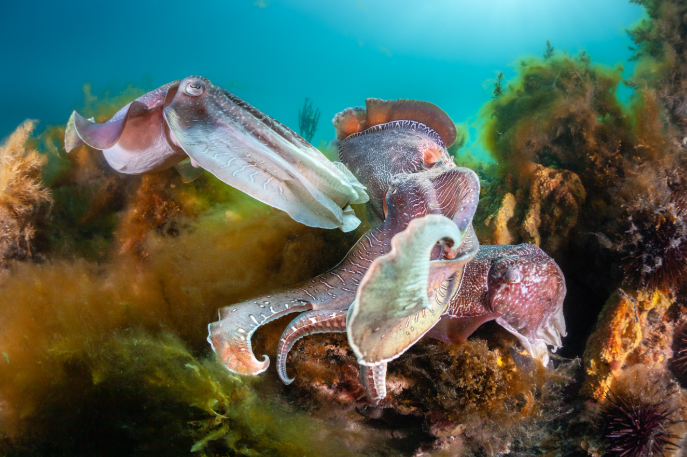
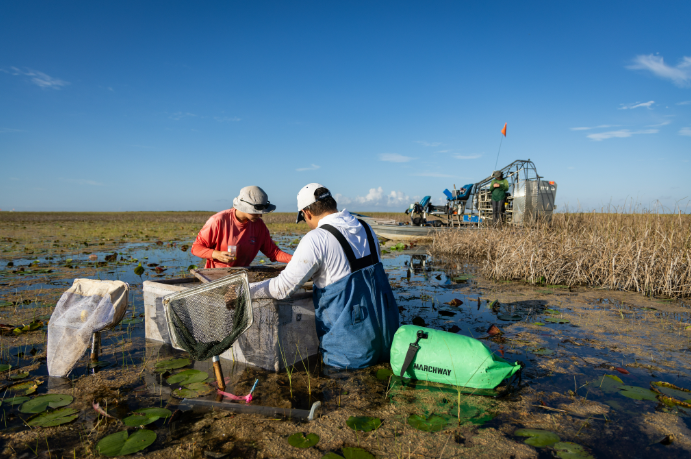
The 2026 BMC Ecology and Evolution and BMC Zoology Image Competition celebrates the creativity and curiosity of researchers from all around the world, showcasing photographs that capture the beauty, diversity, and complexity of the natural world. The competition offers a fascinating glimpse into the beauty, drama, and diversity of ecological research and highlights both the subjects being studied and the amazing researchers working to understand and protect them.
Read the whole post by @Jennifer Harman to take in the whole collection of photographs and discover the science and stories behind each image.
Exploring life on top of the world
How diverse is life in the alpine zones of mountains around the world? In this Behind the Paper, @Lotta Schultz and @Suzette Flantua explore the global patterns of alpine biodiversity and the surprising challenges involved in answering what initially seemed like a straightforward question for their Nature Communications publication.
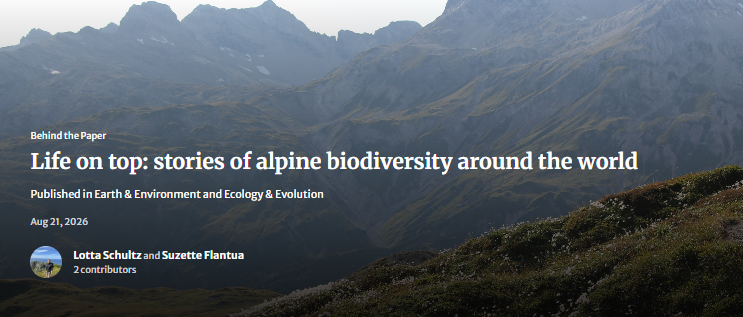
The post explores everything from the challenges of working with fragmented global data to defining what counts as an 'alpine' species, while revealing the Neotropical Andes as a global hotspot for alpine biodiversity. It also features some wonderful landscape photography from mountain environments around the world, bringing the diverse ecosystems discussed in the research vividly to life.
Read the whole post to explore the research, discover the surprising patterns of alpine biodiversity and take a visual journey through some of the world’s mountain landscapes.
Can fungi help plants invade new environments?
@Sara G Cazzaniga explores the hidden role of mycorrhizal fungi in plant establishment in this Behind the Paper post, drawing on an enormous global dataset of more than 440,000 vegetation plots.
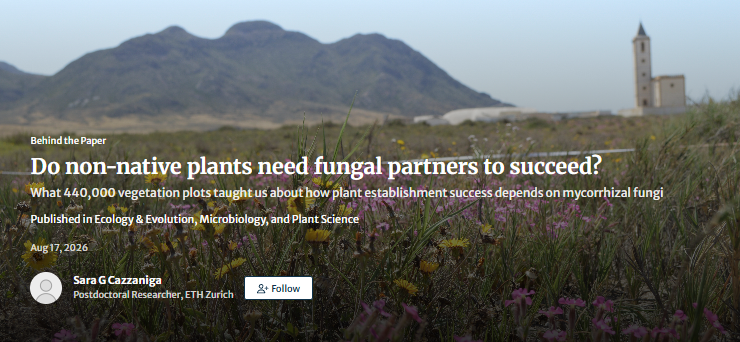
Their study, published in Nature Ecology & Evolution, reveals that the relationship between mycorrhizal strategy and successful plant establishment varies considerably depending on the biome and the type of disturbance a landscape experiences. From grasslands and drylands to forests shaped by human activity, the findings highlight why there may be no universal rule for predicting which non-native plants will succeed. The post also features some beautiful images of plants and landscapes, bringing the research and the environments it explores to life.
Read the whole post to discover what 440,000 vegetation plots can tell us about the hidden relationships shaping plant communities around the world.
Other highlights from the Research Communities this month...
Breaking Barriers is back!
After a two-year break, Breaking Barriers for Gender Rights and Justice through Research returns this September for its third edition!
This is a free virtual conference which brings together researchers, policymakers, practitioners and advocates from around the world to explore progress, challenges and opportunities related to SDG 5: Gender Equality. Across five days, the programme will tackle a wide range of pressing issues, from leadership gaps and menstrual health to AI and gender, online misogyny, and creating more equitable research cultures.
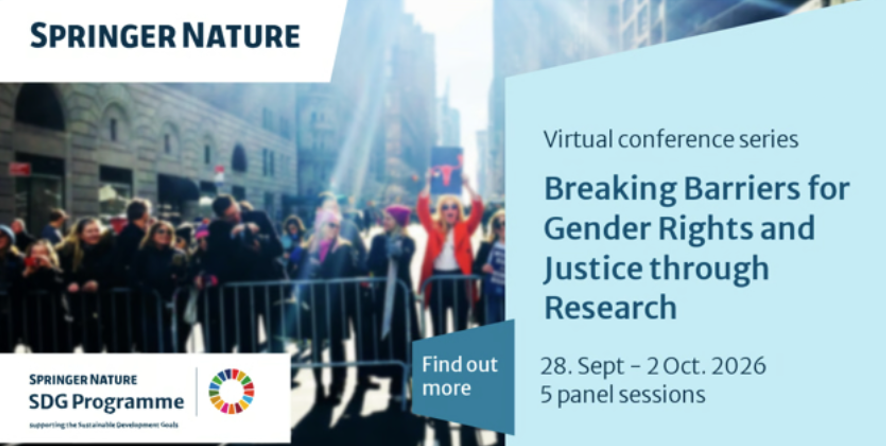 This is a free virtual conference which brings together researchers, policymakers, practitioners and advocates from around the world to explore progress, challenges and opportunities related to
Breaking Barriers offers an opportunity to connect across disciplines and consider how research can help turn conversations about gender equality into action.
We've got a new Beyond the Book channel
There is a new book Channel called Beyond the Book! This is a space for authors to share the stories, experiences and ideas that sit beyond the pages of a published book. If you’d like to know more about it, read:
Looking beyond the lab bench
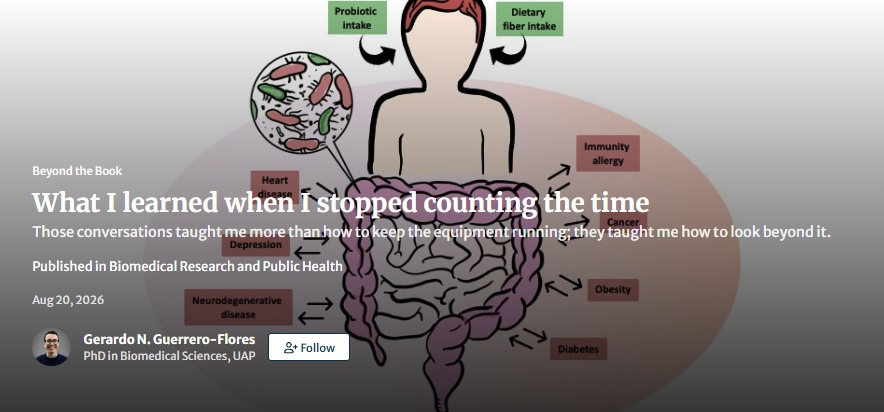
What can we learn when we stop seeing conversations as interruptions? In this Beyond the Book post, @Gerardo N. Guerrero-Flores reflects on his time working in a mass spectrometry lab and how conversations with colleagues, field service engineers and fellow researchers gradually changed the way he approached his work. What began as practical discussions about keeping laboratory equipment running ultimately led to an unexpected opportunity to contribute to a book chapter.
This Behind the Book blog offers a thoughtful reflection on the value of stepping away from the bench, sharing ideas and being open to the expertise of the people around us. It is a reminder that the time we think we are losing by talking to others can sometimes be the time that helps us move forward.
Read the whole post to discover how changing his approach to time, conversation and collaboration opened up unexpected opportunities.
We hope these posts have inspired you to explore the latest research and expert perspectives shared across the Research Communities. If one of these topics sparks your interest, we'd love to hear your thoughts in the comments, and don't forget to follow the Communities and Topics of interest to stay up to date with future content.
Explore more:
- March to June 2026 - Quarterly Highlights from Health & Clinical Research and Life Sciences Communities
- July 2026 Highlights from the Health & Clinical and Life Sciences Research Communities
- August Highlights from the Humanities and Social Sciences Communities

Helping researchers connect, collaborate, and communicate their work. Specialising in Medicine and Life Science and passionate about making science more visible and accessible.
Follow the Topic
-
Nature Communications
An open access, multidisciplinary journal dedicated to publishing high-quality research in all areas of the biological, health, physical, chemical and Earth sciences.
-
BMC Ecology and Evolution
An open access, peer-reviewed journal interested in all aspects of ecological and evolutionary biology.
-
Nature Ecology & Evolution
This journal is interested in the full spectrum of ecological and evolutionary biology, encompassing approaches at the molecular, organismal, population, community and ecosystem levels, as well as relevant parts of the social sciences.
-
BMC Zoology
This is an open access, peer-reviewed journal that considers articles on zoology, including comparative physiology, mechanistic and functional studies, morphology, life history, animal behavior, signaling and communication, cognition, parasitism, systematics, biogeography and conservation.




Related Collections
With Collections, you can get published faster and increase your visibility.
Pollinators under pressure: ecology, evolution, and environmental change
BMC Ecology and Evolution is calling for submissions to our Collection, Pollinators under pressure: ecology, evolution, and environmental change. Pollinators are important for a healthy and functioning planet, playing a vital role in ecosystem health and food production. Pollinators directly and indirectly support several of the United Nation's Sustainable Development Goals, from SDG 2: Zero Hunger to SDG 15: Life on Land. However, largely due to human activities, pollinator populations are declining worldwide. Almost 35% of invertebrate pollinators, including many bee and butterfly species are facing extinction. Similarly, 17% of vertebrate pollinators, such as bats and hummingbirds, are at risk.
Pollinators face numerous challenges, including habitat loss, climate change, pesticide exposure, and diseases. This Collection welcomes research that advances our understanding of how these pressures shape pollinator populations, behaviors, communities and the ecosystems they support. We are particularly interested in studies that generate actionable insights for conservation, restoration and policy, including work that evaluates mitigation strategies, models future risks, or examines the effectiveness of current management practices.
Topics of interest include but are not limited to:
- Impacts of pesticide exposure on pollinator health
- How habitat and land‑use changes affect pollinators
- Pollinator biodiversity monitoring
- Pollinator conservation and restoration approaches
- How management practices impact pollinators
- Pollination ecology in changing environments
- Effects of diseases on bee populations
- Climate‑driven shifts in pollinator phenology, distribution and behavior
- Evolutionary responses to environmental stressors, including adaptation, plasticity and genetic change
- Impacts of invasive species on native pollinators and pollination systems
- Landscape connectivity and fragmentation, and their influence on pollinator movement and gene flow
- Neuroethological and behavioral studies linking stressors to changes in cognition, navigation and foraging
- Socio‑ecological and policy‑relevant research that informs conservation planning, agri‑environment schemes and ecosystem‑service management
- Modeling approaches predicting future risks to pollinators or forecasting ecosystem impacts of pollinator decline
All manuscripts submitted to this journal, including those submitted to collections and special issues, are assessed in line with our editorial policies and the journal’s peer review process. Reviewers and editors are required to declare competing interests and can be excluded from the peer review process if a competing interest exists.
Publishing Model: Open Access
Deadline: Jan 25, 2027
Women's Health
Publishing Model: Hybrid
Deadline: Ongoing