August Highlights from the Humanities and Social Sciences Communities
Published in Social Sciences, Public Health, and Behavioural Sciences & Psychology

This month’s posts explored how people navigate barriers, seek support, and create opportunities for themselves and others. From women in research and maternal health to mental wellbeing, education, and cultural storytelling, these highlights reflect some of the conversations taking place across the Humanities and Social Sciences Communities this August.
Breaking Barriers
@Rita Moreira
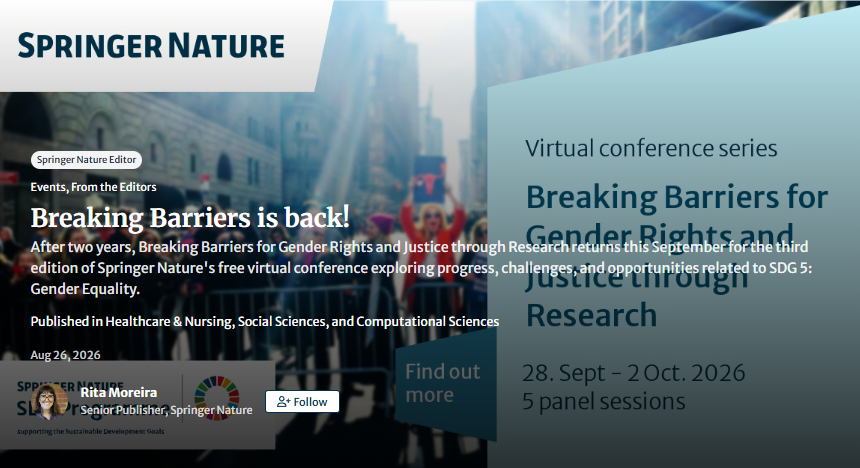
After a two-year break, “Breaking Barriers for Gender Rights and Justice through Research” returns this September and October. This free virtual conference brings together researchers, policymakers, practitioners, and advocates to discuss some of today's most pressing issues around gender equality, from leadership and career progression to AI, health, and social justice. The programme highlights how research can help identify barriers and create opportunities for women and girls across different disciplines.
Explore the full post and discover this year's programme.
World Breastfeeding Week
Observed every August, World Breastfeeding Week highlights the importance of creating supportive environments for mothers and families. This year's posts explored the social, healthcare, and policy factors that help make breastfeeding possible.
Strengthening the Support Around Mothers
@Noohi Nasim
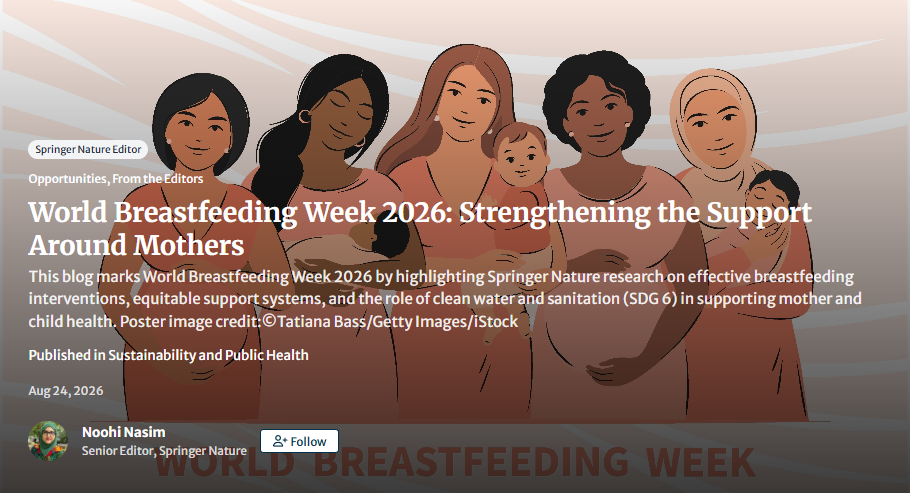
Breastfeeding is often discussed as a personal choice, but this post highlights something broader: the support systems that make breastfeeding possible. Drawing on recent research, it explores how healthcare services, workplace policies, community support, and access to basic services such as clean water all shape mothers' experiences.
Read the full post to learn more about the support systems behind successful breastfeeding.
Further reading:
- World Breastfeeding Week 2026 by @Saliha Bayir
- World Breastfeeding Week 2025: Creating Sustainable Support Systems and World Breastfeeding Week 2024 - Action needed to close the gaps in breastfeeding support @Tamara May
- Breastfeeding-related Collections @Stacey Morgan @Laura Rossi @Mitchell Gauvin @Robert Greensmith @Sophie Gray
Looking Closer at Depression
How do we understand, measure, and support people living with depression? The posts below explore different perspectives on depression research, from assessment tools and self-beliefs to personalised approaches to care.
Are We Measuring Depression Fairly?
@Delwin B. Carter @David Alpizar
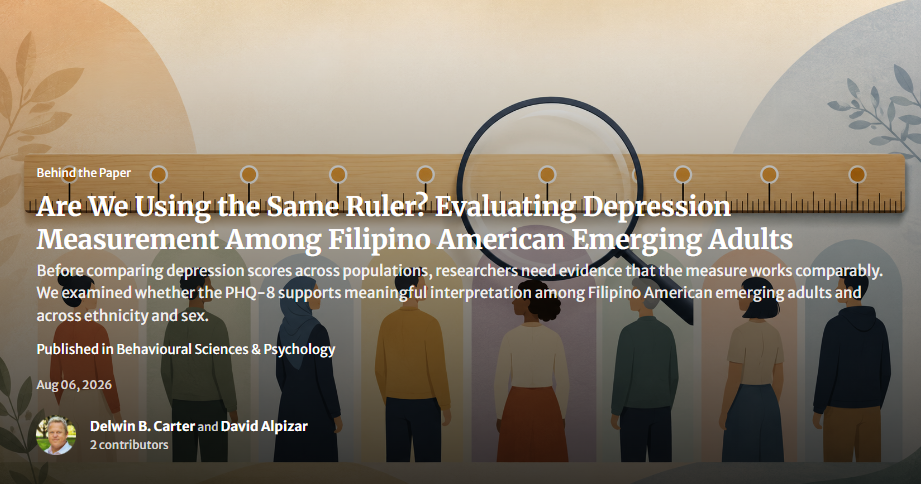 Can the same questionnaire accurately measure depression across different populations? In this Behind the Paper post, @Delwin explores whether one of the most widely used depression assessments works equally well for Filipino American young adults. The research raises a broader question that extends beyond depression research: how can we be confident that the tools we use reflect people's experiences fairly and accurately?
Read the full post to explore why measurement matters in mental health research.
Further reading:
- The compliment that changes nothing: Understanding negative self-beliefs in depression
- Treating the Person, Not the Population: How Machine Learning Is Personalizing Depression Care
After Graduation: What Comes Next?
@Olga Oleinikova
 Scholarships can open doors, but what happens after graduation? Drawing on her forthcoming book Refugees at University: Access, Belonging, and What Comes After, @Olga explores the long-term experiences of refugee-background graduates in Australia. The post looks beyond university access to consider belonging, employment, and the challenges that can emerge once formal support ends.
Read the full post to learn what happens after the scholarship ends.
Rethinking the Siren
@Tanja Weyandt
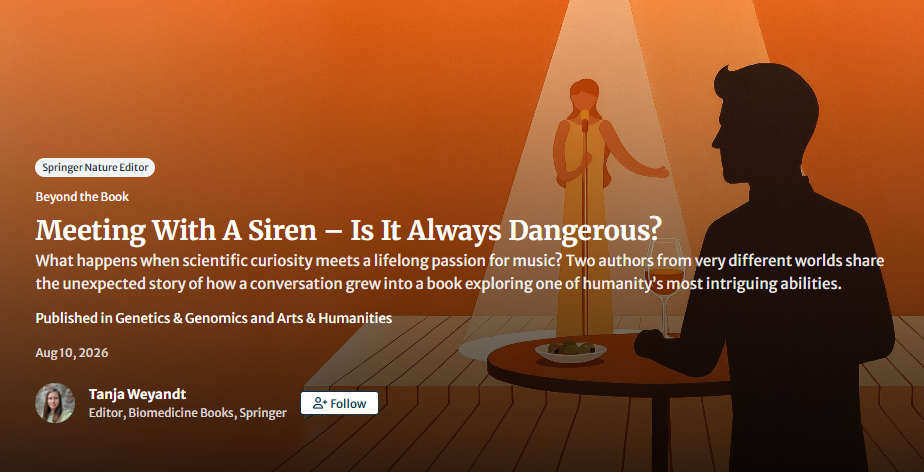
What happens when a geneticist and an opera singer start talking about music? This unusual and engaging Beyond the Book post tells the story behind Why Music is Genetic, a book inspired by conversations, curiosity, and a shared fascination with why humans enjoy music. Exploring questions about music, evolution, and human behaviour, the authors examine why music seems to play such an important role in our lives and whether our response to it may be rooted more deeply than we realise.
Read the full post to discover how an unexpected partnership became a book.
Beyond the Book – A Space for book authors!
These two blog posts are also part of the new book Channel Beyond the Book. This is a space for authors to share the stories, experiences and ideas that sit beyond the pages of a published book. If you’d like to know more about it, read:
From supporting mothers and improving mental health care to creating opportunities for refugee students and understanding why music matters to us, this month’s posts offered a wide range of perspectives on people’s lives and experiences. I hope something here catches your interest and inspires you to dive deeper into the full posts.
Thanks for reading, and feel free to share your thoughts in the comments!
Further readings:
- July Highlights from the Humanities & Social Sciences Communities
- June Highlights from the Humanities & Social Sciences Communities
- Quarterly Highlights from the Humanities & Social Sciences Communities
- Highlights from Health & Clinical and Life Sciences Research Communities by @Alice Taylor
- Highlights from the Mathematics, Physical & Applied Sciences Communities by @Yijia Li

Supporting Humanities and Social Sciences research area on the Research Communities platform. I’d love to hear from you and connect!
Follow the Topic
-
International Breastfeeding Journal
This journal encompasses articles about breastfeeding, focusing on nursing, midwifery, paediatric, obstetric, family medicine, public health, immunology, physiology, sociology and many other topics.
-
Scientific Reports
An open access journal publishing original research from across all areas of the natural sciences, psychology, medicine and engineering.
-
Journal of Psychopathology and Behavioral Assessment
The journal publishes articles on research investigations that enhance understanding of psychopathology and mental disorders applicable to all ages, deviant or abnormal behaviors, including those related to medical conditions and trauma, and constructs descriptive of personality.
-
BMC Public Health
An open access, peer-reviewed journal that considers articles on the epidemiology of disease and the understanding of all aspects of public health.
-
BMC Pediatrics
This is an open access journal publishing peer-reviewed research articles in all aspects of health care in neonates, children and adolescents, as well as related molecular genetics, pathophysiology, and epidemiology.
-
BMC Pregnancy and Childbirth
This is an open access, peer-reviewed journal that considers articles on all aspects of pregnancy and childbirth. It welcomes submissions on the biomedical aspects of pregnancy, breastfeeding, labor, maternal health, maternity care, trends and sociological aspects of pregnancy and childbirth.
-
Palgrave Macmillan
Palgrave Macmillan is a world-class publisher of books and journals with more than 175 years’ experience in the Humanities and Social Sciences.






Related Collections
With Collections, you can get published faster and increase your visibility.
Cancer Prevention and Control
Publishing Model: Hybrid
Deadline: Feb 19, 2027
Non-obstetric emergency surgery in pregnant patients
Non-obstetric surgery in pregnant patients presents unique challenges and considerations that are often not well understood within the healthcare community. As pregnancy can complicate both the diagnosis and management of surgical conditions, understanding the implications of various surgical interventions on maternal and fetal outcomes is crucial. Improved understanding of the physiological changes during pregnancy has led to better risk assessment and management strategies, ultimately supporting more informed decision-making. Continued research can provide more robust, individualized care allowing for more nuanced approaches when addressing the needs of pregnant patients facing surgical interventions.
The Collection invites researchers and clinicians in fields including maternal-fetal medicine, obstetrics, orthopedics, and anesthesiology to contribute research that explores topics including, but not limited to, the management of non-obstetrical surgical emergencies, including appendicitis and cholecystitis, and the safety of anesthesia during pregnancy.
This Collection supports and amplifies research related to SDG 3: Good Health & Well-Being & SDG 5: Gender Equality.
All manuscripts submitted to this journal, including those submitted to collections and special issues, are assessed in line with our editorial policies and the journal’s peer review process. Reviewers and editors are required to declare competing interests and can be excluded from the peer review process if a competing interest exists.
Publishing Model: Open Access
Deadline: Oct 27, 2026