September Highlights from the Humanities and Social Sciences Communities
Published in Social Sciences, Sustainability, and Arts & Humanities

This month, researchers, authors, and editors shared insights on topics ranging from gender equity and innovation to human rights, storytelling, and academic life. Below are a few highlights from across the Humanities and Social Sciences Communities that caught my attention this September.
Breaking Barriers 2026
September saw the return of Breaking Barriers 2026, a series focused on advancing gender equity in research, policy, health, and society. Several blog posts published this month introduce different aspects of the event, including its speakers, themes, and related research. A selection of these posts is featured below. I hope they inspire you to learn more about the event and the topics it explores.
🎬Register to attend live or watch the recordings!
Gender Equity in the Digital Age
@Sophie Gray
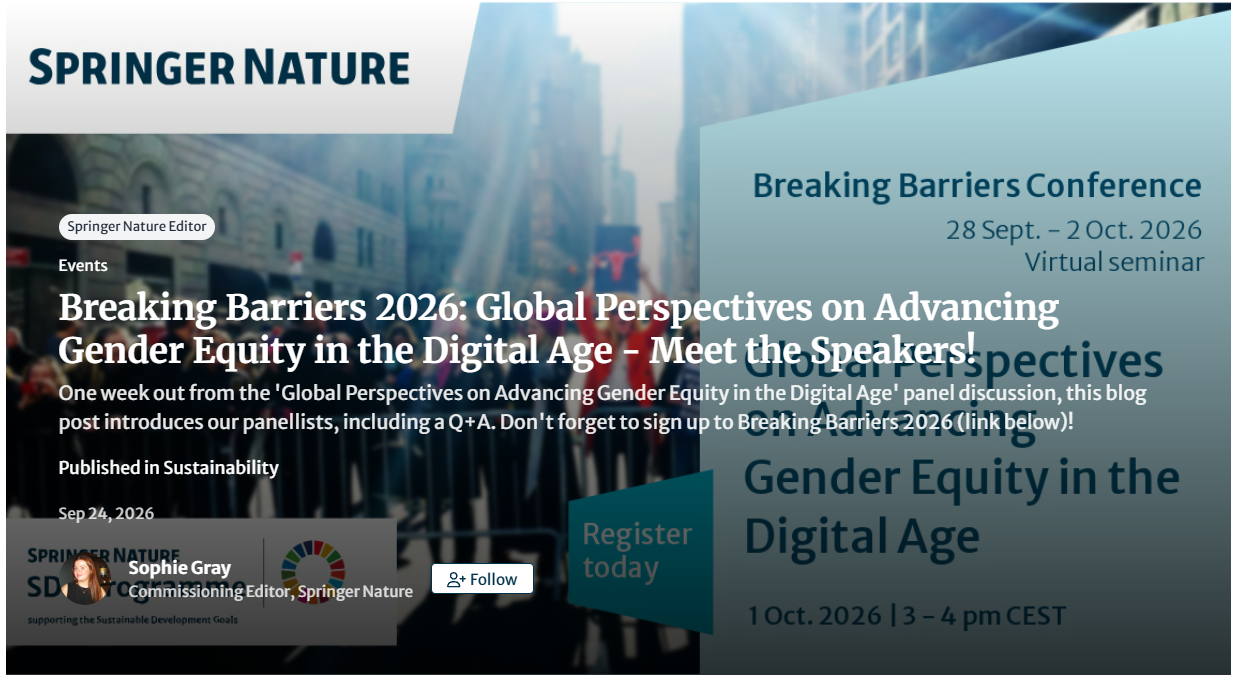
What does gender equity look like in a rapidly changing digital world? This post introduces speakers participating in Breaking Barriers 2026, bringing together perspectives from research, policy, healthcare, and advocacy. Covering topics ranging from women's health and workplace equality to digital inclusion and human rights, the programme highlights some of the opportunities and challenges facing women and girls today.
Read the full post to discover this year's speakers and programme.
Further readings:
- Global Perspectives on Advancing Gender Equity in the Digital Age - Related Literature @Sophie Gray
- From Barriers to Breakthroughs in Women’s Health @Lorena Verduci @Kathryn Schubert @Erika Miller @Sandra E. Brooks, MD, MBA, FACOG
- Meet the speakers: Policy Pathways for Gender Equity @Clare Kernie @Rita Moreira @Giulia Guariento @Elliot Cox
- Menstrual Health as a Human Rights Issue: Perspectives from Research, Policy and Advocacy @Lorena Verduci
- Breaking Barriers is back! @Rita Moreira @Clelia Petracca
Becoming a Scientartist
@Claudia Rosa
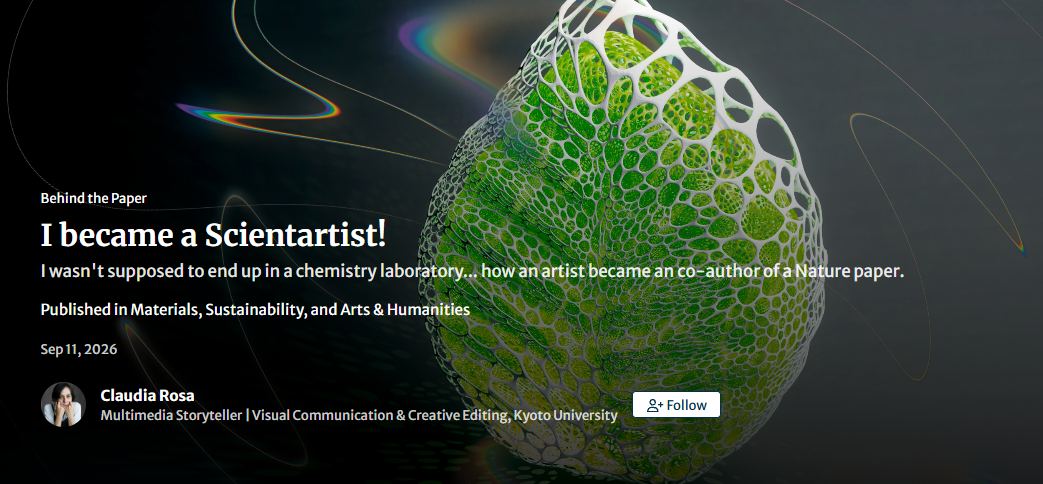
Do science and art belong in separate worlds? This personal reflection challenges that assumption, describing a journey that combines scientific thinking with artistic expression. The post highlights how creativity can emerge when disciplinary boundaries are crossed and suggests that new perspectives often develop unexpectedly. Perhaps that is also part of the value of communities like ours: bringing together people from different disciplines and creating opportunities for unexpected conversations and ideas.
Read the full post to learn more about the journey of becoming a "Scientartist".
Looking Back to Move Forward
@Estrella Trincado
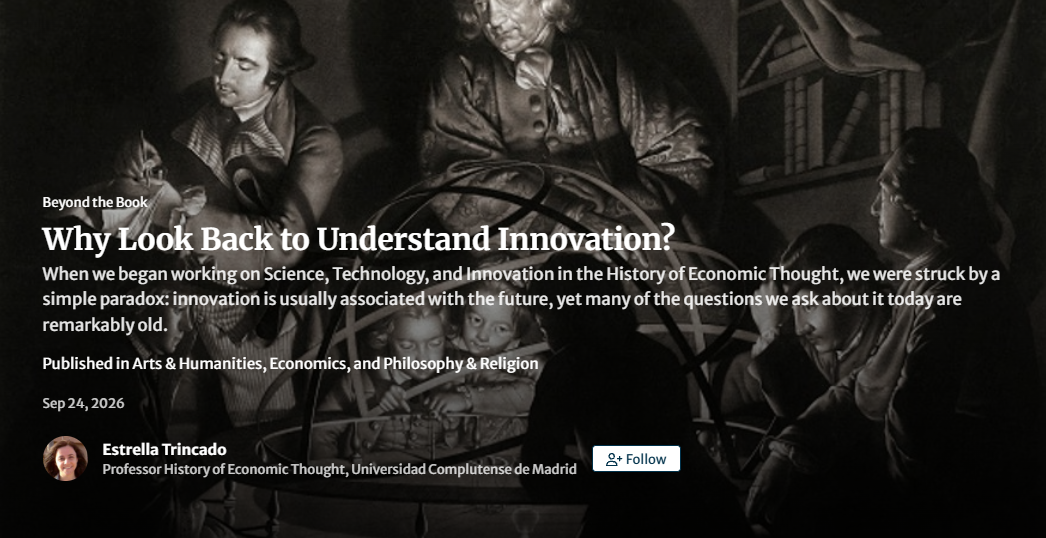
When we talk about innovation, our attention usually turns to the future. But what can the past teach us about creating change? Inspired by themes explored in Science, Technology and Innovation in the History of Economic Thought, Estrella explores why historical perspectives remain valuable when thinking about innovation, economic development, and social progress. The blog suggests that understanding where ideas come from can help us better understand where they might lead.
Read the full post to discover why history still matters for innovation.
Human Rights and Justice
@Nasir Uddin @Palash Kamruzzaman@Bayes Ahmed
Drawing on ideas discussed in their recent book Politics of Denial and Non-Recognition of Genocide, the authors ask an important question: what happens after recognition? Using the Rohingya crisis as a case study, the post argues that acknowledging injustice is only the first step. It explores how diplomacy, international cooperation, and sustained political action can help turn recognition into meaningful progress for displaced communities still seeking rights, protection, and accountability.
Read the full post to learn more about what diplomacy can contribute beyond recognition.
Stories That Matter
@Robin James @Dr. Shane Tilton
Published alongside the book The Human Impact of Multimedia Journalism, this post explores why storytelling continues to matter in an age of algorithms and short attention spans. Reflecting on the teaching of multimedia journalism, @Robin James and Dr. Shane Tilton discuss how students can engage with real communities, amplify overlooked voices, and communicate complex issues in meaningful ways.
Read the full post to discover how storytelling can help create meaningful connections.
Beyond the Book – A space for book authors!
These three blog posts are also part of the new book Channel Beyond the Book. This is a space for authors to share the stories, experiences and ideas that sit beyond the pages of a published book. If you’d like to know more about it, read:
Where to Start? Your First Book
@Christabell Ndive
Publishing a first academic book can feel both exciting and overwhelming. Where do you begin? What should you consider before approaching a publisher? In this practical post, the author shares advice for researchers considering their first book project, from developing an idea and identifying an audience to understanding the publishing process. Whether you are at the beginning of your academic career or simply curious about book publishing, the post offers a helpful introduction to getting started.
Read the full post or listen to the podcast to learn more about taking the first steps towards your first book.
Semmelweis' Dilemma and Mendelian Option
@Chi-Ping Day
What happens when the project you believe in is not the one most rewarded by the system? This thought-provoking post revisits the stories of Semmelweis and Mendel to reflect on recognition, scientific change, and academic careers. It introduces the idea of the ‘Mendelian option’: balancing the work that sustains a career with the work that feels most meaningful.
This is the Mendelian option: to hold two projects simultaneously; the one that sustains your career within the system as it exists, and the one you privately believe matters most, even if the system cannot yet see its value.”
Read the full post for a thoughtful reflection on research, careers, and scientific progress.
From gender equity and human rights to innovation, storytelling, and academic life, this month's posts all challenged us to look at familiar questions from new perspectives. I hope you find something here that sparks your curiosity and encourages you to explore the full posts. Thanks for reading, and feel free to join the conversation in the comments!
Further readings:
- August Highlights from the Humanities and Social Sciences Communities
- July Highlights from the Humanities & Social Sciences Communities
- June Highlights from the Humanities & Social Sciences Communities
- Quarterly Highlights from the Humanities & Social Sciences Communities
- Highlights from Health & Clinical and Life Sciences Research Communities by @Alice Taylor
- Highlights from the Mathematics, Physical & Applied Sciences Communities by @Yijia Li

Supporting Humanities and Social Sciences research area on the Research Communities platform. I’d love to hear from you and connect!
Follow the Topic
-
Nature
A weekly international journal publishing the finest peer-reviewed research in all fields of science and technology on the basis of its originality, importance, interdisciplinary interest, timeliness, accessibility, elegance and surprising conclusions.
📢 Introducing: # Mental Health
Mental Health is a Topic created to increase visibility and impact of research in this area and facilitate exchange amongst researchers.
Continue reading announcementRelated Collections
With Collections, you can get published faster and increase your visibility.
Carbon Dioxide Removal
Publishing Model: Hybrid
Deadline: Jan 16, 2027
Cancer Neuroscience: from mechanisms to therapy
Publishing Model: Hybrid
Deadline: Jan 30, 2027