Quarterly Highlights from the Mathematics, Physical and Applied Sciences Communities
Published in Chemistry, Earth & Environment, and Computational Sciences


This quarter’s highlights bring together inspiring research stories and opportunities from across the Research Communities. Discover how researchers turned curiosity into innovation, uncovering new insights into ancient structures, coastal ecosystems, brain-computer interfaces, AI, and biomedical technologies.
We also feature Calls for Papers that invite researchers to share their work and contribute to emerging conversations in their fields.
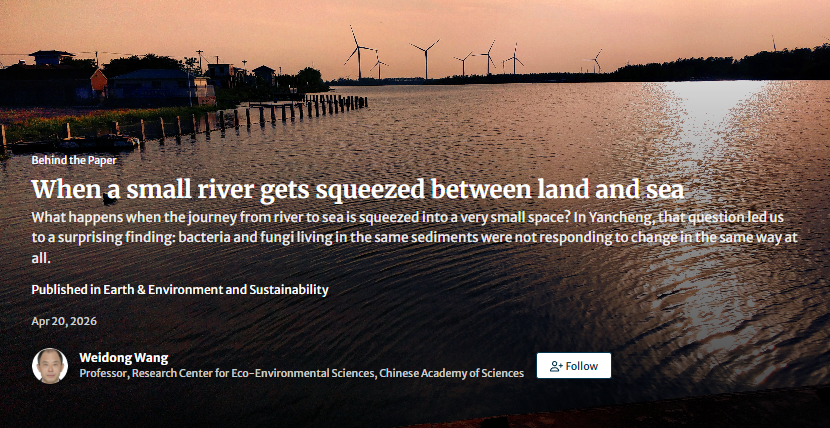
A small river, a big ecological question: what happens when nature’s transitions are squeezed?
What if a river’s journey to the ocean happened too quickly for nature to adjust? @Weidong Wang takes us behind the scenes of a study from Yancheng’s coastal wetlands, where researchers explored how a “compressed” river-sea transition influences the invisible communities living beneath the sediment. Their findings, published in Communications Earth & Environment, reveal a fascinating divide: bacteria and fungi sharing the same environment can follow completely different survival strategies.
From field observations to microbial discoveries, this story shows why small coastal rivers deserve closer attention in a changing world.
Read the full Behind the Paper post to explore how one river revealed a much bigger lesson about ecosystem resilience and vulnerability.
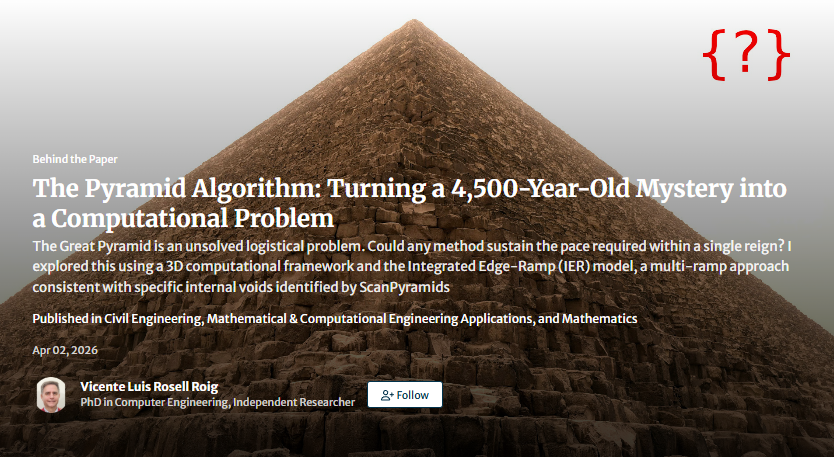
How do you even begin to test a 4,500- year- old construction theory?
For @Vicente Luis Rosell Roig , it started unexpectedly with a documentary, a few sketches on paper, and a question he couldn’t let go of: could any proposed method really keep up with the speed needed to build the Great Pyramid within a single reign? In his Behind the Paper post about a paper from npj Heritage Science, he shares how that curiosity slowly turned into a full computational framework simulating ramps, labour flow, and block transport in 3D.
What I really enjoyed about this story is how iterative the process feels. The model wasn’t built around proving a theory from the start. It evolved through testing, adjusting, and seeing what actually worked under realistic constraints. From multi- ramp systems to possible alignments with ScanPyramids voids, the post offers a fascinating look at how modern engineering tools can reopen ancient questions in completely new ways.
Read the full Behind the Paper post to follow the journey from hand- drawn sketches to pyramid scale simulations.
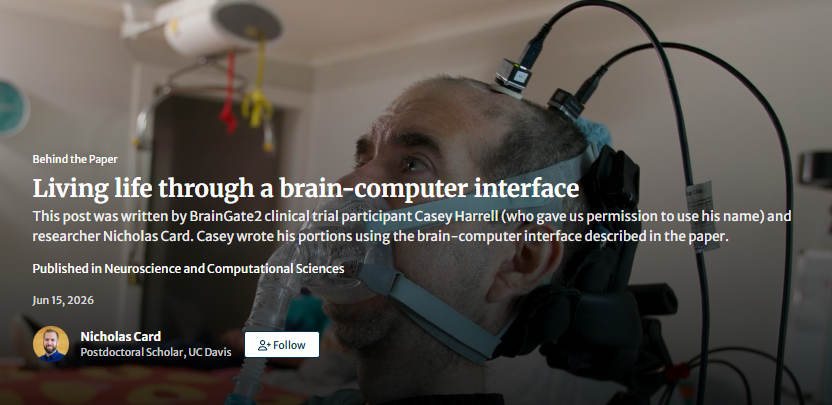
When science gives a voice back
Could a technology developed in a laboratory one day become part of our everyday lives? @Nicholas Card takes us behind the scenes of a remarkable collaboration with Casey Harrell, whose experience with a brain-computer interface is shows what the future of communication could look like for people living with ALS.
This Behind the Paper story goes beyond the headlines to explore the people, persistence, and purpose behind the science - from restoring a lost voice to creating technology that can quietly support everyday life.
Read the full Behind the Paper post to discover how this research is bringing us closer to a future where communication barriers can be overcome.
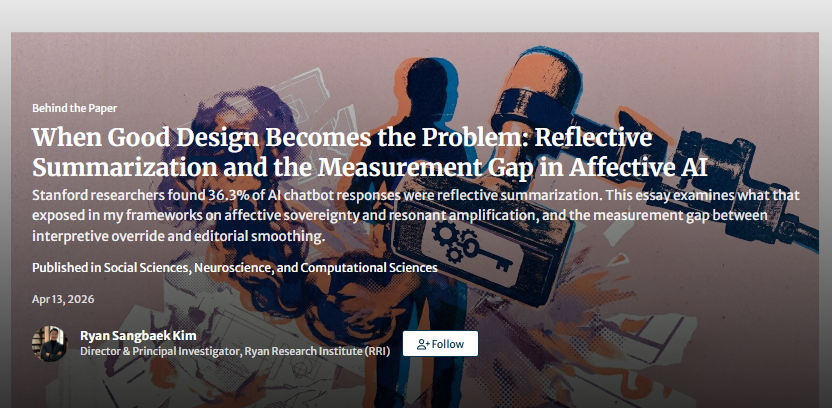
When AI makes our words sound better, what might we be losing?
In this thought-provoking Behind the Paper post, @Ryan Sangbaek Kim reflects on new evidence showing that AI chatbots often respond by polishing users' words rather than simply reflecting them. That observation prompted him to rethink his own research on affective AI, raising important questions about whether subtle "editorial smoothing" can influence how we understand and process our own emotions.
Rather than focusing on obvious AI failures, this research from Discover Artificial Intelligence explores the subtle ways conversational AI may influence how we process our own thoughts. It's a fascinating reflection on how new evidence can reshape scientific thinking.
Read the full Behind the Paper post to discover the story behind the research.
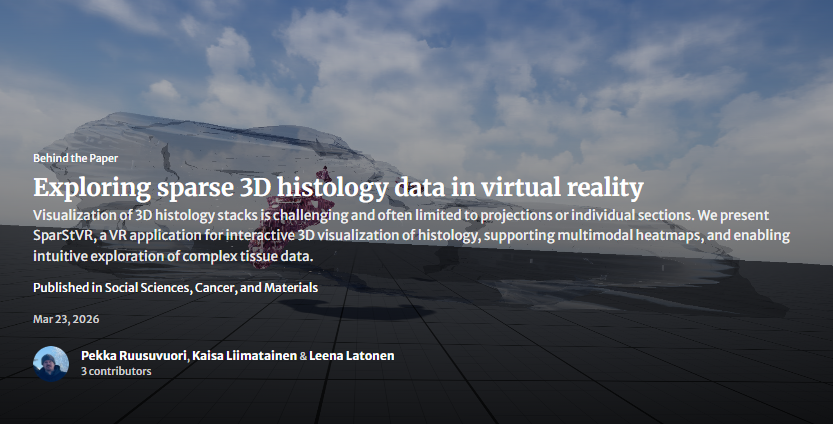
Seeing tissue in a new dimension: how virtual reality is changing histology exploration
In this Behind the Paper story, @Pekka Ruusuvuori , @Kaisa Liimatainen & @Leena Latonen share the journey behind their research published in Communications Engineering. The team developed SparStVR, a virtual reality tool designed to transform how scientists visualise complex 3D histology data.
By moving beyond traditional 2D views and static 3D projections, SparStVR creates a more immersive way to explore tissue structures, investigate disease-related features, and support future applications in research and education.
Read the full Behind the Paper post to discover how new visualisation technologies are opening up fresh perspectives in biomedical research.
Opportunities to contribute: Call for Papers
Beyond sharing research stories, the Research Communities also provide opportunities for researchers to contribute to ongoing conversations and collections. This quarter, we highlight two Calls for Papers that invite the community to share their latest work and insights in important areas of research.
Whether exploring the stories behind groundbreaking research or contributing to future collections, these highlights reflect the ideas, collaborations, and communities shaping science today.
Explore the full selection of Behind the Paper stories and Calls for Papers to discover new research perspectives and opportunities to engage with the Communities.
Explore more research breakthroughs:
- June Highlights from Mathematics, Physical and Applied Sciences Communities
- June Highlights from the Medicine and Life Sciences Research Communities
- May Highlights from the Humanities & Social Sciences Communities
Passionate about connecting researchers and amplifying their voices through digital engagement. As Manager for the Research Communities by Springer Nature, I work with researchers to showcase their discoveries and experiences.
With a strong interest in public engagement and creative science communication, I’m dedicated to making research more accessible and inspiring wider conversations around scientific discovery and innovation.
Follow the Topic
-
Nature Medicine
This journal encompasses original research ranging from new concepts in human biology and disease pathogenesis to new therapeutic modalities and drug development, to all phases of clinical work, as well as innovative technologies aimed at improving human health.
-
Communications Engineering
A selective open access journal from Nature Portfolio publishing high-quality research, reviews and commentary in all areas of engineering.
-
Communications Earth & Environment
An open access journal from Nature Portfolio that publishes high-quality research, reviews and commentary in the Earth, environmental and planetary sciences.
-
Discover Artificial Intelligence
This is a transdisciplinary, international journal that publishes papers on all aspects of the theory, the methodology and the applications of artificial intelligence (AI).
-
npj Heritage Science
This journal will consider original research papers for the scientific study of heritage, based primarily on physical, chemical and biological measurements and / or computations.





Related Collections
With Collections, you can get published faster and increase your visibility.
Clinical Research in Respiratory Medicine
Publishing Model: Hybrid
Deadline: Feb 18, 2027
Generative AI for mechanical engineering design and optimization
Publishing Model: Open Access
Deadline: Dec 31, 2026