Quarterly Highlights from the Mathematics, Physical and Applied Sciences Communities
Published in Earth & Environment and Materials

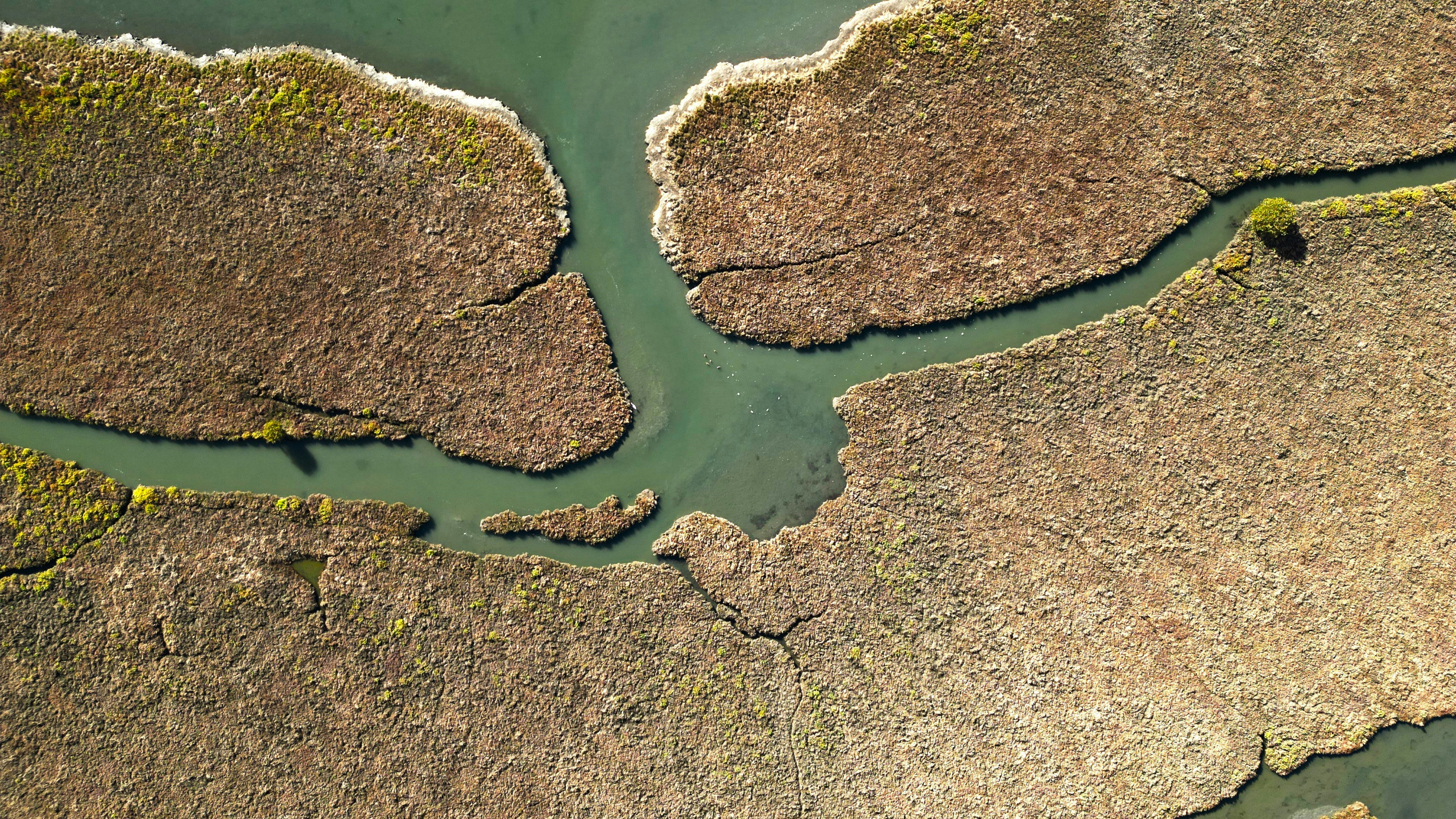
From global challenges such as water security and gender equality to breakthroughs in geoscience and photonics, these highlights showcase the breadth of research and conversations shaping global research. Together, they offer a snapshot of how researchers are advancing knowledge, sparking discussion, and connecting ideas across disciplines.
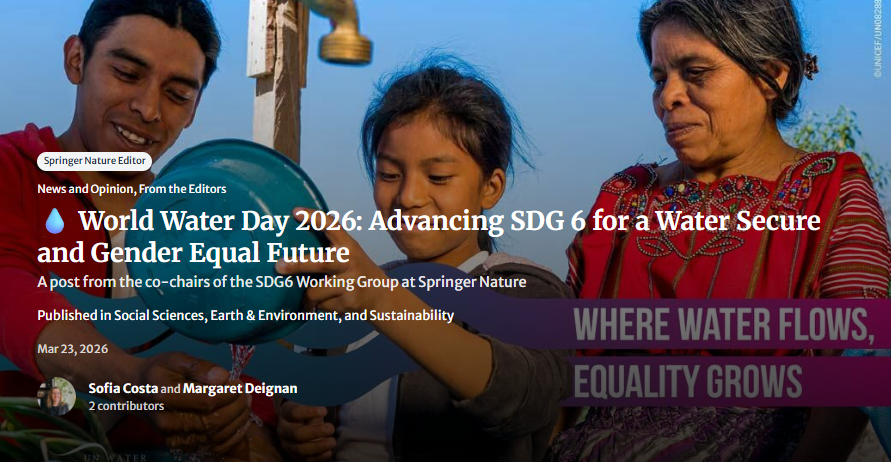
Can water security drive gender equality?
On World Water Day 2026, @Sofia Costa and @Margaret Deignan highlighted the powerful connection between access to safe water and gender equality. With over a billion women and girls still lacking reliable water access, the post explores how this challenge continues to impact health, education, and opportunities, and why achieving SDG 6 is inseparable from advancing gender equity.
Drawing on research and global perspectives, the authors emphasise the importance of inclusive, rights-based water governance and the need to empower women as leaders in shaping sustainable solutions. Their message is clear: meaningful progress depends on placing women and girls at the centre of water security efforts.
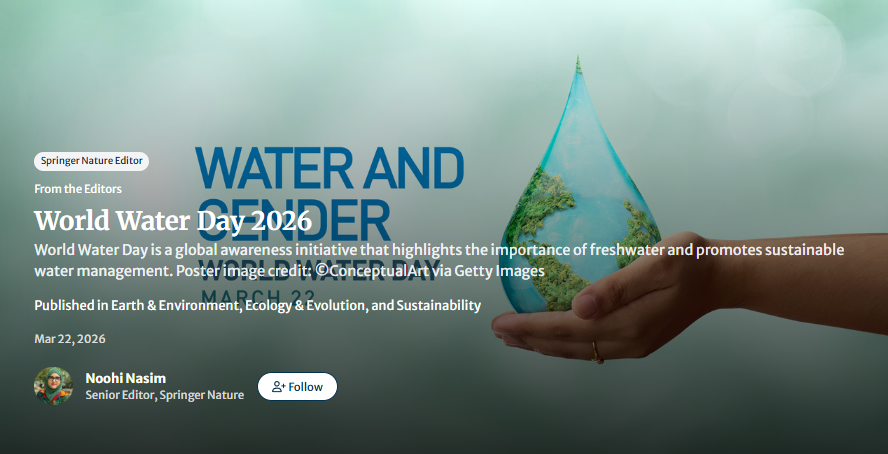
What does clean water really change in people’s lives?
Marking World Water Day 2026, @Noohi Nasim brings together research that shows how access to safe water goes far beyond basic need. It shapes health outcomes, gender equality, and everyday wellbeing. From reducing childhood disease through improved hygiene practices to revealing how water access impacts women’s safety and reproductive health, these studies highlight the deeply interconnected role water plays across communities.
The post also explores innovative solutions, including sustainable water purification using plant-based materials, pointing to how science can support scalable and environmentally friendly approaches. Together, these insights reinforce a simple but powerful idea: improving water access can transform lives in multiple, lasting ways.
Water is a topic that goes far beyond World Water Day. If you haven’t had a chance, take a look at our March roundup post and explore more World Water Day content.
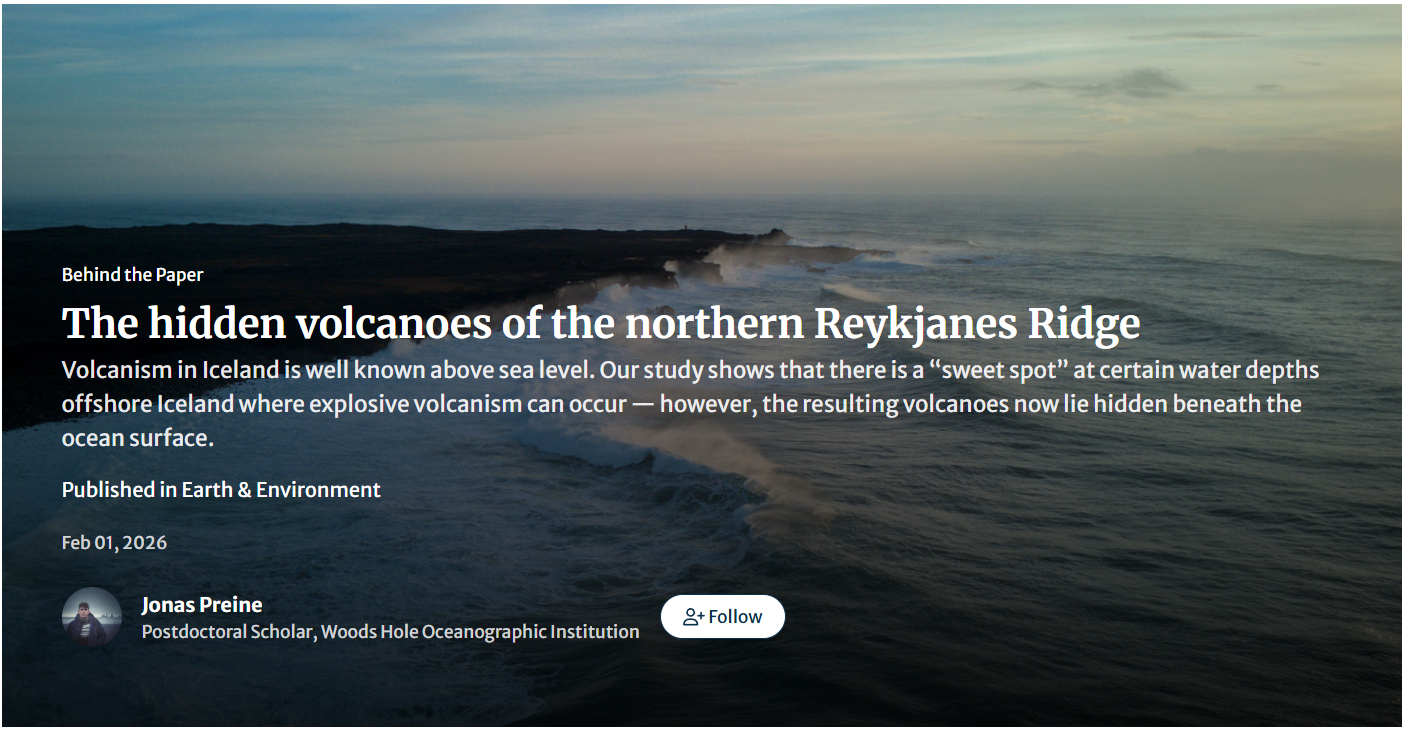
Hidden Volcanoes Beneath the Reykjanes Ridge
@Jonas Preine explores new findings that reveal a surprising shift in volcanic activity along the Reykjanes Ridge. The research shows that, contrary to long-held assumptions, shallow submarine environments can host explosive volcanism, building hidden volcanic structures beneath the ocean surface rather than the classic lava-flow formations we associate with mid-ocean ridges.
These insights, published in Communications Earth & Environment, challenge the traditional view of mid-ocean ridge volcanism as predominantly effusive and suggest that explosive processes may be more common than previously thought, reshaping our understanding of how volcanic systems operate beneath the sea. Read the full Behind the Paper post to explore the study in more detail.
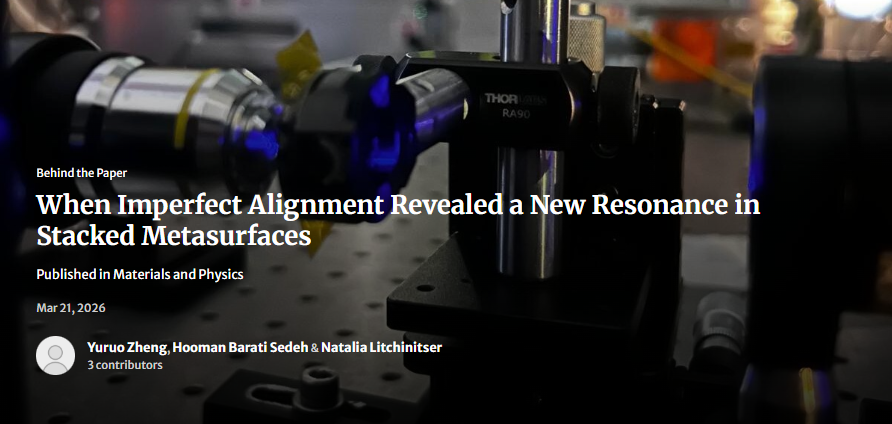
When “Imperfection” Unlocks New Light Physics
What if a small misalignment could lead to a major breakthrough? In this Behind the Paper post, @Yuruo Zheng , @Hooman Barati Sedeh , and @Natalia Litchinitser share how an unexpected fabrication imperfection revealed a completely new type of optical resonance in stacked metasurfaces, published in npj Metamaterials. Instead of limiting performance, a slight lateral shift between layers enhanced light confinement and significantly boosted nonlinear optical signals.
By turning what first appeared to be an error into insight, the study shows how controlled symmetry breaking can become a powerful design strategy for future photonic technologies. It’s a reminder that discovery doesn’t always come from perfect systems, but sometimes from noticing what doesn’t behave as expected.
Meet the Editor-in-Chief: Why Clean Planet?
In Why Clean Planet? shared by @Jess Xia , Editor-in-Chief Prof. Lin Wang reflects on the journal’s mission, its interdisciplinary scope, and the importance of research that contributes to a cleaner and more sustainable future.
Read the interview to learn how a new journal comes to life and why setting the right mission is pivotal.
These highlights represent just a small selection of the many insightful conversations happening across our Communities. We hope they inspire you to explore further, engage with the research, and join the discussion. If you have a story to share, whether it’s a Behind the Paper, Behind the Book, After the Paper, or your own research perspective, we’d love to hear from you!
Explore more research breakthroughs:
-
Quarterly Highlights from the Medicine and Life Sciences Research Communities
-
Quarterly Highlights from the Humanities & Social Sciences Communities
Passionate about connecting researchers and amplifying their voices through digital engagement. As Manager for the Research Communities by Springer Nature, I work with researchers to showcase their discoveries and experiences.
With a strong interest in public engagement and creative science communication, I’m dedicated to making research more accessible and inspiring wider conversations around scientific discovery and innovation.
Follow the Topic
-
BMC Public Health
An open access, peer-reviewed journal that considers articles on the epidemiology of disease and the understanding of all aspects of public health.
-
Communications Earth & Environment
An open access journal from Nature Portfolio that publishes high-quality research, reviews and commentary in the Earth, environmental and planetary sciences.
-
npj Metamaterials
This journal focuses on the latest research and advances in the design, fabrication and applications of metamaterials and metasurfaces.


Related Collections
With Collections, you can get published faster and increase your visibility.
Monitoring, preventing, and managing type 2 diabetes
BMC Public Health is calling for submissions to our Collection on Monitoring, preventing, and managing diabetes at the population level. With rates of type 2 diabetes rising globally, especially in low- and middle-income countries and underserved communities, prevention strategies are critical. As the disease progresses people with diabetes are at increased risk of complications such as cardiovascular and kidney diseases, neuropathy and visual loss.
This Collection seeks submissions that explore population-level approaches to monitoring rates of diabetes, preventing or delaying the development of type 2 diabetes, and system-wide efforts to improve the management of the disease and reduce rates of complications, with a focus on improving health outcomes and reducing healthcare burdens.
Submissions are encouraged on primary prevention initiatives and culturally adapted, community-level interventions to reduce the risk of diabetes. Research aimed at improving systems for monitoring rates of diabetes and its complications through routinely-collected health data, or for improving management by enhancing patient engagement with healthcare systems or better identifying those in need, are encouraged. Research on diabetes education and support systems is also welcomed, with a focus on empowering individuals to adopt and sustain healthier lifestyles and avoid known causes of diabetes.
Additional topics of interest include (but are not limited to):
Access to healthcare and diabetes management
The impact of food insecurity on diabetes outcomes
Community-based interventions for low-income populations
Interventions to reduce exposure to environmental causes of diabetes
Financial barriers to diabetes medication and treatment
Housing instability, employment status and type 2 diabetes
Health literacy, poverty, and diabetes management
Policies to reduce poverty-related health disparities in diabetes
This Collection supports and amplifies research related to SDG 3: Good Health & Well-Being.
All manuscripts submitted to this journal, including those submitted to collections and special issues, are assessed in line with our editorial policies and the journal’s peer review process. Reviewers and editors are required to declare competing interests and can be excluded from the peer review process if a competing interest exists.
Publishing Model: Open Access
Deadline: Oct 16, 2026
Ecological resistance and resilience under global change
Publishing Model: Open Access
Deadline: Apr 07, 2027