Getting microbial single-cells of interest for sequencing or for culture
Published in Biomedical Research and Agricultural & Food Science

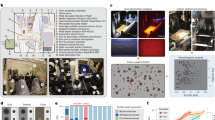

I stumbled into the microbiome field at the end of the year 2012. This has nothing to do with my PhD, postdoc, or my previous job. But it is full of possibilities. Back then, we did metagenomics on a regular basis, and had been exploring single-cell techniques already. After trying a few different approaches over a decade, on and off, and with different members of the team, this time, I got an equipment that suits the job (Equipment for morphology, Raman and LIFT). This has finally become feasible, with two world-class postdocs, Xihong and Qiaoxing, and hardworking people with genuine interest in the topic, especially Jiayi, Lili and Ping.
We knew years ago that plating the human microbiome samples and picking the colonies do work, but we would soon get many redundant ones. Although tweaking with media recipes help a little, the proportion is not too different from the relative abundances according to metagenomic sequencing (Culturomics 2019). For metagenomics, the problem is similar. With tens of millions of sequencing reads, it would not help much to scale up a few fold (Book 2022 tech chapter).
So after getting through the institutional bureaucratics to get the equipment, install it in a suitable environment and expand the computer memory and such, I eagerly started working on the new possibility. Somehow it did not break my record of getting things to work at first test, since my PhD time in Cleveland, Ohio. But problems usually come at second or third attempts. The team went through a number of trouble-shooting procedures both experimentally and computationally. In this end, we can not only use samples such as saliva or soil, but also 10 micrometer tissue slices from patients or animals.
Many diseases wait to be studied by this in situ microbial single-cell method. More difficult questions in development also welcome brave young minds.

Follow the Topic
-
Nature Communications
An open access, multidisciplinary journal dedicated to publishing high-quality research in all areas of the biological, health, physical, chemical and Earth sciences.

Related Collections
With Collections, you can get published faster and increase your visibility.
Women's Health
Publishing Model: Hybrid
Deadline: Ongoing
Tumor Microenvironment Crosstalk and Therapeutic Implications
Publishing Model: Hybrid
Deadline: Nov 02, 2026