Linking Thyroid Clinical–Epidemiological Patterns to Environmental Exposure: Effects of Groundwater on Thyroid Development in an Amphibian Model
Published in Chemistry and Biomedical Research


After years of clinical practice in a region of Argentina, I began to notice a progressive increase in cases of hypothyroidism and goiter. This observation sparked my interest in formally evaluating the local population in order to determine the true prevalence of these disorders. An initial epidemiological analysis confirmed that both hypothyroidism and goiter were highly prevalent in this area.
From clinical observation to a research question
Once the magnitude of the problem was identified, a central scientific question arose: what characteristics did individuals in this population share that could explain such a high prevalence of thyroid diseases typically associated with iodine-deficient regions? Importantly, the area is classified at the national level as iodine sufficient, largely due to its geographic proximity to coastal regions. Therefore, iodine deficiency could not account for the observed prevalence. Likewise, the population is ethnically diverse, composed of descendants of Europeans and various Latin American groups, and dietary habits are consequently heterogeneous, making a shared genetic background or a uniform dietary pattern unlikely explanations for the widespread thyroid pathology observed. Over the past two decades, population density in the region has increased significantly, while environmental sanitation infrastructure has not kept pace with this growth. In particular, the absence of comprehensive wastewater treatment systems and centralized drinking water treatment networks, together with the presence of nearby agricultural fields and industrial parks, has led to a progressive deterioration of groundwater quality. This emerged as the main characteristic shared by all inhabitants of the region: the lack of access to piped drinking water and wastewater treatment systems.
Groundwater is often assumed to be safe if it meets regulatory standards; however, chronic exposure to low concentrations of chemical contaminants may exert biological effects that are not immediately apparent. Nitrates are among the most common groundwater contaminants globally, largely as a consequence of agricultural activity and inadequate waste management. While their acute toxicity—particularly their association with infant methemoglobinemia—is well established, their potential role as endocrine disruptors at environmentally realistic concentrations has not yet been sufficiently explored in vivo. Endocrine disruptors are defined as exogenous substances that can interfere with hormone synthesis, signaling, or action, particularly during critical windows of development.
This led us to a fundamental question: can chronic exposure to groundwater intended for human consumption induce significant alterations in thyroid development? To address this question, we first performed physicochemical and bacteriological analyses of groundwater samples, together with assessments of their potential endocrine-disrupting activity. These analyses revealed variable nitrate concentrations ranging from 40 to 83 mg/L, exceeding the limits considered safe by regional regulatory agencies.
Environmental exposure and experimental approach
Given these findings, it became essential to evaluate whether groundwater from this area could directly affect thyroid structure and function. To investigate this, we selected an experimental model based on the distinctive biological characteristics of amphibians, including aquatic reproduction and larval life, high skin permeability, and a metamorphic process that is entirely dependent on thyroid hormones. Specifically, we chose Xenopus laevis, a well-established and widely accepted model for studying thyroid disruption.
Following international guidelines for the assessment of thyroid-disrupting substances, we adapted a chronic in vivo exposure model in which larvae were exposed throughout their entire metamorphic period to groundwater collected from randomly selected domestic wells in the study region, where a high prevalence of hypothyroidism and goiter had been identified. This approach allowed us to prioritize environmental relevance while maintaining experimental rigor.
One of the main challenges of the study was balancing experimental control with ecological validity. The groundwater samples were not chemically modified, and exposure conditions were carefully standardized across experimental groups. Nitrates were found to be the most consistently detected contaminant, in agreement with previous environmental and epidemiological concerns. At the same time, we were careful not to attribute the observed effects to any single compound, recognizing the inherent complexity of natural water matrices.
Ethical and methodological rigor was fundamental to the experimental design. Amphibian models are increasingly used in endocrine research due to their high sensitivity, which allows for the detection of subtle biological effects without relying on overt toxicity or exposure to high doses. Our study was designed to minimize animal use while maximizing the information obtained from relevant histological and molecular endpoints related to thyroid function.
Developmental effects and biological relevance
To ensure robustness and reproducibility, the experiment was replicated four times and conducted across different seasons. This strategy allowed us to capture seasonal variability in groundwater composition and to reproduce environmental exposure conditions as accurately as possible. The results were highly consistent and biologically significant. Morphological alterations were observed in juvenile specimens after completion of metamorphosis and upon reaching sexual maturity. In addition, histological and biomolecular changes were detected in the thyroid glands of larvae during critical stages of thyroid hormone–dependent development.
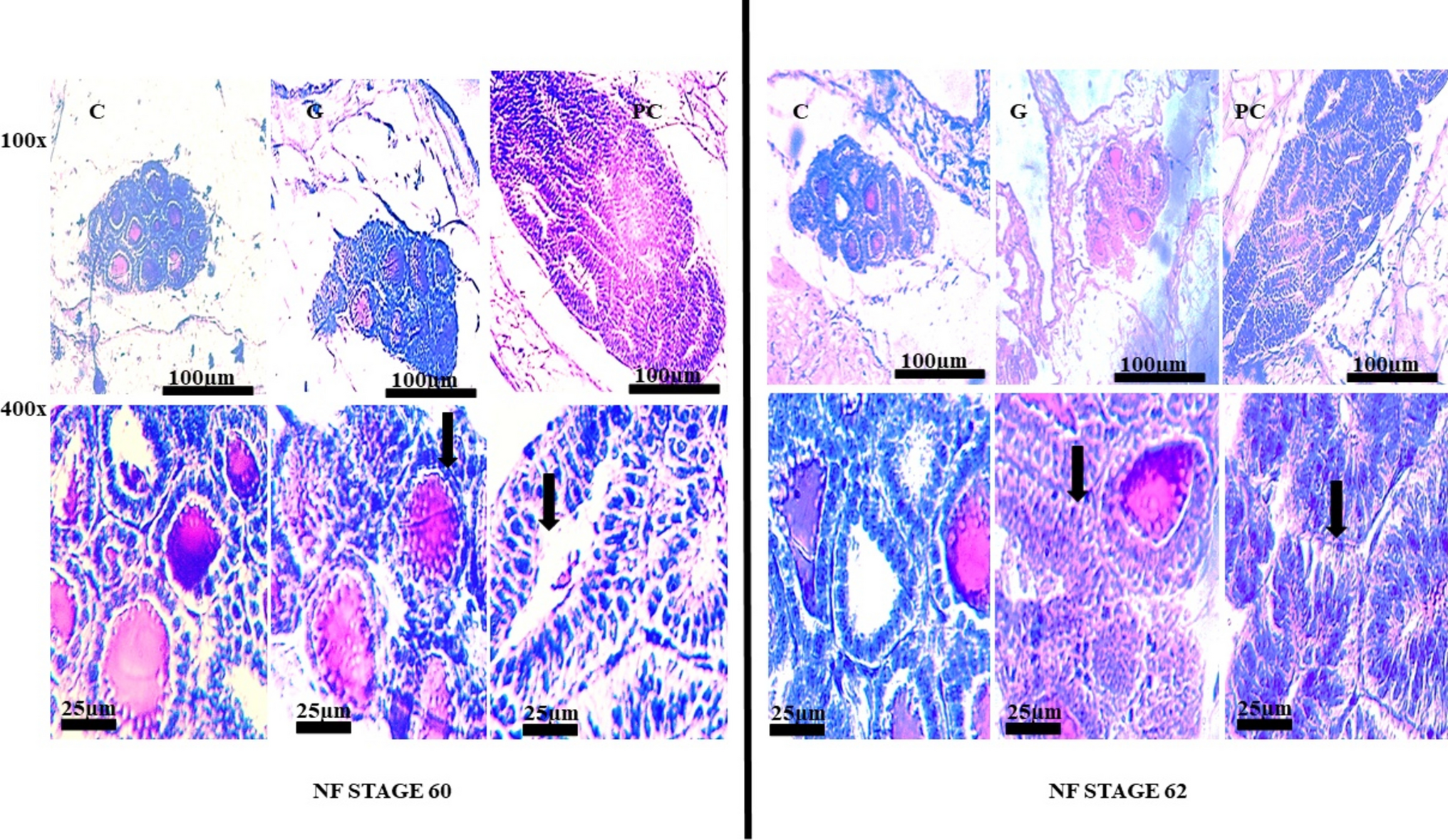
Exposure to groundwater during metamorphosis resulted in clear alterations in thyroid tissue architecture and changes in molecular markers associated with thyroid regulation. Notably, these effects occurred at exposure levels considered environmentally realistic, reinforcing the concept that endocrine disruption does not necessarily require acute toxicity. Rather, chronic exposure to low doses during sensitive developmental periods may be sufficient to induce biologically relevant changes.
Overall, these findings emphasize the importance of assessing endocrine effects within a developmental context. The thyroid gland plays a central role in growth, differentiation, and metabolic regulation, and disruptions during early life stages may have long-lasting consequences. While this study does not aim to establish a direct causal relationship with human disease, it highlights the need to integrate environmental exposure—particularly drinking water quality—into endocrine research and public health risk assessment strategies. From a broader perspective, this work illustrates how clinical observation can serve as a catalyst for experimental research that bridges medicine, environmental science, and developmental biology.
By combining epidemiological data, environmental analysis, and an established in vivo model, the study provides an integrated framework for exploring subtle endocrine effects that might otherwise remain undetected. Importantly, it also underscores the value of interdisciplinary approaches when addressing complex health problems influenced by both biological susceptibility and environmental exposure. Thus, the study contributes not only specific findings related to thyroid disruption, but also a methodological perspective that could be applied to other regions and to other endocrine outcomes shaped by chronic environmental conditions across vulnerable populations and settings.
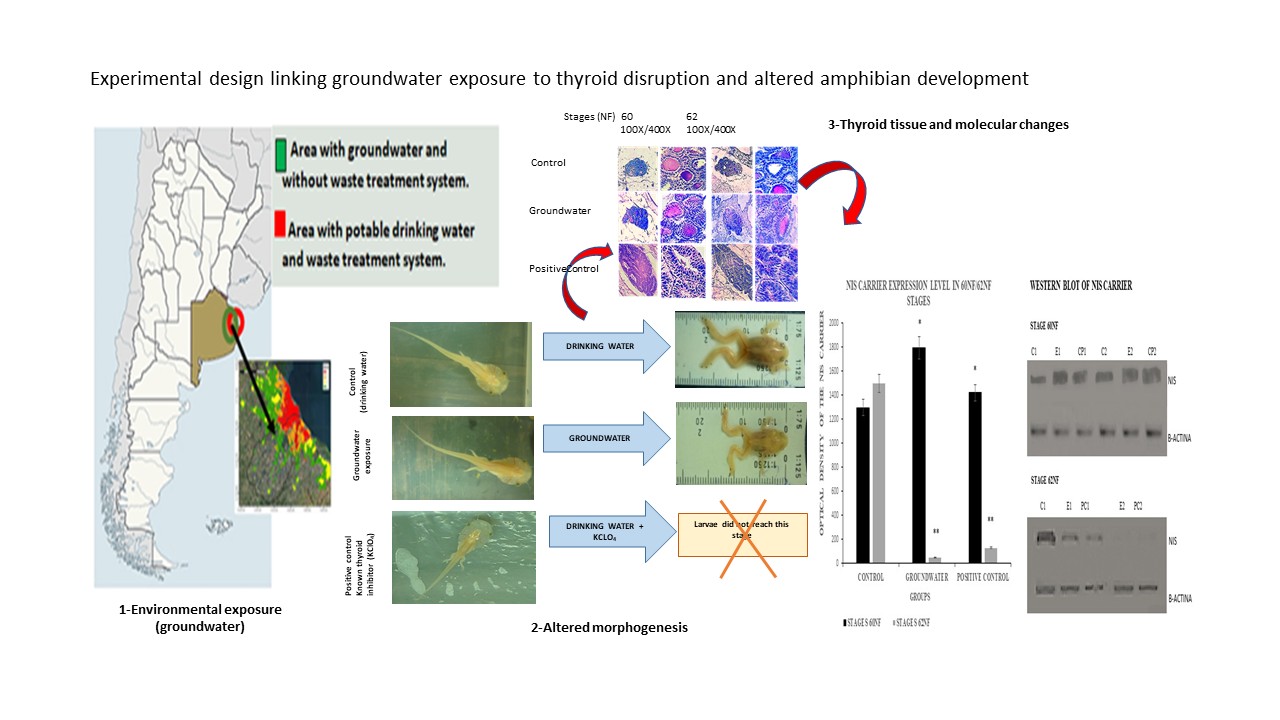
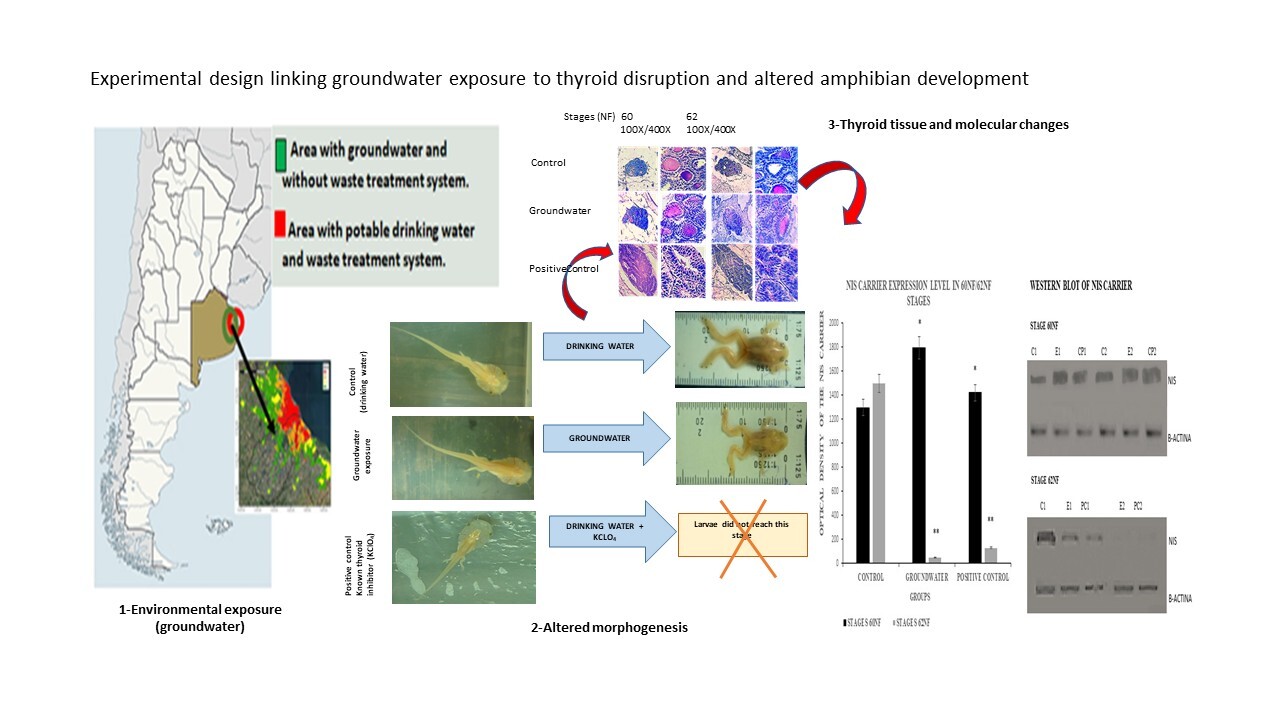
General scheme of the integrated experimental design.
This schematic summarizes the experimental approach, linking groundwater from a region of Argentina intended for human consumption to thyroid histological, molecular, and developmental alterations in an amphibian model.
“Figure adapted from the original publication.”
Authors: Maria Fernanda Modarelli, Rodrigo Miguel Bilbao, Osvaldo Juan Ponzo.
Conflict of interest: The authors declare no conflicts of interest.
Journal / Link: Environmental Science and Pollution Research. https://doi.org/10.1007/s11356-025-37139-z

I am a medical doctor and clinical researcher with experience in endocrinology, thyroid disorders, and environmental health. My work focuses on hypothyroidism, goiter, thyroid cancer, and the impact of environmental factors on endocrine function. I have conducted clinical and experimental research, including in vivo models, and I am particularly interested in translational research, biomarkers, and the interaction between environmental exposures and human disease. I am open to interdisciplinary collaboration and international research networks.
Follow the Topic
-
Environmental Science and Pollution Research

This journal serves the international community in all broad areas of environmental science and related subjects with emphasis on chemical compounds.


Please sign in or register for FREE
If you are a registered user on Research Communities by Springer Nature, please sign in
This study reflects the intersection between clinical observation and experimental biology. I look forward to discussing how environmental exposure, particularly drinking water quality, can be better integrated into endocrine research and public health perspectives.