Herring larvae benefit from changes in the food web induced by ocean acidification
Published in Ecology & Evolution
The paper in Nature Ecology & Evolution is here: http://go.nature.com/2GHT2L8
Pelagic mesocosms can serve as big test tubes to study the combined direct and indirect effects of OA. The KOSMOS mesocosms host a natural plankton community, from phytoplankton and bacteria at the base of the food web up to mesozooplankton. In 2013 herring larvae were introduced to the KOSMOS, where they would live and feed under simulated end-of-the-century OA and present-day conditions. The results in herring larval survival after 6 weeks were unexcpected; larval survival was ~20% higher under end-of-the-century OA compared to present-day conditions. These results highlight the importance of taking into account the indirect effects of ocean acidification via the food web.
In 2013, I got the opportunity to join the BIOACID-team of Prof. Riebesell in collaboration with Catriona Clemmesen (both GEOMAR Helmholtz Centre for Ocean Research Kiel) to work on the introduction of fish larvae to the KOSMOS system.
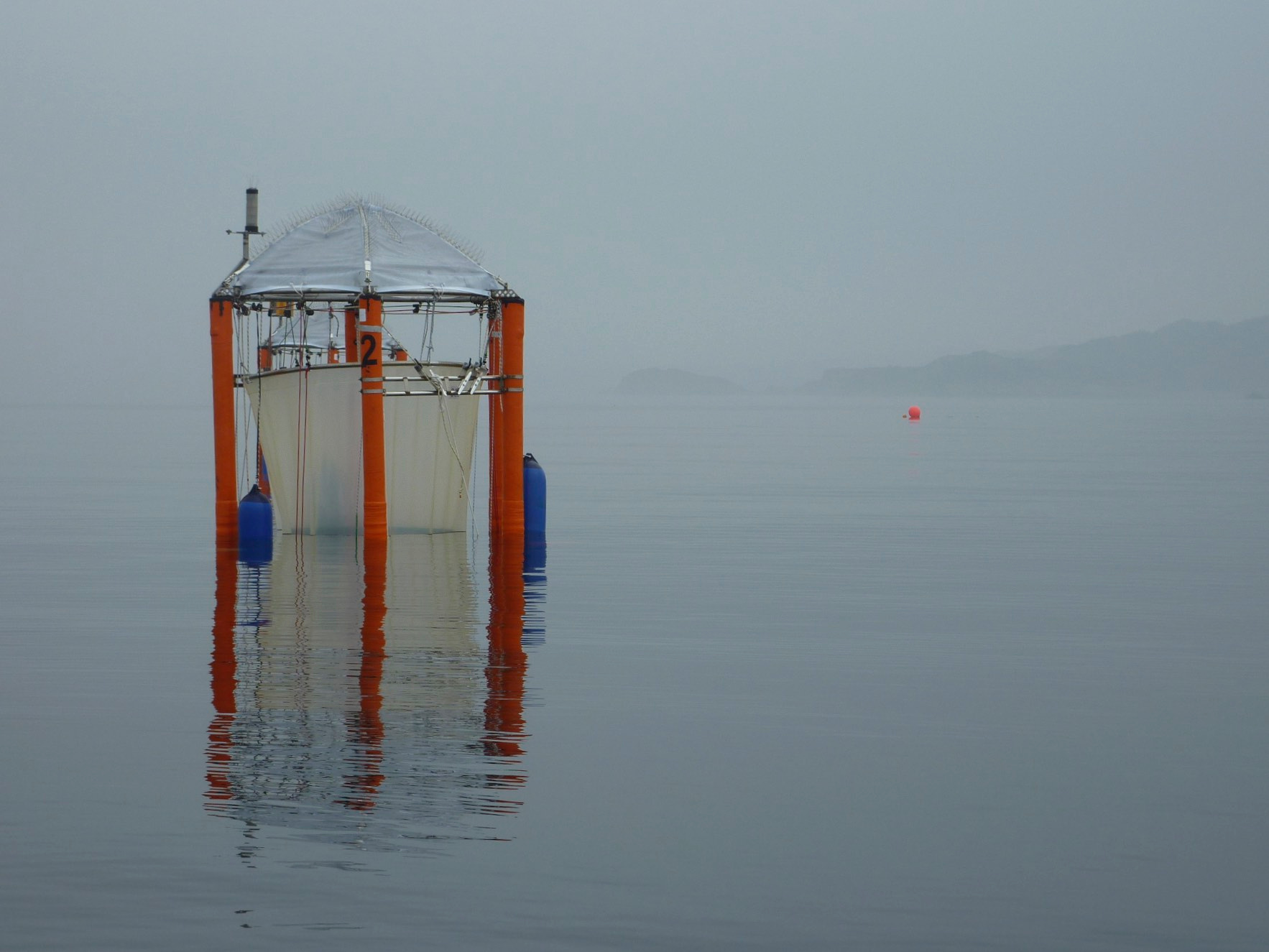
Our plan was to compare fish larvae survival in a plankton community subjected to CO2 conditions expected for the end-of-the-century and compare it to those raised under present-day CO2 levels. This mission turned out to be quite demanding. The mesocosm experiment started in March in the Gullmarsfjord, Sweden (photo above). To obtain fish eggs we ended up catching herring in the Oslo Fjord, as our attempts to capture local herring was not successful.
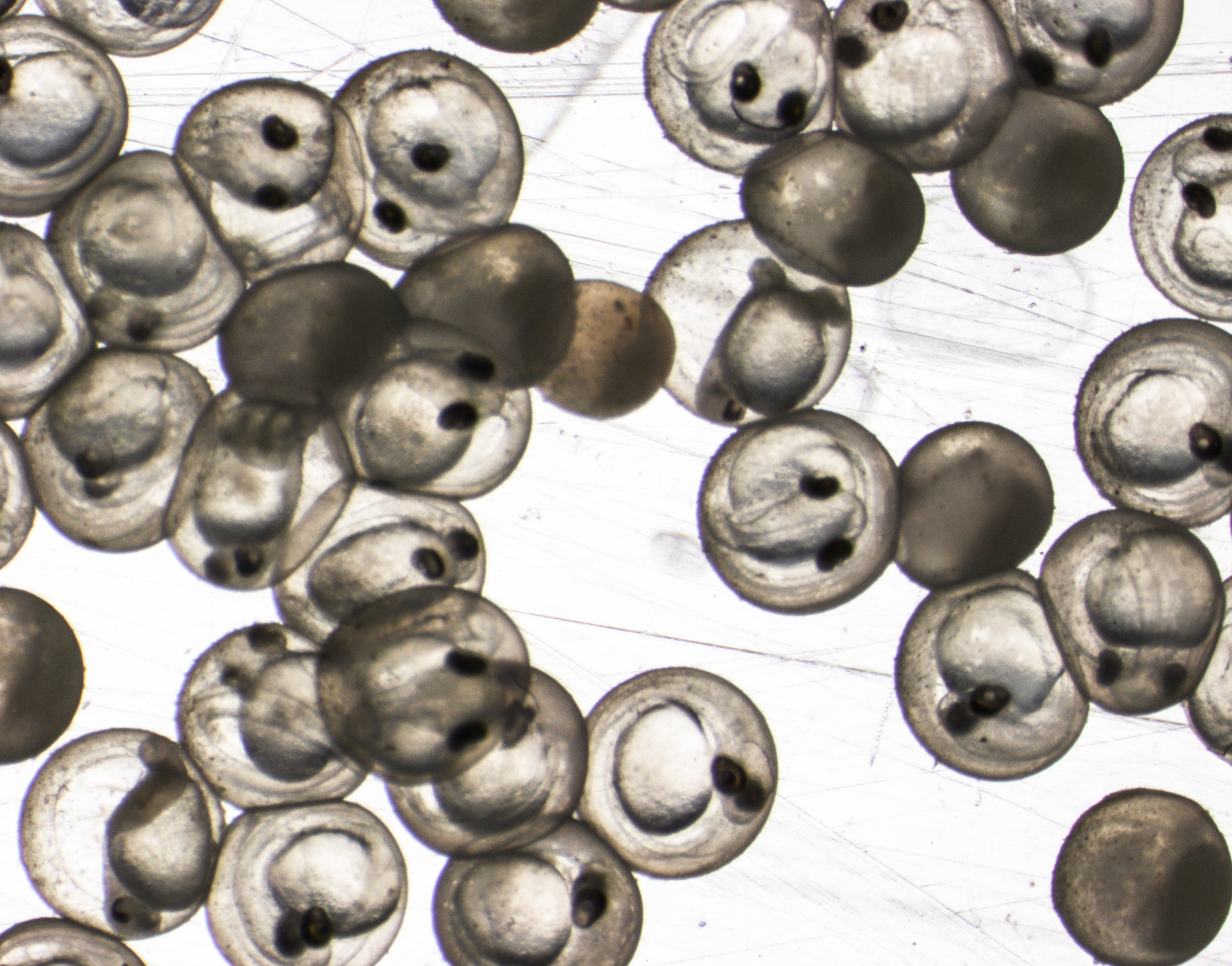
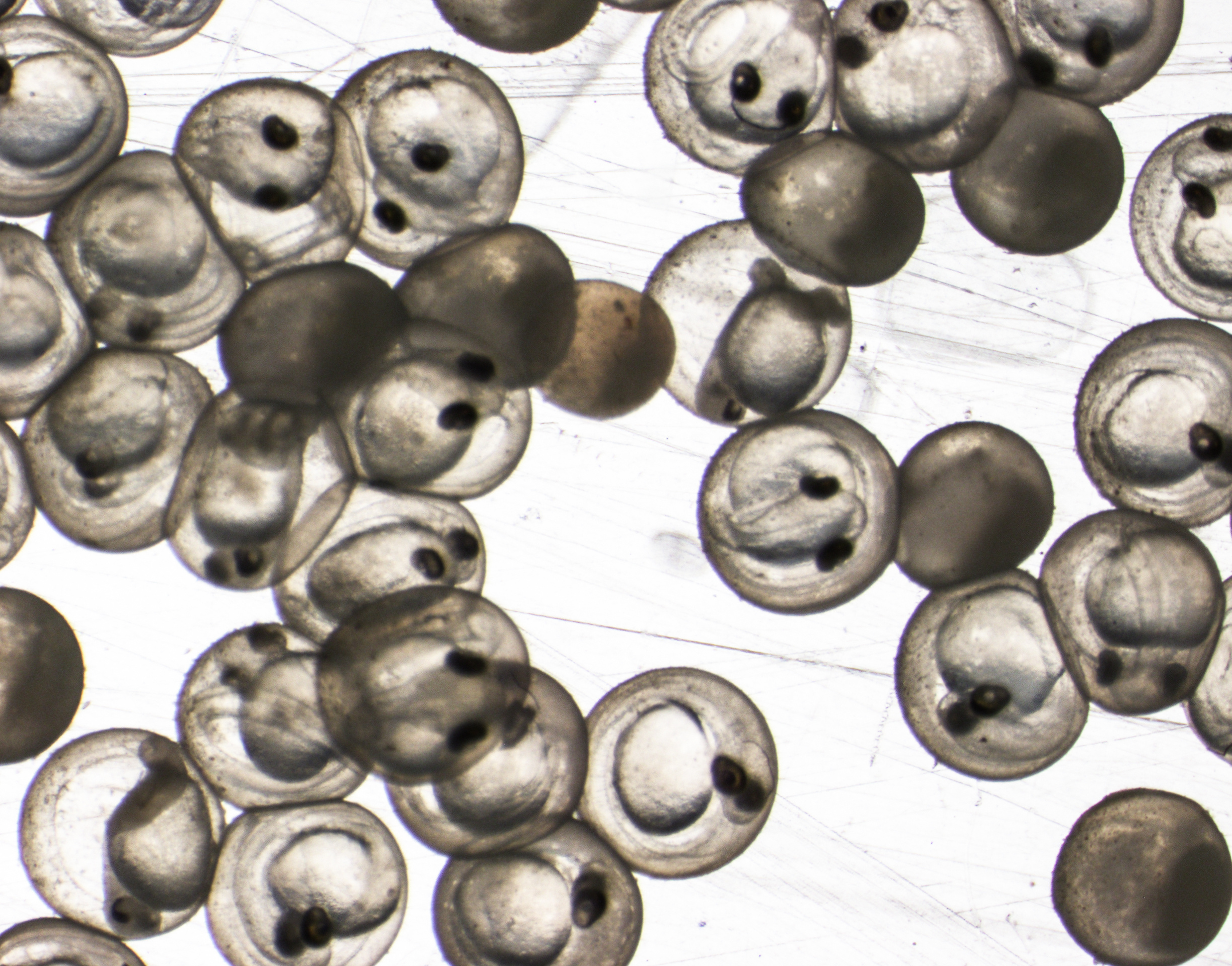
Conveniently, the sticky herring eggs can be attached to plastic plates (photo above), which we then placed in "egg cages" in the mesocosms (photo below). A couple of days before estimated hatch we only saw some dead larvae in the egg cages. We came to the conclusion that they must have had hatched already.
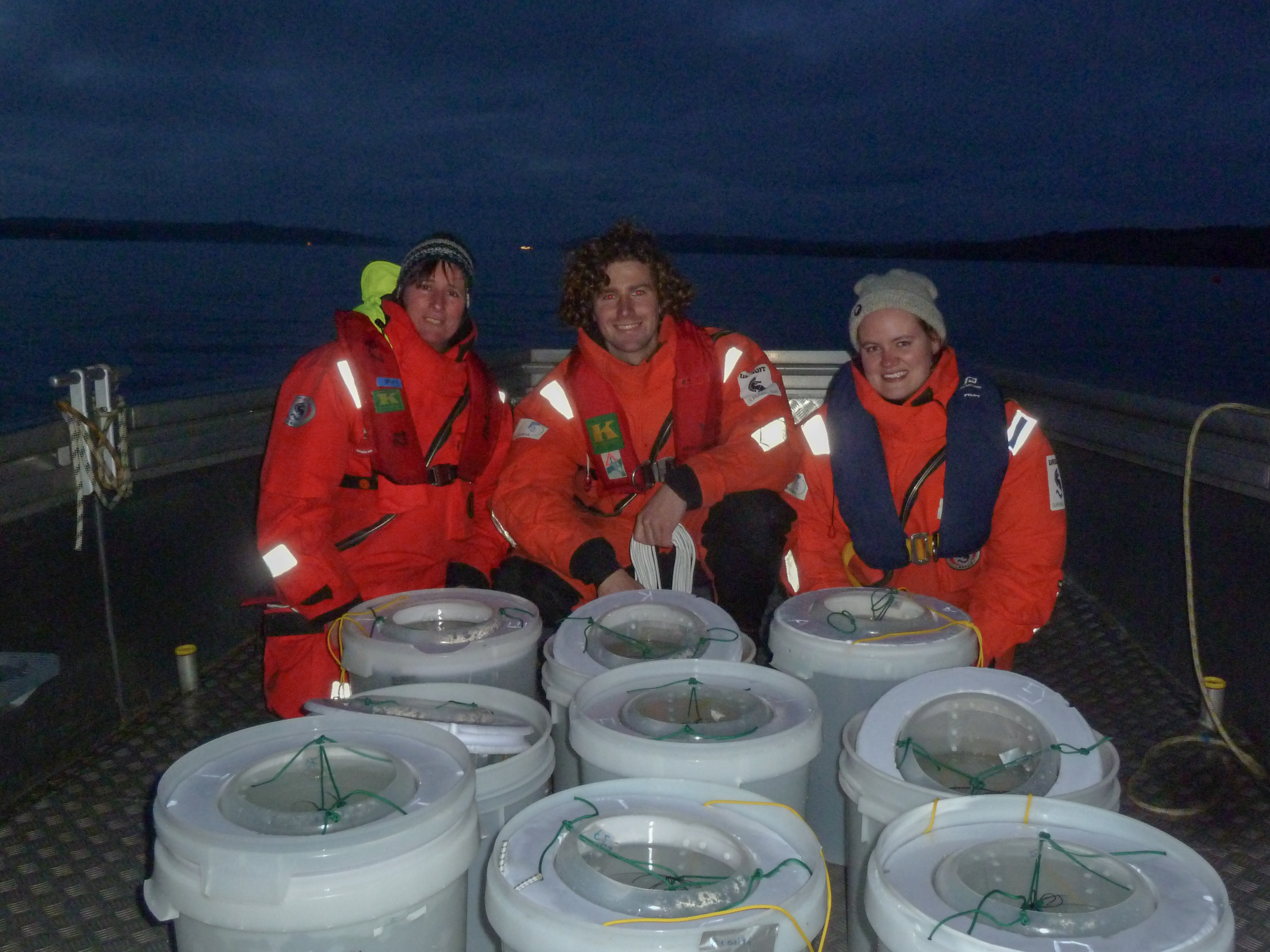
We lowered a camera to assure the first ever introduction of fish larvae to the KOSMOS. Luckily, we saw several larvae. The odds of finding them were quite small: only ~1500 larvae, less than one cm in size, completely transparent in ~55.000 Liter of seawater!
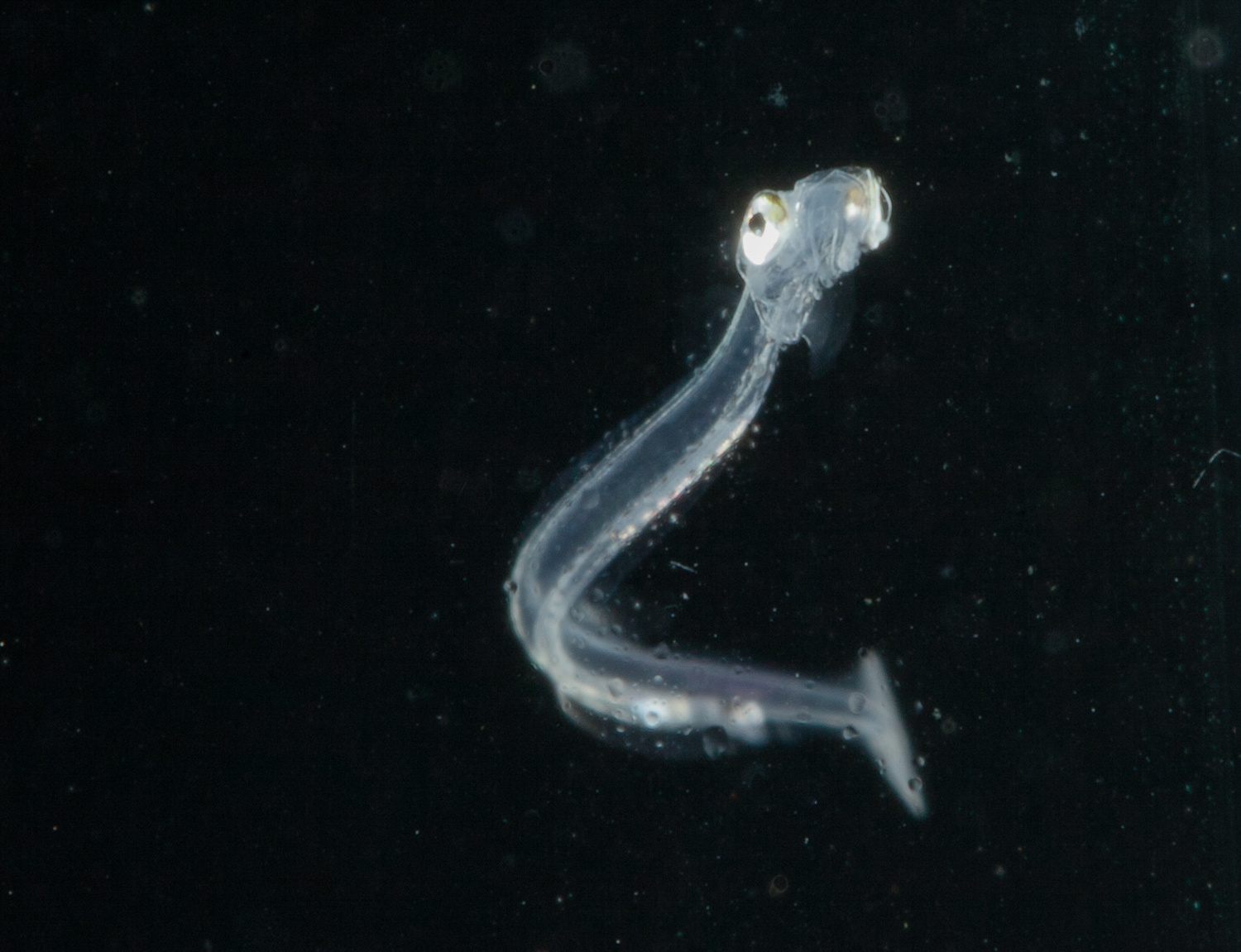
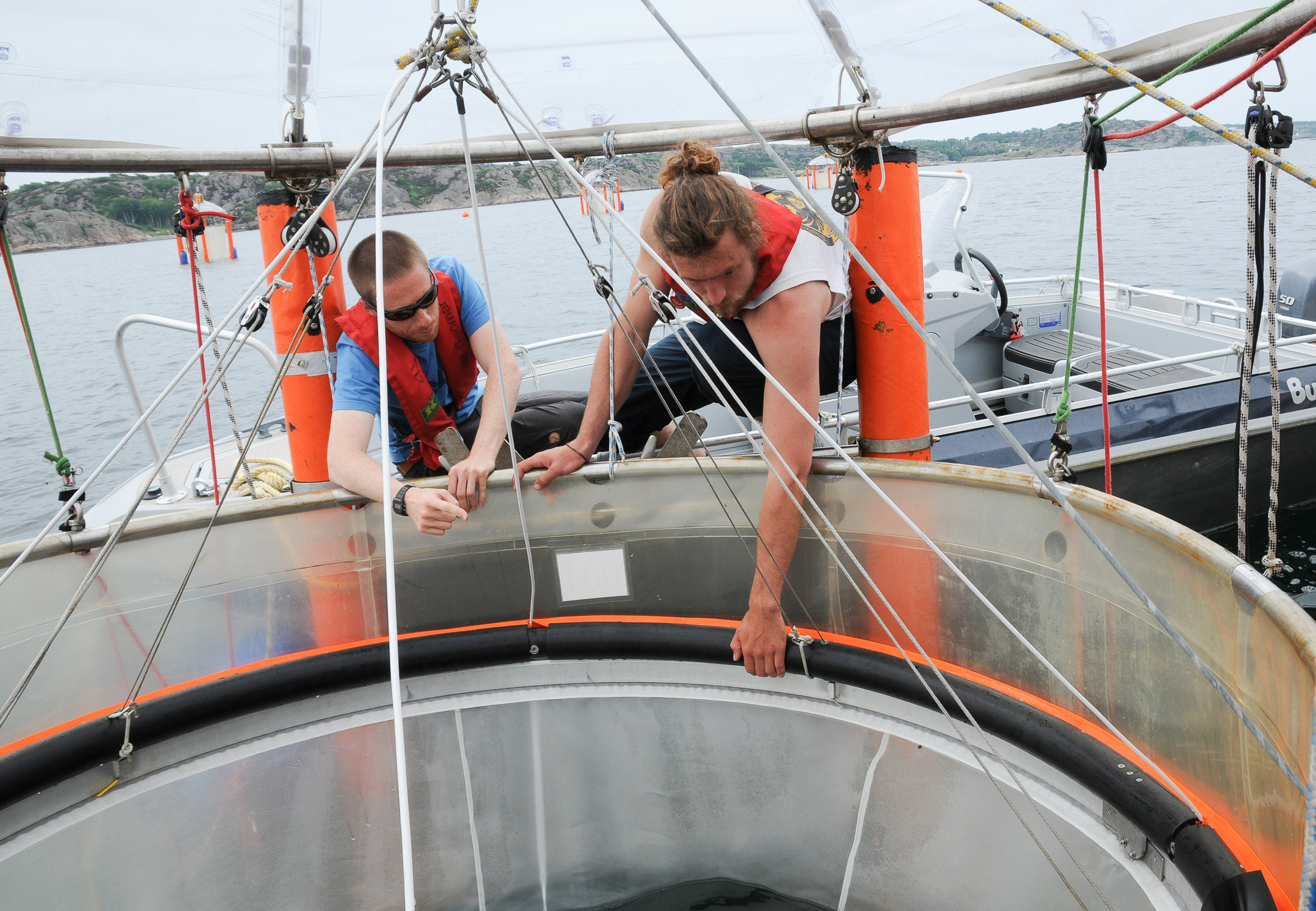
At the end of the experiment herring larvae were living in the mesocosms for 6 weeks and were feeding exclusively on the enclosed plankton community. The "fishing" was done with a ring net, which has the same diameter as the mesocosms (photo below). It is lowered in a folded manner and unfolds when reaching the bottom. On the way upward the net catches everything in the mesocosm > 1 mm, including the herring larvae.
After counting the larvae we were puzzled to see that more of them had survived under high compared to ambient CO2 conditions. But also the abundance of copepods, the food of the herring larvae, had increased under high CO2, which could be explained by a "CO2-fertilization" effect on phytoplankton fueling the food web.
A lab experiment performed in parallel focusing only on the direct CO2 effect revealed that herring larvae are tolerant to increased CO2-induced acidification at levels projected for the end of the century. Thus in the mesocosms they benefitted purely from the positive food effect. This indirect effect does not necessarily have to be always positive. If important links in the food web would be negatively impacted, it could be a challenge even for acidification-tolerant species.